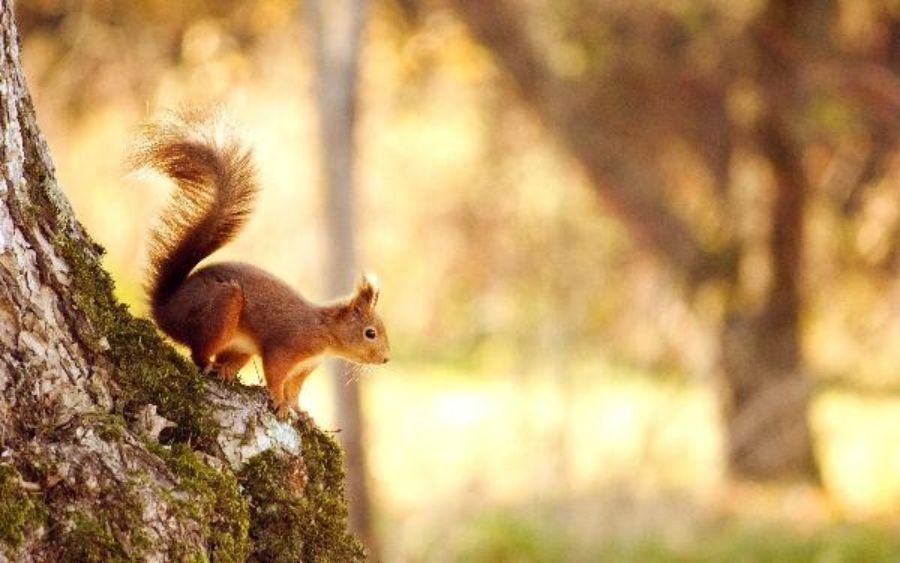
The spiritual meaning of a squirrel centers on preparation, resourcefulness, adaptability, abundance, balance, and playfulness. Squirrels gather and store food while conditions are favorable, making them a natural symbol of planning ahead and using available resources wisely. At the same time, their energetic movement and playful behavior represent the importance of staying flexible and enjoying the present rather than focusing entirely on future needs.
Seeing a squirrel can therefore serve as a symbolic reminder to examine how you prepare for change, manage your resources, and respond to new opportunities. A squirrel crossing your path may emphasize adaptability or preparation, while repeated squirrel sightings may draw your attention to a recurring issue involving security, planning, or balance. The meaning can also change according to the squirrel’s color, behavior, and the circumstances of the encounter.
This guide explores squirrel spiritual meaning through its main symbolic associations, specific encounters, spirit animal symbolism, different squirrel colors, and dreams. It also explains how to interpret a squirrel encounter in relation to your own circumstances without treating every sighting as a supernatural sign.
What Is the Spiritual Meaning of a Squirrel?
The spiritual meaning of a squirrel is associated with 6 main themes: preparation, resourcefulness, adaptability, abundance, balance, and playfulness. These meanings reflect the squirrel’s recognizable behaviors, especially gathering food, storing resources, moving quickly through changing environments, and remaining highly active. In spiritual symbolism, these traits turn the squirrel into a reminder to prepare for future needs without losing awareness of the present.
Preparation is one of the strongest meanings associated with squirrels. Squirrels collect and store food rather than relying only on what is immediately available. Symbolically, this behavior represents foresight: taking useful action now to create greater security later. A squirrel encounter may therefore resonate during periods when you are preparing for a career change, saving money, developing a skill, or working toward a long-term goal.
Resourcefulness represents the ability to recognize and use what is already available. A squirrel continually searches its surroundings for food, shelter, and safe routes, which creates a symbolic connection with making effective use of existing resources. In personal terms, this meaning can apply when progress depends less on acquiring something new and more on recognizing the time, knowledge, relationships, or opportunities you already possess.
Adaptability is connected to the squirrel’s ability to respond quickly to its surroundings. Squirrels climb, jump, change direction, and adjust their behavior when obstacles appear. Spiritually, this can represent flexibility during uncertain circumstances. The message is not simply to prepare for one expected outcome, but to remain capable of changing your approach when circumstances no longer match the original plan.
Abundance is associated with gathering and having resources available for future needs. In spiritual symbolism, this does not necessarily mean that seeing a squirrel predicts financial wealth. Instead, the squirrel can represent awareness of what is available and the ability to build security through consistent effort. Abundance in this context may involve money, time, knowledge, supportive relationships, or other resources that contribute to stability.
Balance and playfulness complete the squirrel’s symbolism by preventing preparation from becoming constant worry about the future. Squirrels are associated not only with storing resources but also with energetic movement, curiosity, and playful behavior. Together, these characteristics create a broader spiritual lesson: prepare responsibly for what comes next while continuing to participate fully in the life you have now.
What Does a Squirrel Symbolize Spiritually?
A squirrel spiritually symbolizes the balance between preparing for the future and responding actively to the present. Its symbolism combines behaviors that appear different but complement each other: squirrels gather resources for later while remaining alert, mobile, and responsive to immediate conditions. This combination makes the squirrel a useful symbol for people who need security without becoming rigid or overly focused on future uncertainty.
The squirrel’s association with preparation comes primarily from gathering and storing food. Symbolically, storing resources represents delayed benefit: effort performed today can support needs that arise later. Applied to everyday life, the same principle appears when someone builds an emergency fund, develops professional skills before seeking a new role, or prepares resources before beginning an important project. The spiritual lesson centers on intentional preparation rather than fear-driven accumulation.
Resourcefulness adds another dimension because preparation depends on recognizing what can be used. The squirrel does not symbolize abundance only because it gathers; it also represents the active search for useful resources. In a spiritual interpretation, this can encourage you to evaluate what you already have before assuming that progress requires more. Existing experience, available time, personal skills, or support from other people can function as resources that have been overlooked.
Adaptability prevents this preparation from becoming inflexible. A carefully created plan loses value when a person cannot respond to changing conditions. The squirrel’s quick movement and ability to navigate obstacles provide a symbolic model for adjusting direction while maintaining the same underlying goal. For example, an unexpected change at work may require a different route toward financial security without requiring you to abandon the goal itself.
The deeper symbolism of the squirrel therefore comes from preparation and presence working together. Saving everything for an imagined future can create anxiety, while focusing only on immediate enjoyment can leave future needs unsupported. Squirrel symbolism occupies the space between these extremes: gather what matters, use resources intelligently, adapt when circumstances change, and leave room for curiosity and enjoyment along the way.
What Does It Mean Spiritually When You See a Squirrel?
Seeing a squirrel spiritually represents a reminder to prepare, recognize your available resources, stay adaptable, and maintain balance. The encounter can be interpreted through the squirrel’s core symbolism rather than as a fixed prediction about what will happen next. What the squirrel is doing and what is happening in your life provide the context needed to determine which symbolic meaning is most relevant.
A squirrel gathering food emphasizes preparation and responsible planning. This behavior can symbolically reflect a period when present actions will influence future stability. For example, seeing a squirrel collecting food may feel particularly relevant when you are saving for an important expense, preparing for a career transition, studying for a qualification, or building something that will produce results later.
An active squirrel moving quickly between trees or across the ground carries a different emphasis. This behavior is more closely associated with adaptability, awareness, and decisive action. It can serve as a reminder to observe changing circumstances instead of remaining attached to a plan that no longer works. When an unexpected opportunity or obstacle appears, adapting your approach can preserve your larger goal.
Seeing a squirrel can also highlight the relationship between security and enjoyment. Preparation is useful when it creates stability, but excessive concern about future needs can make it difficult to engage with the present. Because squirrel symbolism combines storing resources with energetic and playful behavior, the encounter can represent a need to examine whether these two priorities are currently in balance.
Not every squirrel sighting needs to be interpreted as a supernatural message. Squirrels are animals following natural behaviors, and encountering one does not prove that an external spiritual force is communicating with you. Within spiritual symbolism, the value of the encounter comes from using the squirrel as a reflection point for questions about preparation, resources, adaptability, and balance.
What Does It Mean When a Squirrel Crosses Your Path?
A squirrel crossing your path spiritually symbolizes preparation, awareness of opportunities, and the need to remain flexible when circumstances change. Crossing-path symbolism places greater emphasis on movement and direction than simply seeing a squirrel. The encounter can represent a symbolic prompt to consider where you are going, what you need for the next stage, and whether your current approach remains effective.
The first interpretation is preparation before moving forward. Squirrels gather resources while opportunities are available, so one crossing your path can symbolically reinforce the value of preparing before an important transition. This meaning may resonate when you are about to start a new job, move somewhere new, begin a relationship, make a financial commitment, or undertake another change that requires resources and planning.
The second interpretation concerns opportunities that are already within reach. Squirrel symbolism encourages resourcefulness rather than waiting passively for ideal circumstances. For example, someone considering a career change may already possess transferable skills, professional contacts, or experience that can support the transition. In this context, the symbolic lesson is to identify and use existing resources before assuming that something essential is missing.
The third interpretation is adaptability. A squirrel rarely follows a perfectly straight route; it changes speed and direction in response to obstacles and potential threats. Spiritually, a squirrel crossing your path can therefore represent the difference between having a destination and insisting on one route toward it. Your objective may remain valid even when the method used to reach it needs to change.
The circumstances of the encounter help determine which interpretation is most useful. A squirrel carrying food places stronger emphasis on preparation, while one rapidly changing direction can reinforce adaptability. The spiritual meaning should come from the combination of the squirrel’s symbolism, its behavior, and your current circumstances, rather than from treating every crossing as having one universal meaning.
What Does It Mean When a Squirrel Comes to You?
A squirrel coming toward you can spiritually symbolize curiosity, openness, trust, and awareness of opportunities. Unlike watching a squirrel from a distance, an approaching squirrel creates a direct encounter. In symbolic interpretation, this can shift the emphasis from observing a message to considering what you are currently willing to approach, receive, or explore.
Curiosity is one of the clearest themes in this type of encounter. A squirrel approaching something unfamiliar must observe its surroundings while deciding whether moving closer is worthwhile. Symbolically, this reflects curiosity combined with awareness rather than impulsive action. The meaning can be relevant when you are considering a new opportunity, relationship, idea, or direction but still need to evaluate it carefully.
Trust can provide another interpretation, particularly when the encounter feels calm rather than threatening. Spiritually, an approaching squirrel may encourage reflection on how readily you establish trust and whether your current boundaries are appropriate. The lesson is not necessarily to trust more people. Instead, it can be to distinguish between openness that creates meaningful connections and openness that ignores reasonable caution.
An approaching squirrel may also symbolize an opportunity becoming easier to notice. Opportunities do not always arrive as dramatic changes; they can emerge through conversations, existing relationships, small decisions, or resources that were previously overlooked. The squirrel’s connection with resourcefulness makes this encounter a useful reminder to examine what has recently entered your attention and decide whether it deserves action.
There is also a practical explanation for this behavior. A squirrel may approach because it has become accustomed to humans or associates people with food. The animal’s natural behavior should therefore remain separate from the personal meaning you choose to draw from the encounter. Spiritual symbolism provides a framework for reflection, not evidence that the squirrel intentionally approached to deliver a supernatural message.
Why Do I Keep Seeing Squirrels Spiritually?
Repeatedly seeing squirrels can spiritually symbolize a recurring need to focus on preparation, resourcefulness, adaptability, or balance. A single encounter may draw your attention briefly, while repeated sightings can make the squirrel’s symbolism more personally significant. The useful question is not whether every squirrel has been sent as a sign, but which recurring theme in your life most closely matches the animal’s symbolic traits.
Preparation is especially relevant when you keep seeing squirrels during a period of transition. Repeated sightings may prompt you to examine whether you have prepared enough for an upcoming decision, responsibility, or change. For example, someone planning to leave a job may interpret recurring squirrel encounters as a reminder to strengthen savings, develop new skills, or establish professional connections before making the transition. In this interpretation, the squirrel represents purposeful preparation rather than a prediction about the outcome.
Repeated squirrel sightings can also emphasize resourcefulness when you feel that you do not have enough to move forward. The symbolism encourages an inventory of resources that already exist, including knowledge, time, skills, relationships, and practical opportunities. A person struggling to start a project, for example, may discover that the primary obstacle is not a complete lack of resources but an ineffective use of what is already available.
Adaptability becomes the stronger interpretation when your circumstances are changing faster than expected. Squirrels continually respond to movement, obstacles, and changes in their surroundings, making them a symbolic reminder that a plan should support a goal rather than restrict it. If the same approach repeatedly fails, seeing squirrels may serve as a reflection point for changing the method while preserving the objective.
Repeated sightings can also highlight an imbalance between preparing for tomorrow and experiencing today. Squirrel symbolism combines future-oriented preparation with energetic engagement in the present. If your attention is dominated by saving, planning, working, or worrying about future security, the recurring symbol may remind you that preparation should support life rather than consume it. Conversely, if you consistently avoid planning, the same symbolism can point toward greater responsibility and foresight.
Frequency alone does not prove that repeated squirrel sightings are supernatural communication. Your environment, season, local squirrel population, and increased awareness can all make squirrels appear more noticeable. Spiritually, the encounters are most useful as a framework for self-reflection: identify what is repeating in your life, compare it with the squirrel’s symbolic themes, and focus on the interpretation that has a clear connection to your present circumstances.
What Does a Squirrel Spirit Animal Mean?
The squirrel spirit animal represents preparation, resourcefulness, adaptability, energetic action, curiosity, and balance. Within spirit animal symbolism, the squirrel reflects a person who prepares for future needs while remaining capable of responding quickly to present circumstances. Its lesson is not simply to accumulate more resources; it is to know what to gather, when to use it, and when to change direction.
Preparation is a central lesson of the squirrel spirit animal because future security depends partly on present action. This symbolism is particularly relevant when a goal requires consistent effort before visible results appear. Saving money, developing expertise, establishing healthy routines, and preparing for a major life change all follow this pattern: resources are built before they become necessary. The squirrel represents the discipline to perform that work in advance.
Resourcefulness shifts the focus from how much you possess to how effectively you use it. Someone aligned with squirrel symbolism may benefit from recognizing overlooked assets instead of constantly searching for new ones. A limited budget can require creative allocation, a small professional network can still contain valuable connections, and an existing skill can be applied in a different context. The spiritual lesson is to identify useful resources and put them into purposeful action.
Adaptability adds flexibility to preparation. Planning alone becomes ineffective when circumstances change and a person refuses to adjust. The squirrel spirit animal symbolizes maintaining awareness, changing direction when necessary, and continuing toward an objective through a different route. This lesson is particularly relevant during career changes, relocation, financial uncertainty, relationship transitions, or other situations where the original plan no longer matches reality.
Curiosity and energetic action provide another side of squirrel symbolism. Preparation does not require remaining cautious indefinitely. The squirrel spirit animal represents observing an opportunity and acting when sufficient information and resources are available. Someone who plans continuously but never takes action may need this aspect of the symbolism more than another reminder to prepare.
The final lesson is balance. A squirrel is associated with gathering resources for future needs, but its symbolism also includes movement, curiosity, and playfulness. This creates a practical contrast between security and enjoyment. Preparing for tomorrow has value, but sacrificing every present experience for future security creates a different form of imbalance. The squirrel spirit animal therefore represents a middle path: prepare deliberately, use resources intelligently, adapt when conditions change, and remain engaged with the present.
Squirrel spirit animal symbolism is most relevant during periods involving future planning, limited resources, changing circumstances, or an imbalance between responsibility and enjoyment. Rather than prescribing one meaning for every person, these contexts help identify which aspect of squirrel symbolism is most applicable. Someone facing financial uncertainty may connect primarily with preparation and resourcefulness, while someone trapped in rigid routines may find adaptability and playfulness more relevant.
What Do Different Squirrel Colors Mean Spiritually?
Different squirrel colors can add a secondary layer of meaning to squirrel symbolism, with black, white, gray, and red squirrels commonly interpreted through different symbolic themes. The squirrel’s core meanings of preparation, resourcefulness, adaptability, and balance remain relevant, while its color provides an additional framework for personal reflection. Color symbolism is interpretive rather than a fixed spiritual rule, so the circumstances of the encounter should remain part of the meaning.
What Does a Black Squirrel Mean Spiritually?
A black squirrel can spiritually symbolize resilience, mystery, independence, and transformation. Black is frequently used symbolically to represent the unknown, making a black squirrel particularly relevant to periods when the outcome of a decision or transition is unclear. Combined with the squirrel’s adaptability, this symbolism emphasizes remaining resourceful when you cannot predict exactly what comes next.
Seeing a black squirrel may therefore resonate during a career transition, relocation, relationship change, or another situation that requires moving forward without complete certainty. The symbolic lesson is not that the encounter predicts a major change. Instead, it encourages you to rely on preparation and adaptability while accepting that not every variable can be controlled.
What Does a White Squirrel Mean Spiritually?
A white squirrel can spiritually symbolize clarity, renewal, new beginnings, and the significance of something unusual. Because a white squirrel stands out visually, an encounter with one may feel more memorable than seeing a squirrel with a more familiar coat color. Within spiritual interpretation, that distinctiveness can represent the need to notice an opportunity, idea, or change that differs from your usual pattern.
Renewal is especially relevant when the encounter occurs around the beginning of a new phase. Starting a new job, changing a long-established routine, moving to a different place, or reconsidering a personal goal can all fit this symbolic context. The squirrel’s core theme of preparation adds an important qualification: a new beginning benefits from planning and resourcefulness rather than relying on novelty alone.
What Does a Gray Squirrel Mean Spiritually?
A gray squirrel can spiritually symbolize balance, adaptability, practical preparation, and measured decision-making. Gray sits between the extremes of black and white in color symbolism, which makes balance a natural interpretive theme. Combined with typical squirrel behavior, the meaning emphasizes making practical preparations while remaining flexible enough to respond to changing circumstances.
This symbolism can be relevant when a situation requires moderation rather than an extreme response. For example, a financial decision may require saving without eliminating every enjoyable expense, while a demanding career goal may require disciplined work without neglecting rest or relationships. In this context, the gray squirrel represents the middle ground between preparing responsibly and becoming excessively focused on security.
What Does a Red Squirrel Mean Spiritually?
A red squirrel can spiritually symbolize energy, determination, action, and vitality. Red is commonly associated with active energy, while squirrel symbolism already contains themes of movement and purposeful preparation. Together, these associations place greater emphasis on taking action rather than remaining indefinitely in the planning stage.
A red squirrel encounter may be especially meaningful when you have prepared for a goal but continue postponing the next step. For example, someone who has developed the required skills, gathered information, and created a workable plan may no longer need additional preparation. In that context, the red squirrel can symbolically represent the transition from planning to purposeful action.
Color should not be used in isolation when interpreting an encounter. A black squirrel gathering food, a white squirrel approaching you, and a red squirrel crossing your path each combine color symbolism with behavior and context. Considering these elements together creates a more specific interpretation than assigning one universal meaning to every squirrel of the same color.
What Does a Baby Squirrel Mean Spiritually?
A baby squirrel spiritually symbolizes new beginnings, growth, learning, vulnerability, and developing independence. While an adult squirrel is strongly associated with preparation and resourcefulness, a baby squirrel shifts the symbolism toward the process of acquiring those abilities. The encounter can represent a stage in life when something is beginning but still requires time, attention, and experience before it becomes stable.
New beginnings are one of the clearest meanings because a young squirrel is at an early stage of development. This symbolism may resonate when you have recently started a job, relationship, personal project, spiritual practice, or other unfamiliar chapter. The important distinction is that a beginning does not represent a finished outcome. Like a young animal developing survival skills, a new goal requires learning and repeated effort before independence becomes possible.
Vulnerability adds a second layer to baby squirrel symbolism. Early growth often involves dependence, uncertainty, and mistakes, whether the process involves learning a skill, building a business, or adjusting to a new environment. Seeing a baby squirrel can symbolically encourage patience with something that has not yet reached maturity rather than judging its potential solely by its current condition.
Developing independence connects the baby squirrel back to the central symbolism of resourcefulness. Skills such as finding resources, responding to danger, and navigating the environment develop over time. In personal reflection, this can represent moving gradually from dependence toward greater confidence and self-reliance. The spiritual lesson is to support growth while accepting that competence develops through experience rather than appearing immediately.
What Does a Dead Squirrel Mean Spiritually?
A dead squirrel can spiritually symbolize an ending, transition, release of an old pattern, or a need to reconsider how you prepare for the future. Because squirrel symbolism is strongly connected with preparation, resources, adaptability, and active energy, encountering a dead squirrel can be interpreted as the interruption or completion of one of these themes. It does not mean that death, tragedy, or misfortune is about to occur.
An ending is the most direct symbolic interpretation. Something that previously required your energy may have reached its natural endpoint, creating a need to decide what should be carried forward and what should be released. This could involve an outdated goal, an ineffective routine, a professional direction, or a personal expectation that no longer fits your circumstances. The dead squirrel represents closure in this interpretation rather than a prediction of a negative event.
A dead squirrel can also symbolize preparation that has stopped serving its original purpose. Preparing for future needs creates security, but accumulation can become counterproductive when fear prevents resources from being used. For example, saving money for emergencies is purposeful preparation, while refusing to spend on genuine needs solely because of anxiety reflects a different relationship with security. This interpretation asks whether preparation is supporting your life or controlling it.
Transition provides another possible meaning because endings create space for different priorities and behaviors. A plan that once worked may become ineffective after circumstances change. In this context, the dead squirrel can represent the need to stop relying on an old strategy and adapt to current conditions. The emphasis is on recognizing when persistence remains useful and when adaptation requires letting go.
The practical circumstances of the encounter should remain separate from its symbolic interpretation. Finding a dead squirrel is not evidence of a supernatural warning or an omen of personal death. Within a spiritual framework, the encounter is more constructively used as a reflection point: identify what may be ending, determine which habits or plans no longer serve their purpose, and decide what needs to change before moving forward.
What Does a Squirrel in a Dream Mean Spiritually?
A squirrel in a dream can spiritually symbolize preparation, resource management, adaptability, opportunities, or the need to balance future security with present enjoyment. The most relevant interpretation depends on what the squirrel is doing, how you interact with it, and the emotions surrounding the dream. A squirrel calmly gathering food carries a different symbolic emphasis from several squirrels running chaotically or a squirrel chasing you.
Dreaming of a squirrel gathering or storing food places the strongest emphasis on preparation. The dream may reflect your attention to future needs, especially during periods involving money, career decisions, family responsibilities, or long-term goals. For example, gathering squirrels may resonate with someone actively building savings or developing skills for a future career move. The symbolism reflects the process of creating security through present actions rather than predicting a specific future event.
Seeing many squirrels in a dream can symbolize multiple responsibilities, opportunities, or demands competing for your attention. The interpretation depends largely on how the squirrels behave. Several squirrels gathering calmly may represent productive activity and access to useful resources, while squirrels moving chaotically in different directions may reflect scattered attention. In the second situation, the symbolic message centers on prioritization: having several opportunities is less useful when your energy is divided so widely that none receives sufficient attention.
Feeding a squirrel in a dream can represent nurturing resources, generosity, trust, or investing in something that may grow over time. The resource being developed does not need to be financial. It may be a relationship, skill, project, habit, or personal goal. For example, consistently investing time in learning a new skill resembles feeding something before receiving a future benefit from it. This connects the dream with the squirrel’s broader symbolism of preparation and resourcefulness.
Being chased by a squirrel in a dream can symbolize an avoided responsibility or a small concern that continues demanding attention. Because squirrels are associated with preparation, a chasing squirrel may reflect something you know requires action but continue postponing. An unpaid obligation, unfinished project, approaching deadline, or neglected decision can fit this pattern. The size of the animal is also symbolically relevant: a relatively small issue can become mentally disruptive when repeatedly avoided.
A playful or energetic squirrel creates a different interpretation. Such a dream can highlight curiosity, enjoyment, and active engagement with life, especially when daily responsibilities have become overly dominant. The squirrel’s symbolism is not limited to saving and preparing. Its energetic behavior also represents the value of remaining engaged with the present while building security for the future.
The emotional tone of the dream helps distinguish between these interpretations. A calm squirrel may emphasize preparation or resourcefulness, a playful squirrel may emphasize balance and enjoyment, and an aggressive squirrel may point toward pressure or unresolved responsibilities. Rather than assigning every squirrel dream the same meaning, combine the squirrel’s behavior, your response to it, and your current circumstances to identify the symbolism that fits the dream most closely.
Is Seeing a Squirrel a Good Spiritual Sign?
Seeing a squirrel is generally interpreted as a positive spiritual sign associated with preparation, resourcefulness, adaptability, abundance, and balanced action. Rather than predicting that something good will automatically happen, squirrel symbolism points toward behaviors that can create greater stability: preparing for future needs, recognizing available resources, adjusting to change, and acting when opportunities appear.
Preparation gives the squirrel much of its positive symbolism. Gathering resources before they are needed represents foresight rather than waiting until a problem becomes urgent. In everyday life, this principle can apply to building savings before a major expense, developing skills before changing careers, or organizing time before a demanding period. The positive meaning comes from being better equipped to respond to future conditions.
Resourcefulness and adaptability strengthen this interpretation because having resources is not enough if you cannot use them effectively. Squirrels respond quickly to obstacles and changing surroundings, making them a symbol of flexible problem-solving. Seeing one during an uncertain period may therefore serve as a reminder to assess what you already have and adjust your approach before searching for an entirely new solution.
Abundance is another positive association, but it should not be interpreted as a promise of money or material success. In squirrel symbolism, abundance is more closely connected with recognizing, gathering, and managing useful resources. Those resources can include time, knowledge, relationships, skills, opportunities, and financial assets. The squirrel represents an active relationship with abundance rather than passive expectation.
A squirrel encounter can also carry a cautionary meaning without becoming a negative sign. Excessive preparation can turn into anxiety, accumulation can become hoarding, and constant activity can produce scattered attention. The squirrel’s broader spiritual message is positive when preparation and action remain balanced with adaptability and enjoyment. Its symbolism therefore encourages both responsibility for the future and engagement with the present.
How Can You Interpret a Squirrel Encounter in Your Own Life?
Interpret a squirrel encounter by considering 4 factors: the squirrel’s behavior, the location of the encounter, your circumstances at the time, and the symbolic theme that connects most clearly with your life. This approach creates a more meaningful interpretation than assuming every squirrel carries the same spiritual message.
First, observe what the squirrel was doing. A squirrel gathering food has a stronger connection with preparation and resource management, while one rapidly changing direction can emphasize adaptability. A squirrel approaching you may draw attention to curiosity, openness, or an opportunity that has entered your awareness. Behavior provides context that makes the general symbolism more specific.
Second, consider where the encounter occurred. Location can connect the symbolism with a particular area of life. Seeing a squirrel near your workplace may prompt reflection on career preparation or professional resources, while an encounter around your home may feel more relevant to security, family responsibilities, or personal stability. The location does not determine the meaning by itself, but it can help narrow the context.
Third, examine what was happening in your life when the encounter became meaningful to you. A person preparing for a major decision may connect naturally with the squirrel’s symbolism of planning, while someone facing unexpected change may identify more strongly with adaptability. Someone who has spent months preparing without taking action may instead need the squirrel’s energetic symbolism as a reminder to move from planning into execution.
Fourth, identify the interpretation that produces a practical point of reflection. Ask whether you need to prepare more carefully, use existing resources more effectively, adapt an outdated plan, act on an opportunity, or restore balance between future responsibilities and present enjoyment. The most useful squirrel spiritual meaning is the one that connects the symbolism with a specific situation you can actually examine or act upon.
For example, seeing a squirrel gathering food while you are considering a career change can be interpreted through preparation. Instead of treating the encounter as a prediction that the change will succeed, use the symbolism to assess concrete resources: savings, qualifications, professional contacts, available time, and alternative plans. The encounter then becomes a meaningful prompt for reflection without requiring a supernatural conclusion.
Squirrel spiritual symbolism ultimately centers on a practical principle: prepare for what lies ahead, use what you already have wisely, remain flexible when circumstances change, and do not sacrifice the present entirely for the future. Whether a squirrel appears once, repeatedly, in a dream, or during an important period of your life, these themes provide a consistent framework for interpreting the encounter in relation to your own circumstances.