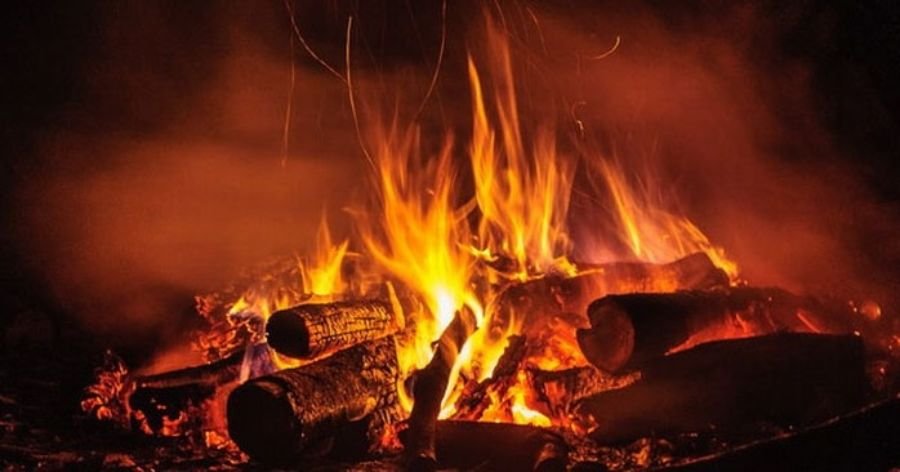
Fire spiritually symbolizes transformation, purification, rebirth, passion, destruction, divine presence, and illumination. Its meaning comes from the way fire changes whatever it touches: it can consume something completely, remove what existed before, provide warmth and light, and create the conditions for something new to emerge. For this reason, fire is one of the strongest symbols of change and renewal in spiritual traditions.
The spiritual meaning of fire is not always positive. A controlled flame can represent inner strength, courage, clarity, protection, or a sacred presence, while an uncontrolled fire can symbolize anger, conflict, destruction, fear, or overwhelming desire. The context in which fire appears therefore plays an important role in its interpretation.
Fire also connects closely with spiritual transformation. Burning can represent releasing old beliefs, habits, attachments, or identities, while the flame itself can symbolize awareness and illumination. This creates a recurring symbolic sequence: destruction leads to purification, purification creates space for renewal, and renewal leads to rebirth. This article explains these meanings in detail, including fire symbolism in spiritual traditions, dreams, candle flames, the fire element, spiritual awakening, and personal experiences with fire.
What Does Fire Mean Spiritually?
Fire spiritually represents transformation, purification, rebirth, passion, destruction, divine presence, and illumination. These meanings arise from fire’s ability to change matter, produce heat, and create light. Spiritually, those physical qualities become metaphors for changing an old state, releasing what no longer serves a purpose, activating inner energy, and gaining greater awareness.
Transformation is one of the central spiritual meanings of fire because burning creates an irreversible change. Something that passes through fire does not return to exactly the same state. In a spiritual context, this process can represent leaving behind an old identity, belief, attachment, or stage of life. Fire therefore appears as a symbol when transformation requires an ending before a new condition can emerge.
Fire also represents purification and rebirth. Purification symbolism comes from the idea that burning removes unwanted material, while rebirth focuses on what follows that removal. The phoenix illustrates this sequence clearly: the mythical bird is consumed by fire before rising again from its ashes. The symbolic pattern is destruction → purification → renewal → rebirth.
Heat and light give fire additional meanings. Heat represents passion, courage, desire, motivation, and inner power because each describes an active rather than passive state. Light represents knowledge, clarity, awareness, and spiritual illumination because it makes what was hidden in darkness visible. A flame can consequently symbolize both the energy required to change and the awareness required to recognize that change.
Fire does not have one fixed spiritual meaning in every situation. A steady candle flame used during prayer carries a different context from a destructive wildfire in a frightening dream. The form of the fire, its intensity, the emotions associated with it, and the spiritual tradition interpreting it determine which symbolic attribute is most relevant.
What Does Fire Symbolize in Spirituality?
Fire symbolizes 5 primary spiritual processes: transformation, purification, rebirth, inner activation, and illumination. These meanings are interconnected rather than independent. Fire changes what it touches, consumes existing material, releases heat, and produces light, allowing its physical characteristics to function as metaphors for spiritual experiences.
Transformation begins with change. Fire converts an existing material into another state, which makes it a direct symbol for experiences that permanently alter a person’s perspective or identity. Spiritually, this can represent abandoning an old belief, ending a destructive pattern, changing a deeply held perspective, or moving from one stage of personal development into another. The important attribute is not destruction alone but the transition from an old condition to a new one.
Purification focuses on removal. In spiritual symbolism, fire can represent burning away attachments, unwanted influences, old patterns, or aspects of the self that prevent further growth. This interpretation explains why flames and ceremonial fires appear in practices centered on symbolic cleansing and release. The spiritual claim is symbolic: burning an object can represent letting something go, but it does not establish that literal invisible or negative energy has been physically removed.
Rebirth represents what happens after the old state has ended. Fire can destroy, but that destruction also creates an empty space in which renewal becomes possible. This apparent contradiction explains why fire can represent death and life within the same symbolic system. The phoenix is a well-known example because its destruction in flames is inseparable from its subsequent rebirth.
Inner activation comes from fire’s heat and intensity. Fire can symbolize passion when its energy is directed, courage when that energy supports action, and anger when its intensity becomes uncontrolled. The same basic attribute therefore produces different meanings according to its expression. A contained inner fire suggests motivation and personal power, while uncontrolled fire can represent impulsiveness, aggression, or consuming desire.
Illumination comes from the flame’s ability to produce light. Darkness conceals; light reveals. Fire therefore becomes a metaphor for recognizing something previously unseen, gaining knowledge, developing awareness, or experiencing spiritual insight. In this context, the flame represents consciousness rather than physical destruction. This relationship creates the symbolic progression fire → light → clarity → awareness → illumination.
Does Fire Have Both Positive and Negative Spiritual Meanings?
Fire has both positive and negative spiritual meanings because it can sustain, illuminate, transform, and protect, but it can also consume, injure, and destroy. Its spiritual symbolism reflects this dual nature. Positive interpretations include transformation, renewal, courage, passion, protection, warmth, and illumination, while negative interpretations include anger, conflict, uncontrolled desire, destruction, fear, and loss.
Controlled fire generally supports constructive symbolism. A small flame provides light without consuming its surroundings, while a hearth provides heat within defined boundaries. These qualities make controlled fire an effective symbol of disciplined passion, inner strength, stability, and purposeful transformation. A person describing a strong but controlled “inner fire,” for example, is expressing determination rather than uncontrolled aggression.
Uncontrolled fire reverses many of these associations. A blaze that spreads beyond its boundaries can symbolize emotions, desires, or circumstances that have become difficult to contain. Anger can consume judgment, desire can overwhelm restraint, and rapid change can destroy familiar structures before a person feels prepared for what follows. In dreams or symbolic imagery, an uncontrollable fire may therefore be associated with conflict, anxiety, loss of control, or disruptive transformation.
Destruction itself is not automatically negative within spiritual symbolism. Fire can represent a difficult ending that makes renewal possible. An old identity, relationship with a belief, or behavioral pattern may need to end before another can develop. This produces one of fire’s central symbolic paradoxes: the same flame can represent destruction from the perspective of what is ending and rebirth from the perspective of what comes next.
Context therefore determines whether fire carries a constructive, destructive, or mixed interpretation. A warm hearth, sacred flame, burning building, candle used in prayer, and wildfire do not communicate identical meanings simply because each involves fire. The type and behavior of the fire, the setting in which it appears, and the emotional response it produces provide the context required to interpret its spiritual symbolism.
Why Is Fire Associated With Spiritual Transformation?
Fire is associated with spiritual transformation because it represents an irreversible transition from an old state into a new one. When fire burns something, the original form changes and cannot simply return to what it was before. Spiritually, this process becomes a metaphor for profound personal change: an old identity, belief, attachment, or behavioral pattern ends so that a different way of living or understanding can emerge.
Fire-based transformation follows a sequence of 4 stages: old state, disruption, transition, and new state. The old state represents beliefs, habits, relationships, or identities that have become incompatible with further growth. Disruption occurs when those structures are challenged or released. The transitional stage represents uncertainty between what has ended and what has not yet fully developed. The new state emerges when a person integrates the experience into a different perspective, identity, or direction.
This symbolism explains why fire can represent transformation even when the process feels destructive. Spiritual growth does not always involve adding something new; it can involve removing something that previously defined a person. Letting go of a limiting belief, ending a repeated behavioral pattern, or changing a deeply established self-image can create discomfort because the familiar structure disappears before its replacement becomes clear. Fire represents this process precisely because it combines destruction and creation within the same transformation.
The phoenix provides a clear symbolic example. The mythical bird does not simply improve its existing form; it is consumed by flames and rises again from its ashes. Its symbolism follows the sequence ending → destruction → renewal → rebirth. This is why phoenix imagery is frequently connected with resilience and personal transformation: the new state emerges after the previous one has ended rather than existing alongside it.
Fire can also represent spiritual awakening when transformation involves a major change in awareness. In this context, the flame combines two attributes: heat represents the energy of change, while light represents the awareness produced by that change. A person may use fire symbolism to describe abandoning an old worldview and recognizing life from a different perspective.
Being attracted to fire or encountering fire imagery does not, by itself, prove that a spiritual transformation is taking place. Fire functions as a symbolic framework for interpreting change rather than objective evidence that a specific spiritual event has occurred. The strongest interpretation comes from examining the fire together with the person’s circumstances, emotions, beliefs, and stage of personal development.
Why Is Fire Used for Spiritual Cleansing and Purification?
Fire is used for spiritual cleansing and purification because burning symbolizes the removal of what is unwanted before renewal begins. In spiritual practices, the flame can represent releasing attachments, old patterns, symbolic burdens, or a previous state of being. The central sequence is burning → removal → purification → renewal.
The symbolism begins with fire’s ability to consume material. When an object burns, its previous physical form is broken down. Spiritual traditions and practices can translate this observable process into a symbolic act of release. For example, a person may write down a thought, fear, habit, or experience and burn the paper as a ritual representation of letting it go. The physical act creates a visible boundary between keeping something and choosing to release it.
Sacred and ceremonial fires extend this meaning beyond personal release. Fire can function as a focal point for prayer, offerings, transitions, remembrance, or purification within religious and spiritual settings. Its role depends on the tradition using it, so different fire rituals should not be treated as interchangeable. A sacred flame maintained as part of worship, for example, carries a different context from a personal ritual in which an object is burned to symbolize the end of a life chapter.
Candle flames provide a smaller and more controlled form of the same symbolism. A candle used during meditation or prayer can represent concentrated intention, clarity, hope, or purification. The boundaries of the flame matter symbolically: rather than spreading uncontrollably, its energy remains focused around a single point. This makes the candle particularly suitable as a metaphor for directed attention and deliberate spiritual practice.
Purification through fire also connects directly with rebirth. Removing the old is symbolically valuable because it creates space for the new. A purification ritual may therefore represent more than cleansing; it can mark a transition between two stages. Burning an object associated with a completed period of life, for instance, can symbolize both releasing the previous stage and consciously entering the next one.
Spiritual purification should be distinguished from a literal physical claim. A ritual involving fire can have religious, cultural, personal, or symbolic significance, but the symbolism alone does not demonstrate that fire physically removes invisible “negative energy.” Its spiritual value lies in what the act represents within a particular belief system or personal practice.
What Does Fire Symbolize in Different Spiritual Traditions?
Fire symbolizes divine presence, purification, sacrifice, transformation, sacred power, and renewal across different spiritual and religious traditions. These meanings are not identical in every belief system. Each tradition gives fire significance through its own teachings, rituals, sacred texts, and practices, so fire should be interpreted within its specific religious or cultural context rather than treated as a universal symbol with one fixed meaning.
In Hindu traditions, sacred fire has an important ritual role and is closely associated with Agni, the deity connected with fire. Fire can serve as a medium through which offerings are made during rituals such as yajna. The flame therefore carries meanings connected with sacrifice, sacred communication, purification, and transformation. Hindu wedding ceremonies also use sacred fire in specific rites, making the flame part of a transition from one stage of life into another.
In Christianity, fire can represent the presence and power of God, spiritual purification, judgment, and the Holy Spirit. One prominent example appears in the account of Pentecost, where the Holy Spirit is described through imagery of tongues resembling fire. Biblical fire imagery can also carry a very different meaning when associated with judgment. These contrasting uses demonstrate why religious fire symbolism must be interpreted from its immediate context rather than assigned an exclusively positive or negative meaning.
Fire also has sacred significance in Zoroastrianism, where it is closely connected with purity and divine light. Fire maintained in places of worship should not simply be interpreted as an object of worship itself; its significance is connected with concepts such as purity, truth, and the divine. This distinction illustrates an important principle when interpreting spiritual symbols: similar physical objects can perform different theological functions across traditions.
Buddhist contexts provide another example of fire carrying multiple meanings. Fire can illustrate attachment, aversion, desire, and other states that produce suffering, while fire imagery can also appear within particular ritual traditions. Here, the symbolism differs substantially from interpretations that treat fire primarily as passion or personal empowerment. The surrounding doctrine determines which attribute of fire becomes relevant.
Despite these differences, several recurring relationships explain why fire appears across spiritual traditions. Fire produces light, changes matter, consumes material, and generates heat. These physical characteristics provide foundations for symbolic associations with illumination, transformation, purification, sacrifice, and spiritual intensity. The shared physical entity is fire, but the spiritual meaning assigned to it depends on the tradition.
What Is the Spiritual Meaning of the Fire Element?
The fire element spiritually represents energy, action, passion, willpower, creativity, and transformation. Elemental systems use fire to describe active and dynamic qualities because a flame moves, produces heat, spreads, consumes fuel, and transforms material. In this context, fire represents the force that initiates change rather than a passive state of being.
Energy is the foundational attribute of the fire element. A flame requires fuel and releases heat, making it a natural metaphor for the internal energy that drives action. Spiritually, this energy can be interpreted as motivation, determination, courage, or the desire to create. A person described as having strong “fire” therefore symbolizes someone driven toward movement and expression rather than inactivity.
Passion and willpower develop from the same relationship. Balanced fire represents directed energy, while excessive fire represents energy without sufficient control. Directed passion can support creativity, persistence, leadership, and decisive action. When the same intensity becomes uncontrolled, fire symbolism can shift toward anger, impatience, impulsiveness, aggression, or consuming desire. The difference lies in how the energy is expressed rather than in the existence of the energy itself.
The fire element also represents transformation because fire changes what it encounters. Within spiritual frameworks, this quality can symbolize the willingness to act on insight rather than simply possess it. A realization may provide awareness, but fire represents the energy required to turn awareness into change. This creates a relationship between illumination and action: the flame first makes something visible and then provides the transformative energy associated with responding to what has been revealed.
Fire gains additional meaning when contrasted with other classical elements such as water, air, and earth. Fire commonly emphasizes heat, activity, intensity, and transformation; water can emphasize fluidity and emotion; air can emphasize movement, thought, or communication; and earth can emphasize stability and material grounding. The exact relationships vary between spiritual, philosophical, and esoteric systems, so these correspondences should not be treated as one universal elemental doctrine.
From a personal spiritual perspective, the fire element can function as a metaphor for examining how energy is being expressed. A lack of symbolic fire may be interpreted as insufficient motivation or initiative, balanced fire as purposeful action and courage, and excessive fire as uncontrolled intensity. These interpretations are tools within spiritual or esoteric frameworks rather than psychological diagnoses or objective measurements of personality.
What Does Seeing Fire Mean Spiritually?
Seeing fire spiritually can symbolize transformation, purification, passion, warning, renewal, or a need for greater awareness. The appropriate interpretation depends on 4 factors: the form of the fire, the context in which it appears, your emotional response, and what is happening in your life at the time. Seeing fire should therefore be interpreted contextually rather than treated as automatic evidence of a spiritual message.
The form of the fire provides the first clue. A small, controlled flame can represent focused energy, hope, clarity, or gradual transformation because its power remains contained. A large but controlled fire may represent intense motivation, major change, or strong emotional energy. An uncontrolled blaze creates a different symbolic relationship because destruction and danger become dominant attributes, making conflict, overwhelming emotions, rapid change, or loss of control more relevant interpretations.
Context provides the second clue. Seeing a flame during prayer or meditation carries a different symbolic context from encountering an accidental fire in everyday life. Repeatedly noticing fire imagery in art, dreams, meditation, or personal reflection may encourage someone to consider themes associated with transformation or passion. A real fire, however, is first a physical event and should not automatically be interpreted as a supernatural sign.
Your emotional response provides the third clue because the same image can produce opposite meanings. Feeling calm while observing a flame may connect the experience with warmth, concentration, safety, or clarity. Feeling frightened by fire can instead connect it with danger, anger, instability, or unwanted change. The emotional response does not prove a particular spiritual meaning, but it helps identify which symbolic attribute is most relevant to the experience.
Your current circumstances provide the fourth clue. Fire imagery encountered while ending an old habit, changing direction, or rebuilding after a difficult period can function as a metaphor for transformation and renewal. During conflict or emotional exhaustion, the same imagery may instead reflect anger, pressure, or burnout. A useful interpretation therefore follows the sequence form of fire → context → emotional response → current circumstances.
Seeing fire repeatedly does not establish that a spiritual force is sending a message. Spiritual traditions and individuals can assign symbolic meaning to repeated experiences, but that interpretation remains dependent on belief and context. Fire is most useful as a spiritual symbol when it encourages meaningful reflection without turning coincidence into certainty.
What Does Fire Mean in a Dream Spiritually?
Fire in a dream can spiritually symbolize transformation, intense emotion, purification, destruction, passion, or renewal. Its meaning depends primarily on how the fire behaves and how the dreamer responds to it. A calm flame and an uncontrollable blaze involve the same central entity, but their different attributes create substantially different interpretations.
Dream fire often represents transformation when something is being consumed or changed. A burning object, building, or landscape can symbolically represent an existing structure reaching an end. The structure may correspond to an old belief, relationship, identity, habit, or stage of life in a personal interpretation. What happens after the fire matters as much as the burning itself: destruction followed by rebuilding supports a stronger renewal interpretation than destruction followed only by fear or loss.
Fire can also represent emotional intensity. Heat provides a natural metaphor for passion, anger, desire, excitement, and conflict. A dream involving fire during a period of strong motivation may therefore be interpreted differently from an identical image during an unresolved argument. Dream interpretation becomes more coherent when the symbolic attribute is connected with the dreamer’s circumstances instead of relying on a universal dictionary meaning.
What Does a Calm Fire Mean in a Dream?
A calm fire in a dream can symbolize controlled passion, inner strength, warmth, clarity, or steady spiritual energy. A contained flame provides heat and light without creating immediate destruction, which makes balance and direction its dominant attributes.
For example, sitting peacefully beside a fireplace may symbolically reflect security, emotional warmth, or a stable source of inner motivation. Watching a small flame in darkness may emphasize clarity because the light makes the surrounding environment visible. A steady flame can similarly represent an intention or passion that remains strong without becoming overwhelming.
The dreamer’s reaction still determines the interpretation. Feeling peaceful around the flame strengthens associations with warmth and stability, while feeling anxious around the same flame may indicate concern that a controlled situation could become more intense. The visual symbol provides the potential meaning; the surrounding dream context narrows it.
What Does an Uncontrolled Fire Mean in a Dream?
An uncontrolled fire in a dream can symbolize overwhelming emotion, conflict, fear, destructive change, or loss of control. Unlike a contained flame, spreading fire is difficult to limit, making uncontrolled intensity its most important symbolic attribute.
A wildfire moving rapidly through a landscape, for example, can function as a metaphor for a situation that appears to be expanding faster than the dreamer can manage. A burning home may carry a more personal interpretation because a home can be associated with security, identity, family, or private life. The meaning changes further depending on whether the dreamer escapes, observes the fire, tries to extinguish it, or feels trapped by it.
Uncontrolled fire can also represent transformation rather than only danger. A destructive change may remove an existing structure and create conditions for something different to emerge. However, interpreting every frightening fire dream as a positive sign of rebirth ignores the emotional content of the dream. Fear, destruction, relief, survival, and what remains after the fire all contribute to the interpretation.
Dreams do not provide objective proof of future events or supernatural messages. A spiritual interpretation treats fire as symbolic material through which a person can examine transformation, emotion, conflict, passion, or renewal. This distinction allows the dream to carry personal spiritual value without presenting one interpretation as a guaranteed prediction.
What Does a Candle Flame Mean Spiritually?
A candle flame spiritually symbolizes light, intention, hope, prayer, remembrance, meditation, and divine presence. Unlike an uncontrolled fire, a candle produces a small and contained flame, so its symbolism emphasizes focused energy and illumination rather than destruction. This distinction makes candle flames especially relevant in spiritual practices centered on concentration, reflection, and sacred intention.
Light is one of the strongest meanings associated with a candle flame. A single flame can illuminate darkness, creating the symbolic relationship flame → light → visibility → awareness → spiritual illumination. Within spiritual practice, lighting a candle can therefore represent seeking clarity, directing attention toward a specific intention, or maintaining awareness during prayer and meditation. The physical light provides the foundation for the symbolic meaning rather than proving that a supernatural event is occurring.
A candle flame can also represent intention because the act of lighting it creates a defined beginning for a spiritual practice. Someone may light a candle before prayer, meditation, remembrance, or personal reflection and extinguish it when the practice ends. The flame becomes a visible focal point for the intention maintained during that period. In this context, its meaning comes from the relationship between the ritual action and the purpose assigned to it.
Hope and remembrance provide two additional meanings. A flame that continues to burn in darkness can symbolize persistence, making it an appropriate representation of hope during uncertainty. Memorial candles use the continuing light to represent remembrance of a person or event. Although both practices use the same physical flame, their meanings differ because one emphasizes future possibility while the other emphasizes connection with memory.
Claims about unusual candle behavior require greater caution. A flickering, tall, low, or suddenly extinguished flame is sometimes interpreted within particular spiritual practices as a sign or message. However, flame behavior also changes because of ordinary physical factors such as airflow, wick length, wax, and available oxygen. A changing candle flame is therefore not reliable proof of spirit communication or supernatural activity. A spiritual interpretation can still have personal meaning, but it should remain distinct from claims about physical causation.
How Can You Interpret the Spiritual Meaning of Fire in Your Life?
You can interpret the spiritual meaning of fire in your life by examining 4 factors: the form of the fire, its context, your emotional response, and your current circumstances. This method is more useful than assigning every encounter with fire the same meaning because transformation, passion, purification, warning, and renewal become relevant under different conditions.
First, identify the form of fire. A candle, hearth, ceremonial fire, wildfire, dream fire, and recurring image of flames have different characteristics. A candle emphasizes concentrated light, while a wildfire emphasizes expansion and uncontrollable force. Identifying the form prevents a broad meaning such as “transformation” from being applied automatically to every experience.
Second, examine the context in which the fire appears. A flame intentionally lit during meditation already exists within a spiritual practice, whereas seeing an ordinary cooking flame does not necessarily carry the same symbolic relevance. Recurring fire imagery during a period of major personal change may provide material for reflection, but repetition alone does not establish that an external spiritual source is producing it.
Third, observe your emotional response. Calmness, attraction, fear, grief, excitement, and discomfort point toward different attributes of fire symbolism. Feeling energized by a flame may connect with motivation or passion. Feeling threatened by spreading fire may connect with instability, anger, or fear of change. The emotion helps establish the micro-context of the symbol.
Fourth, compare the symbolism with your current circumstances. Someone ending a long-standing habit may find the themes of release and transformation especially relevant. A person experiencing burnout may instead connect a fading or exhausted flame with declining motivation. Someone beginning a creative project may identify more strongly with fire as passion and creative energy. These interpretations work because the symbolic attribute corresponds with an existing situation rather than because the fire predicts what will happen next.
A practical interpretation can therefore follow one sequence: identify the fire → examine the context → observe the emotion → connect the symbolism with your circumstances. This framework preserves the reflective value of spiritual symbolism without requiring every fire-related experience to be treated as a supernatural message.
Is Fire a Sign of Spiritual Awakening?
Fire can symbolize spiritual awakening because it represents transformation, illumination, purification, and the transition from an old state of awareness to a new one. However, seeing fire, dreaming about flames, or feeling attracted to fire does not by itself prove that a spiritual awakening is occurring. Fire functions as a symbol of awakening when its attributes correspond with a broader process of inner change.
The first connection comes from illumination. Fire produces light, and light makes something previously hidden visible. Spiritual symbolism extends this physical process into the sequence fire → light → clarity → awareness → illumination → awakening. A flame can therefore represent the moment when a person recognizes a belief, behavior, perspective, or aspect of life differently from before.
The second connection comes from transformation. Spiritual awakening is frequently understood as involving a substantial shift in perspective rather than the simple accumulation of new information. Fire provides an appropriate metaphor because it changes an existing state. Symbolically, old assumptions can be “burned away,” allowing another way of understanding the self or the world to develop.
Purification creates a third connection. Within spiritual frameworks that use cleansing symbolism, fire can represent releasing attachments or patterns that no longer correspond with a person’s developing awareness. The important mechanism is release → transition → renewal. The symbolic fire marks the movement away from an old pattern, while renewal represents what develops afterward.
Fire symbolism can also describe the intensity associated with inner change. A spiritual transition may involve motivation, uncertainty, emotional intensity, or a strong desire to change direction. These experiences resemble fire’s heat and movement, which explains why phrases such as “inner fire” and “spiritual flame” are used as metaphors for active spiritual energy.
Fire should not be used as a standalone test for spiritual awakening. A candle behaving unusually, a recurring fire image, or a dream about flames has multiple possible interpretations and may also have ordinary explanations. The stronger spiritual interpretation comes from a consistent pattern of personal transformation, increased awareness, changing values, and intentional reflection rather than from the appearance of fire alone.
In this sense, fire is best understood as a symbolic language for awakening rather than evidence of awakening. It captures three aspects of the process particularly well: something old changes, greater awareness emerges, and a new direction becomes possible.