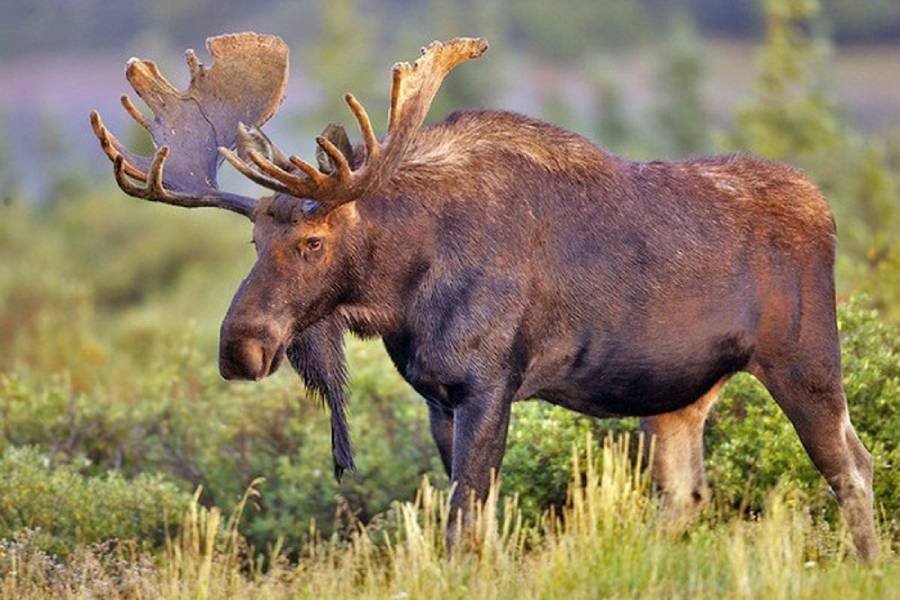
The spiritual meaning of a moose centers on strength, independence, resilience, self-reliance, confidence, and intuition. As one of the largest members of the deer family, the moose combines physical power with a largely solitary way of life. These characteristics have made it a symbol of standing firmly on your own, trusting your abilities, and continuing forward during difficult periods.
Seeing a moose can carry a different symbolic meaning depending on the context of the encounter. A single sighting may encourage reflection on personal strength or independence, while repeatedly seeing moose may draw attention to a recurring issue involving confidence, boundaries, or direction. A moose crossing your path can also be interpreted differently from encountering one in a dream or identifying with the moose as a spirit animal.
Moose symbolism should be understood as a form of spiritual interpretation rather than a fixed prediction or scientific fact. The most relevant meaning depends on what happened during the encounter, how you responded to it, and what is occurring in your life at the time. Examining these factors makes it possible to connect moose symbolism with personal growth without assuming that every encounter carries the same message.
What Is the Spiritual Meaning of a Moose?
The spiritual meaning of a moose represents strength, resilience, independence, self-reliance, confidence, intuition, and personal boundaries. These meanings are associated with the moose’s imposing size, ability to survive demanding environments, and largely solitary behavior. Rather than depending on a herd for its identity, an adult moose often moves through its environment alone, creating a natural symbolic connection with inner strength and the ability to follow an individual path.
Strength is one of the most prominent meanings associated with moose symbolism. An adult moose is a physically powerful animal capable of navigating forests, wetlands, deep snow, and cold northern environments. Spiritually, this strength can represent the ability to remain steady when circumstances become difficult. The message is not limited to physical power; it can also represent emotional endurance, particularly during periods that require patience, persistence, or recovery after a setback.
Resilience is closely connected with this symbolism because a moose survives seasonal changes and demanding environmental conditions. In spiritual interpretation, resilience represents continuing forward without allowing temporary difficulties to determine your direction. Seeing the moose as a symbol of resilience can therefore be relevant during major transitions, personal losses, career challenges, or other periods in which progress requires sustained effort rather than immediate results.
Independence and self-reliance form another major part of the moose’s spiritual meaning. Moose are generally solitary outside specific social and reproductive contexts, so their behavior provides a natural metaphor for functioning independently. Spiritually, this does not mean rejecting relationships or isolating yourself. It represents developing enough self-trust to make decisions without requiring constant approval from other people.
Confidence develops from the same symbolic relationship. A moose does not need to appear aggressive to have a commanding presence; its size and posture naturally make it noticeable. This characteristic can symbolize quiet confidence: recognizing your abilities without continually proving them to others. For someone struggling with self-doubt, moose symbolism can serve as a prompt to distinguish genuine limitations from uncertainty created by fear or external judgment.
Intuition adds an internal dimension to moose symbolism. A wild moose must respond to its surroundings, detect threats, locate resources, and navigate changing terrain. Within a spiritual framework, these behaviors can represent awareness and trust in internal guidance. The symbolism encourages balancing logical information with careful attention to instincts, emotions, and patterns that may reveal something about a situation before a decision is made.
Personal boundaries complete this symbolic pattern. Moose are powerful animals that require physical space, and approaching one too closely can provoke a defensive response. As a spiritual metaphor, this characteristic represents knowing where personal limits exist and communicating them clearly. Healthy boundaries protect time, emotional energy, values, and relationships without requiring unnecessary hostility. In this sense, the moose represents strength that includes knowing when to stand firm and when to continue peacefully on your own path.
What Does Seeing a Moose Mean Spiritually?
Seeing a moose spiritually can represent a call to recognize your strength, trust your judgment, protect your boundaries, or move forward with greater independence. The most relevant interpretation depends on the circumstances surrounding the encounter and the situation you are currently experiencing. A moose appearing during a period of uncertainty, for example, may carry a different personal association than one encountered when you are already making a major life transition.
A single moose encounter can draw attention to qualities that are currently important in your life. If you are facing a difficult decision, its symbolism may relate to self-trust and independent judgment. If you are recovering from a setback, strength and resilience may be more relevant. If relationships or responsibilities are consuming too much of your energy, the encounter may instead prompt reflection on personal boundaries. The context determines which symbolic attribute deserves attention.
Your emotional response also affects how an encounter can be interpreted. Feeling calm or fascinated when seeing a moose may create an association with confidence, stability, or quiet strength. Feeling intimidated may draw attention to power, boundaries, or a situation that currently feels larger than you expected. The animal itself does not provide a fixed prediction; your response supplies additional context for interpreting what the encounter means within your spiritual practice.
What Does It Mean When You Keep Seeing Moose?
Repeatedly seeing moose can symbolize a recurring theme involving independence, resilience, confidence, boundaries, or self-trust. Repetition matters in spiritual reflection because it encourages you to examine whether the same symbolic theme corresponds with a pattern already occurring in your life. It does not prove that an external force is sending a specific message.
For example, repeatedly encountering moose while considering a major personal decision may lead you to reflect on independence and confidence. Repeated sightings during a difficult period may instead make resilience the more relevant association. The useful question is not simply why the moose keeps appearing, but which characteristic of the moose consistently connects with your present circumstances.
Repeated encounters can also be explained by ordinary factors such as location, season, habitat, or changes in your routine. A spiritual interpretation does not require ignoring those explanations. You can recognize the practical reason for seeing moose while still using the experience as a meaningful prompt for personal reflection.
What Does It Mean When a Moose Crosses Your Path?
A moose crossing your path can spiritually symbolize direction, boundaries, deliberate movement, or the need to reconsider how you are moving forward. The symbolism comes from the encounter itself: an animal physically enters your route and temporarily changes where your attention is directed.
Direction is particularly relevant when you are approaching a decision or transition. The encounter can serve as a symbolic reminder to evaluate whether your current path reflects your own judgment or has been shaped primarily by outside expectations. Moose symbolism emphasizes self-reliance, so crossing paths with one can encourage a more deliberate assessment of where you are going and why.
The encounter can also represent boundaries. A moose crossing your route requires distance and respect rather than an attempt to force your way past it. Symbolically, this can mirror situations in which progress depends on recognizing limits, slowing down, or giving yourself or another person appropriate space.
A moose crossing your path should not be treated as a prediction that a particular event will happen. Its spiritual value comes from using the encounter as a point of reflection. Consider what decision, boundary, or direction currently demands your attention, then determine whether the qualities associated with the moose provide a useful perspective on that situation.
What Does a Moose Spirit Animal Mean?
A moose spirit animal represents self-reliance, quiet confidence, resilience, personal boundaries, and trust in your inner guidance. Within spiritual interpretation, the moose is associated with the ability to stand independently while remaining aware of the environment around you. Its symbolism emphasizes strength that does not require constant validation, making the moose particularly relevant to periods when you need to rely more strongly on your own judgment.
Self-reliance is one of the clearest traits associated with the moose spirit animal. Adult moose spend much of their lives alone rather than moving continuously within a herd. Symbolically, this behavior represents the ability to function independently and make decisions without depending on approval from others. The lesson is not to reject help or relationships but to develop enough internal stability that another person’s opinion does not automatically determine your choices.
Quiet confidence is a second important meaning. A moose has a powerful physical presence without needing to display that power constantly. As a spiritual symbol, this can represent confidence based on self-knowledge rather than attention, status, or external recognition. Someone who identifies with the moose spirit animal may use this symbolism as a reminder that confidence can be expressed through consistent decisions and clear boundaries instead of dominance.
Resilience connects the moose spirit animal with difficult periods of life. Moose live in environments where they must navigate seasonal changes, deep snow, cold temperatures, and changing food availability. In symbolic interpretation, these conditions represent circumstances that require endurance and adaptation. The spiritual lesson is to preserve your direction while adjusting how you move through obstacles rather than expecting every obstacle to disappear.
Personal boundaries are equally important because a moose requires space and can defend itself when threatened. Spiritually, this characteristic represents recognizing which demands, relationships, or situations are exceeding your limits. A healthy boundary does not require aggression. It establishes what you will accept, what you will protect, and where another person’s responsibility ends and your own begins.
The moose spirit animal can also represent inner guidance. In this context, intuition does not mean ignoring evidence or making impulsive decisions. It means recognizing information produced by your own experience, emotions, observations, and recurring patterns. Moose symbolism encourages you to combine that internal awareness with practical judgment, particularly when no outside person can make a personal decision for you.
What Does a Moose Symbolize in Personal Growth?
In personal growth, a moose symbolizes developing self-trust, becoming more independent, remaining resilient through adversity, and choosing a direction that reflects your own values. These themes make moose symbolism especially relevant during transitions in which an old identity, relationship, career path, or way of thinking no longer fits your circumstances.
Self-trust is the first connection between moose symbolism and personal growth. Growth often requires making decisions before complete certainty is available. Constantly seeking reassurance can make those decisions harder because every new opinion introduces another standard to satisfy. The moose represents a different approach: gather the information you need, recognize your own experience, make a deliberate choice, and accept responsibility for that choice.
Independence represents another stage of development. Becoming independent does not require cutting yourself off from other people. It means separating healthy support from dependence on external validation. For example, you can listen to advice from family members or friends while still choosing a career, relationship, or lifestyle that aligns with your own priorities. Moose symbolism reinforces this distinction because its solitary nature represents autonomy without implying complete isolation.
Resilience becomes especially relevant when personal growth includes failure, rejection, loss, or an unexpected change in plans. The moose symbolizes continuing with strength while adapting to the conditions in front of you. This distinction matters because resilience is not simply enduring discomfort. It also involves changing strategies when the existing approach no longer works while preserving the values or objectives that remain important.
Moose symbolism can also be useful when you doubt yourself. Self-doubt often becomes restrictive when uncertainty is treated as evidence that you are incapable of moving forward. The moose’s association with confidence offers a symbolic counterpoint: confidence does not require knowing exactly what will happen. It requires enough trust in your ability to respond to what happens next.
Personal boundaries form the final connection between moose symbolism and growth. Greater confidence often changes what you are willing to tolerate from relationships, work, and other commitments. Establishing a boundary may involve declining an unreasonable request, protecting time for an important priority, or communicating clearly when someone’s behavior crosses a limit. In this context, the moose represents strength expressed through clarity rather than unnecessary confrontation.
The broader lesson of moose symbolism is therefore not simply to “be strong.” It is to combine strength with self-awareness, independence with healthy relationships, and confidence with deliberate action. These qualities turn the moose from a general symbol of power into a more specific spiritual representation of personal development and self-directed growth.
What Does Dreaming About a Moose Mean Spiritually?
Dreaming about a moose can spiritually represent strength, independence, resilience, personal boundaries, or a need to trust your own direction. The specific interpretation depends on what the moose is doing, how you interact with it, and which emotions dominate the dream. A calm moose and an aggressive moose therefore represent different symbolic contexts even though the central entity remains the same.
Moose dreams can become particularly relevant during periods of transition or uncertainty. If you are deciding whether to leave a familiar situation, take greater responsibility, or follow a more independent path, the moose may symbolically reflect qualities required for that change. Its solitary behavior connects naturally with autonomy, while its physical strength creates associations with confidence and resilience.
The setting of the dream provides additional context. Seeing a moose moving freely through a forest can represent independence or confidence in following your own direction. Encountering one that blocks a road or path may instead draw attention to an obstacle, boundary, or decision requiring greater consideration. The interpretation should connect the animal’s role in the dream with circumstances already present in your life rather than treating the dream as a prediction.
What Does a Calm Moose Mean in a Dream?
A calm moose in a dream can symbolize stability, quiet confidence, self-control, and comfort with your own strength. Its calm behavior changes the symbolic emphasis from physical power to controlled power. Instead of needing to prove itself through aggression, the animal simply occupies its space.
This dream can be especially meaningful when you are learning to become more comfortable with independence. For example, seeing a calm moose while facing a major decision may reflect a desire to make that decision without allowing pressure from other people to dominate your judgment. The relevant symbolic lesson is confidence without unnecessary confrontation.
Your own behavior in the dream also matters. Standing peacefully near the moose can suggest comfort with qualities such as independence or personal strength, while watching it from a distance may reflect a quality you recognize but have not fully developed. These interpretations are reflective possibilities rather than fixed meanings.
What Does an Aggressive or Chasing Moose Mean in a Dream?
An aggressive or chasing moose in a dream can symbolize pressure, violated boundaries, unresolved conflict, or a problem you are trying to avoid. Because moose can become defensive when they perceive a threat, aggressive behavior creates a symbolic connection with situations in which personal space, limits, or emotional security feel challenged.
Being chased adds an element of avoidance. If you repeatedly run from the moose in a dream, consider whether there is a difficult conversation, responsibility, decision, or emotion that you have been postponing. The symbolic focus shifts from the moose itself to the relationship between pursuit and avoidance.
An aggressive moose does not necessarily represent another person. It may symbolize your own suppressed frustration or a boundary you have failed to communicate. For example, repeatedly accepting responsibilities you do not have time for can create resentment even when nobody explicitly forces you to accept them. In that context, the aggressive animal can serve as a useful metaphor for pressure that has accumulated because a limit has not been addressed.
What Do Moose Antlers Symbolize Spiritually?
Moose antlers can spiritually symbolize growth, maturity, renewal, strength, and an expanding sense of personal identity. Antlers are especially useful as a symbolic attribute because they grow, are shed, and grow again. This natural cycle creates a clear metaphor for development that involves both gaining something new and releasing what has completed its purpose.
Growth is the most direct interpretation. Large antlers do not appear instantly; they develop over time. Spiritually, this can represent personal abilities, confidence, wisdom, or experience that accumulate through repeated challenges. The symbolism emphasizes development as a process rather than a single moment of transformation.
The shedding and regrowth of antlers adds the meaning of renewal. Losing something is not always equivalent to losing progress. A completed role, relationship, belief, or stage of life may need to end before another stage can develop. Moose antlers provide a symbolic model for this cycle because shedding is followed by new growth rather than permanent absence.
Antlers can also symbolize mature strength and presence. Their size makes an adult bull moose visually distinctive, yet carrying them also requires adaptation to the surrounding environment. Symbolically, greater strength or status can therefore be connected with greater responsibility. Personal development is not only about acquiring more influence or confidence; it also involves learning how to use those qualities deliberately.
Read more: 8 Spiritual Meanings of Dolphins and Their Symbolism
Does the Spiritual Meaning Change for a Male, Female, or Baby Moose?
The spiritual meaning can change depending on whether the encounter involves a bull, cow, or baby moose because each one emphasizes different characteristics of the central moose symbolism. A bull commonly emphasizes strength and presence, a cow emphasizes protection and nurturing strength, and a baby moose emphasizes growth, vulnerability, and new development. These distinctions provide context rather than creating completely separate systems of symbolism.
A bull moose can symbolize strength, confidence, maturity, and commanding presence. Its large body and prominent antlers make physical power particularly visible. Spiritually, encountering a bull can therefore draw attention to how you use personal strength, whether you trust your abilities, and whether confidence is being expressed with appropriate control.
A cow moose can symbolize protection, care, vigilance, and defensive strength, particularly in contexts involving offspring. This symbolism presents strength differently from the bull. Power is connected with protecting something valuable rather than displaying status or presence. In personal reflection, this may relate to protecting family, personal values, emotional well-being, or boundaries.
A baby moose can symbolize growth, vulnerability, learning, and the beginning of a new stage. A young animal has not yet developed the physical strength or independence of an adult, making development itself the central symbolic attribute. Seeing a baby moose may therefore resonate with a new relationship, skill, career direction, spiritual practice, or personal identity that still requires time and protection before becoming established.
The three interpretations share the same central symbolism but emphasize different stages and expressions of strength. The bull represents developed strength, the cow represents protective strength, and the baby represents strength that is still developing. Identifying which form of moose appears in an encounter or dream can therefore make a personal spiritual interpretation more specific.
How Can You Interpret a Moose Encounter in Your Own Life?
You can interpret a moose encounter by examining 4 factors: what happened during the encounter, how you responded emotionally, which moose symbolism matches the experience, and how that meaning relates to your current life. This approach keeps the interpretation connected to your circumstances instead of assuming that every moose encounter delivers the same spiritual message.
First, identify the exact context of the encounter. Seeing a moose standing calmly at a distance creates a different symbolic situation from having one cross your path, repeatedly encountering moose, or dreaming that one is chasing you. Record the details that made the experience distinctive, including the moose’s behavior, your distance from it, the setting, and whether the encounter occurred once or formed part of a recurring pattern. These details help determine which symbolic attributes deserve the most attention.
Second, examine your emotional response. Your reaction provides context for determining which meaning is personally relevant. Feeling peaceful around a moose may connect the experience with stability, quiet confidence, or independence. Feeling intimidated may point toward power, boundaries, or an overwhelming situation. Feeling curious or unusually attentive may encourage you to examine a decision or direction that already occupies your thoughts. The same animal can therefore produce different interpretations because the observer’s circumstances and reactions are different.
Third, connect the encounter with the most relevant moose symbolism rather than trying to apply every possible meaning. There are several major themes to consider, including strength, resilience, independence, self-reliance, confidence, intuition, and personal boundaries. If you are recovering from a difficult period, resilience may be the strongest connection. If you are making a decision that other people disagree with, independence and self-trust may be more relevant. If you feel exhausted by demands from work or relationships, boundaries may provide the clearest interpretation.
Finally, compare the symbolism with something specific happening in your life. Ask what decision, challenge, relationship, or transition currently reflects the theme you identified. For example, a moose crossing your path while you are considering a career change does not predict whether you should accept or reject a particular job. Instead, its symbolism may encourage you to examine whether your decision reflects your own values or primarily the expectations of other people.
A useful interpretation should lead to reflection or action rather than fear. If strength is the relevant theme, identify where greater persistence is required. If independence stands out, determine which decision requires more self-trust. If boundaries are central, identify the specific limit that needs to be communicated. If resilience is the strongest connection, consider what must change in your approach so you can continue moving forward without abandoning an important goal.
Practical explanations should remain part of the interpretation as well. Moose live in specific habitats and move according to feeding, seasonal, reproductive, and environmental conditions. Seeing one repeatedly can therefore have an ordinary ecological explanation. Recognizing that explanation does not prevent you from assigning personal symbolic value to the experience; it simply separates observable events from spiritual interpretation.
The most useful spiritual meaning of a moose is the one that connects its symbolism with a real pattern in your life and produces meaningful self-reflection. Moose symbolism consistently returns to strength, resilience, independence, confidence, intuition, and boundaries. Rather than treating an encounter as a fixed prediction, use these qualities to examine how you are responding to your present circumstances and whether your current direction reflects the person you want to become.