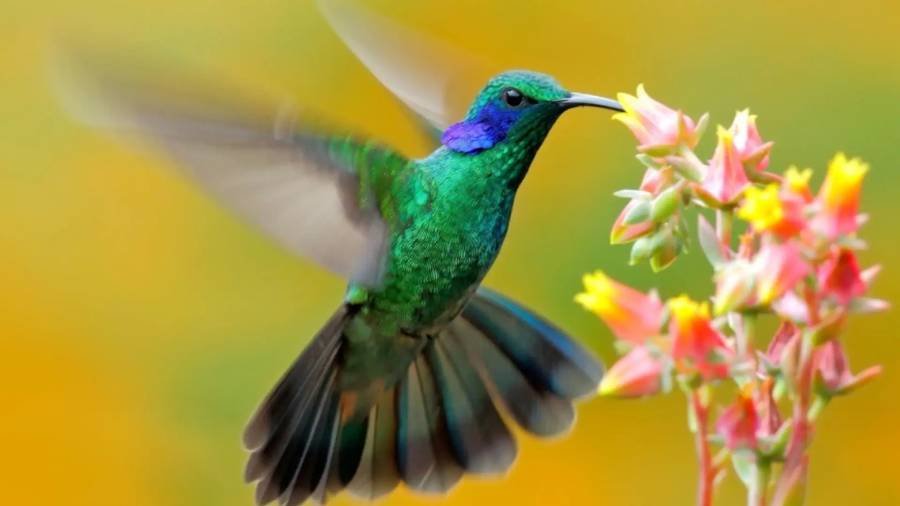
Hummingbirds spiritually symbolize joy, resilience, love, hope, healing, adaptability, and living in the present moment. Their small size, energetic movement, ability to hover, and constant search for nectar have made them powerful symbols of finding sweetness in life while remaining strong through change and difficulty.
Seeing a hummingbird can also carry a more personal meaning. Depending on the circumstances, an encounter may be interpreted as a reminder to appreciate happiness, remain hopeful during a difficult period, reconnect with love, or adapt to a new stage of life. Repeated sightings, unusual encounters, dreams, and different hummingbird colors can add further layers of symbolism. These interpretations come from spiritual beliefs, cultural traditions, and personal associations rather than scientific evidence, so the meaning of an encounter depends partly on the person experiencing it.
The spiritual meaning of a hummingbird therefore extends beyond a single message. Understanding its symbolism requires looking at what hummingbirds represent, why particular qualities are associated with them, and how the meaning changes in contexts involving love, grief, dreams, colors, and different spiritual traditions.
What Is the Spiritual Meaning of a Hummingbird?
There are 7 main spiritual meanings of a hummingbird: joy, resilience, love, hope, healing, adaptability, and living in the present moment. These meanings reflect the hummingbird’s distinctive behavior, including its energetic flight, ability to hover, rapid changes in direction, and close association with nectar-producing flowers. In spiritual interpretation, these physical characteristics become symbols for approaching life with energy while remaining flexible during change.
Joy is one of the strongest meanings associated with hummingbirds. Hummingbirds move between flowers to obtain nectar, creating a symbolic connection between the bird and seeking sweetness in everyday life. Spiritually, this association represents appreciating positive experiences rather than overlooking them while focusing on future goals or difficulties. A hummingbird encounter may therefore serve as a personal reminder to recognize small sources of happiness that are already present.
Resilience represents another central hummingbird meaning. Despite being exceptionally small birds, hummingbirds maintain highly energetic lifestyles and perform complex flight movements. This contrast between physical size and activity makes the hummingbird a natural symbol of persistence and inner strength. For someone experiencing a difficult period, the symbolism can represent continuing forward even when personal circumstances appear larger than the resources available to overcome them.
Love is associated with hummingbirds through their broader symbolism of joy, beauty, affection, and emotional connection. In spiritual contexts, a hummingbird can represent giving attention to relationships that create genuine happiness. The meaning does not necessarily refer only to romantic love; it can include affection between family members, friendships, self-love, and an enduring emotional connection with someone who has died.
Hope and healing are closely connected to the hummingbird’s symbolism of resilience. A hummingbird can symbolize the possibility of emotional renewal after grief, disappointment, or a major life transition. Healing in this context does not mean that seeing a hummingbird physically or spiritually cures an illness. Instead, the bird functions as a symbolic reminder that difficult emotional states can change and that positive experiences can coexist with pain.
Adaptability comes from the hummingbird’s unusual control in flight. Hummingbirds can hover and maneuver in multiple directions, making movement and flexibility prominent characteristics of the bird. Spiritually, these qualities can represent changing direction without abandoning a larger purpose. For example, a person facing an unexpected career, relationship, or lifestyle change might interpret a hummingbird encounter as a reminder that adapting to new circumstances is different from giving up.
Living in the present moment completes the 7 primary meanings. A hummingbird’s rapid movements between flowers create an image of brief but intense interaction with its surroundings. In spiritual interpretation, this behavior represents paying attention to what is available now rather than allowing past experiences or future concerns to dominate the present. The hummingbird therefore combines two complementary ideas: continue moving forward while still noticing the meaningful moments encountered along the way.
Why Do Hummingbirds Symbolize Joy, Hope, and Resilience?
Hummingbirds symbolize joy, hope, and resilience because their observable characteristics create strong associations with sweetness, energy, persistence, and adaptation. Spiritual symbolism frequently develops by connecting an animal’s recognizable traits with human experiences. For hummingbirds, feeding from flowers supports the association with joy, while their energetic behavior and remarkable flight abilities support interpretations involving persistence and flexibility.
Joy is especially connected with nectar and flowers. Nectar provides hummingbirds with an energy-rich food source, while flowers are widely associated with beauty, growth, and renewal. This combination supports the symbolic idea of seeking the “sweetness” of life. The message is not that difficulties should be ignored; rather, hummingbird symbolism emphasizes maintaining the ability to notice positive experiences while dealing with them.
Hope develops from the same symbolic relationship but focuses on what comes after difficulty. A hummingbird continually searches for the resources it needs and moves rapidly from one location to another. Within a spiritual framework, this behavior can represent continuing to seek opportunities when one path no longer provides what is needed. Someone recovering from a breakup, loss, failure, or major transition may consequently associate a hummingbird with the possibility of a better period ahead.
Resilience adds persistence to this interpretation. The contrast between a hummingbird’s small body and its energetic movement makes it an effective symbol for strength that is not determined by physical size or outward appearance. Its spiritual message is commonly interpreted as remaining persistent while adapting the way you move through challenges. Together, joy, hope, and resilience create a broader hummingbird symbolism centered on finding meaningful experiences, continuing through adversity, and remaining receptive to positive change.
What Does It Mean Spiritually When You See a Hummingbird?
Seeing a hummingbird spiritually represents joy, awareness, resilience, or positive change, depending on the circumstances surrounding the encounter. The bird does not have one fixed message for every person. Its meaning develops from the hummingbird’s broader symbolism combined with where it appears, what it does, and what is happening in your life when you notice it.
A hummingbird flying close to you can symbolize the need to pay greater attention to the present moment. Because hummingbirds move quickly and an encounter may last only a few seconds, noticing one requires immediate awareness. Spiritually, this brief interaction can represent the value of recognizing meaningful experiences while they are happening instead of remaining focused entirely on past events or future concerns. Someone preoccupied with work, a relationship problem, or an important decision might interpret the encounter as a reminder to reconnect with the present.
A hummingbird that appears to look directly at you can carry a similar meaning but places greater emphasis on attention and self-reflection. Eye contact can make an animal encounter feel unusually personal, even when the bird’s behavior has an ordinary biological explanation. Within spiritual interpretation, the moment can prompt questions about what currently requires your attention. The significance comes from the reflection the encounter creates rather than proof that the hummingbird intentionally delivered a supernatural message.
Seeing a hummingbird near your home can symbolize joy, harmony, or renewal within your personal life. A home commonly represents security, family, relationships, and private emotional experiences, so the location changes the context of the symbolism. For example, someone experiencing family tension might associate a hummingbird near the home with restoring warmth and appreciation, while someone beginning a new stage of life might interpret the same encounter as a symbol of positive transition.
An unexpected close encounter can feel especially significant because it interrupts normal attention. The most useful spiritual interpretation combines the hummingbird’s established symbolism with the specific circumstances of the encounter. A person going through grief may focus on hope and continuing love, while someone facing a major change may connect more strongly with adaptability and resilience. The same hummingbird can therefore hold different personal meanings without requiring every encounter to have a predetermined spiritual explanation.
What Does It Mean When You Keep Seeing Hummingbirds?
Repeatedly seeing hummingbirds can spiritually symbolize a recurring reminder to notice joy, remain resilient, or pay attention to a period of personal change. Repetition makes an experience more noticeable, which can cause the hummingbird’s symbolism to feel more personally relevant. The interpretation should still depend on context rather than assuming that repeated sightings automatically predict a future event.
There are 3 useful ways to interpret repeated hummingbird encounters. The first is a reminder to recognize joy. Someone concentrating heavily on responsibilities, conflict, or long-term goals may connect repeated sightings with the hummingbird’s symbolism of nectar and sweetness. In this interpretation, the repeated appearance encourages greater awareness of positive experiences that might otherwise receive little attention.
The second interpretation is encouragement during change. Hummingbirds are strongly associated with adaptability because of their distinctive ability to hover and maneuver rapidly. Seeing them repeatedly during a career change, relocation, breakup, new relationship, or other transition can therefore become a personal symbol of remaining flexible without losing direction. The hummingbird represents movement through change rather than resistance to change itself.
The third interpretation is heightened personal awareness. Once an animal or symbol becomes emotionally significant, people naturally become more likely to notice it in their surroundings. This does not remove the spiritual value of the experience. Instead, it means that personal meaning and ordinary attention can exist together. A hummingbird may become a useful symbol precisely because its appearance encourages someone to reflect on an issue that already matters deeply to them.
Repeated hummingbird sightings are not objective evidence that a supernatural event is occurring. Spiritual traditions and individuals interpret signs differently, and there is no universal rule establishing how many encounters constitute a spiritual message. A stronger interpretation considers what was happening before each encounter, which emotions appeared afterward, and whether the same symbolic theme—such as love, hope, resilience, or change—continues to relate meaningfully to your current life.
What Does a Hummingbird Mean Spiritually in Love?
A hummingbird spiritually symbolizes joy, affection, emotional renewal, and appreciation in love. Its association with flowers and nectar supports the idea of finding sweetness in relationships, while its energetic movement represents keeping emotional connections active rather than taking them for granted. Hummingbird symbolism can apply to romantic relationships, new love, self-love, and enduring affection for someone who is no longer physically present.
For someone who is single, seeing a hummingbird can symbolize openness to love without making a prediction about when or with whom a relationship will begin. The stronger interpretation centers on emotional readiness. A hummingbird’s connection with joy and adaptability can represent releasing previous disappointments, recognizing sources of happiness outside a romantic relationship, and remaining receptive to new emotional experiences. For example, a sighting during a period of recovery after a breakup may be interpreted as a symbol of renewal rather than a guarantee that a new partner will soon appear.
For someone in a relationship, a hummingbird can represent appreciation and renewed affection. Long-term relationships can become dominated by routines, responsibilities, and future plans, making small positive interactions easier to overlook. The hummingbird’s association with sweetness and present-moment awareness creates a symbolic reminder to notice these experiences. Expressing affection, spending intentional time together, and recognizing a partner’s everyday contributions are practical examples of how this symbolism can be applied.
Hummingbirds are also sometimes connected with soulmate symbolism in modern spiritual interpretations. Seeing a hummingbird does not establish that someone is your soulmate or predict that a soulmate will enter your life. Instead, a person who already views a relationship as spiritually meaningful may use the hummingbird as a personal symbol of emotional connection, devotion, or shared joy. This distinction keeps the interpretation centered on symbolism rather than treating an animal encounter as evidence about the future of a relationship.
The central love message of a hummingbird is therefore appreciation. Whether the context involves being single, developing a new relationship, or maintaining a long-term partnership, hummingbird symbolism directs attention toward experiencing love in the present while remaining emotionally adaptable as relationships change.
What Does a Hummingbird Mean After Someone Dies?
After someone dies, a hummingbird can spiritually symbolize remembrance, continuing love, comfort, hope, and emotional healing. People experiencing grief may attach particular significance to an unexpected animal encounter, especially when it happens near an important date, location, memory, or moment of reflection about the deceased person. In this context, the hummingbird can become a personal symbol that connects loss with affection and remembrance.
Continuing love is particularly relevant because death ends a person’s physical presence but does not immediately remove the emotional relationship that survivors have with them. Memories, habits, places, objects, anniversaries, and meaningful symbols can continue to evoke that connection. A hummingbird encountered during grief may become one of these symbols. For example, someone who notices a hummingbird while thinking about a deceased family member may associate the experience with the affection they still feel for that person.
Hope and healing add a second layer to this symbolism. Grief does not require forgetting someone in order to move forward. The hummingbird’s broader associations with resilience and joy can instead represent gradually becoming able to experience positive moments alongside sadness. In this interpretation, the hummingbird symbolizes carrying love and memory forward while continuing to live. This meaning can be especially comforting during anniversaries, memorial periods, or other moments when grief becomes more noticeable.
Is a Hummingbird a Sign From a Deceased Loved One?
A hummingbird can be interpreted as a sign from a deceased loved one within some personal and spiritual belief systems, but there is no objective evidence that a hummingbird is carrying a message from someone who has died. The distinction matters because spiritual meaning and factual verification answer different questions. A person can find genuine comfort or significance in an encounter without treating that interpretation as universally established fact.
The circumstances of the encounter often determine its personal significance. Seeing a hummingbird immediately after thinking about someone who died, on the anniversary of their death, near a place associated with them, or during an emotionally difficult period can make the experience feel connected to that person. Someone who already believes that deceased loved ones communicate through signs may interpret the encounter as reassurance, while another person may view the same event as a meaningful coincidence that triggers a cherished memory.
Neither interpretation changes the underlying symbolic function of the encounter. The hummingbird can represent continuing love, remembrance, and hope whether it is understood as a spiritual sign or as a personally meaningful experience. This allows the symbolism to provide comfort without requiring certainty about a supernatural explanation.
What Does a Hummingbird Mean in a Dream?
A hummingbird in a dream can spiritually symbolize joy, freedom, resilience, emotional renewal, or the need to pay attention to brief but meaningful experiences. The interpretation depends on what the hummingbird does, how you respond to it, and the emotions present in the dream. A peaceful encounter carries a different symbolic context from a dream involving an injured or dead hummingbird.
A flying hummingbird commonly represents freedom, movement, and adaptability. Its ability to change direction quickly makes it a fitting symbol for navigating a period when circumstances are changing. For example, dreaming about a hummingbird moving freely between flowers during a career transition may reflect a desire to explore new opportunities rather than remain attached to one path. A hovering hummingbird can carry a slightly different meaning, emphasizing attention to the present situation before moving forward.
A hummingbird entering your house shifts the symbolism toward personal and emotional life. Houses in dream interpretation are frequently treated as representations of private space, security, family, or aspects of the self. A hummingbird entering this space may therefore symbolize the arrival or rediscovery of joy, affection, or hope within an area of life that feels personal. The dreamer’s emotional reaction remains important: excitement supports a positive interpretation, while fear or discomfort may point toward uncertainty about change.
An injured hummingbird can represent vulnerable joy, emotional exhaustion, or difficulty maintaining hope during a challenging period. Because hummingbirds are otherwise associated with energy and movement, seeing one unable to fly creates a symbolic contrast. A person who feels emotionally drained, for example, might interpret this dream as reflecting the need to restore energy rather than continually forcing progress.
A dead hummingbird can symbolize an ending, loss, or transition rather than literal death. It may reflect the end of a relationship, a period of happiness, an old identity, or a stage of personal development. Dreaming of a dead hummingbird does not predict that someone will die. The more useful interpretation considers what has recently ended or changed in the dreamer’s life and how that experience relates to the hummingbird’s broader symbolism of joy, resilience, and renewal.
Dream meanings are not universal predictions. Personal memories, beliefs, recent experiences, and emotions can influence dream content. The strongest interpretation therefore combines the hummingbird’s symbolic associations with the specific details of the dream rather than assigning one fixed meaning to every hummingbird dream.
What Do Different Hummingbird Colors Mean Spiritually?
Different hummingbird colors can add symbolic themes involving growth, passion, intuition, transformation, and emotional healing to the bird’s broader spiritual meaning. Four commonly interpreted colors are green, red, blue, and black. These meanings come largely from broader color symbolism combined with hummingbird symbolism, so they should not be treated as universal spiritual rules.
A green hummingbird can symbolize growth, renewal, balance, and healing. Green is strongly associated with vegetation, new growth, and the natural world, while hummingbirds already carry symbolism connected with resilience and vitality. Together, these associations make a green hummingbird particularly relevant to periods of recovery or personal development. Someone rebuilding confidence after a difficult experience, for example, might interpret seeing one as a personal symbol of gradual renewal.
A red hummingbird can symbolize vitality, passion, courage, and intense emotional energy. Red draws attention and is commonly associated with energy and strong emotions. Combined with the hummingbird’s energetic nature, it can represent approaching an important goal or relationship with renewed enthusiasm. In a love context, red may strengthen interpretations involving attraction or affection, although it does not predict a specific romantic outcome.
A blue hummingbird can symbolize calmness, intuition, communication, and emotional clarity. Blue symbolism often emphasizes peaceful reflection and expression, creating a contrast with the hummingbird’s rapid physical movement. Spiritually, this combination can represent maintaining internal calm while external circumstances change quickly. A person dealing with an important conversation or decision may connect this symbolism with expressing thoughts clearly instead of reacting impulsively.
A black hummingbird can symbolize mystery, introspection, endings, or transformation. Black does not automatically carry a negative spiritual meaning. Within symbolic interpretation, darkness can represent what is unknown, hidden, or undergoing change. A black hummingbird may therefore become personally significant during a transition when the outcome is uncertain. The symbolism focuses more on moving through uncertainty than predicting misfortune.
Actual hummingbird coloration is more complex than these symbolic categories. Iridescent feathers can appear different depending on species, lighting, and viewing angle. Color-based spiritual meaning should therefore be understood as symbolic interpretation rather than a fixed message determined by the bird’s feather color. The encounter’s context and the meaning a particular color already holds for the observer provide stronger clues for personal interpretation.
What Does a Hummingbird Mean in Different Spiritual Traditions?
The spiritual meaning of a hummingbird varies across cultural and religious traditions, with recurring themes including joy, vitality, resilience, beauty, and connection with the sacred. These meanings are not interchangeable. A hummingbird can hold a specific role within one Indigenous tradition while having no equivalent established meaning in another religion, so cultural interpretations should be identified by their actual context rather than combined into a single universal definition.
Hummingbirds have particularly deep cultural significance in the Americas because hummingbird species are native to the Americas. Their distinctive speed, small size, colorful plumage, and energetic flight contributed to different symbolic associations among cultures that lived alongside them. These traditions add historical depth to modern hummingbird symbolism, but they should not be treated as proof that every contemporary hummingbird encounter carries the same spiritual message.
What Does a Hummingbird Symbolize in Native American Traditions?
Hummingbird symbolism in Native American traditions varies by nation and should not be reduced to one universal Native American meaning. Indigenous peoples of North America have distinct histories, oral traditions, spiritual systems, and relationships with animals. As a result, statements such as “Native Americans believe hummingbirds mean joy” are too broad unless a specific people or tradition supports that interpretation.
Where hummingbirds appear in Indigenous stories and symbolism, themes can include beauty, vitality, persistence, natural abundance, and relationships between humans and the natural world. The bird’s speed and ability to hover make it visually distinctive, while its dependence on flowers creates an observable relationship between the hummingbird and its environment. These characteristics provide a foundation for symbolic meanings, but the interpretation depends on the cultural tradition in which the story or symbol occurs.
Modern spiritual content sometimes uses the phrase “Native American hummingbird meaning” as though hundreds of Indigenous cultures share one belief system. A more accurate interpretation identifies the specific nation, community, story, or historical source whenever possible. This distinction preserves cultural context and prevents contemporary spiritual ideas from being incorrectly presented as traditional Indigenous teachings.
What Does a Hummingbird Symbolize in Christianity?
The hummingbird has no clearly established symbolic meaning in the Bible, but modern Christian interpretations sometimes associate it with joy, hope, endurance, and appreciation for God’s creation. This distinction is important because a modern Christian spiritual association is not the same as explicit biblical symbolism.
Hummingbirds are native to the Americas, while the biblical texts originated in regions where hummingbirds do not naturally occur. Consequently, interpretations describing a hummingbird as a specific biblical sign should not be presented as direct biblical teaching without textual evidence. A Christian reader can still find personal religious significance in seeing one, but that meaning comes from reflection and faith rather than a biblical passage assigning the bird a defined spiritual role.
Within a modern Christian interpretation, the hummingbird’s energy and persistence can serve as reminders of perseverance, while its colorful appearance and relationship with flowers can encourage gratitude for the natural world. Someone experiencing hardship might connect a hummingbird with hope, for example, while another person may view the encounter simply as an opportunity to appreciate creation. These are devotional interpretations rather than universal Christian doctrines.
Other spiritual and cultural traditions may assign additional meanings to hummingbirds, particularly in Central and South America where humans and hummingbirds have shared environments for thousands of years. These interpretations should be examined within their individual historical contexts. The most accurate approach is to distinguish traditional cultural symbolism, modern spiritual interpretation, and personal belief instead of presenting all three as the same source of meaning.
Read more: 8 Spiritual Meanings of Dolphins and Their Symbolism
Is a Hummingbird Your Spirit Animal?
A person who identifies strongly with hummingbird symbolism may associate the hummingbird with qualities such as joy, resilience, adaptability, energy, and persistence. In contemporary spirituality, people sometimes describe an animal that represents these personal qualities as a “spirit animal.” The hummingbird may therefore resonate with someone who values finding happiness during difficulty, adapting quickly to change, or maintaining determination despite limitations.
There are 5 qualities commonly associated with identifying personally with hummingbird symbolism: energy, adaptability, resilience, joy, and persistence. Energy reflects the hummingbird’s active behavior. Adaptability corresponds with its remarkable maneuverability. Resilience represents continuing despite challenges. Joy derives from its association with flowers and nectar. Persistence reflects the sustained effort required by its energetic lifestyle. Together, these attributes create a symbolic personality centered on remaining active and receptive while navigating change.
For example, someone who has repeatedly rebuilt their life after difficult transitions may connect strongly with the hummingbird’s resilience symbolism. Another person may identify more with its association with joy because they consciously seek positive experiences despite demanding circumstances. The same central entity can therefore represent different qualities depending on which attributes have the strongest personal relevance.
The term “spirit animal,” however, should be used carefully. It is sometimes applied broadly in modern popular spirituality even though animal-related spiritual traditions among Indigenous peoples have specific cultural contexts that cannot be reduced to a generic personality symbol. Identifying with hummingbird qualities is not equivalent to participating in an Indigenous spiritual tradition. Descriptions such as “personal symbol” or “animal symbolism” may be more appropriate when discussing a general spiritual connection without reference to a specific cultural practice.
A hummingbird does not need to be formally labeled a spirit animal for its symbolism to have personal value. The more useful question is which hummingbird qualities reflect your current circumstances and why those qualities feel significant. This approach keeps the interpretation connected to joy, resilience, adaptability, and other established themes while respecting the distinction between personal spirituality and culturally specific traditions.
How Can You Interpret a Hummingbird Encounter in Your Own Life?
You can interpret a hummingbird encounter by examining 4 factors: the context of the encounter, your emotional response, the symbolism that matches your current circumstances, and the personal or cultural significance you associate with the bird. This approach provides more useful meaning than assuming every hummingbird carries the same spiritual message. Joy may be relevant to one encounter, while resilience, love, healing, or adaptability may better explain another.
First, consider what was happening when you saw the hummingbird. Context narrows the possible interpretation. Seeing one while making an important life decision may draw attention to adaptability, while encountering one during a period of emotional recovery may make healing or hope more relevant. A hummingbird appearing while you are thinking about a relationship could instead connect with affection, appreciation, or emotional renewal. The circumstances surrounding the encounter help determine which symbolic attribute deserves the most attention.
Second, identify the emotion you experienced during the encounter. Feelings such as joy, calmness, surprise, sadness, or comfort can change how the same event is understood. For example, someone grieving a loved one may feel unexpectedly comforted after seeing a hummingbird and associate the bird with remembrance. Another person may see the same bird during an ordinary morning and experience simple happiness. The external event is similar, but its personal significance differs because the emotional contexts are different.
Third, determine which hummingbird symbolism relates directly to your current life. The 7 primary meanings—joy, resilience, love, hope, healing, adaptability, and living in the present moment—provide a practical framework. If you are struggling with a major change, adaptability may be the strongest connection. If responsibilities have caused you to overlook positive experiences, joy and present-moment awareness may be more relevant. If you are recovering from loss or disappointment, hope and healing may carry greater significance.
Fourth, consider whether the hummingbird already has personal, family, religious, or cultural significance for you. A hummingbird associated with a deceased relative, an important memory, or an existing spiritual belief will naturally carry a different meaning from a bird encountered without those associations. Cultural context also matters because hummingbird symbolism is not identical across spiritual traditions. Personal interpretation should complement rather than replace the specific meaning of a symbol within a documented cultural tradition.
It is also useful to separate meaning from prediction. Interpreting a hummingbird as a symbol of love does not predict that a new relationship will begin. Connecting it with transformation does not guarantee that a specific change is about to occur. Likewise, seeing one during grief does not objectively establish communication with someone who has died. Spiritual symbolism works more effectively as a framework for reflection than as a system for predicting specific future events.
The spiritual meaning of your hummingbird encounter is therefore strongest when the symbolism matches both the event and your lived context. Ask what was happening, what you felt, which hummingbird quality relates to your situation, and why the encounter matters personally. These 4 questions connect the hummingbird’s broader symbolism with individual experience without requiring every sighting to have a predetermined supernatural explanation.