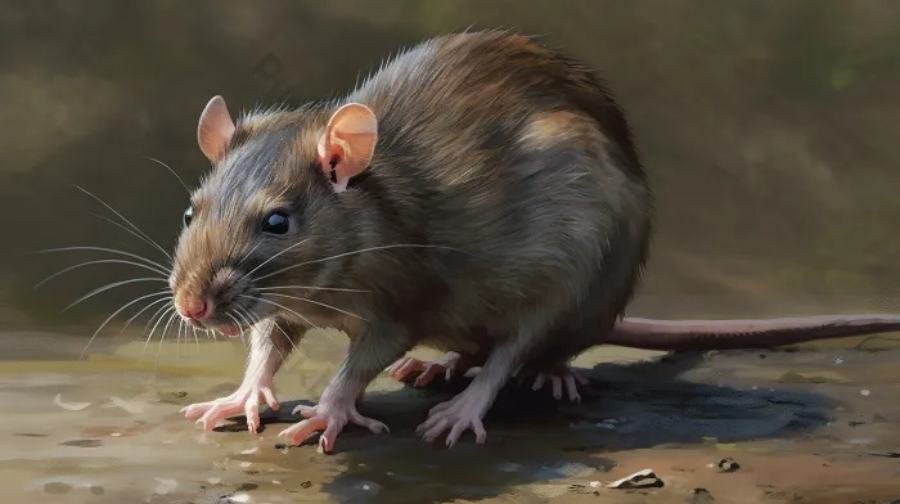
A mouse crossing your path is spiritually associated with awareness, adaptability, resourcefulness, and the need to notice small details that may have been overlooked. Because mice survive by staying alert, responding quickly to change, and making effective use of limited resources, an unexpected mouse encounter can symbolize a need to apply these same qualities to your current situation.
The meaning is not automatically positive or negative. A mouse crossing your path can represent an opportunity to become more observant and adaptable, but it can also serve as a symbolic warning about neglected problems, persistent worries, or fear influencing your decisions. The circumstances surrounding the encounter help shape its interpretation.
Specific details can add another layer of meaning. A mouse moving from left to right may be associated with forward movement or transition, while one traveling from right to left can encourage reflection on unfinished matters. Seeing mice repeatedly, encountering one at night, or finding one inside your home can also carry different symbolic interpretations.
These meanings belong to spiritual and symbolic traditions rather than established scientific rules. The most useful interpretation therefore connects the mouse’s symbolism with your circumstances, thoughts, and concerns at the time of the encounter.
What Does It Mean Spiritually When a Mouse Crosses Your Path?
A mouse crossing your path spiritually means you may need to pay closer attention to small details, adapt to changing circumstances, and use your available resources more carefully. The mouse is a small animal that survives through alertness, quick responses, and the ability to work with what is available. In spiritual symbolism, these characteristics connect a mouse encounter with awareness, adaptability, resourcefulness, overlooked matters, and vulnerability.
There are 5 main spiritual meanings associated with a mouse crossing your path. The first is attention to detail. A mouse notices small changes in its surroundings because overlooking a threat or opportunity can directly affect its survival. Symbolically, its appearance can encourage you to examine details you have dismissed as insignificant. A minor financial issue, an unresolved conversation, or a small change in someone’s behavior may deserve more attention than you have given it.
The second meaning is adaptability. Mice adjust their behavior to changing environments and find alternative ways to obtain food, shelter, and safety. A mouse crossing your path can therefore symbolize the need to change your approach when an existing method is no longer working. Instead of continuing with a rigid plan, the encounter may prompt reflection on where flexibility would produce a better outcome.
The third meaning is resourcefulness. A mouse works with limited resources rather than waiting for ideal conditions. Spiritually, this characteristic can represent making better use of the time, knowledge, relationships, or material resources already available to you. The message is less about acquiring more and more about recognizing value in what you currently have.
The fourth meaning involves overlooked matters. Because mice are small, quiet, and frequently hidden from view, their symbolism can point toward an issue developing outside your immediate attention. The encounter may encourage you to address a small problem before it becomes harder to manage. This interpretation can apply to neglected responsibilities, unresolved emotions, financial details, or tension within a relationship.
The fifth meaning is vulnerability and fear. A mouse survives partly by recognizing danger and reacting quickly, but constant vigilance can also symbolize living from a position of fear. If you have recently avoided a decision because of anxiety or uncertainty, seeing a mouse cross your path can serve as a symbolic prompt to distinguish useful caution from fear that prevents action.
The strongest interpretation depends on what was happening in your life when the encounter occurred. Someone facing an unexpected change may connect more strongly with adaptability, while someone managing several neglected responsibilities may find the attention-to-detail symbolism more relevant. The encounter provides a framework for reflection rather than a fixed prediction of what will happen next.
What Does a Mouse Symbolize Spiritually?
A mouse spiritually symbolizes resourcefulness, attention to detail, adaptability, survival, caution, and awareness of things that are easy to overlook. These meanings are connected to the characteristics traditionally associated with mice: they are small, observant, responsive to environmental changes, and capable of surviving with limited resources.
Resourcefulness is one of the strongest symbolic attributes of a mouse. Its small size does not prevent it from finding food, shelter, and routes through difficult environments. In spiritual interpretation, this characteristic represents the ability to achieve an objective without having ideal circumstances. Someone facing limited money, time, or support may interpret mouse symbolism as a reminder to identify resources that already exist instead of focusing exclusively on what is missing.
Attention to detail is another central meaning. Mice interact with their surroundings on a small scale, making minor changes and subtle signals especially significant to their survival. Symbolically, the mouse represents the value of noticing details before making decisions. This can apply to practical details, such as an overlooked expense, as well as personal ones, such as a recurring thought or a subtle change in a relationship.
Adaptability and survival are closely connected within mouse symbolism. Mice can adjust to different surroundings and respond rapidly when conditions change. Spiritually, these traits represent flexibility during periods of uncertainty or transition. The symbolism does not necessarily suggest escaping difficulty; instead, it emphasizes adjusting behavior while continuing toward an objective.
Mouse symbolism also has a cautionary side. Constant alertness can represent excessive worry, fear, or becoming consumed by minor problems. Attention to detail is useful when those details affect a larger goal, but it becomes restrictive when every small uncertainty receives the same level of concern. For this reason, the mouse can symbolize both careful awareness and the need to avoid allowing small fears to dominate a larger perspective.
These contrasting qualities explain why seeing a mouse is not automatically interpreted as either fortunate or unfortunate. Its spiritual symbolism contains both strengths and warnings: be observant without becoming anxious, adapt without abandoning your direction, and use available resources without allowing perceived limitations to define your choices.
Is a Mouse Crossing Your Path a Good or Bad Sign?
A mouse crossing your path is not inherently a good or bad spiritual sign; its meaning depends on the circumstances of the encounter and the symbolism that is most relevant to your life. Mouse symbolism contains positive qualities such as adaptability and resourcefulness alongside cautionary themes such as fear, vulnerability, and neglected problems. For this reason, treating every mouse encounter as either good luck or bad luck oversimplifies its spiritual meaning.
As a positive sign, a mouse crossing your path can represent resourcefulness, awareness, and the ability to adjust to change. The encounter may be especially meaningful when you are entering unfamiliar circumstances or trying to achieve something with limited resources. For example, someone starting a new project without ideal funding, time, or support might interpret the mouse as a reminder to work intelligently with what is already available.
As a cautionary sign, the mouse can draw attention to something small that has been ignored. Minor problems can become more significant when they remain unresolved, and the mouse’s association with hidden spaces reinforces this interpretation. An unpaid obligation, recurring disagreement, neglected responsibility, or persistent worry may represent the type of issue this symbolism encourages you to examine.
The mouse can also symbolize the difference between caution and fear. Caution helps you recognize genuine risks before acting, while fear can keep you focused on possible threats even when action is necessary. If the encounter occurs during a period of indecision, its spiritual meaning may be less about predicting an external event and more about examining whether fear is controlling your choices.
The most useful interpretation therefore comes from context rather than labeling the encounter as a universal omen. Consider what you were thinking about, what decision you were facing, and which small issues had recently demanded your attention. A mouse crossing your path is better understood as a symbolic invitation to observe and adapt than as a fixed prediction of good or bad fortune.
What Does It Mean When a Mouse Crosses Your Path From Left to Right?
A mouse crossing your path from left to right can spiritually symbolize forward movement, action, transition, and attention to an emerging opportunity. In interpretations that assign symbolic meaning to direction, movement toward the right is associated with progressing from an existing situation toward something new. The mouse adds themes of adaptability and careful observation to that movement.
This interpretation can become relevant during a transition. Starting a job, changing a routine, entering a relationship, moving to a different place, or beginning a personal project all involve leaving familiar circumstances while responding to new conditions. A mouse moving across your path from left to right can symbolically reinforce the need to move forward while remaining attentive to the smaller details of that transition.
The direction can also represent an opportunity that requires action rather than passive observation. Because mouse symbolism emphasizes resourcefulness, the opportunity does not need to appear large or dramatic. A useful introduction, a small financial opening, an overlooked idea, or access to a new resource can become important when recognized early. The symbolic lesson is to notice what is available before dismissing it because it appears insignificant.
However, a left-to-right crossing should not be treated as a guaranteed prediction that success or good fortune is approaching. Directional meanings are spiritual interpretations rather than established rules. The encounter is most useful as a prompt to ask where you are already moving forward and which details require greater awareness as you do so.
What Does It Mean When a Mouse Crosses Your Path From Right to Left?
A mouse crossing your path from right to left can spiritually symbolize reflection, reconsideration, unfinished matters, or the need to return your attention to something previously overlooked. Rather than emphasizing outward progress, this directional interpretation focuses on looking back at information, responsibilities, or emotions that may still require attention.
An unfinished matter does not need to be a major problem. Mouse symbolism is strongly connected with small details, so the relevant issue may initially seem insignificant. It could be a conversation that ended without resolution, a task repeatedly postponed, an expense that has not been reviewed, or an emotional concern that continues to return. The encounter can symbolically encourage examination of that loose end before proceeding.
Right-to-left movement can also represent reconsideration. Changing your mind after receiving new information is not necessarily a failure to progress; it can demonstrate adaptability. Because adaptability is one of the central symbolic qualities associated with mice, this encounter may be interpreted as a reminder to reassess a decision when circumstances have changed rather than remaining committed to an approach that no longer works.
This meaning becomes particularly relevant when the same concern repeatedly returns to your attention. For example, if you have been trying to move forward with a decision while continually thinking about one unresolved detail, the crossing can provide a symbolic framework for examining that detail instead of suppressing it.
A right-to-left crossing does not mean you should reverse every decision or expect a negative event. Its spiritual value lies in reflection: identify what remains unresolved, determine whether it still matters, and address it before giving your full attention to what comes next.
What Does Seeing a Mouse During the Day Mean Spiritually?
Seeing a mouse during the day can spiritually symbolize conscious awareness, visibility, and a small issue that now requires your direct attention. Because mice are commonly associated with hidden spaces and cautious behavior, noticing one in a highly visible setting creates a symbolic contrast between what normally remains unnoticed and what has become difficult to ignore.
The encounter can represent an overlooked matter moving into your conscious awareness. A concern may have existed for some time without receiving enough attention, but circumstances now require you to acknowledge it. This could involve a recurring expense, an unfinished responsibility, tension with another person, or a small mistake that needs correction. The mouse symbolism emphasizes that the issue does not need to be large to deserve action.
A daytime mouse encounter can also represent increased awareness of your surroundings. The mouse’s symbolic connection with observation and attention to detail suggests looking more carefully at information already available to you. For example, you may realize that the answer to a problem is contained in a detail you previously dismissed or that a small change in your circumstances creates an opportunity you had not considered.
The appearance should not automatically be interpreted as a prediction that a specific event will occur. A real mouse may appear during daylight for ordinary environmental or behavioral reasons. From a spiritual perspective, the encounter is most useful as a reminder to recognize what has become visible and decide whether it deserves your attention.
What Does Seeing a Mouse at Night Mean Spiritually?
Seeing a mouse at night can spiritually symbolize hidden concerns, intuition, uncertainty, or something operating outside your immediate awareness. Nighttime naturally limits visibility, while mice are associated symbolically with subtle details and things that remain concealed. Together, these elements create an interpretation centered on noticing what is not immediately obvious.
One meaning involves an unresolved concern that has remained beneath the surface. You may sense that something requires attention without yet having enough information to identify the exact problem. For example, persistent uncertainty about a relationship, decision, financial commitment, or personal goal may create discomfort even when there is no obvious external problem. The nighttime mouse can symbolically represent the need to examine that uncertainty rather than dismiss it.
The encounter can also be associated with intuition. Intuition in this context does not mean assuming every feeling predicts what will happen. Instead, it means paying attention to recurring observations, emotional reactions, and subtle details that your conscious attention may not have fully processed. Mouse symbolism reinforces this idea because the animal represents sensitivity to small changes in its environment.
Nighttime also introduces the theme of fear. Limited visibility can make a harmless sound or movement appear more threatening because important information is missing. Spiritually, this creates a useful distinction between intuition and anxiety. Seeing a mouse at night can encourage you to investigate what feels uncertain instead of allowing incomplete information to become fear.
A nighttime encounter is therefore not inherently a bad omen. Its symbolic meaning centers more strongly on what is hidden, uncertain, or insufficiently examined. The practical question is whether there is a concern in your life that requires more information, closer observation, or deliberate reflection.
What Does It Mean Spiritually If You Keep Seeing Mice?
Repeatedly seeing mice can spiritually symbolize a recurring message about overlooked details, adaptability, resourcefulness, or a concern that continues to demand your attention. A single encounter can be easy to dismiss, while repeated encounters naturally become more noticeable. Within spiritual interpretation, repetition increases the emphasis placed on the symbolic theme rather than guaranteeing that a supernatural message is being sent.
There are 3 main ways to interpret repeated mouse encounters. The first is a repeated reminder. A small issue may continue returning because it has not been resolved. This could involve an administrative task you repeatedly postpone, a minor financial problem that keeps resurfacing, or a conversation you know needs to happen. The connection with mouse symbolism comes from the importance of noticing small matters before they become larger ones.
The second interpretation concerns a recurring behavioral pattern. Mice symbolize adaptability and resourcefulness, so repeated sightings can prompt you to examine whether your current approach needs to change. If the same strategy repeatedly produces the same problem, greater persistence may not be the answer. Changing the method, using different resources, or responding more quickly to new circumstances may be more appropriate.
The third interpretation is personal attention. Once an encounter becomes meaningful to you, you naturally become more conscious of similar encounters. This makes personal context essential. Someone experiencing financial uncertainty may associate repeated mice with resourcefulness, while someone overwhelmed by small responsibilities may connect them with attention to detail. The same symbol can therefore produce different reflections without requiring contradictory meanings.
Repeated sightings also have practical explanations. If mice repeatedly appear in the same house, garden, workplace, or neighborhood, factors such as food, shelter, and access points may explain their presence. Spiritual reflection does not require ignoring those explanations. The strongest interpretation acknowledges the practical cause while asking why the repeated encounter feels personally significant to you.
What Does It Mean Spiritually When a Mouse Appears in Your House?
A mouse appearing in your house can spiritually symbolize an overlooked issue within your personal life, a need to protect your sense of security, or a reminder to pay closer attention to matters involving home and family. In symbolic interpretation, a house represents private life, personal boundaries, safety, relationships, and the environment you create for yourself. When mouse symbolism is combined with the symbolism of the home, the encounter shifts from a general message about awareness toward matters that affect your personal space.
One interpretation involves neglected details within your home or family life. Because mice symbolize small things that can remain unnoticed, their appearance can encourage you to examine minor concerns before they develop into larger problems. An unresolved disagreement, neglected household responsibility, recurring expense, or boundary that has not been clearly communicated can fit this symbolism. The emphasis is not necessarily on expecting trouble but on recognizing what requires attention.
A mouse inside the house can also symbolize resource management. Mice survive by locating and using available resources, which creates a symbolic connection with how you manage money, time, food, energy, and other necessities. If you have recently felt that your resources are limited, the encounter may encourage greater awareness of what you already have and how effectively you are using it. Resourcefulness, rather than accumulation, is the central symbolic theme.
Personal boundaries provide another interpretation. A house separates private space from the outside world, so an unexpected animal entering that space can symbolically draw attention to boundaries. You might reflect on whether another person’s demands are taking too much of your time, whether work is intruding into personal life, or whether you need greater control over your physical and emotional space.
A mouse appearing indoors also has a direct practical explanation and should not be treated only as a spiritual event. Mice enter buildings to obtain necessities such as food and shelter. The spiritual interpretation can serve as a personal reflection, while the physical presence of a mouse should still be understood and addressed as a real-world situation.
What Does Dreaming About a Mouse Mean Spiritually?
Dreaming about a mouse can spiritually symbolize small worries, overlooked details, vulnerability, resourcefulness, or a situation requiring greater awareness. Unlike physically seeing a mouse cross your path, a dream places the symbol within a personal mental context. The details of the dream therefore influence which aspect of mouse symbolism is most relevant.
A mouse that hides or runs away in a dream can represent avoidance or a concern that has not been confronted directly. The issue may appear minor but continue occupying your attention. For example, repeatedly worrying about a small mistake, postponing an uncomfortable conversation, or avoiding a manageable responsibility can fit this interpretation. The mouse represents something that remains present even when it is kept outside your immediate focus.
A calm or active mouse can carry a different meaning. It may represent resourcefulness, adaptability, and the ability to work effectively within limitations. If the mouse is successfully navigating obstacles or finding what it needs, the dream can reflect a situation in which patience and intelligent use of available resources are more useful than forceful action.
The number and behavior of mice can also change the symbolic emphasis. One mouse may direct attention toward a specific concern, while many mice can represent numerous small responsibilities or worries competing for attention. A mouse entering a protected space may relate to boundaries, whereas one leaving can symbolically suggest that a minor concern is becoming less dominant.
Dream interpretation remains subjective rather than predictive. A mouse dream is most useful when its symbolism is compared with the emotions, circumstances, and unresolved concerns present in your waking life. This distinction also separates dream symbolism from the meaning of physically encountering a mouse, even though both experiences share symbolic themes such as awareness, adaptability, and attention to detail.
What Does a Mouse Spirit Animal Represent?
A mouse spirit animal represents observation, resourcefulness, adaptability, careful decision-making, and awareness of small details. The symbolism emphasizes working intelligently with what is available rather than relying on size, power, or ideal circumstances. A person who identifies strongly with mouse symbolism may use these qualities as reminders to observe carefully, respond to change, and recognize opportunities that others overlook.
Observation is one of the strongest qualities associated with the mouse spirit animal. Mice depend on sensitivity to their surroundings to identify food, shelter, routes, and potential threats. Spiritually, this behavior translates into a message about gathering information before acting. For example, when facing an important decision, mouse symbolism favors examining the details and identifying subtle changes rather than making a choice based only on the most obvious information.
Resourcefulness is equally important. The mouse does not symbolize unlimited resources; it represents making effective use of limited ones. This meaning can become relevant when time, money, knowledge, or support is restricted. Instead of waiting until every condition is ideal, mouse spirit animal symbolism encourages identifying what is already available and determining how those resources can support the next step.
Adaptability adds another dimension. Conditions change, and a successful response sometimes requires changing methods without abandoning the underlying goal. Someone experiencing a career transition, unexpected financial limitation, or change in a personal relationship may connect with this aspect of mouse symbolism. The emphasis is on adjusting intelligently rather than reacting impulsively.
The mouse spirit animal also carries a caution about becoming overly focused on minor concerns. Attention to detail is valuable when the details influence an important outcome, but excessive attention can turn into worry and prevent action. The mouse spirit animal therefore represents a balance between careful observation and the ability to recognize when enough information has been gathered to move forward.
A mouse spirit animal and a mouse crossing your path are related concepts, but they are not identical. A mouse crossing your path describes a specific encounter that can prompt reflection at a particular moment. A mouse spirit animal represents a broader symbolic association with the characteristics attributed to mice. Seeing one mouse does not automatically mean the mouse is your spirit animal.
What Should You Do Spiritually After a Mouse Crosses Your Path?
After a mouse crosses your path, reflect on what you were thinking about, identify small matters you may have overlooked, consider where greater adaptability is needed, and separate symbolic meaning from the practical reason for the encounter. These four actions turn the experience into a structured reflection rather than treating it as a fixed prediction about your future.
First, recall what was happening immediately before the encounter. Your thoughts and circumstances provide useful context for interpreting the symbolism. If you were considering a major decision, for example, the mouse’s association with careful observation may encourage you to review details before committing. If you were worrying about limited resources, its resourcefulness symbolism may instead be more relevant.
Second, identify one or more small issues that have repeatedly demanded attention. Mouse symbolism strongly emphasizes details that are easy to dismiss. Review responsibilities, relationships, finances, work, and personal commitments for matters that remain unresolved. A missed payment, postponed task, unanswered message, or recurring disagreement may appear minor individually but become more difficult when repeatedly ignored.
Third, determine where adaptability would improve your current situation. Ask whether you are continuing with a method because it remains effective or simply because it is familiar. Adaptability does not require abandoning your objective. It means changing the route when circumstances show that another approach is more practical. For example, a project facing limited resources may require reducing its scope, changing its timeline, or using existing tools differently.
Fourth, distinguish spiritual reflection from literal explanation. A mouse may cross your path because it is searching for food, shelter, or a safe route through its environment. Recognizing a natural explanation does not prevent you from using the encounter as a symbolic prompt for reflection. It does prevent the interpretation from becoming an unsupported prediction that something specific must happen.
Avoid making an important life decision solely because a mouse crossed your path. Spiritual symbolism is more useful as a framework for examining circumstances than as a substitute for evidence, judgment, or practical information. If the encounter makes you think about an ignored problem, investigate that problem. If it reminds you that circumstances have changed, examine whether your approach should change as well.
The central message of a mouse crossing your path is to notice what is small but significant, use your resources intelligently, and adapt when circumstances require it. The value of the encounter comes from how accurately those themes connect with your present situation, not from assuming that every mouse predicts the same outcome.