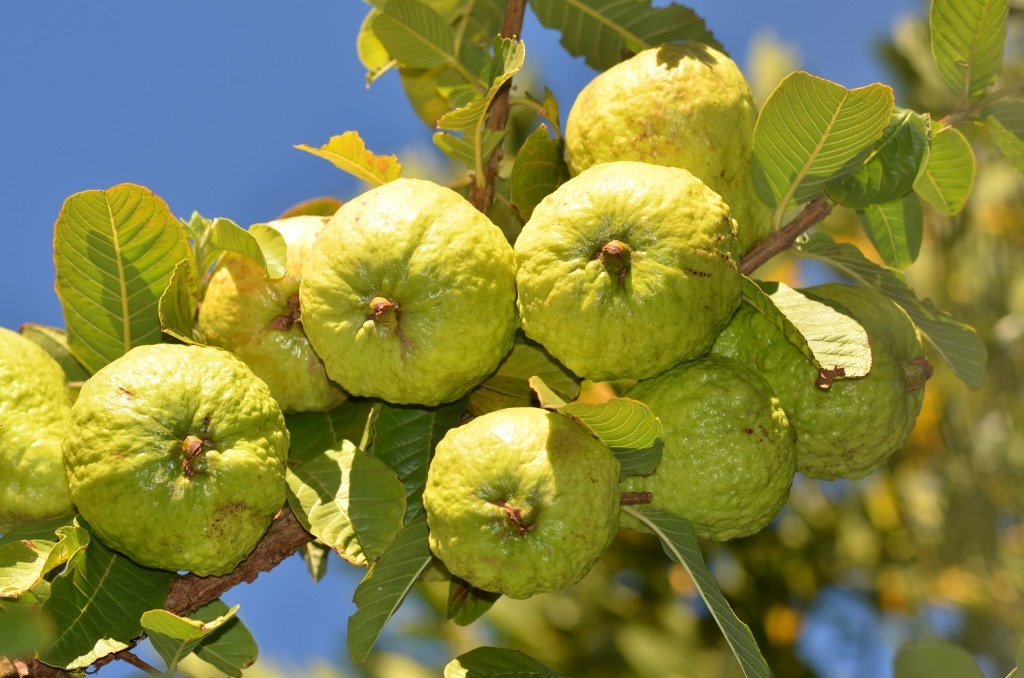
Guava is spiritually associated with abundance, prosperity, growth, fertility, nourishment, and fulfillment. These meanings come largely from the fruit’s natural characteristics: a guava tree can produce numerous fruits filled with many seeds, while the fruit itself progresses from an unripe state to sweetness and maturity. In symbolic interpretation, these qualities connect guava with productive growth, developing potential, and enjoying the results of previous effort.
The spiritual meaning of guava also changes according to its condition and the context in which it appears. A ripe guava can represent maturity, readiness, or a reward that is ready to be received, while a green guava can symbolize potential that still requires time to develop. A rotten guava carries a contrasting meaning and may represent neglect, missed timing, or something that has passed its productive stage.
Guava can also take on different meanings when it appears in dreams or personally significant experiences. Eating, picking, receiving, or simply seeing the fruit creates different symbolic contexts. These interpretations are not universal predictions or guaranteed supernatural messages. Instead, guava symbolism provides a framework for examining themes such as abundance, personal growth, relationships, opportunities, and the transition from potential to fulfillment.
What Is the Spiritual Meaning of Guava?
The spiritual meaning of guava centers on abundance, prosperity, growth, fertility, nourishment, and fulfillment. These symbolic meanings reflect the guava plant’s natural cycle: a tree grows, flowers, develops fruit, and produces numerous seeds capable of creating new growth. Spiritually, this progression can represent the movement from potential to development and finally to receiving the results of sustained effort.
Guava also represents fruitfulness because a healthy guava tree can bear numerous fruits rather than producing a single harvest item. This physical characteristic creates a natural symbolic connection with having enough resources to share, enjoying productive results, and recognizing what has grown successfully in life. In this context, abundance does not refer exclusively to money. It can describe supportive relationships, creative opportunities, knowledge, emotional well-being, or other resources that make life feel fuller.
The fruit’s transition from an unripe state to maturity adds another layer to its symbolism. A green guava requires time before reaching ripeness, while a mature fruit represents a completed stage of development. Guava can therefore symbolize patience with a process and recognition of when something is ready. A person encountering guava during a period of change might use this symbolism to reflect on whether an opportunity needs more development or is ready to be acted upon.
These meanings should be treated as symbolic interpretations rather than fixed predictions. Guava does not have one universal spiritual meaning that applies to every dream, culture, or personal experience. Its meaning becomes more specific when the fruit’s condition, the surrounding situation, and the person’s relationship with the symbol are considered together.
Why Does Guava Symbolize Abundance and Prosperity?
Guava symbolizes abundance and prosperity because a fruit-bearing tree provides a visible representation of growth producing tangible results. A tree covered with fruit turns previous stages of rooting, flowering, and development into something that can be harvested. In spiritual symbolism, this process naturally connects guava with productivity, sufficient resources, and the rewards that follow sustained growth.
Prosperity in guava symbolism is broader than financial wealth. It can refer to 4 major forms of abundance: material resources, relationships, personal development, and opportunities. For example, a person who has spent months developing a skill and begins receiving new opportunities can interpret ripe guava as a symbol of productive effort reaching a rewarding stage. The symbolism comes from the relationship between cultivation and harvest rather than from a promise that seeing guava will cause financial gain.
Sharing the fruit adds another dimension to abundance. Food becomes socially meaningful when there is enough to nourish both the individual and other people. Guava can therefore represent generosity and the circulation of resources rather than accumulation alone. Receiving or sharing the fruit in a personally meaningful situation may encourage reflection on what a person currently has available to give, receive, or appreciate.
This distinction is important because spiritual prosperity should not be interpreted as a guaranteed prediction of money, success, or good fortune. Guava works more coherently as a symbol of fruitfulness: something has developed enough to produce a result. Whether that result relates to work, relationships, creativity, or personal development depends on the context in which the symbol appears.
Why Does Guava Symbolize Growth and Fertility?
Guava symbolizes growth and fertility because the fruit contains seeds that represent the potential for new life and continued development. The complete cycle moves from seed to tree, flower, fruit, and new seeds, creating a repeating pattern of generation and renewal. This makes growth one of the strongest symbolic interpretations that can be derived from the guava plant itself.
Fertility in this context does not have to refer exclusively to pregnancy or childbirth. Symbolically, fertility describes the capacity to create and develop something new. A new relationship, business idea, creative project, skill, or personal goal can all fit this interpretation. Guava seeds represent potential, while the mature fruit represents potential that has already passed through a period of development.
The distinction between potential and maturity also explains why guava symbolism can change over time. A seed represents a beginning, an unripe fruit represents development, and a ripe fruit represents readiness or fulfillment. These stages create a simple symbolic sequence: potential → growth → maturity → fruition. For example, someone beginning a long-term project could associate seeds or green fruit with development, while ripe fruit would better represent the completion or productive stage of that process.
Guava can consequently symbolize both creation and the responsibility required to sustain growth. Potential alone does not produce fruit; development requires suitable conditions and time. Spiritually, the fruit can serve as a reminder that meaningful growth involves nurturing what has been started until it reaches an appropriate stage of maturity.
What Do Ripe, Green, and Rotten Guavas Mean Spiritually?
Ripe, green, and rotten guavas have different spiritual meanings because the condition of the fruit represents a different stage in the cycle of growth and maturity. A ripe guava symbolizes readiness and fulfillment, a green guava represents potential and ongoing development, and a rotten guava can represent neglect, missed timing, or decline. The condition of the fruit therefore provides important context when interpreting guava in a dream or personally meaningful experience.
A ripe guava spiritually represents maturity, fulfillment, readiness, and the rewards of completed growth. Ripening occurs after the fruit has passed through earlier developmental stages, making ripe fruit a natural symbol for something that has reached an appropriate time for use or enjoyment. This meaning can apply to a goal that is ready to pursue, a skill that has developed sufficiently, or a project that is beginning to produce results. Seeing or receiving ripe guava can therefore prompt reflection on what has become ready in a person’s life rather than predict that a specific reward will appear.
A green or unripe guava represents potential, patience, preparation, and unfinished development. An unripe fruit is not inherently defective; it is simply at an earlier stage of its natural cycle. This distinction gives green guava a more constructive meaning than failure or bad luck. For example, a new relationship, developing skill, or recently started project may have genuine potential while still requiring additional time before producing the desired result. The symbolism encourages attention to timing rather than forcing an outcome before the necessary development has occurred.
A rotten guava represents decay, neglect, missed timing, or an opportunity that is no longer productive in its existing form. Rotting occurs after the useful condition of the fruit has deteriorated, creating a symbolic contrast with ripeness and freshness. In personal interpretation, this image can point toward something that has been ignored for too long, such as an unresolved commitment, neglected relationship, or opportunity that was not used when circumstances were favorable. It does not predict loss or misfortune; it provides a symbolic framework for examining whether something in life needs attention, release, or renewal.
The three conditions create a clear spiritual sequence. Green guava represents what is developing, ripe guava represents what is ready, and rotten guava represents what has remained beyond its productive stage. Identifying which condition appears is therefore more informative than interpreting every guava as a generic symbol of prosperity or abundance.
What Does a Guava Tree Symbolize Spiritually?
A guava tree spiritually symbolizes growth, stability, fruitfulness, renewal, and the relationship between sustained development and eventual results. While the fruit emphasizes abundance and maturity, the entire tree broadens the symbolism by connecting roots, branches, flowers, fruit, and seeds within one continuing life cycle.
The roots can represent stability and foundations because they support the tree while supplying the resources required for continued growth. Symbolically, this creates a connection between visible results and the less visible foundations that make those results possible. Personal values, knowledge, relationships, routines, and accumulated experience can function in a similar way. A fruitful period of life rarely develops independently of the foundations that support it.
Branches, flowers, and developing fruits represent expansion and progressive development. A guava tree does not move directly from planting to harvest; it passes through distinct biological stages before producing mature fruit. Spiritually, this process can represent the idea that development occurs through stages rather than instant transformation. Someone building a career, developing a creative practice, or strengthening a relationship may see the tree as a symbol of maintaining growth before expecting its final results.
A guava tree bearing fruit particularly emphasizes fruitfulness and realized potential. The symbolism differs from that of an individual ripe guava because the tree represents the system that continues producing results, while the fruit represents a particular result that has reached maturity. A fruit-bearing tree can therefore symbolize sustained productivity, resources that continue to develop, or a stable foundation capable of supporting future abundance.
Guava seeds add the meaning of potential, beginnings, continuation, and future growth. Each seed represents the possibility of another developmental cycle, connecting the end of one cycle with the beginning of another. Symbolically, this means fulfillment does not always represent a final endpoint. Completing one goal can generate knowledge, resources, or opportunities that become the starting point for something new.
Taken together, the guava tree and its fruit create a continuous symbolic pattern: roots represent foundations, growth represents development, ripe fruit represents fulfillment, and seeds represent new potential. This cycle makes the guava tree particularly relevant as a spiritual symbol for long-term growth rather than immediate success.
What Does Guava Mean in a Dream?
Guava in a dream can symbolize abundance, developing potential, nourishment, maturity, and the results of personal growth. The specific interpretation depends on 4 main factors: the condition of the guava, what happens to it, the emotions experienced during the dream, and the dreamer’s personal associations with the fruit. A ripe guava and a rotten guava therefore should not be interpreted in the same way.
Seeing a ripe guava in a dream can represent something that has reached a stage of readiness or fulfillment. This might relate to a project approaching completion, a decision that has become clearer, or personal development beginning to produce visible results. The connection comes from the ripening process itself: the fruit has moved from development to maturity. A dream involving ripe fruit can therefore encourage the dreamer to consider what currently feels ready to pursue, complete, or receive.
Green guava carries a different dream meaning because unripe fruit represents potential that has not yet reached maturity. The dream may reflect a goal, relationship, skill, or opportunity that remains in development. Rather than representing failure, the green fruit emphasizes timing and patience. For example, trying to eat a hard, unripe guava could symbolically reflect an attempt to obtain a result before the necessary development has taken place.
Rotten guava creates the opposite symbolic context. It can represent neglect, deterioration, missed timing, or something that no longer provides the value it once offered. Finding rotten guavas after expecting fresh fruit, for example, could be interpreted as a prompt to examine an opportunity, commitment, or expectation that has remained unattended. This interpretation is symbolic rather than predictive; dreaming about rotten guava does not establish that a negative event will occur.
Emotions provide another layer of context. Feeling satisfied while seeing ripe guava supports an interpretation involving fulfillment or appreciation, while anxiety around the same fruit may point toward concerns about responsibility, timing, or change. Personal associations matter as well. Someone who connects guava with childhood, family, or a particular place may experience a dream whose meaning is more closely related to memory and relationships than generic fruit symbolism.
What Does Eating or Picking Guava in a Dream Mean?
Eating guava in a dream can symbolize receiving, enjoying, or internalizing something that has become available to you. Because eating converts food into nourishment, the action can represent benefiting from knowledge, relationships, opportunities, emotional support, or the results of previous effort. The condition and taste of the guava determine whether this interpretation is positive or uncomfortable.
Eating a sweet, ripe guava can represent satisfaction and enjoyment of something that has reached fruition. For example, the dream could correspond symbolically with completing a demanding project and finally experiencing its benefits. Eating an unpleasant or rotten guava creates a contrasting interpretation because the dreamer is taking in something that no longer provides healthy symbolic nourishment. This may encourage reflection on an experience, commitment, or relationship that feels unproductive.
Picking guava in a dream symbolizes harvesting or actively obtaining the results of growth. The distinction between seeing and picking is important: seeing is primarily observational, while picking involves deliberate action. Picking ripe fruit can therefore represent recognizing an opportunity and choosing to act when conditions are favorable.
Picking green guava changes that meaning. Because the fruit has not completed its development, the action may symbolize impatience or an attempt to obtain results too early. For example, someone waiting for a new project to become established might interpret picking unripe guava as a reflection on whether they are expecting returns before sufficient time or effort has been invested.
What Does Receiving Guava in a Dream Mean?
Receiving guava in a dream can symbolize a gift, opportunity, support, affection, or resource coming from another person. Unlike picking guava, where the dreamer actively obtains the fruit, receiving it introduces another person into the symbolic relationship. The identity of the giver and the condition of the guava therefore become central to the interpretation.
Receiving ripe guava from someone you trust can represent generosity, nourishment, appreciation, or an opportunity offered through a supportive relationship. For example, if the dream occurs while a friend or mentor is providing meaningful assistance in waking life, the guava may symbolically reflect the value being received through that relationship. The interpretation concerns the existing context rather than predicting that the giver will bring future wealth or good fortune.
Receiving green guava can represent an offer or relationship with potential that still needs development. The opportunity may have value without being ready for immediate results. Receiving rotten guava creates a different symbolic pattern and can prompt reflection on whether something being offered feels outdated, burdensome, or inconsistent with the dreamer’s needs.
The dreamer’s response provides the final interpretive clue. Accepting, rejecting, sharing, storing, or eating the guava represents a different relationship with what is being offered. Receiving the fruit with gratitude can emphasize acceptance, while refusing it may represent boundaries or unwillingness to take on a particular opportunity. Guava dreams are therefore most useful when interpreted through the complete interaction rather than through the presence of the fruit alone.
What Does Seeing Guava Mean as a Spiritual Sign?
Seeing guava as a spiritual sign can represent abundance, growth, maturity, nourishment, or the transition from potential to fulfillment. The most relevant interpretation depends on what the guava looks like, where it appears, and what is happening in the person’s life. Seeing guava does not automatically prove that a supernatural message has been sent; its value as a spiritual symbol comes from the meaning a person draws from the encounter and its context.
A ripe guava can direct attention toward something that has reached maturity. This might be a skill that is ready to be used, a decision that no longer needs additional preparation, or a long-term effort beginning to produce results. The fruit’s natural development provides the mechanism behind this interpretation: ripeness follows a period of growth and indicates that the fruit has reached a stage at which it can be harvested.
Seeing green guava can carry the opposite temporal message. Green fruit represents development rather than completion, so its symbolism centers on patience, preparation, and unrealized potential. Someone repeatedly encountering green guavas while beginning a new project, for example, might use the symbol as a reminder that early progress should not be judged by the standards of a finished result.
Repeated encounters with guava can feel more significant because repetition increases a person’s attention to a particular symbol. The interpretation should still begin with context rather than assuming repetition is evidence of divine communication. Consider whether the guava is ripe or unripe, whether it appears on a tree or separately, and whether the experience creates feelings such as gratitude, anticipation, discomfort, or nostalgia.
Receiving a guava in a personally meaningful encounter adds the symbolism of giving and receiving. A fresh, ripe fruit offered by another person can represent generosity, support, shared abundance, or nourishment. Giving guava to someone else can reverse this relationship and symbolize sharing resources or helping another person benefit from something you already possess. The relationship between the giver and receiver provides more interpretive value than the fruit alone.
Does Guava Have Different Spiritual Meanings Across Cultures?
Guava can have different symbolic meanings across cultures because the significance of a plant depends partly on how a community uses, values, and understands it. A fruit associated with food, family, agriculture, traditional practices, or local identity can acquire meanings that differ from modern spiritual interpretations based primarily on its appearance and life cycle.
This distinction matters because there is no single documented spiritual system that gives guava one universal meaning for every culture. Broad claims such as “guava universally symbolizes prosperity” or “ancient cultures considered guava sacred” require evidence from a named culture, historical period, or religious tradition. Without that evidence, abundance, fertility, nourishment, and growth are better described as symbolic interpretations derived from characteristics of the fruit and tree rather than universal traditional beliefs.
Cultural context can nevertheless change how an individual experiences the symbol. Guava is native to tropical America and became established in numerous tropical and subtropical regions, where the fruit entered local food traditions and everyday life. For someone raised in a place where guava trees are familiar, the fruit may evoke family, home, childhood, harvest, or community. For another person, the same fruit may primarily represent sweetness, tropical environments, or abundance.
Religious use, ritual use, folklore, and everyday cultural association should also be treated as separate categories. A plant being used as food or traditional medicine does not automatically establish that it is a sacred spiritual symbol. Likewise, a modern spiritual interpretation should not be attributed to an older religious tradition without supporting evidence. Keeping these categories separate makes the spiritual meaning of guava more precise and prevents personal symbolism from being presented as historical fact.
For personal spiritual interpretation, cultural knowledge can therefore provide additional context rather than a fixed definition. If guava has a specific meaning within a person’s family, community, or tradition, that association may be more relevant than a generalized online interpretation. The strongest reading combines the characteristics of the guava with the cultural and personal context in which it appears.
Is Guava Always a Positive Spiritual Symbol?
No. Guava is not always a positive spiritual symbol because its meaning changes according to the fruit’s condition, the surrounding context, and the person’s interaction with it. Fresh or ripe guava generally supports interpretations connected with abundance, maturity, nourishment, and fulfillment, while unripe or decaying fruit can point toward unfinished development, poor timing, neglect, or decline.
The positive meaning is strongest when the guava is healthy, ripe, or growing abundantly on a tree. These conditions represent a successful progression from growth to maturity. A ripe fruit can therefore symbolize readiness or fulfillment, while a tree bearing numerous healthy fruits can represent sustained productivity and abundance. The symbolism reflects an observable process: healthy development has produced something that is ready to provide nourishment.
Green guava is more neutral than negative. An unripe fruit represents something unfinished rather than something unsuccessful. Its spiritual meaning can involve patience, preparation, learning, or potential that still requires development. For example, encountering green guava during the early stages of a new goal can serve as a symbolic reminder to distinguish progress from completion. Something can be developing successfully without being ready to produce its final result.
Rotten or damaged guava creates stronger negative symbolism because decay represents the loss of a previously useful state. It can symbolize neglect, stagnation, wasted resources, or missed timing. A rotten fruit in a dream, for example, might prompt someone to examine whether a responsibility has been ignored or an opportunity has remained unused for too long. This does not mean rotten guava predicts failure, illness, financial loss, or another negative event.
Guava symbolism therefore works through contrasts: growth versus stagnation, ripeness versus immaturity, abundance versus scarcity, and freshness versus decay. These contrasts make context essential. Classifying every guava encounter as either a good omen or bad omen removes the details that give the symbol its more useful meaning.
How Can You Interpret the Spiritual Meaning of Guava in Your Own Experience?
You can interpret the spiritual meaning of guava by examining 4 factors: its form, condition, your interaction with it, and the context of the experience. Using these factors together produces a more specific interpretation than assigning the same meaning of abundance or prosperity to every guava encounter.
First, identify the form in which guava appears. A fruit, tree, seed, leaf, or flower represents a different stage or component of the plant. A mature fruit naturally relates more closely to fulfillment and nourishment, while seeds relate to beginnings and future potential. A whole tree provides a broader symbol of foundations, sustained growth, and fruitfulness.
Second, examine its condition. Ripe guava points toward readiness and fulfillment, green guava toward development and patience, and rotten guava toward decline or missed timing. Condition establishes where the symbol sits within the broader cycle from potential to growth, maturity, and eventual decay. This distinction is especially useful when interpreting dreams.
Third, identify the action taking place. Seeing guava involves observation, while picking it involves actively obtaining something. Eating the fruit introduces nourishment and receiving benefits. Giving guava can represent sharing, while receiving it can symbolize accepting support, resources, affection, or an opportunity. The same ripe guava can therefore carry different nuances depending on whether you see, pick, eat, give, or receive it.
Fourth, consider the surrounding context and your emotional response. A dream involving ripe guava accompanied by satisfaction has a different symbolic tone from one involving the same fruit accompanied by anxiety. Personal memories also matter. If guava reminds you strongly of a relative, childhood home, or particular period of life, those associations can provide more relevant interpretive information than a generalized spiritual definition.
For example, picking a ripe guava while feeling satisfied can symbolize recognizing and actively receiving the results of something that has matured. Picking an unripe guava while feeling frustrated can instead reflect impatience with an unfinished process. Receiving rotten fruit and refusing it may symbolically relate to boundaries or rejecting something that no longer feels valuable.
The most useful interpretation therefore connects the guava symbol with an identifiable situation rather than treating it as a prediction. Ask what is currently growing, what feels ready, what needs more time, and what may have remained unattended for too long. These questions preserve guava’s central symbolism of growth, maturity, fruitfulness, and renewal while allowing its meaning to fit the specific experience in which it appears.