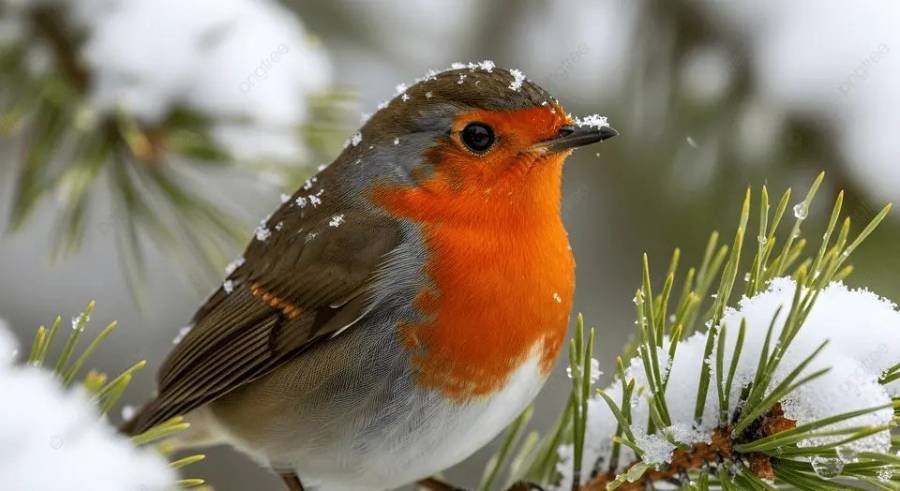
A robin spiritually symbolizes renewal, new beginnings, hope, transformation, joy, love, resilience, and guidance. Its symbolism is strongly connected with change and fresh starts, which is why seeing a robin is often interpreted as encouragement to leave a difficult period behind and move into a new stage of life. The bird’s association with seasonal change, its distinctive red-orange breast, and its noticeable presence around people have also contributed to its symbolic meanings.
The spiritual meaning of seeing a robin depends on the context of the encounter. A robin appearing in a garden may be interpreted differently from one repeatedly visiting a window, approaching a person, or appearing during grief. Personal circumstances also shape the interpretation. Someone beginning a new relationship, recovering from loss, or making a major life decision may connect the same robin encounter with a different symbolic message.
Robins are also associated with deceased loved ones, good luck, dreams, and spiritual messages in some beliefs and traditions. These interpretations represent symbolic or spiritual beliefs rather than evidence that a robin predicts an event or carries a literal supernatural message. Understanding both the established symbolism and the circumstances of an encounter provides a clearer way to interpret what seeing a robin may mean spiritually.
What does a robin mean spiritually?
A robin spiritually represents renewal, hope, positive change, and the beginning of a new life phase. The bird is especially associated with moving from a difficult or inactive period into one marked by growth. This interpretation makes the robin a positive symbol for people experiencing a transition, such as starting a relationship, changing careers, recovering from a loss, or rebuilding their sense of purpose.
The meaning of a robin is closely connected with cycles of change in the natural world. Robins are commonly noticed around periods of seasonal transition, so their appearance has become symbolically linked with the return of activity, growth, and possibility. In spiritual interpretation, this natural cycle becomes a metaphor for personal renewal: an ending does not necessarily represent permanent loss because it can create the conditions for another beginning.
A robin can also represent encouragement during uncertainty. Rather than functioning as a literal prediction of what will happen next, its symbolism can remind a person to recognize change, remain hopeful, and pay attention to opportunities for growth. The exact interpretation therefore depends on both established robin symbolism and the circumstances surrounding an encounter.
What are the main spiritual meanings of a robin?
There are 7 main spiritual meanings associated with a robin: renewal and new beginnings, hope, transformation, joy, love, resilience, and spiritual guidance. These meanings overlap because they share a central theme of moving from one state of life into another. However, each meaning emphasizes a different aspect of that transition.
1. Renewal and new beginnings. Renewal is the strongest theme associated with robin symbolism. A robin can represent the end of one cycle and the beginning of another, making it particularly relevant during periods of personal transition. Starting a new job, moving to a new home, entering a relationship, or rebuilding life after a setback are examples of situations in which this symbolism may feel personally relevant. Renewal does not require abandoning the past; it represents using previous experience as the foundation for a new stage.
2. Hope. A robin symbolizes hope because its broader symbolism emphasizes the return of growth after a period of difficulty or inactivity. In a spiritual context, encountering one during uncertainty can serve as a reminder that present circumstances are not necessarily permanent. For example, a person dealing with disappointment may interpret a robin sighting as encouragement to remain receptive to improvement rather than assuming that the current situation defines what comes next.
3. Transformation and personal growth. Robin symbolism can represent transformation when a person is changing beliefs, habits, relationships, or direction in life. Transformation differs from a simple new beginning because it involves an internal change as well as a change in circumstances. A person who becomes more confident after a difficult experience, for example, has not merely entered another phase; the experience has altered how that person approaches future challenges.
4. Joy and positive energy. A robin can symbolize the return of joy after a period dominated by stress, sadness, or emotional stagnation. Its visible activity and birdsong contribute to an association with vitality and renewed engagement with life. Spiritually, this meaning encourages attention to ordinary sources of happiness rather than waiting for a major event to create fulfillment. Reconnecting with friends, spending time outdoors, or returning to a meaningful activity are practical examples of this theme.
5. Love and connection. Robin symbolism is also associated with emotional connection, affection, and the relationships people value. In this context, the bird can act as a symbolic reminder to nurture an existing bond or become more receptive to connection. The meaning does not apply only to romantic love; it can include family relationships, friendships, and emotional connections with people who are no longer physically present.
6. Resilience. A robin represents resilience through the broader theme of continuing forward despite changing conditions. Spiritually, resilience does not mean avoiding hardship. It means adapting to hardship without allowing it to permanently stop growth. Someone rebuilding after a breakup, professional failure, or other major change may therefore connect a robin with persistence and the ability to begin again.
7. Spiritual guidance. Some spiritual interpretations regard a robin as a symbolic messenger that draws attention to change, hope, or a decision that deserves reflection. In this sense, guidance means using the encounter as a prompt for awareness rather than assuming that the bird delivers a literal supernatural instruction. A robin appearing during an important transition, for example, may prompt someone to consider what they are ready to release and what they want to pursue next.
Together, these 7 meanings create a consistent symbolic pattern. The central spiritual message of a robin is renewal: change can lead to growth, hope can follow difficulty, and an ending can create space for a new beginning. The circumstances in which the robin appears help determine which part of this symbolism is most relevant.
What does seeing a robin mean spiritually?
Seeing a robin spiritually symbolizes renewal, encouragement, and positive change, but the specific meaning depends on where the robin appears, what it does, and what is happening in your life. A single sighting does not have one fixed spiritual interpretation. The encounter becomes more meaningful when its context connects with one of the robin’s established symbolic themes, such as starting over, maintaining hope, or moving through a period of transformation.
Three details provide useful context for interpreting a robin sighting. The first is location, such as seeing the bird near your home, garden, window, or while traveling. The second is behavior, including whether the robin approaches you, remains nearby, sings, or repeatedly returns to the same place. The third is personal context. A robin encountered during a career change, relationship transition, bereavement, or period of uncertainty may carry a different personal meaning than an ordinary sighting during a routine day.
This does not mean every robin encounter is a spiritual sign. Robins are living birds whose movements have natural explanations related to food, nesting, territory, and their environment. Spiritual interpretation adds symbolic meaning to the encounter rather than replacing these biological explanations.
What does it mean when a robin visits you?
When a robin visits you, it can symbolize an approaching period of renewal, an opportunity to move forward, or a reminder to remain receptive to positive change. A visit tends to feel more significant when the bird stays nearby, appears in an unusual place, or returns to an area where you regularly spend time.
The meaning should be interpreted in relation to your circumstances. A robin appearing while you are considering a new opportunity may represent new beginnings, while the same encounter during an emotionally difficult period may connect more strongly with hope and resilience. Someone recovering from a breakup, for example, might view a recurring robin visit as a personal reminder that emotional recovery is a process and that another stage of life can follow the relationship that ended.
A robin visiting you does not guarantee that a particular event is about to occur. Its spiritual value lies in the symbolism you connect with the encounter and whether that symbolism provides a useful perspective on your present circumstances.
What does it mean when you keep seeing robins?
Repeatedly seeing robins can symbolize a recurring theme of renewal, transformation, or attention to a life transition that has not yet been fully addressed. In spiritual interpretation, repetition can make an encounter feel more personally significant because the same symbol continues to appear while a person is dealing with a particular situation.
For example, someone repeatedly seeing robins while deciding whether to leave an unfulfilling situation may associate the sightings with change and forward movement. Someone experiencing grief may instead connect repeated sightings with remembrance, hope, or an emotional bond with the person they lost. The robin remains the same central symbol, but personal circumstances determine which symbolic attribute receives the greatest emphasis.
Repeated sightings can also have straightforward natural explanations. A robin may repeatedly appear because your home is inside its territory or because the surrounding area provides food, water, shelter, or nesting opportunities. Frequency alone does not prove that a spiritual message is being sent. A balanced interpretation considers the natural explanation while allowing the encounter to hold personal symbolic meaning.
What does a robin near your home mean spiritually?
A robin near your home can spiritually symbolize growth, renewal, emotional security, and a new phase developing within your personal or family life. Because a home represents private life, relationships, stability, and belonging, robin symbolism in this setting is often interpreted through these themes rather than through change in an unrelated area of life.
A robin in your garden is especially compatible with the symbolism of growth and renewal. Gardens visibly move through cycles of dormancy, growth, flowering, and decline, which creates a natural connection with the robin’s broader symbolism of new beginnings. If you are rebuilding an aspect of your personal life, for example, seeing a robin regularly in the garden may become a symbolic reminder that meaningful growth develops gradually rather than appearing all at once.
A robin at your window can carry a different interpretation because a window forms a boundary between your private space and the outside world. Spiritually, the encounter may be interpreted as an invitation to notice something beyond your current perspective, particularly during a period of change or reflection. A robin repeatedly approaching a window, however, also has natural behavioral explanations. Birds can react to reflections in glass because they perceive the reflected bird as another individual, so repeated window visits should not automatically be treated as supernatural activity.
A robin at your door or near the entrance to your home is commonly interpreted through the symbolism of arrival and transition. Doors mark the point between one space and another, making a robin in this location compatible with themes of entering a new stage, welcoming change, or leaving an old phase behind. For someone moving home, beginning a relationship, or experiencing a change within the family, this symbolism may feel particularly relevant.
The location changes the emphasis rather than the robin’s fundamental spiritual meaning. A garden strengthens the theme of growth, a window emphasizes awareness and perspective, and a doorway emphasizes transition. In each case, the strongest interpretation combines robin symbolism with the setting and the circumstances of the person experiencing the encounter.
Does seeing a robin mean a deceased loved one is near?
Seeing a robin is sometimes interpreted as a symbolic connection with a deceased loved one, especially when the bird appears during grief, remembrance, or an emotionally significant moment. In spiritual belief, the robin may represent continuing love, reassurance, remembrance, or the feeling that an emotional bond remains after death. However, seeing a robin does not provide evidence that a deceased person is literally present or communicating through the bird.
This interpretation is particularly meaningful during bereavement because people often connect familiar symbols with memories of someone they have lost. A robin appearing on an anniversary, near a place associated with the deceased person, or during a moment of intense remembrance may therefore acquire personal significance. For example, someone thinking about a deceased parent before noticing a robin in the garden may interpret the encounter as a comforting reminder of that relationship. The emotional context gives the sighting its personal meaning.
The association also fits several of the robin’s broader spiritual meanings. Renewal can represent continuing life after a period of loss, hope can represent emotional recovery, and love can represent a relationship that remains meaningful through memory. Under this interpretation, the robin does not need to function as a literal messenger for the encounter to provide comfort. The bird can instead become a symbol through which a person expresses remembrance and maintains an emotional connection with someone who has died.
Grief also changes how people notice and interpret events around them. A bird that might have attracted little attention before a loss can become meaningful when it appears at a moment connected with the deceased person. This does not make the experience insignificant. It distinguishes personal spiritual meaning from a verifiable supernatural claim.
For this reason, a robin encountered while grieving is best interpreted in relation to what the bird represents to you and the person you remember. If robins were already connected with that person, the association may be particularly strong. If there was no previous connection, the robin can still symbolize hope, remembrance, and the possibility of moving forward while preserving an important emotional bond.
Is seeing a robin a sign of good luck?
Seeing a robin is generally interpreted as a positive sign because robin symbolism centers on renewal, hope, growth, and new beginnings. In spiritual interpretation, this makes the bird compatible with the idea of good luck, particularly when it appears during a transition or before the beginning of a new phase.
The association with good luck does not mean a robin predicts money, success, romance, or another specific favorable event. Instead, the symbolism points toward favorable possibilities and a willingness to recognize them. For example, seeing a robin while preparing to start a new job could symbolize optimism about the transition, but it does not guarantee professional success. The practical outcome still depends on decisions, circumstances, and actions.
The meaning can become more specific when the encounter matches a person’s current situation. A robin appearing after a prolonged period of uncertainty may represent renewed hope. One appearing when someone is considering a major change may symbolize readiness to move forward. A robin encountered after an emotional setback may instead represent resilience and the possibility of recovering from the experience. In each example, “good luck” describes the positive symbolic direction of the encounter rather than a prediction.
Robin symbolism can also encourage a more active interpretation of luck. Renewal requires accepting change, growth requires action, and new beginnings require a person to move beyond an earlier stage. From this perspective, seeing a robin can serve as a reminder to notice opportunities and respond to them rather than wait for circumstances to improve without action.
A robin is therefore better understood as a positive spiritual symbol than as a guarantee of good fortune. Its appearance can represent hope, opportunity, and a fresh start while leaving the outcome of future events uncertain.
Is a robin a spiritual messenger?
A robin can symbolize a spiritual messenger associated with renewal, hope, change, and moving forward. In spiritual interpretation, the bird may draw attention to an important transition or emotional issue rather than deliver a literal supernatural instruction. The message attributed to the robin therefore comes from the symbolism of the bird combined with the circumstances in which it appears.
One common message is to accept a new beginning. This interpretation is especially relevant when a person remains attached to a situation that has already ended, such as a relationship, career path, or previous stage of life. Because renewal is the robin’s central spiritual theme, encountering one during such a transition can symbolize the need to acknowledge what has ended and direct attention toward what can develop next.
A second message concerns hope during difficult periods. Seeing a robin when progress feels slow can symbolize that present circumstances are temporary rather than permanent. For example, someone rebuilding life after a major setback may use the encounter as a reminder that recovery develops through continued action. In this context, the robin represents encouragement rather than a promise that the difficulty will disappear without effort.
A third message is to pay attention to personal transformation. Major changes do not only alter external circumstances; they can also change priorities, beliefs, relationships, and goals. A robin appearing during this process can symbolically prompt reflection on what a person has learned and which parts of an earlier identity no longer fit the next stage of life.
Repeated robin encounters may make this messenger symbolism feel stronger, but repetition does not prove that an external spiritual force is communicating. A robin may repeatedly visit the same location because of territory, nesting conditions, food, or other natural factors. The spiritual message is an interpretation of the encounter, while the robin’s presence can still have an ordinary biological explanation.
What does a robin mean in a dream?
A robin in a dream commonly symbolizes renewal, emotional change, hope, or movement into a new stage of life. The most relevant interpretation depends on what the robin does, where it appears, and how the dreamer feels during the dream. A calm encounter and a frightening encounter should not automatically receive the same meaning simply because both contain a robin.
A flying robin can represent movement, freedom, or leaving a previous limitation behind. This interpretation is particularly relevant when the dreamer is already considering a significant transition. For example, dreaming of a robin flying away while preparing to leave an unfulfilling job could reflect themes of release and forward movement. The symbolism does not predict that leaving the job will produce a particular outcome; it reflects the relationship between the dream imagery and the dreamer’s circumstances.
A robin entering a home can symbolize a change connected with private life, relationships, family, or emotional security. The home represents a personal space, while the robin carries themes of renewal and transition. A peaceful robin entering the house may therefore be interpreted as welcoming emotional change, whereas anxiety during the same dream could indicate uncertainty about that change.
Seeing several robins in a dream can strengthen themes of connection, activity, and renewal. The surrounding details remain important. Multiple robins gathering peacefully in a garden create a different symbolic context from birds behaving chaotically or attempting to escape. Dream interpretation depends on the complete scene rather than the number of birds alone.
A dead robin in a dream does not necessarily predict death or misfortune. It can instead symbolize an ending, a lost opportunity, emotional closure, or the completion of a life phase. Because the robin itself represents renewal, the image can also reflect the tension between something ending and something else becoming possible. Someone who has recently ended a relationship, for example, might connect this dream with accepting the end of that chapter before beginning another.
Dreams involving deceased loved ones and robins can carry particularly strong emotional significance. In spiritual interpretation, the robin may represent remembrance, continuing love, or comfort. From a personal perspective, it can also reflect memories and emotions associated with grief. Neither interpretation establishes that the dream is a literal communication from someone who has died.
The clearest way to interpret a robin dream is to combine the bird’s symbolism with the dream’s action, setting, emotion, and your current circumstances. The robin provides the symbolic theme, while the rest of the dream determines how that theme applies.
What does a robin spirit animal symbolize?
A robin spirit animal symbolizes renewal, adaptability, hope, emotional awareness, and the willingness to move forward. In modern spiritual interpretation, a person who identifies strongly with robin symbolism may use these qualities as reminders to accept change without losing connection with past experiences.
Renewal is the strongest attribute associated with the robin spirit animal. It represents recognizing when one stage has reached its end and creating space for another to begin. This meaning can apply to practical transitions, such as changing careers or moving to a new place, as well as internal transitions involving beliefs, priorities, or relationships. The emphasis is not on forgetting what came before but on allowing growth to continue after circumstances change.
Adaptability and resilience form a second part of this symbolism. Life transitions rarely happen exactly as expected, so moving forward requires adjusting decisions when circumstances change. A person going through an uncertain period may therefore identify the robin with persistence: continue adapting rather than allowing disruption to become permanent stagnation.
The robin can also represent emotional awareness. Its symbolism encourages recognizing emotions while preventing fear, grief, or disappointment from defining every future decision. For example, someone who has experienced a painful relationship may acknowledge that experience while remaining receptive to future connections. In this context, the robin combines emotional awareness with hope rather than encouraging a person to ignore difficult feelings.
The term “spirit animal” should be used carefully because concepts involving animal spirits have distinct meanings within specific Indigenous cultures and spiritual traditions. Modern spiritual uses of the term should not be presented as if they represent one universal Indigenous belief. In a general spiritual context, robin symbolism is more accurately treated as a personal symbolic framework unless a specific tradition can be identified and supported by reliable sources.
What do robins symbolize in different spiritual traditions?
Robins do not have one universal meaning across all spiritual traditions; their symbolism changes according to cultural stories, religious associations, local beliefs, and the characteristics people associate with the bird. Renewal, hope, death, remembrance, and spiritual connection can therefore appear in different interpretations without meaning that every tradition understands the robin in the same way.
In Christian-associated folklore and symbolism, the robin’s red breast has been connected with stories surrounding Jesus Christ. Different versions of these stories explain the red breast through an act of compassion during Christ’s suffering. This gives the robin associations with sacrifice, compassion, and devotion within that symbolic context. Such stories are better described as folklore or later religious symbolism rather than established biblical teaching because the Bible does not provide a robin narrative that establishes these meanings.
In British and European folk traditions, robins have also developed strong associations with winter, seasonal change, the home, and remembrance. Their familiar presence around people contributes to the bird’s cultural visibility, while seasonal imagery strengthens its connection with cycles of ending and return. These associations help explain why modern spiritual interpretations frequently connect robins with hope and renewal.
Robins are also commonly connected with deceased loved ones in contemporary spiritual belief. In this interpretation, an unexpected or emotionally significant sighting may represent remembrance, comfort, or an enduring bond with someone who has died. The symbolism can become especially powerful during bereavement because the encounter provides a recognizable image through which grief, memory, and affection can be expressed.
Claims about Indigenous or Native American robin symbolism require greater specificity. Indigenous peoples include distinct nations with their own languages, histories, stories, and spiritual systems, so statements such as “Native Americans believe the robin means renewal” are too broad without identifying a particular tradition and reliable source. A specific cultural account should be attributed to the community from which it originates rather than converted into a universal meaning.
These differences show why cultural symbolism should provide context rather than be combined into a single list of supposedly universal beliefs. The recurring modern interpretation of the robin as a symbol of renewal and hope does not mean every spiritual or cultural tradition assigns the bird the same meaning. Identifying the source of an interpretation makes it possible to distinguish traditional symbolism, folklore, and contemporary personal spirituality.
Read more: Spiritual Meanings of Grand Rising
Why are robins associated with renewal and new beginnings?
Robins are associated with renewal and new beginnings because their seasonal visibility, activity, and connection with changing natural cycles have made them symbols of transition and returning life. Spiritual symbolism develops from these observable characteristics and extends them into human experiences such as recovering from hardship, beginning a new relationship, changing direction, or entering another stage of personal growth.
Seasonal change provides the clearest foundation for this symbolism. Robins are strongly connected in popular imagination with the transition into spring, when plants begin growing, daylight increases, and animal activity becomes more noticeable. Spring itself represents the movement from dormancy toward growth. The robin consequently fits into the same symbolic pattern: winter gives way to spring, inactivity gives way to growth, and an ending creates the conditions for another beginning.
This association explains why renewal is broader than simply receiving good luck. Renewal involves a process in which an existing condition changes and something new develops from it. A person recovering after a difficult year, for example, may interpret a robin encounter as representing the gradual return of motivation and possibility. The bird does not cause that renewal; it provides a symbol through which the transition can be understood.
The robin’s symbolism also connects renewal with action. A new beginning becomes meaningful when a person responds to changing circumstances rather than remaining attached to a stage that has ended. Someone who has left an unsuccessful career path may still need to learn new skills, pursue opportunities, and establish different goals before the next phase develops. In this context, robin symbolism represents both the availability of a fresh start and the willingness required to participate in it.
This relationship between natural cycles and human experience is why renewal remains the central theme connecting many other robin meanings. Hope describes confidence that circumstances can improve. Transformation describes the internal change that accompanies a transition. Resilience describes continuing after difficulty. Joy describes renewed engagement with life. These meanings function as different attributes of the robin’s broader symbolism of beginning again.
How should you interpret a robin encounter?
Interpret a robin encounter by considering 4 factors: what happened, the robin symbolism that matches the encounter, your personal circumstances, and the difference between symbolic meaning and prediction. This approach provides a more specific interpretation than assuming every robin has exactly the same spiritual message.
First, identify the encounter itself. Note where the robin appeared, what it was doing, whether it approached you, and whether the sighting was isolated or repeated. A robin feeding in a garden, repeatedly appearing at a window, and approaching you during a walk are three different encounters. Location and behavior provide the immediate context needed to determine which symbolic theme fits best.
Second, connect the encounter with an established symbolic attribute of the robin. Renewal and new beginnings are relevant to transitions, hope is relevant to difficult periods, resilience is relevant to recovery, and love or remembrance may be relevant during grief. This method keeps the interpretation connected with robin symbolism instead of assigning an unrelated meaning to every detail.
Third, consider what is happening in your life. The same encounter can hold different personal meanings depending on the observer’s circumstances. A robin appearing while you are beginning a new career may reinforce the theme of new beginnings. The same bird appearing while you are grieving a family member may instead evoke remembrance and emotional connection. Personal context determines which part of the robin’s broader symbolism feels most relevant.
Fourth, separate spiritual interpretation from prediction. Seeing a robin does not establish that a particular event will occur, that good fortune is guaranteed, or that a supernatural being is sending a literal message. A natural explanation for the bird’s presence can exist at the same time as a personal symbolic interpretation. Spiritual meaning describes what the encounter represents to you; it does not prove what will happen next.
For example, imagine that a robin repeatedly appears in your garden while you are deciding whether to make a major life change. The encounter involves repetition and a setting associated with growth. Robin symbolism includes renewal and new beginnings, while your personal circumstances involve transition. The most coherent spiritual interpretation would therefore center on growth, change, and moving into a new phase rather than an unrelated prediction about money, romance, or future events.
A meaningful robin encounter does not require a dramatic supernatural explanation. Its value can come from how clearly the symbolism reflects an experience you are already navigating. When the encounter, established symbolism, and personal context point toward the same theme, the robin can serve as a powerful personal symbol of renewal, hope, and the possibility of moving forward.