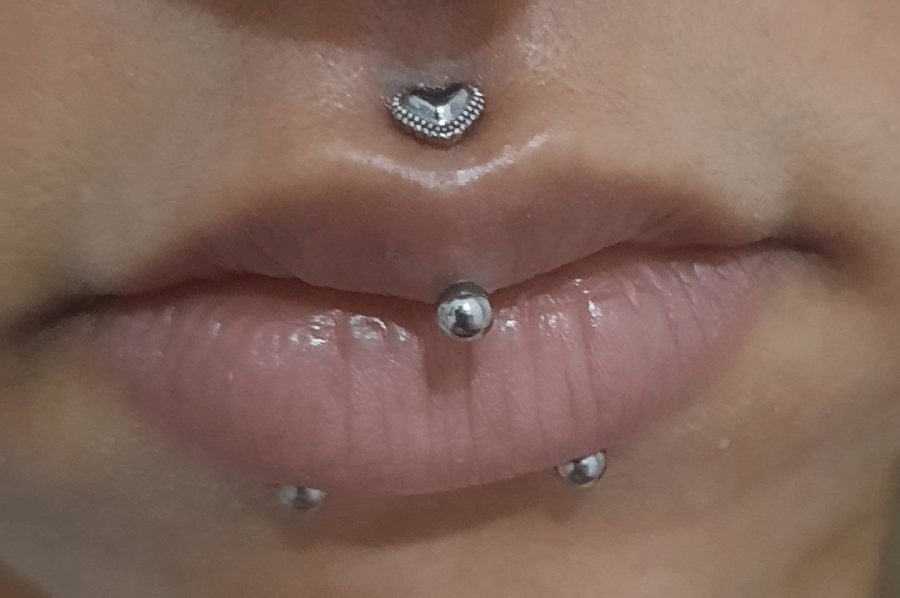
A Jestrum piercing does not have one universally recognized spiritual meaning. Its symbolism is primarily personal, with common interpretations centered on self-expression, individuality, personal transformation, empowerment, confidence, and intentional body adornment. Unlike spiritual symbols tied to established religious or cultural traditions, the meaning of a Jestrum piercing largely depends on the intention and life experiences of the person wearing it.
A Jestrum piercing is a vertical upper-lip piercing positioned through the philtrum, the groove between the nose and upper lip. Its central and highly visible placement makes it a distinctive form of facial adornment. For someone who deliberately uses body modification to express identity, this visibility can turn the piercing into a personal symbol of embracing individuality, marking a life transition, reclaiming control over appearance, or becoming more comfortable with visible self-expression.
Spiritual interpretations should therefore be separated from universal claims. A Jestrum piercing does not automatically represent a chakra, alter spiritual energy, or carry an ancient religious meaning simply because of its location. Its spiritual significance develops when the wearer intentionally connects the piercing with a belief, experience, value, or personal transformation. This distinction provides the foundation for understanding the different spiritual meanings associated with Jestrum piercings.
What Does a Jestrum Piercing Mean Spiritually?
Spiritually, a Jestrum piercing can represent intentional self-expression, individuality, transformation, and personal empowerment. These meanings come primarily from the intention a person attaches to the piercing rather than from a universally accepted spiritual tradition. Choosing a visible modification in the center of the face can become a deliberate way to express identity, commemorate change, or represent greater ownership over personal appearance.
The distinction between personal symbolism and established spiritual meaning is important. A religious or cultural symbol generally receives its meaning from a shared tradition, practice, or belief system. A Jestrum piercing does not have an equivalent universally recognized spiritual framework. Its meaning is therefore more individual: one wearer might associate the piercing with becoming more confident, while another might use it to mark independence after an important change in life.
The piercing’s visibility can strengthen this personal symbolism. A Jestrum passes vertically through the upper lip in the philtrum area, making the jewelry a prominent element of facial appearance. Unlike a hidden symbol that primarily serves as a private reminder, a facial piercing becomes part of how a person intentionally presents themselves. For this reason, its symbolic value can connect physical appearance with identity and self-perception.
A Jestrum piercing can also have no spiritual significance at all. Choosing one for aesthetic preference, fashion, or appreciation of body modification does not automatically create a deeper meaning. Spiritual significance exists when the wearer intentionally connects the piercing with a belief, value, experience, or personal transition.
What Are the Spiritual Meanings of a Jestrum Piercing?
There are 6 main spiritual meanings that can be associated with a Jestrum piercing: self-expression, individuality, personal transformation, new beginnings, empowerment, and confidence. These meanings should be understood as modern or personal interpretations rather than fixed properties of the piercing itself. The same Jestrum piercing can therefore represent different ideas for different wearers.
How Can a Jestrum Piercing Represent Self-Expression and Individuality?
A Jestrum piercing can represent self-expression by allowing a person to deliberately incorporate body modification into their visible identity. Clothing and hairstyles can be changed quickly, while a piercing requires a more deliberate physical decision. For a wearer who values body modification as a form of personal expression, that commitment can make the Jestrum more meaningful than a temporary aesthetic choice.
Individuality is closely related to self-expression but describes a different aspect of the symbolism. Self-expression concerns showing something about yourself, while individuality concerns recognizing and presenting yourself as a distinct person. Because a Jestrum creates a noticeable vertical accent at the center of the upper lip, someone may choose it specifically because it reflects an appearance they consider personally distinctive.
This symbolism does not mean that wearing a Jestrum proves a person is independent, unconventional, or rebellious. Appearance alone cannot reliably establish personality traits. Instead, individuality becomes part of the spiritual meaning when the wearer consciously uses the piercing to represent authenticity or a decision to express themselves according to their own preferences.
For example, a person who previously avoided visible body modifications because of social expectations might choose a Jestrum after deciding to become more comfortable with their preferred appearance. In that context, the piercing can function as a personal reminder of authenticity. The meaning comes from the decision and experience surrounding the piercing, not from the jewelry alone.
How Can a Jestrum Piercing Symbolize Personal Transformation?
A Jestrum piercing can symbolize personal transformation when it is intentionally connected to a significant change in the wearer’s life or identity. Physical changes are sometimes used to make an internal transition tangible. A new piercing can serve this function by creating a visible marker between an earlier period and a new stage of life.
Transformation in this context does not mean that getting pierced produces spiritual growth. The mechanism works in the opposite direction: an existing change, decision, or experience gives the piercing its symbolic value. The Jestrum becomes a physical reminder of that transition because the wearer deliberately associates the two.
New beginnings are a closely related interpretation. A person might get the piercing after leaving a difficult period, reaching a personal milestone, changing how they view themselves, or beginning a new chapter in life. The piercing can then represent the moment at which that transition was consciously acknowledged.
For example, someone who gets a Jestrum after making a major personal change may regard the jewelry as a permanent reminder of the decision that started the new period. Another wearer who gets exactly the same piercing simply because they like its appearance may attach no transformational meaning to it. Personal context determines which interpretation applies.
How Can a Jestrum Piercing Represent Empowerment and Confidence?
A Jestrum piercing can represent empowerment when choosing it reflects personal agency and ownership over one’s appearance. Empowerment in this interpretation comes from making an intentional decision about the body rather than from the piercing providing power by itself. The symbolism is strongest when the decision has personal significance for the wearer.
Confidence has a related but distinct meaning. Empowerment concerns agency and control, whereas confidence concerns a person’s willingness to express their identity visibly. A Jestrum is located prominently on the face, so choosing to wear one can become a personal symbol of being comfortable with attracting attention to an intentionally modified appearance.
The relationship between piercing and confidence should not be reversed into a universal personality claim. Having a Jestrum does not prove that someone is confident, just as deciding against facial piercings does not indicate insecurity. Instead, the piercing can symbolize confidence for a person who specifically connects it with becoming more comfortable in their appearance or expressing a previously restrained part of their identity.
For example, a wearer might choose the Jestrum after reaching a point where external expectations have less influence over how they present themselves. In this situation, the piercing can simultaneously represent agency through the decision to modify the body and confidence through the decision to display that modification openly. These meanings originate from personal intention, which is why two people wearing identical Jestrum jewelry can give it completely different spiritual significance.
Does a Jestrum Piercing Have a Feminine Spiritual Meaning?
A Jestrum piercing can represent femininity when the wearer intentionally connects it with feminine identity, beauty, sensuality, or self-expression. Femininity is not an inherent spiritual property of the piercing, and a Jestrum does not have a fixed gender meaning. Its feminine symbolism develops from the wearer’s personal interpretation of the piercing and its effect on facial appearance.
The location of a Jestrum helps explain this association. The piercing passes vertically through the philtrum and upper lip, placing jewelry directly around a facial feature commonly emphasized through cosmetics, jewelry, and other forms of personal adornment. A wearer who associates these forms of adornment with their feminine identity may therefore use a Jestrum as another visible expression of that identity.
Beauty can also become part of this symbolism without becoming a universal spiritual claim. A person might view intentionally decorating the body as a way of appreciating, reclaiming, or redefining their appearance. In that context, the Jestrum can represent a personal definition of beauty rather than conformity to an external beauty standard. The symbolic mechanism is based on intention: the wearer chooses the modification, determines what they consider beautiful, and gives that decision personal significance.
Sensuality is another possible interpretation because the jewelry visually emphasizes the lips. However, a visible association with the lips does not mean that every Jestrum piercing represents sensuality or feminine energy. A wearer may identify with femininity, masculinity, both, or neither and still choose exactly the same piercing. For this reason, feminine symbolism should be treated as one possible personal meaning rather than a defining characteristic of Jestrum piercings.
Can a Jestrum Piercing Symbolize Balance and Symmetry?
A Jestrum piercing can symbolize balance and symmetry because its vertical, centrally positioned jewelry creates a strong visual relationship with the center line of the face. A wearer who associates symmetry with harmony, alignment, or balance may extend that visual characteristic into a personal spiritual meaning.
This interpretation begins with physical placement rather than a documented spiritual property. The Jestrum is positioned around the philtrum and travels vertically through the upper lip. When correctly centered, the jewelry follows the approximate vertical axis formed by central facial features such as the nose, philtrum, and lips. This creates a visual sense of alignment that can become the basis for symbolic interpretation.
Balance can then represent an internal concept for the wearer. For example, someone trying to establish a healthier balance between personal needs and external expectations might choose symmetry as a reminder of that intention. Another person might associate the centered appearance with emotional stability or maintaining equilibrium during periods of change. In both cases, the visual structure provides the symbol, while the individual supplies its meaning.
Visual symmetry should not be confused with evidence of spiritual or energetic balance. A Jestrum piercing has no established ability to align spiritual energy simply because it occupies a central position on the face. Claims about energetic alignment require a separate spiritual framework and supporting tradition. Without that context, balance and harmony are best understood as personal symbolic interpretations of the piercing’s symmetrical appearance.
Does the Location of a Jestrum Piercing Affect Its Spiritual Meaning?
The location of a Jestrum piercing can influence its symbolic meaning because the piercing is centrally positioned and highly visible on the upper lip. Placement does not create a predetermined spiritual meaning, but it changes how prominently the modification becomes part of the wearer’s appearance and self-presentation.
A Jestrum is a vertical piercing associated with the philtrum and upper lip. Its position means that the jewelry is visible during ordinary face-to-face interaction and becomes integrated into a central area of the face. This differs symbolically from a body modification that can remain hidden beneath clothing. For someone who uses piercing as intentional self-expression, visibility can make the Jestrum a stronger public representation of personal identity.
The upper-lip location can also support interpretations involving beauty and intentional adornment because the piercing changes how attention is distributed around the mouth. A wearer may use that visual emphasis to represent confidence, individuality, or greater comfort with their appearance. These interpretations remain dependent on intention rather than anatomy itself.
Location can therefore strengthen several meanings discussed earlier without creating a new universal meaning. A person using the Jestrum to mark transformation may value having that symbol visibly present on the face. Someone using it to represent individuality may value its distinctive central placement. A wearer focused only on aesthetics may appreciate exactly the same location without attaching any spiritual significance to it. The physical placement provides the visual context, while personal intention determines the symbolic meaning.
Does a Jestrum Piercing Have a Chakra Meaning?
A Jestrum piercing does not have a universally recognized chakra meaning within established chakra traditions. Although its position near the mouth may encourage modern spiritual interpretations involving communication, expression, or personal energy, the piercing itself should not automatically be described as a chakra piercing.
The chakra system consists of energy centers that are assigned particular locations and symbolic functions within specific spiritual traditions. Jestrum piercing is a modern form of body modification rather than a standard component of those systems. Its location around the philtrum and upper lip does not establish a traditional connection between the piercing and a particular chakra.
The throat chakra is one possible association people may make because it is commonly interpreted in modern spiritual practices through themes involving communication and self-expression. Since self-expression can also be a personal reason for choosing a visible facial piercing, the two ideas can overlap symbolically. However, this connection comes from interpretation rather than from the physical placement of the Jestrum itself. The piercing is located at the upper lip, not at the throat.
A wearer can still give the Jestrum a chakra-related meaning as part of an individual spiritual practice. For example, someone who uses the concept of the throat chakra as a symbol of expressing themselves more openly might treat their piercing as a personal reminder of that intention. In this case, the chakra meaning comes from the wearer’s belief and intention rather than an inherent energetic property of the Jestrum piercing.
Does Jestrum Piercing Have an Ancient or Cultural Spiritual Meaning?
There is no single ancient or cultural spiritual meaning that can be universally assigned to the Jestrum piercing. Body piercing and body adornment have existed in different societies and historical periods, but the broader history of piercing does not prove that every modern piercing style inherited the spiritual meanings of older practices.
This distinction matters because different forms of body modification can have fundamentally different cultural contexts. Piercing practices may function as decoration, markers of identity, expressions of social status, ritual practices, or signs of belonging within particular communities. Those meanings belong to the practices and cultures in which they developed. They should not automatically be transferred to a modern Jestrum piercing simply because both involve modifying or decorating the body.
The same principle applies to lip-related body modifications. Historical evidence that a culture practiced a particular form of lip adornment does not establish that a contemporary vertical upper-lip piercing carries the same symbolism. The type of modification, placement, jewelry, social function, and cultural context all affect what a practice means. Similar anatomy alone is insufficient to establish the same spiritual significance.
For a modern wearer, this means the Jestrum’s spiritual value is more accurately explained through personal intention unless a specific documented tradition provides another context. Someone may use the piercing to symbolize transformation, identity, empowerment, or another personally meaningful concept without claiming that these meanings originated in an ancient culture.
This distinction also prevents cultural symbolism from being removed from its original context. The existence of ancient piercing traditions does not make the Jestrum an ancient spiritual symbol. A stronger interpretation separates the documented history of body adornment from the personal meanings that contemporary wearers create around specific piercing styles.
Does Jestrum Piercing Jewelry Change Its Spiritual Meaning?
Jestrum piercing jewelry can change its personal spiritual meaning when the wearer intentionally connects the jewelry’s material, color, shape, or decorative elements with a specific belief or experience. The jewelry does not create a universal spiritual meaning by itself. Instead, it provides another layer through which the wearer can personalize the symbolism of the piercing.
Material is one way to create this additional meaning. A person may choose gold because they personally associate it with warmth, value, achievement, or abundance, while another may prefer silver-colored jewelry because they associate its appearance with clarity or simplicity. These associations are not fixed properties of the metals. The same material can represent different ideas depending on the wearer’s beliefs, cultural background, and personal experiences.
Color and decorative elements can work in the same way. A person might deliberately select a particular color because it reminds them of a life event, relationship, personal goal, or emotional state. Gemstone jewelry can also carry an additional symbolic association when the wearer already connects that stone with a particular intention. For example, someone who personally associates a specific gemstone with confidence may choose it for a Jestrum intended to represent becoming more comfortable with visible self-expression.
Shape and jewelry design can influence symbolism through appearance as well. Minimal jewelry may represent simplicity or a desire for understated self-expression, while a more decorative piece may represent visibility, celebration, or confidence for another wearer. Neither design possesses those meanings automatically. The symbolic relationship is created by the combination of the Jestrum piercing, jewelry choice, and the wearer’s intention.
Claims about jewelry should also be separated from claims about physical or spiritual effects. Choosing a gemstone because it has personal symbolic value is different from claiming that the stone heals the body, changes energy, or produces a specific spiritual result. A spiritual interpretation can describe what an object represents to the wearer without presenting that interpretation as a measurable property of the jewelry.
Is the Spiritual Meaning of a Jestrum Piercing Different From a Medusa Piercing?
The spiritual meanings of Jestrum and Medusa piercings can differ at a personal level, but neither piercing has one universally established spiritual meaning. Their different placements and visual structures may influence how a wearer interprets them, while personal intention ultimately determines their symbolic significance.
A Jestrum and a Medusa are closely related because both draw attention to the philtrum and upper-lip area. Their structures, however, are different. A Jestrum is vertically oriented through the upper lip, creating visible jewelry along that vertical placement. A Medusa piercing is centered in the philtrum above the upper lip and produces a different visual presentation. These anatomical and aesthetic differences make them separate piercing choices even though they occupy a similar region of the face.
For spiritual interpretation, the Jestrum’s vertical and centered appearance may appeal to someone who personally associates it with alignment, balance, transformation, or distinctive self-expression. A person choosing a Medusa piercing may attach entirely different symbolism to it. The appearance of either piercing can provide the starting point for an interpretation, but placement alone does not establish a spiritual definition.
Personal intention creates a greater difference than the piercing name. For example, one wearer might choose a Jestrum to commemorate a new beginning, while another chooses a Medusa after reaching a similar personal milestone. In that situation, both piercings can represent transformation despite their structural differences. Conversely, two people with Jestrum piercings may give their jewelry completely different meanings.
Jestrum and Medusa piercings should therefore be compared as different forms of body adornment rather than two spiritual symbols with predetermined meanings. Their physical differences affect appearance, while their spiritual significance depends primarily on the values, experiences, and intentions attached to them by individual wearers.
Read more: Spiritual Meanings of Waking up at 5 AM
How Can You Choose a Personal Spiritual Meaning for Your Jestrum Piercing?
You can choose a personal spiritual meaning for your Jestrum piercing by connecting four elements: your intention, life experience, desired symbolism, and jewelry choice. This approach gives the piercing a meaning based on something personally significant rather than adopting a spiritual interpretation simply because it is associated with body modification.
Start with intention because it determines why the piercing matters to you. Ask what you want the Jestrum to represent beyond its appearance. The answer might be independence, greater confidence, a new beginning, personal transformation, or becoming more comfortable with self-expression. A specific intention creates a clearer symbolic connection than choosing a broad concept such as “spiritual energy” without defining what that concept represents in your life.
Life experience provides context for that intention. A piercing obtained after a meaningful transition can become a physical marker of the experience. For example, someone beginning a new stage of life may associate their Jestrum with renewal, while someone who has become more comfortable expressing their identity may associate it with authenticity. In both cases, the experience exists first and gives the piercing its meaning.
Next, choose symbolism that accurately reflects the experience. Transformation can represent moving from one stage of life to another. Individuality can represent accepting characteristics that distinguish you from others. Empowerment can represent greater agency over personal choices and appearance. Confidence can represent becoming comfortable with visible self-expression. Defining the concept precisely makes the symbolism more personal and prevents several unrelated meanings from being attached to the piercing without context.
Jewelry can reinforce the chosen meaning. Its material, color, shape, or decorative element can serve as an additional reminder of the original intention. Someone who associates their Jestrum with a new beginning, for instance, might select a particular jewelry design because it reminds them of the period when that change occurred. The jewelry then supports an existing meaning instead of determining what the piercing must symbolize.
Personal meaning can also change over time. A Jestrum initially chosen only for its appearance may later become associated with a particular period, relationship, achievement, or transformation. Conversely, a piercing originally obtained to mark an important transition may eventually become an ordinary part of the wearer’s appearance. Spiritual meaning remains personal because the wearer, rather than the piercing itself, creates and maintains the symbolic connection.
Can a Jestrum Piercing Have No Spiritual Meaning?
Yes, a Jestrum piercing can have no spiritual meaning at all. A person can choose the piercing because they like its appearance, enjoy body modification, prefer a particular jewelry style, or simply want a distinctive upper-lip piercing. Spiritual significance is optional rather than an inherent characteristic of the Jestrum.
This distinction prevents appearance from being treated as evidence of a person’s beliefs. Seeing someone with a Jestrum does not establish that they are spiritual, undergoing a transformation, expressing feminine energy, working with chakras, or making a statement about their identity. Those interpretations require information about the wearer’s intention that cannot be determined from the piercing alone.
Aesthetic motivation can also exist alongside symbolic motivation. Someone may initially choose a Jestrum because they like its centered appearance and later associate it with confidence after becoming comfortable wearing visible facial jewelry. Another person may appreciate the same design for years without ever assigning it a deeper meaning. Neither experience makes the piercing more or less valid.
The distinction also applies to the six meanings discussed throughout this article. Self-expression, individuality, transformation, new beginnings, empowerment, and confidence are possible interpretations rather than definitions of Jestrum piercing. They become meaningful when a wearer intentionally connects the piercing with one or more of these concepts.
Ultimately, the spiritual significance of a Jestrum piercing comes from context and intention. It can serve as a symbol of a deeply personal transformation, a visible reminder of a chosen value, or simply a form of body adornment with no spiritual message. Recognizing all three possibilities provides a more accurate interpretation than assigning the same spiritual meaning to everyone who wears one.