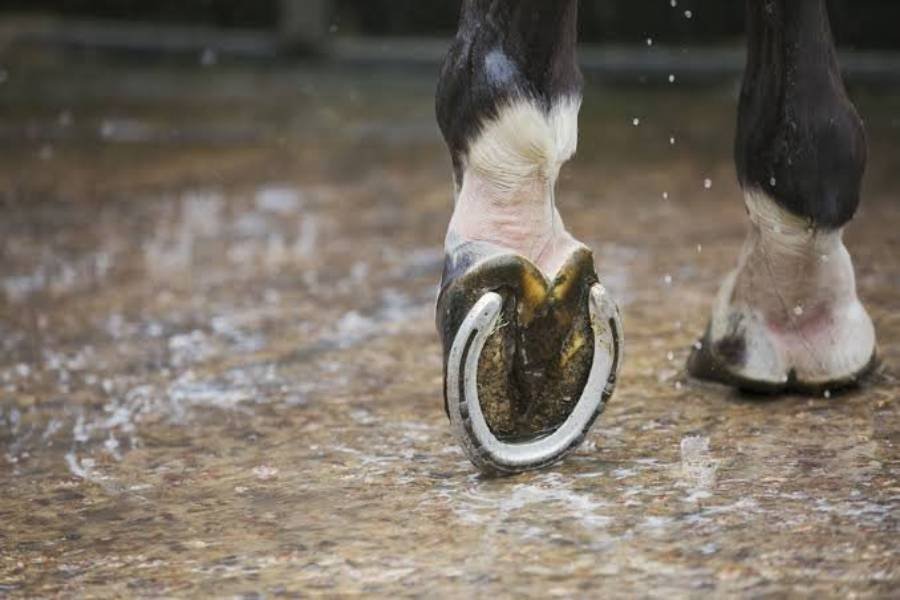
A horseshoe spiritually symbolizes good luck, protection, prosperity, abundance, strength, and positive fortune. For centuries, people have treated the horseshoe as more than a practical object used to protect a horse’s hooves. Its distinctive shape, its traditional construction from iron, and its association with horses have helped turn it into a recognizable symbol of favorable fortune and protection.
The spiritual meaning of a horseshoe comes from several layers of folklore and cultural tradition. Iron has historically carried protective symbolism in European folklore, while horses represent qualities such as strength, vitality, freedom, and endurance. Legends involving blacksmiths and protective iron objects further strengthened the horseshoe’s association with keeping harmful influences away. These traditions eventually contributed to the practice of displaying horseshoes around homes and carrying smaller horseshoe symbols as lucky charms.
The meaning also changes according to how the horseshoe is used. A horseshoe pointing upward is commonly interpreted as holding or collecting good luck, while a downward-facing horseshoe can symbolize pouring luck onto those beneath it in some traditions. Hanging one above a doorway, finding one unexpectedly, receiving one as a gift, or wearing horseshoe jewelry can therefore carry different symbolic meanings. These interpretations reflect folklore and spiritual belief rather than scientifically demonstrated supernatural effects.
What Does a Horseshoe Mean Spiritually?
A horseshoe spiritually represents six main meanings: good luck, protection, prosperity, abundance, strength, and positive fortune. Good luck and protection are the two meanings most strongly associated with the symbol, while prosperity, abundance, and strength develop from its broader connections with horses, iron, and traditional folklore. The horseshoe can therefore function as both a good-luck charm and a protective symbol depending on how and where it is used.
Good luck is the most recognizable spiritual meaning of a horseshoe. The symbol is traditionally kept in homes, displayed above entrances, given as a gift, or worn as jewelry to represent favorable fortune. In this context, the horseshoe does not represent one specific fortunate event. It expresses a broader wish for beneficial circumstances, successful outcomes, and continued good fortune.
Protection is the second major spiritual meaning of a horseshoe. This interpretation is closely connected with iron, the material traditionally used to make horseshoes. European folklore attributed protective qualities to iron and associated it with the ability to repel harmful supernatural forces. Placing an iron horseshoe near an entrance consequently combined the symbolic properties of iron with the doorway, a boundary between the protected home and the outside world.
Prosperity and abundance extend the horseshoe’s symbolism from receiving luck to maintaining favorable circumstances. A person may use a horseshoe to represent hopes for financial stability, a successful household, a thriving relationship, or progress in a new stage of life. This explains why horseshoe imagery can appear in contexts involving weddings, new homes, and other beginnings where prosperity is wished for the recipient.
Strength is connected to both the horse and the iron horseshoe itself. Horses have long been associated symbolically with power, endurance, movement, and vitality, while iron represents physical durability. When these associations are combined, the horseshoe can represent the strength required to continue moving forward despite difficulties.
Positive fortune connects these meanings into a single spiritual symbol. A horseshoe may represent attracting favorable circumstances, preserving existing blessings, or symbolically guarding them against harmful influences. The precise interpretation depends on cultural tradition, orientation, placement, and personal belief rather than one universal spiritual rule.
| Spiritual meaning | What the horseshoe symbolizes |
|---|---|
| Good luck | Favorable circumstances and fortunate outcomes |
| Protection | Guarding a person or home from harmful influences |
| Prosperity | Continued success and material well-being |
| Abundance | Growth, blessings, and having sufficient resources |
| Strength | Endurance, resilience, and the power to move forward |
| Positive fortune | Attracting or preserving favorable circumstances |
Why Is a Horseshoe Considered a Symbol of Good Luck?
A horseshoe is considered a symbol of good luck because several older symbolic associations—iron, horses, blacksmithing, and protective folklore—gradually became connected with the same object. Rather than coming from one universally established origin, horseshoe luck developed through overlapping traditions that treated the object and its material as favorable or protective.
Iron plays an important role in this symbolism. Traditional European folklore attributed unusual protective properties to iron, particularly against supernatural beings and harmful forces. Because historical horseshoes were made from iron, the horseshoe inherited part of this protective reputation. An everyday object associated with iron could consequently become an amulet when placed in a symbolic location such as the entrance to a home.
The horse adds another layer of meaning. Horses have been associated with strength, endurance, movement, status, and vitality in different societies. A horseshoe protects the hoof of an animal capable of carrying people and goods over long distances, creating a natural symbolic connection between the object and safe movement or continued progress. In spiritual interpretation, these qualities allow the horseshoe to represent not only random luck but also favorable movement through life.
Blacksmiths strengthened the connection between horseshoes and folklore because they worked directly with iron and fire. Their ability to heat, shape, and transform metal made blacksmithing an unusual and highly valued craft in earlier societies. Folkloric traditions consequently surrounded both blacksmiths and the objects they produced with symbolic associations that went beyond their practical functions.
These meanings eventually converged around the horseshoe as a good-luck charm. Keeping one in a home can symbolize preserving favorable fortune, giving one to another person can express a wish for future success, and wearing a horseshoe pendant can turn the larger household symbol into a personal charm. The horseshoe represents good luck because tradition accumulated several favorable meanings around the same object, not because its shape or material has been scientifically shown to alter future events.
Why Does a Horseshoe Symbolize Protection?
A horseshoe symbolizes protection because traditional folklore connects its iron material with defense against harmful supernatural forces and its placement with guarding important boundaries such as the entrance to a home. This protective meaning developed alongside the horseshoe’s association with good luck, making protection one of its most established symbolic interpretations.
Iron is central to this meaning. In European folklore, iron was regarded as a material capable of repelling or weakening supernatural beings and harmful influences. Horseshoes were traditionally forged from iron, so an ordinary object designed to protect a horse’s hoof could acquire a second, symbolic protective function. The connection follows a clear symbolic relationship: iron represented defense, the horseshoe was made from iron, and the horseshoe consequently became associated with protection.
The horseshoe’s original physical function reinforces this symbolism. A horseshoe protects a horse’s hoof from excessive wear and damage when traveling over hard or uneven surfaces. Symbolically, an object that provides physical protection can represent protection in a broader spiritual sense. This relationship helps explain why the horseshoe became associated with safety, resilience, and protection during difficult journeys or transitions.
Doorways strengthened this protective meaning because an entrance represents a boundary between two spaces. The inside represents the household, while the outside represents people, events, and influences entering it. Hanging a horseshoe near a doorway therefore places a protective symbol directly at the point where these two spaces meet. In traditional belief, the horseshoe could symbolically guard the household while simultaneously welcoming good fortune through the entrance.
The protective interpretation is also reinforced by folklore surrounding blacksmiths. Blacksmiths worked with iron and fire to transform raw metal into useful objects, including horseshoes. Because iron already carried protective associations in folklore, objects shaped by blacksmiths could acquire symbolic importance beyond their practical purpose. The horseshoe brought together three elements—protective iron, transformative craftsmanship, and an object that physically protects an animal—into one recognizable symbol.
In modern spiritual practice, a horseshoe may consequently represent protection from negative influences, harmful intentions, or unwanted energy. These interpretations should be understood as spiritual and folkloric symbolism rather than evidence that a horseshoe creates a measurable protective force. Its spiritual significance comes from the meaning people and traditions assign to the object.
What Does a Horseshoe Symbolize for Prosperity and Abundance?
A horseshoe symbolizes prosperity and abundance by representing continued good fortune, growth, sufficient resources, and favorable conditions for future success. These meanings are related to good luck but are not identical to it. Luck concerns favorable circumstances or outcomes, while prosperity and abundance describe the continuation or accumulation of favorable conditions over time.
Prosperity gives the horseshoe a forward-looking meaning. A person beginning a new stage of life may use the symbol to express the hope that the new beginning will develop successfully. For example, giving a horseshoe for a new home can symbolize wishes for a prosperous household, while using horseshoe imagery around a wedding can represent hopes for a fortunate and flourishing marriage. The object functions as a symbolic wish rather than a mechanism that guarantees the desired outcome.
Abundance broadens this interpretation beyond money. In spiritual symbolism, abundance can refer to resources, opportunities, supportive relationships, personal growth, or other things a person considers valuable. A horseshoe associated with abundance can therefore represent having enough and continuing to receive what is needed rather than simply becoming wealthy.
The horseshoe’s curved form also contributes to some interpretations of abundance. When positioned with its open ends upward, its U-shaped form resembles a container capable of holding something. Traditional interpretations consequently describe an upward horseshoe as holding or collecting luck rather than allowing it to escape. Within this symbolic framework, preserving luck naturally connects with preserving prosperity and abundance.
The horse itself adds another semantic layer. Horses historically enabled transportation, agricultural work, trade, and movement, making them valuable animals in many societies. Their symbolic associations with strength, endurance, and forward movement complement the idea of prosperity because sustained progress requires both resources and the ability to continue moving toward a goal.
For this reason, good luck, prosperity, and abundance describe three related but distinct aspects of horseshoe symbolism. Good luck represents favorable circumstances, prosperity represents continuing success and well-being, and abundance represents sufficient or growing resources and blessings. Together, they explain why the horseshoe is frequently used as a positive symbol during new beginnings and important life transitions.
What Does a Horseshoe Pointing Up Mean Spiritually?
A horseshoe pointing upward spiritually symbolizes holding, collecting, and preserving good luck. In this orientation, the horseshoe’s two ends point toward the sky and its curved base forms a U-shaped container. Traditional symbolism interprets this shape as a vessel capable of keeping favorable fortune from escaping.
The idea of “holding luck” connects the horseshoe’s orientation with its broader meanings of prosperity and abundance. Good fortune is not only something to attract; it is also something to preserve. An upward-facing horseshoe therefore represents maintaining favorable circumstances, protecting existing blessings, and creating symbolic space for additional prosperity to accumulate.
This interpretation explains why an upward horseshoe is frequently associated with homes and entrances. A person following this tradition may hang the horseshoe with both ends pointing upward to symbolize keeping good fortune within the household. The orientation adds a second layer of meaning to the object: the horseshoe represents luck itself, while its upward position represents retaining that luck.
The upward orientation can also symbolize receptivity. Because the horseshoe resembles an open vessel, modern spiritual interpretations may treat it as a symbol of being open to opportunities, blessings, positive experiences, and personal growth. This meaning extends the older idea of collecting luck into a broader spiritual concept of receiving favorable influences.
However, an upward-facing horseshoe is a traditional symbolic interpretation rather than a universal spiritual rule. Horseshoe customs differ between communities and traditions, and an orientation considered lucky in one context may have a different interpretation in another. Pointing the horseshoe upward should therefore be understood as one established way of expressing good fortune rather than the only correct way to display it.
What Does a Horseshoe Pointing Down Mean Spiritually?
A horseshoe pointing downward spiritually symbolizes pouring, sharing, or spreading good luck in traditions that interpret the open ends as releasing fortune onto the people below. This interpretation is especially relevant when a horseshoe is displayed above an entrance because anyone passing beneath the symbol can figuratively receive its luck.
The downward orientation reverses the container symbolism of an upward horseshoe. Instead of collecting favorable fortune, the open ends face toward the ground and create the image of something being poured out. Within this interpretation, the horseshoe acts as a source from which luck and blessings flow outward rather than a vessel designed to keep them inside.
This meaning can make a downward horseshoe appropriate as a symbol of generosity and shared fortune. A household or space displaying it may symbolically extend good wishes to family members, guests, or anyone who passes beneath it. The emphasis shifts from possessing luck to distributing it.
A competing belief gives the same orientation the opposite meaning. According to this interpretation, turning a horseshoe downward allows the luck stored inside it to fall out. People who follow this belief prefer an upward orientation because the U-shaped horseshoe can symbolically retain fortune. The disagreement demonstrates how the same physical arrangement can produce different meanings when different symbolic traditions are applied to it.
For this reason, a downward horseshoe does not universally represent either good luck or bad luck. Its meaning depends on the tradition being followed. It can represent spreading good fortune in one interpretation and losing stored fortune in another.
Should a Horseshoe Face Up or Down for Good Luck?
There is no universally accepted direction that a horseshoe must face for good luck. Pointing it upward traditionally represents collecting and retaining fortune, while pointing it downward can represent pouring or sharing fortune. The preferred orientation therefore depends on the symbolic meaning a person wants the horseshoe to express and the tradition they follow.
An upward orientation is the clearer choice when the intended meaning is preservation. Its U-shaped position resembles a container, supporting interpretations such as holding luck, preserving blessings, maintaining prosperity, and remaining receptive to favorable opportunities. Someone displaying a horseshoe primarily as a symbol of keeping good fortune may therefore choose this orientation.
A downward orientation is appropriate within traditions that emphasize distribution. The open ends face the people or space below, creating the symbolic image of luck being poured outward. This interpretation works particularly well when the horseshoe is positioned above a doorway and represents extending favorable fortune to those who enter.
The belief that downward horseshoes lose their luck creates the main disagreement between the two orientations. This does not mean one interpretation is objectively correct and the other is incorrect. Horseshoe symbolism developed through folklore and cultural customs rather than a single standardized spiritual system, so different communities can preserve contradictory interpretations.
| Horseshoe position | Common spiritual interpretation |
|---|---|
| Pointing up | Holds, collects, or preserves good luck |
| Pointing down | Pours, shares, or spreads good luck |
| Pointing down in an alternative tradition | Allows stored luck to escape |
Choose the upward position when the horseshoe is intended to symbolize holding and preserving good fortune. Choose the downward position when following a tradition in which the horseshoe symbolizes sharing or pouring good fortune. In either case, the spiritual meaning comes from the tradition and intention attached to the orientation rather than from a proven supernatural effect.
What Does Hanging a Horseshoe Over a Door Mean Spiritually?
Hanging a horseshoe over a door spiritually symbolizes protecting the home and welcoming or preserving good fortune. The placement combines two important elements of horseshoe symbolism: the horseshoe acts as a traditional protective and lucky object, while the doorway represents the boundary through which people and outside influences enter a home.
Protection is one of the main reasons the doorway carries symbolic importance. An entrance separates the private space of the household from the outside environment, making it a natural location for protective charms in folk traditions. Placing a horseshoe at this boundary symbolically positions protection where unwanted influences would enter. The practice therefore extends the horseshoe’s protective meaning from an individual object to the entire household.
The doorway also connects the horseshoe with hospitality and incoming fortune. Every person, opportunity, or change entering a home passes symbolically through its threshold. A horseshoe placed above that threshold can consequently represent welcoming favorable circumstances while guarding the household against harmful ones. In this interpretation, the horseshoe performs two symbolic roles: it welcomes what is beneficial and guards against what is considered harmful.
Orientation adds another layer to the meaning. A horseshoe placed above a door with its ends pointing upward commonly represents collecting and preserving luck within the home. A downward-facing horseshoe can represent pouring good fortune onto people who pass underneath it in traditions that follow this interpretation. Other traditions avoid the downward position because they believe it allows accumulated luck to escape.
The intention behind the placement therefore matters as much as its direction. Someone may hang a horseshoe above the main entrance to represent household protection, prosperity, good fortune, or a combination of these meanings. The practice reflects cultural and spiritual symbolism rather than evidence that the object physically blocks negative energy or changes future events.
Where Did the Spiritual Meaning of the Horseshoe Come From?
The spiritual meaning of the horseshoe developed from several overlapping traditions involving iron, horses, blacksmiths, protective folklore, and later legends about the horseshoe as a defense against evil. There is no single origin that explains every horseshoe belief. Its modern symbolism is better understood as the accumulation of meanings attached to the object over time.
Iron provides one of the most important foundations for this symbolism. In European folklore, iron was associated with protection against supernatural beings and harmful forces. Because horseshoes were traditionally made from iron, they could inherit these protective associations. Their practical availability also made them suitable objects to keep or display rather than leaving protective iron symbolism attached only to specialized weapons or tools.
Blacksmiths added another layer to the tradition. Their work involved fire, intense heat, iron, and the physical transformation of metal. In societies where metalworking required specialized knowledge, the blacksmith occupied a distinctive position because the craft could turn raw material into durable tools, weapons, and horseshoes. Folklore surrounding ironworking consequently helped reinforce the symbolic connection between forged objects and protection.
The horse itself contributed meanings of strength, endurance, vitality, and movement. A horseshoe physically protects the hoof and allows a horse to continue traveling over demanding surfaces. This practical relationship creates a natural symbolic association with safe journeys, resilience, and forward movement. Over time, the horseshoe could represent the favorable qualities associated with the animal while remaining a portable object that people could display or carry.
A well-known Christian legend connects horseshoe symbolism with Saint Dunstan, a tenth-century English saint who worked as a metalworker before becoming Archbishop of Canterbury. In later folklore, the Devil supposedly approached Dunstan and asked him to fit a horseshoe to his hoof. Dunstan instead caused him great pain and agreed to remove the horseshoe only after the Devil promised not to enter a place where a horseshoe was displayed. The story provides a direct folkloric explanation for hanging horseshoes at entrances as protection against evil.
The Saint Dunstan account should be treated as legend rather than documented evidence that the supernatural event occurred. Its importance lies in explaining how Christian folklore reinforced an already meaningful connection among horseshoes, iron, doorways, and protection. The legend gave people a memorable narrative for why displaying a horseshoe could guard a building against evil.
These traditions eventually converged into the horseshoe symbolism recognized today. Iron contributed protection, the horse contributed strength and movement, blacksmithing contributed transformative craftsmanship, and folklore connected the object with defense against harmful forces. Later customs expanded these associations into good luck, prosperity, and abundance. The spiritual meaning of the horseshoe therefore developed through accumulated cultural symbolism rather than from one historical event or one universal belief system.
What Does Finding a Horseshoe Mean Spiritually?
Finding a horseshoe spiritually symbolizes unexpected good luck, protection, new opportunities, and positive change. Because the horseshoe already carries strong associations with favorable fortune, discovering one unexpectedly can be interpreted as encountering the symbol of luck rather than deliberately choosing or purchasing it.
Unexpected fortune is the most direct interpretation. Finding an object traditionally associated with luck can represent favorable circumstances arriving without being actively sought. In this sense, the discovery may serve as a personal reminder to recognize opportunities, appreciate existing blessings, or approach an upcoming change with optimism.
Finding a horseshoe can also carry a protective meaning. Traditional horseshoe symbolism connects iron with protection and the horseshoe itself with guarding people or places against harmful influences. Discovering one may therefore be interpreted spiritually as a symbol of safety, resilience, or reassurance during a difficult period.
A third interpretation involves transition and opportunity. Horses are symbolically associated with movement, endurance, and forward progress, while a horseshoe enables a horse to travel with greater protection for its hooves. Finding a horseshoe can consequently represent moving into a new stage of life, continuing along a chosen path, or recognizing an opportunity that encourages progress.
The circumstances surrounding the discovery can influence its personal meaning. Finding a horseshoe while beginning a new job, moving home, entering a relationship, or making an important decision may cause someone to connect the symbol with that particular transition. The event gains meaning through the relationship between the traditional symbolism of the horseshoe and the finder’s current circumstances.
Finding a horseshoe should not, however, be treated as a guaranteed prediction of future events. Its spiritual significance comes from symbolic interpretation rather than evidence that discovering one causes good fortune. A person can regard the experience as meaningful without assuming that it guarantees wealth, success, or protection.
What Does Receiving a Horseshoe as a Gift Mean?
Receiving a horseshoe as a gift symbolizes a wish for good luck, protection, prosperity, and success in a new stage of life. Unlike finding a horseshoe unexpectedly, receiving one involves another person intentionally passing the symbol and its positive meanings to the recipient.
Good luck is the clearest message behind the gift. A person who gives a horseshoe is symbolically wishing favorable circumstances upon the recipient. The horseshoe therefore functions similarly to a good-luck charm, but its meaning becomes interpersonal: one person is expressing a positive intention for another person’s future.
A horseshoe gift can be particularly meaningful during a transition. Weddings, housewarmings, new businesses, and other new beginnings provide natural contexts because each involves entering an uncertain future with hopes for a positive outcome. For example, a horseshoe given to newlyweds can symbolize good fortune and prosperity in married life, while one given for a new home can represent protection and abundance for the household.
Protection provides a second layer of meaning. A decorative horseshoe intended for a home may combine the giver’s wish for good fortune with the traditional idea of protecting the household. When displayed near an entrance, its meaning can become even more specific by connecting the gift with the symbolism of the doorway as a protected threshold.
The meaning ultimately depends on the intention behind the gift. A horseshoe may communicate congratulations, encouragement, protection, or wishes for prosperity depending on the occasion. The common element is positive intention: the giver uses an established symbol of favorable fortune to express hopes for the recipient’s well-being and future.
What Does Wearing Horseshoe Jewelry Mean Spiritually?
Wearing horseshoe jewelry spiritually symbolizes carrying good luck, protection, strength, or positive fortune with you in a personal form. A horseshoe necklace, pendant, bracelet, charm, or ring transforms a symbol traditionally displayed around homes and entrances into an object that remains physically close to the wearer.
Good luck is the most common meaning of horseshoe jewelry. Instead of placing the symbol in one fixed location, the wearer carries it throughout daily life. This makes the horseshoe a personal good-luck charm associated with favorable opportunities, confidence, or a general wish for positive outcomes.
Protection is another important interpretation. Traditional horseshoes derive part of their protective symbolism from iron and folklore surrounding the material. Modern horseshoe jewelry does not necessarily contain iron, but it can preserve the symbolic form and meaning of the older protective object. In this context, the shape itself functions as the recognizable symbol.
Horseshoe jewelry can also represent strength and resilience. The association comes partly from the horse, an animal symbolically connected with endurance, vitality, freedom, and forward movement. Someone may therefore wear a horseshoe not because they expect supernatural luck but because the symbol reminds them to remain resilient and continue moving forward.
Personal intention can further modify the meaning. One person may wear a horseshoe necklace as a lucky charm, another may associate it with protection, while someone with a personal connection to horses may interpret it as a symbol of strength, freedom, or identity. A horseshoe received from a significant person can additionally represent the relationship or the giver’s wishes for the wearer.
Wearing horseshoe jewelry therefore changes the location of the symbol without removing its core meanings. The traditional horseshoe protects or brings fortune to a place, while horseshoe jewelry applies symbolism such as luck, protection, and strength to the individual wearing it.
Read more: 9 Spiritual Meanings of Dogs Barking Explained
Does Horseshoe Symbolism Have the Same Meaning in Every Culture?
No. Horseshoe symbolism does not have the same meaning in every culture, tradition, or historical period. Good luck and protection are widespread associations, but the reasons behind these meanings and the ways people display a horseshoe vary. Differences are especially visible in beliefs about orientation, doorway placement, iron, and the religious or folkloric stories used to explain the symbol.
European folklore provides an important foundation for the horseshoe’s protective symbolism. Iron was traditionally associated with protection against harmful supernatural beings, so an iron horseshoe could function symbolically as more than an object used on a horse. Placing it near a home or entrance extended this protective association to the household.
Christian folklore added another interpretation through the legend of Saint Dunstan and the Devil. According to the legend, Dunstan used a horseshoe against the Devil and obtained a promise that the Devil would avoid places displaying the object. This story strengthened the relationship between horseshoe → doorway → protection from evil. The account belongs to religious folklore and should not be treated as evidence that the supernatural event historically occurred.
Orientation provides one of the clearest examples of conflicting traditions. In one interpretation, a horseshoe should point upward because its U shape acts like a container that holds good luck. Turning it downward would allow that fortune to escape. Another interpretation gives a downward-facing horseshoe a positive meaning because its open ends symbolically pour good fortune onto people passing beneath it.
Modern spiritual interpretations broaden the symbol further. A horseshoe can represent positive energy, abundance, opportunity, resilience, or progress even when the person using it does not follow the older folklore associated with iron or supernatural protection. In these contexts, the object works as a personal symbol whose traditional associations are adapted to an individual spiritual practice.
These differences mean that statements such as “a horseshoe must always point upward” are too absolute. The meaning of a horseshoe depends on the tradition, placement, orientation, and intention attached to it. Identifying the specific cultural or folkloric context provides a more accurate interpretation than treating every horseshoe custom as part of one universal belief.
Is a Horseshoe a Spiritual Symbol or Just a Superstition?
A horseshoe can be both a spiritual symbol and an object of superstition because the two descriptions address different aspects of its meaning. It functions as a spiritual symbol when people use it to represent concepts such as protection, good fortune, prosperity, strength, or positive intention. It becomes part of superstition when specific supernatural outcomes are attributed to possessing, finding, or positioning the object.
The distinction becomes clearer when symbolic meaning is separated from causal claims. Wearing a horseshoe pendant as a reminder of strength or giving a horseshoe to newlyweds as a wish for prosperity uses the object symbolically. Claiming that a particular horseshoe will necessarily produce wealth or prevent a specific misfortune makes a stronger supernatural claim.
Folklore explains why these two functions overlap. Stories involving protective iron, blacksmiths, evil forces, and lucky horseshoes gave communities narratives through which the object acquired meaning. Repeating these customs across generations allowed the horseshoe to remain recognizable as a symbol even when people no longer interpreted the underlying legends literally.
A person therefore does not need to believe that a horseshoe possesses supernatural power to find spiritual value in it. Symbols can represent intentions, values, memories, and aspirations. A horseshoe displayed above a doorway may remind someone of protection and hospitality, while horseshoe jewelry may represent resilience or a desire to approach new opportunities positively.
At the same time, spiritual interpretations should not be presented as scientifically established effects. There is no basis for treating the horseshoe itself as a guarantee of luck, prosperity, protection, or future success. These meanings belong to folklore, cultural tradition, personal spirituality, and symbolic interpretation.
The horseshoe has endured as a spiritual symbol because several meanings converge in one simple object. Its iron construction connects it with traditional protection, its relationship with the horse evokes strength and movement, its curved form supports interpretations about holding or sharing luck, and centuries of folklore connect it with favorable fortune. Whether displayed above a door, discovered unexpectedly, received as a gift, or worn as jewelry, the horseshoe ultimately represents the meaning and intention that a person or tradition places upon it.