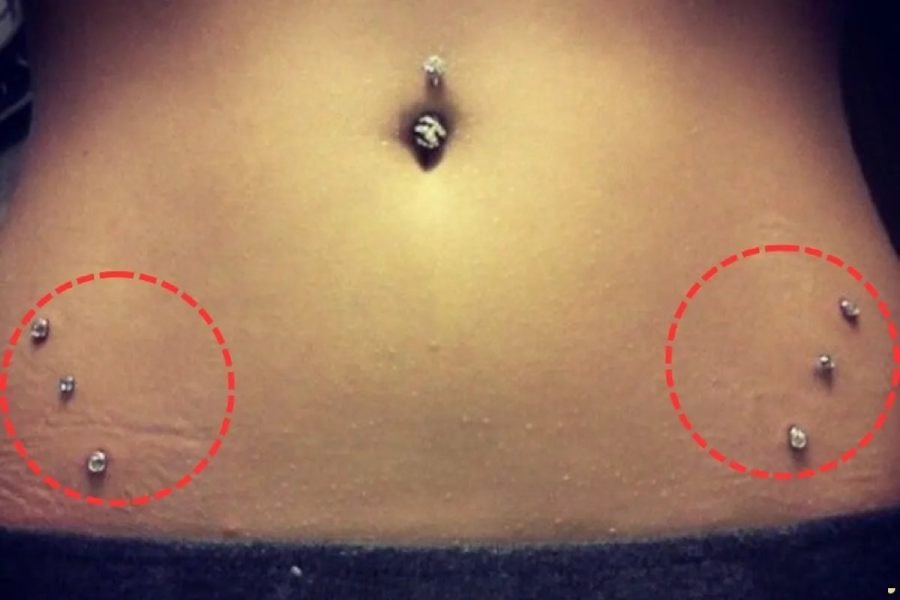
A hip piercing can spiritually symbolize self-expression, confidence, sensuality, feminine energy, personal transformation, independence, creativity, connection with the body, and sacral chakra energy. Rather than carrying one fixed spiritual definition, its meaning depends largely on the intention, beliefs, and personal experiences of the person wearing it.
The location of the piercing contributes to these interpretations. The hips are closely associated with movement, physical identity, sensuality, and the pelvic region, so decorating this part of the body can become a personal symbol of body acceptance, autonomy, or transformation. In modern spiritual interpretations, the area is also associated with the sacral chakra, or Svadhisthana, which is linked with themes such as creativity, emotions, pleasure, sexuality, and relationships. This association does not mean that a hip piercing automatically activates or balances the chakra.
A hip piercing can therefore have spiritual significance without having a universal spiritual meaning. Its symbolism changes according to why it was chosen and what the wearer intends it to represent. The 9 interpretations below explain these meanings in detail, including how left or right placement and sacral chakra symbolism can influence personal interpretations.
What Does a Hip Piercing Mean Spiritually?
A hip piercing spiritually represents personal identity, body empowerment, transformation, sensuality, and intentional self-expression when the wearer assigns those meanings to it. There is no single spiritual tradition that gives every hip piercing the same symbolic definition. Its significance comes primarily from the relationship between the location of the piercing, the act of modifying the body, and the intention behind the choice.
The hip area contributes to this symbolism because it is connected physically with movement and the pelvic region and symbolically with themes such as embodiment, sensuality, creativity, and personal autonomy. Choosing to decorate this relatively private part of the body can therefore represent a form of expression that exists primarily for the wearer rather than for public recognition. For example, someone who gets a hip piercing after overcoming insecurity about their body may view it as a symbol of acceptance and renewed confidence.
Spiritual interpretations can add another layer of meaning. In chakra-based belief systems, the lower abdominal and pelvic region is associated with Svadhisthana, or the sacral chakra, which represents themes including creativity, emotions, pleasure, sexuality, and relationships. This proximity creates a symbolic connection between hip piercings and sacral chakra energy for some people. However, the physical act of piercing the hip does not inherently open, activate, or balance a chakra.
For this reason, the spiritual meaning of a hip piercing is best understood as intentional symbolism rather than a fixed property of the piercing itself. Nine interpretations are especially relevant: self-expression, confidence and body empowerment, sensuality, feminine energy, personal transformation, freedom and independence, creativity, connection with the body, and sacral chakra energy.
What Are the 9 Spiritual Meanings of a Hip Piercing?
There are 9 main spiritual meanings associated with hip piercing, although an individual piercing may represent one meaning, several meanings, or none of them. The interpretation depends on the wearer’s beliefs, personal experiences, and reason for choosing the piercing.
1. Self-expression
A hip piercing can symbolize the freedom to express an identity through the body. Body modification changes physical appearance intentionally, allowing jewelry placement, design, and personal style to become part of how someone represents themselves.
Hip piercings have a particularly personal dimension because they can remain concealed beneath clothing. A visible facial piercing may become part of a person’s public appearance, while a hip piercing can retain its significance even when few other people see it. The symbolism can therefore focus less on receiving attention and more on making an intentional choice about one’s own body.
For example, a person may choose a hip piercing to represent an identity or aesthetic that they previously felt unable to express. In that context, the jewelry becomes a physical reminder of their decision to express themselves according to their own values.
2. Confidence and body empowerment
A hip piercing can represent confidence, body ownership, and personal agency when the decision to get it is connected with accepting or reclaiming the body. The spiritual significance comes from making a deliberate choice about one’s physical form rather than from the piercing automatically producing confidence.
Body empowerment centers on having agency over how the body is presented, decorated, and understood. Because the hips can be a sensitive area of body image for some people, intentionally drawing attention to this area may carry a particularly strong personal meaning. The piercing can mark a shift from avoiding a part of the body to consciously accepting or celebrating it.
For example, someone who previously felt uncomfortable with their hips may choose jewelry there after developing a more accepting relationship with their appearance. The piercing then symbolizes that personal change. Another person who already feels confident may simply use the piercing to express that confidence. The same physical modification can therefore represent different experiences of empowerment.
3. Sensuality
A hip piercing can symbolize sensuality and conscious connection with physical experience. The hips are associated with body movement and the pelvic region, while hip jewelry deliberately decorates an area that is often treated as intimate or private. These characteristics make sensuality a natural personal interpretation of the piercing.
Sensuality and sexuality are related concepts, but they are not identical. Sensuality can refer more broadly to awareness of the body, physical pleasure, movement, attractiveness, and comfort with embodied experience. A person does not need to assign an explicitly sexual meaning to a hip piercing for it to symbolize sensuality.
For example, someone may associate their piercing with becoming more comfortable with their physical presence or allowing themselves to appreciate their body without seeking external approval. In this case, the spiritual symbolism concerns embodiment and self-acceptance rather than sexual attraction.
4. Feminine energy
A hip piercing can represent feminine energy within spiritual frameworks that associate femininity with receptivity, creativity, sensuality, emotional awareness, and nurturing qualities. The symbolic relationship comes from these spiritual concepts and the location of the piercing rather than from a universal meaning attached to hip jewelry.
Feminine energy in this context does not mean biological sex. It describes a group of symbolic qualities, so a person of any gender can identify with or seek to express them. The hip and pelvic region can strengthen this interpretation because modern spiritual practices frequently connect this area with creativity, sensuality, emotions, and reproductive symbolism.
A wearer might therefore use a hip piercing as a personal reminder to embrace receptivity, emotional expression, or sensual confidence. This is an individual spiritual interpretation rather than evidence that hip piercings have historically represented feminine energy across cultures.
5. Personal transformation
A hip piercing can symbolize a transition from one stage of identity or life into another. Physical changes are sometimes used as markers for internal changes because they create a visible and lasting reminder of a decision, experience, or turning point.
The mechanism behind this symbolism is intentional association. A person experiences a significant change, chooses a physical marker connected with that change, and then assigns the marker a specific meaning. The piercing can consequently represent what happened before the transition, the decision to change, or the identity that followed it.
For example, a person might get a hip piercing after leaving an unhealthy relationship, reaching a personal milestone, becoming more independent, or developing a healthier relationship with their body. The jewelry does not cause the transformation. Instead, it serves as a symbol of a transformation the wearer has already experienced or intentionally chosen.
6. Freedom and independence
A hip piercing can represent freedom through conscious control over personal appearance and bodily choices. This interpretation is especially relevant when the decision reflects autonomy rather than an attempt to satisfy another person’s expectations.
Independence does not necessarily mean rebellion. Rebellion requires opposition to a rule, authority, or expectation, whereas independence can simply mean making a decision according to one’s own values. A person can therefore view a hip piercing as a symbol of autonomy even when nobody objects to the piercing.
For example, someone who previously based appearance choices on family, social, or relationship expectations may choose a hip piercing after deciding to define their appearance independently. In this situation, the piercing becomes a private reminder that ownership of the decision rests with the wearer.
7. Creativity
A hip piercing can symbolize creativity because body adornment allows a person to intentionally alter and personalize their physical appearance. Jewelry style, placement, symmetry, and the relationship between the piercing and other forms of body art can all function as elements of creative expression.
There is also a separate spiritual interpretation involving the sacral chakra. Chakra-based traditions associate Svadhisthana with creativity, alongside emotions, pleasure, sexuality, and relationships. Because the sacral chakra is associated with the lower abdominal and pelvic area, some modern spiritual interpretations extend these themes to jewelry or body modifications placed near the hips.
These two meanings should remain distinct. A hip piercing can express creativity simply because body adornment is a creative choice, without any chakra belief. Alternatively, a wearer who follows chakra-based practices may intentionally connect the piercing with the creative qualities they associate with the sacral chakra.
8. Connection With the Body
A hip piercing can represent embodiment, or a more conscious relationship with the physical body. In spiritual contexts, embodiment emphasizes being present in physical experience rather than treating spirituality and the body as completely separate.
An intentionally meaningful piercing can support this symbolism because it draws awareness to a specific part of the body. Seeing or touching the jewelry may remind the wearer of the intention they attached to it, such as body acceptance, presence, confidence, or respect for personal boundaries. The symbolic function comes from this repeated association rather than from a special property of the jewelry.
For example, a person who has worked to become more accepting of their physical appearance may treat a hip piercing as a reminder to remain connected with that progress. The piercing does not create embodiment by itself; it functions as a personal symbol of the relationship the wearer wants to maintain with their body.
9. Sacral chakra energy
A hip piercing can symbolize sacral chakra energy when the wearer connects its location with Svadhisthana and the qualities represented by this chakra. The sacral chakra is generally associated with the lower abdomen and with themes such as creativity, pleasure, emotions, sexuality, and relationships.
The connection is primarily symbolic. A hip piercing is physically positioned near the broader pelvic area, making it possible for someone who practices chakra-based spirituality to associate the jewelry with sacral themes. A person focusing on creativity, for example, might treat the piercing as a reminder to express ideas more freely. Someone focusing on emotional awareness might assign a different intention to the same placement.
A hip piercing should not, however, be treated as a traditional technique for opening, healing, or balancing Svadhisthana. The spiritual connection exists through location, symbolism, and personal intention rather than through the piercing automatically changing chakra energy. This distinction allows the piercing to hold meaningful spiritual symbolism without turning a personal belief into a universal claim.
Does the Side of a Hip Piercing Change Its Spiritual Meaning?
The side of a hip piercing can change its personal spiritual interpretation, but there is no universal rule stating that left and right hip piercings have fixed meanings. Differences arise mainly from spiritual systems that assign receptive qualities to the left side of the body and active or expressive qualities to the right side. A wearer can use these associations when choosing a placement, but the symbolism ultimately depends on personal beliefs and intention.
Left-right symbolism appears in different spiritual and energetic frameworks, and those frameworks do not always interpret the two sides identically. For this reason, a left hip piercing should not automatically be labeled feminine, intuitive, or receptive, nor should a right hip piercing automatically be labeled masculine, active, or assertive. These qualities are better understood as possible symbolic associations.
Placement can nevertheless add another layer of meaning when it is chosen deliberately. Someone who sees piercing as a marker of personal transformation, for example, may select a particular side because its symbolic qualities correspond with what they want the jewelry to represent. Someone who chooses the side only for aesthetics or anatomy may attach no left-right spiritual significance to it at all.
What Does a Left Hip Piercing Mean Spiritually?
A left hip piercing can symbolize receptivity, intuition, emotional awareness, and inward reflection within spiritual frameworks that associate the left side of the body with receiving energy. Under this interpretation, the piercing can represent an intention to become more receptive to emotions, inner guidance, relationships, or personal insight.
The key concept is receptivity rather than passivity. Receiving energy can symbolically refer to listening, observing, processing emotions, or becoming aware of internal experiences before acting on them. Combined with the symbolism of the hip area, these qualities can create a personal meaning centered on emotional connection, sensual awareness, or acceptance of the body.
For example, a person might intentionally choose the left hip after a period of emotional growth and use the piercing as a reminder to trust their inner responses. Another wearer might associate the placement with becoming more comfortable receiving affection or expressing vulnerable emotions. These interpretations come from the person’s spiritual framework and intention; they are not inherent properties of a left hip piercing.
What Does a Right Hip Piercing Mean Spiritually?
A right hip piercing can symbolize action, outward expression, assertiveness, and personal direction within spiritual frameworks that associate the right side with projecting or active energy. This interpretation places greater emphasis on expressing intentions externally rather than receiving or processing them internally.
Active energy can include taking initiative, establishing boundaries, expressing identity, pursuing goals, or turning an internal decision into visible action. When combined with a hip piercing, this symbolism can reinforce themes already associated with body modification, including autonomy, confidence, and freedom of self-expression.
For example, someone may choose a right hip piercing after deciding to become more assertive about personal boundaries or to express an identity they previously kept private. The piercing can then function as a physical reminder of that decision. As with left-side symbolism, the meaning comes from the wearer’s intention and belief system rather than from the right side having an objectively fixed spiritual property.
Is a Hip Piercing Connected to the Sacral Chakra?
A hip piercing can be symbolically connected to the sacral chakra because the piercing is located near the pelvic region, but getting a hip piercing is not an established method for opening, activating, or balancing this chakra. The connection is therefore best understood through spiritual symbolism rather than as a direct energetic effect of piercing the body.
The sacral chakra is known as Svadhisthana in the chakra system and is generally located symbolically in the lower abdominal region. It is associated with themes such as creativity, emotions, pleasure, sexuality, relationships, and the capacity to experience enjoyment. These attributes overlap with several symbolic meanings people may already assign to the hips, including sensuality, creative expression, and embodied experience.
This creates a three-part relationship between physical location, chakra symbolism, and personal intention. The hip is the physical location of the jewelry. Svadhisthana provides a spiritual framework through which the broader pelvic region can be interpreted. Personal intention determines whether the wearer actually connects the two. Proximity alone does not give every hip piercing a sacral chakra meaning.
For example, a wearer who wants to express creativity may associate hip jewelry with the creative symbolism of Svadhisthana. Another person may focus on pleasure and becoming more comfortable with their physical body. A third may use the piercing to represent emotional expression or a healthier relationship with sensuality. Each person uses the same general chakra framework while assigning a different personal intention to the piercing.
The distinction between symbolizing sacral chakra energy and changing sacral chakra energy is important. A piercing can serve as jewelry, a visual reminder, or a personal spiritual symbol without being treated as a mechanism that directly alters the chakra. Someone who follows chakra practices may therefore give a hip piercing strong spiritual significance while still recognizing that the significance comes from the beliefs and intentions attached to it.
Read more: Spiritual Meanings of Sternum Piercing
Can Your Intention Change the Spiritual Meaning of a Hip Piercing?
Personal intention can change the spiritual meaning of a hip piercing because the piercing does not carry one universal symbolic meaning on its own. The same placement can represent confidence for one person, transformation for another, and simply aesthetic preference for someone else. Intention provides the context that turns a physical modification into a personal spiritual symbol.
This process can be understood through a simple relationship: intention gives context to the piercing, context creates symbolism, and symbolism gives the piercing personal meaning. A person who chooses a hip piercing after becoming more comfortable with their body may associate it with confidence or embodiment. Someone who gets the same piercing after a major life transition may interpret it as a marker of growth and a new identity. The physical placement is similar, but the meanings differ because the experiences and intentions behind them are different.
Intention can also determine which spiritual framework a person uses to interpret the piercing. Someone interested in chakra practices may connect the hip area with sacral chakra themes such as creativity, pleasure, or emotional expression. Another person may focus on body autonomy and view the piercing as a symbol of independence. A third may choose the placement to celebrate sensuality without connecting it to chakras or energy at all.
The timing of a piercing can strengthen this personal symbolism. Getting one after reaching a milestone, ending a difficult period, developing greater body confidence, or beginning a new stage of life can turn the jewelry into a reminder of that transition. In these cases, the piercing represents an experience because the wearer deliberately associates the two.
A person can also give an existing hip piercing a new meaning. Spiritual symbolism does not necessarily need to be established when the piercing is first received. A wearer may later connect the jewelry with a new intention, experience, or personal value. This makes the spiritual meaning individual and changeable rather than permanently determined by the piercing’s location.
Does a Hip Piercing Always Have a Spiritual Meaning?
No, a hip piercing does not always have a spiritual meaning. People choose hip piercings for aesthetic preference, fashion, body modification, sensual expression, personal identity, or spiritual symbolism. A spiritual interpretation becomes relevant when the wearer intentionally connects the piercing with a belief, experience, energy concept, or symbolic purpose.
This distinction separates body modification from spiritual symbolism. Physically, a hip piercing is a form of body piercing involving jewelry placed around the hip area. Symbolically, the same piercing can acquire additional meaning when a person associates it with ideas such as confidence, transformation, independence, creativity, or connection with the body. The physical object remains the same; the context assigned to it changes.
For example, two people can wear visually similar hip piercings for completely different reasons. One may choose the piercing because they like how the jewelry looks with their personal style and assign no deeper meaning to it. The other may get it after overcoming body-image insecurity and view the jewelry as a permanent reminder of self-acceptance. Only the second person is intentionally using the piercing as a personal symbol, even though both have made the same type of body modification.
Spiritual meaning also does not require a person to adopt every interpretation associated with hip piercings. Someone can connect their piercing with transformation without believing it represents feminine energy. A person can associate it with the sacral chakra without interpreting the left and right hips differently. Another wearer may consider it a symbol of independence while having no interest in chakra-based spirituality.
The most accurate spiritual meaning of a hip piercing is therefore the meaning intentionally assigned to it by the wearer. The nine interpretations of self-expression, confidence, sensuality, feminine energy, transformation, independence, creativity, embodiment, and sacral chakra energy provide possible symbolic frameworks rather than fixed definitions. Personal intention determines which of these meanings, if any, becomes relevant to an individual piercing.