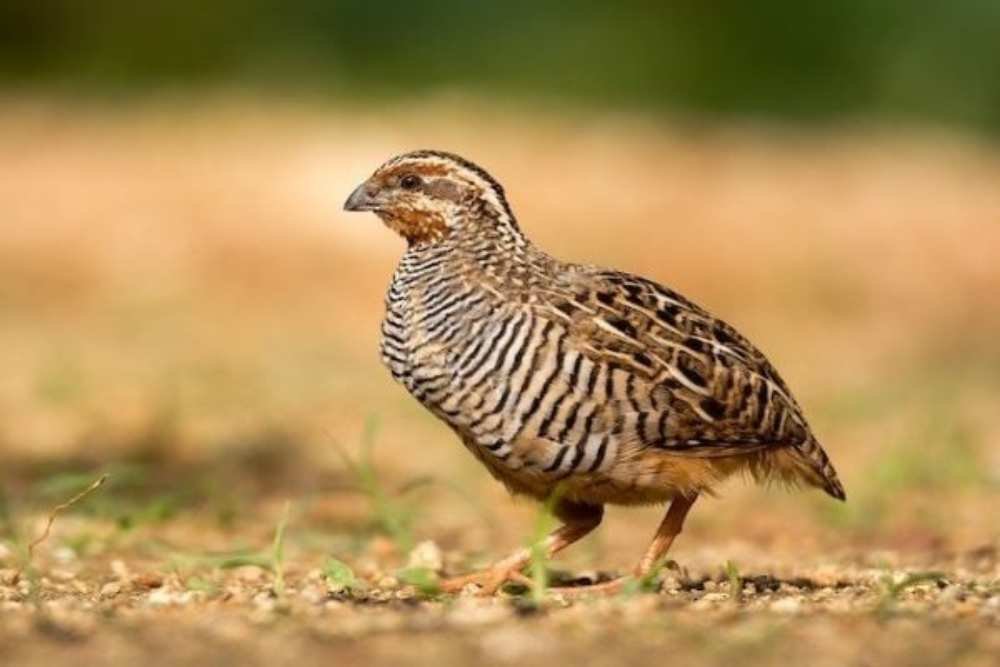
Quail spiritual meaning centers on protection, community, abundance, vigilance, grounding, and strong family bonds. Because quails spend much of their lives close to the ground and often rely on social groups for safety, their behavior has inspired spiritual interpretations connected with staying aware, protecting what matters, and finding strength through cooperation. Seeing a quail can therefore serve as a symbolic reminder to value security and connection while remaining attentive to changes around you.
The quail is also associated with abundance and provision, particularly through religious and cultural narratives in which the bird appears as a source of food. In spiritual interpretation, this association can represent recognizing available resources, appreciating what has already been provided, and using those resources wisely. These meanings are symbolic interpretations rather than predictions that a quail encounter will cause or foretell a specific event.
The meaning can also change according to context. Seeing a single quail, encountering a flock, watching a quail cross your path, dreaming about one, or interpreting the bird as a spirit animal can emphasize different aspects of its symbolism. Understanding these contexts makes it possible to interpret quail symbolism without separating the spiritual meaning from the characteristics and behaviors that helped shape it.
What Is the Spiritual Meaning of a Quail?
The spiritual meaning of a quail centers on 6 main themes: protection, community, abundance, vigilance, grounding, and family bonds. These meanings come from a combination of the bird’s observable characteristics, religious narratives, and later symbolic interpretations. Rather than representing one fixed spiritual message, the quail connects several ideas around security, relationships, resources, and awareness.
Protection is one of the central meanings associated with quail symbolism. Quails are relatively small birds that face threats from larger predators, so survival depends on awareness, concealment, and appropriate responses to danger. In symbolic interpretation, these characteristics connect the quail with protecting yourself without becoming isolated or constantly fearful. The message is not necessarily to withdraw from difficult situations but to recognize risks, maintain boundaries, and protect the people or resources that matter.
Community represents another important aspect of quail spiritual meaning. Quails can form social groups, making cooperation and proximity to others relevant characteristics when the bird is interpreted symbolically. Spiritually, this association emphasizes belonging, mutual support, and the security created through healthy relationships. A quail can therefore represent the idea that independence does not require complete self-reliance; family members, friends, and communities can provide practical and emotional forms of protection.
Abundance is associated with quail partly because the bird has historically appeared as a source of food and provision. The Biblical account of quails provided to the Israelites in the wilderness is one prominent example of this connection. Within spiritual symbolism, abundance does not have to mean sudden wealth. It can refer to recognizing resources that are already available, including food, shelter, relationships, knowledge, or opportunities. This makes the quail a symbol of provision as well as a reminder to distinguish genuine needs from excessive desire.
Vigilance and grounding develop from characteristics associated with the quail’s way of life. Quails spend substantial time on or near the ground and must remain attentive to their surroundings. Modern spiritual interpretation can transform these characteristics into a reminder to stay present, observe what is happening around you, and respond to circumstances based on what is actually occurring. Grounding in this context means maintaining contact with practical realities instead of allowing fear, expectations, or speculation to determine every decision.
Family bonds complete the main group of quail meanings. The protective and social aspects of the bird make family, nurturing, and responsibility natural extensions of its symbolism. A person drawn to quail imagery may use this symbolism to reflect on whom they protect, where they feel a sense of belonging, and whether their closest relationships provide mutual support. These associations are symbolic interpretations rather than evidence that quails carry a universal supernatural message.
What Spiritual Message Does a Quail Bring?
A quail brings a symbolic message to protect what matters, stay connected to supportive people, remain alert, and recognize the resources already present in your life. The message combines the quail’s major symbolic attributes rather than treating each characteristic as an unrelated meaning. Protection without community can become isolation, while vigilance without grounding can become unnecessary fear. Quail symbolism brings these ideas together around practical awareness and security.
The first message is to protect important relationships and resources deliberately. Protection does not always require confrontation. It can involve establishing boundaries, noticing risks early, maintaining a stable home environment, or giving attention to relationships that need care. The quail’s symbolic value lies in active awareness: security becomes stronger when potential problems are recognized before they become larger.
The second message is to use community as a source of strength. Quail symbolism places value on connection rather than portraying personal strength as complete independence. This interpretation can be relevant during periods when someone is trying to handle every responsibility alone. Seeking appropriate support from family, friends, colleagues, or a trusted community can be a practical expression of the same symbolic principle.
The third message is to recognize provision before searching for more. The association between quail and abundance is particularly useful when abundance is understood as having sufficient resources rather than unlimited material gain. For example, someone focused entirely on a future goal may overlook existing skills, supportive relationships, or opportunities that already provide a foundation for progress. In this interpretation, the quail directs attention toward what is available and how effectively it is being used.
The fourth message is to remain vigilant without allowing vigilance to become fear. Awareness is useful when it produces an appropriate response to real circumstances. Constant anticipation of danger has a different effect. Quail symbolism therefore supports a balance between observing potential risks and remaining grounded enough to distinguish an actual problem from an imagined one.
Is Seeing a Quail a Sign of Good Luck?
Seeing a quail can be interpreted as a sign of good luck within spiritual symbolism, especially when the encounter is associated with abundance, provision, safety, or supportive relationships. However, seeing a quail does not guarantee that money, success, or another favorable event will follow. “Good luck” in this context describes a symbolic interpretation rather than a predictable cause-and-effect relationship.
The abundance association gives this interpretation much of its meaning. When quail represents provision, an encounter can encourage someone to notice useful resources or favorable circumstances that already exist. For example, receiving help at the right time, finding an overlooked opportunity, or recognizing the value of a supportive relationship fits the symbolism more closely than expecting an unexplained financial windfall.
Context also changes the interpretation. A calm quail encounter may be viewed through themes of security and grounded abundance, while a flock can place greater emphasis on community and collective support. Natural explanations should remain part of the interpretation as well. Seeing quails repeatedly near suitable habitat, food, or nesting areas can simply reflect normal animal behavior. Spiritual meaning is the significance a person draws from the encounter, not proof that the encounter was created to predict a future event.
What Does It Mean Spiritually When You See a Quail?
Seeing a quail spiritually represents awareness, protection, groundedness, and the importance of staying connected to supportive people. The exact interpretation depends on the encounter because seeing one quail, encountering a flock, or repeatedly noticing quails emphasizes different aspects of the bird’s symbolism. The encounter itself does not establish that a supernatural event has occurred; its spiritual value comes from how the characteristics associated with the quail relate to a person’s circumstances.
Seeing a single quail can emphasize personal awareness and self-protection. Because quails spend substantial time close to the ground and rely on awareness of their surroundings, a solitary bird can symbolically point toward paying closer attention to immediate circumstances. For example, someone facing a difficult decision might interpret the encounter as a reminder to examine available information, identify genuine risks, and remain practical instead of acting from anxiety or impulse.
Repeated quail sightings can place greater emphasis on a theme that deserves attention, but repetition should not automatically be treated as a supernatural sign. Quails may repeatedly appear because suitable habitat, food, shelter, seasonal activity, or nesting conditions bring them into the same area. From a spiritual perspective, a person who repeatedly notices the bird can still use the experience as a prompt to reflect on recurring themes such as security, relationships, resources, or personal boundaries. This approach preserves the symbolic value of the encounter without presenting ordinary wildlife behavior as proof of a spiritual message.
The emotional context of the encounter also matters. Feeling calm while watching a quail may make themes of security, stability, and grounding more relevant. Feeling protective toward a group of quails may direct attention toward family or responsibility. The most useful interpretation therefore combines the circumstances of the encounter with established quail symbolism instead of assigning the same meaning to every sighting.
What Does Seeing a Flock of Quails Mean Spiritually?
Seeing a flock of quails spiritually symbolizes community, belonging, cooperation, and collective protection. A group encounter strengthens the social dimension of quail symbolism because the focus shifts from the security of an individual bird to the advantages of remaining connected with others.
Community symbolism does not mean sacrificing independence. Instead, the flock can represent a balance between individual responsibility and mutual support. People maintain their own roles while benefiting from shared awareness, communication, and protection. In personal interpretation, this symbolism can be relevant when someone has become isolated or is carrying responsibilities that could be shared with trustworthy people.
A flock can also represent strength through coordinated action. For example, a person entering a demanding period at work or within a family may interpret the encounter as a reminder that asking for appropriate assistance is not a loss of personal strength. The symbolic lesson is that cooperation can improve security and resilience when each member contributes to the group.
What Does It Mean When a Quail Crosses Your Path?
A quail crossing your path can symbolize a need to notice your immediate surroundings, protect what matters, and approach your next decision with grounded awareness. The symbolism comes from the broader themes associated with the bird rather than from a fixed rule stating that a crossing quail predicts a particular event.
The direction of the message depends more on personal context than on the literal direction in which the bird travels. Someone dealing with uncertainty may connect the encounter with vigilance. A person experiencing conflict within a family may find the themes of protection and community more relevant. Someone focused excessively on future goals may interpret the same encounter through grounding and appreciation of existing resources.
There is no need to assign elaborate predictions to details such as whether the quail crossed from left to right or right to left unless a specific spiritual tradition provides documented meaning for that distinction. Without such evidence, adding a predetermined meaning creates symbolism rather than interpreting established symbolism. A more grounded approach is to consider what happened, which established quail theme fits the situation, and why that theme is personally relevant.
What Does a Quail Spirit Animal Mean?
A quail spirit animal represents a protective, observant, grounded, resourceful, and community-oriented approach to life. Within spirit-animal interpretation, the quail emphasizes quiet awareness rather than dominance. Its symbolic strength comes from recognizing surroundings, maintaining useful connections, protecting important relationships, and responding efficiently when circumstances change.
Protection is a central trait of the quail spirit animal. This form of protection is closely connected with awareness. A person who identifies with quail symbolism may value noticing problems early, maintaining clear boundaries, and creating stability for family or other people under their care. For example, addressing a developing disagreement before it becomes a major conflict reflects the protective and vigilant qualities attributed to the quail more accurately than simply avoiding confrontation.
The quail spirit animal also emphasizes community without dependence. Its symbolism encourages maintaining relationships in which support moves in both directions. A person can remain capable and independent while recognizing when cooperation produces a better outcome. In this sense, the quail represents social resilience: security becomes stronger when individuals have reliable connections rather than attempting to manage every challenge alone.
Groundedness adds a practical dimension to the quail spirit animal. Because quails are strongly associated with life close to the ground, modern spiritual symbolism can use this physical characteristic as a metaphor for remaining present and realistic. Being grounded means examining current circumstances, available resources, and achievable actions before becoming absorbed in hypothetical outcomes.
Resourcefulness connects this grounded approach with abundance. The quail spirit animal does not need to symbolize unlimited wealth to represent prosperity. Instead, it can represent making effective use of what is already available. Skills, relationships, time, knowledge, and material resources can all constitute forms of abundance. The spiritual lesson is to identify these resources before assuming that progress depends entirely on obtaining something new.
Together, these traits produce a practical spiritual message: protect deliberately, observe carefully, remain grounded, use available resources, and maintain supportive relationships. A quail spirit animal is therefore less about predicting what will happen next and more about the qualities a person can examine within their own behavior and relationships.
What Does a Quail Mean in a Dream?
A quail in a dream can symbolize protection, community, vigilance, grounding, or concern about the resources and relationships that provide security. The most relevant interpretation depends on what the quail is doing, how many birds appear, and how the dreamer responds to them. Dream symbolism is interpretive rather than predictive, so dreaming about a quail does not establish that a specific future event will occur.
Dreaming of a single quail can emphasize personal security and awareness. A calm bird may fit themes of stability and groundedness, while a quail hiding or reacting to danger can place greater emphasis on vigilance and protection. For example, someone experiencing uncertainty about work, finances, or relationships might connect a hiding quail with their own desire to preserve security. The useful connection comes from the relationship between the dream context and quail symbolism, not from assigning one universal meaning to every quail dream.
A flock of quails in a dream places greater emphasis on community, family, and belonging. The presence of multiple birds shifts the symbolic focus from individual awareness toward relationships and collective security. A peaceful flock can be interpreted through cooperation and social support, while a scattered or threatened flock may encourage reflection on instability within a family, friendship, or community. The condition of the group therefore matters more than simply counting the birds.
A flying quail can shift the interpretation toward movement or a change in circumstances, while a dead quail can represent the end or disruption of something previously associated with security, connection, or provision. These interpretations should remain contextual. A dead quail does not predict literal death, just as a flying quail does not guarantee freedom or success. The dreamer’s circumstances and emotional response determine which symbolic association is most relevant.
The strongest way to interpret a quail dream is to examine 3 elements: the bird’s condition, its behavior, and your emotional response. A healthy flock that produces a feeling of safety creates a different symbolic context from an injured bird that produces anxiety. Starting with these observable details prevents the interpretation from becoming a generic list of spiritual meanings that could apply to almost any dream.
What Is the Biblical Meaning of Quail?
The Biblical meaning of quail is primarily connected with divine provision, human need, and the consequences of uncontrolled desire. Quails appear prominently in the narratives of the Israelites in the wilderness, where they are provided as food. This context gives quail a stronger textual connection with provision than many of the modern spiritual meanings attributed to the bird.
In Exodus 16, the Israelites complain about hunger after leaving Egypt, and quails arrive in the evening while manna appears in the morning. Within this narrative, the quail functions as physical provision during a period of need. For spiritual interpretation, this episode supports an association between quail and receiving what is necessary for survival. It also places provision within a larger context of dependence, trust, and response to hardship rather than presenting the bird as a simple symbol of material wealth.
Numbers 11 provides a more complicated context. The Israelites express an intense desire for meat despite the provision already available to them, and quails are subsequently supplied in extraordinary abundance. The narrative then connects this episode with judgment. As a result, Biblical quail symbolism cannot accurately be reduced to the idea that “quail means abundance and good luck.” The same bird participates in a narrative about provision while also appearing in a warning about dissatisfaction and excessive craving.
This distinction gives the Biblical symbolism of quail 2 complementary dimensions: provision and responsibility toward provision. Having resources does not automatically create contentment, and abundance does not automatically indicate approval. From a spiritual perspective, the quail narratives can therefore encourage reflection on whether genuine needs are being met, whether existing provisions are being recognized, and whether desire has expanded beyond what is necessary.
The Biblical context also helps explain why modern quail symbolism is sometimes connected with abundance. However, Biblical provision and modern prosperity symbolism are not identical concepts. The Biblical narratives concern food, survival, trust, desire, and divine action within specific religious accounts. Claims that quail universally predicts money, financial success, or future prosperity extend beyond what these passages directly establish.
For a spiritual blog, the most grounded interpretation is therefore to treat Biblical quail symbolism as a specific religious context within the broader meaning of the bird. Quail can represent provision, but the Biblical narrative also introduces a balancing lesson: receiving more is not the same as needing more, and recognizing what has already been provided can be as spiritually significant as seeking additional abundance.
What Does Quail Symbolism Mean in Different Cultures?
Quail symbolism varies across cultural and religious contexts, so the bird does not have one universal spiritual meaning shared by every tradition. Meanings attributed to quails develop from local beliefs, religious texts, human interactions with the bird, and observable characteristics such as its ground-dwelling lifestyle and social behavior. For this reason, cultural symbolism should be interpreted within a documented tradition rather than presented as a single global belief.
The Biblical tradition provides one of the clearest examples. Quails appear as food provided to the Israelites in the wilderness, connecting the bird with provision and the fulfillment of physical needs. As discussed earlier, the Biblical narrative also complicates a simple abundance interpretation because the quail episode in Numbers is connected with excessive desire and its consequences. This creates a symbolic relationship involving provision, gratitude, need, and restraint rather than prosperity alone.
Outside documented religious contexts, claims about quail symbolism require greater caution. Modern spiritual sources sometimes associate the bird with protection, family, courage, prosperity, or good fortune and then attribute these meanings broadly to ancient cultures. A cultural association should not be treated as historical fact unless reliable evidence establishes that connection. Statements such as “quails represented prosperity in ancient cultures” provide little value when the specific culture, period, practice, or source is unidentified.
The most useful cross-cultural interpretation is therefore that quail symbolism changes according to the context in which people encounter and understand the bird. A society that primarily knows quail as food may develop associations with nourishment or provision, while symbolic interpretations inspired by its behavior may emphasize vigilance, family, or community. These meanings can overlap, but the overlap does not prove that different cultures historically assigned identical spiritual meanings to quails.
Why Do Quail Behaviors Influence Their Spiritual Symbolism?
Quail behaviors influence spiritual symbolism because people often transform observable animal characteristics into metaphors for human qualities and experiences. Three characteristics are especially relevant to modern quail symbolism: living close to the ground, maintaining awareness of danger, and engaging in social or family behavior. These characteristics provide a behavioral foundation for interpretations involving grounding, vigilance, protection, and community.
The quail’s close association with the ground contributes to grounding symbolism. Unlike birds that are primarily imagined through soaring flight, quails spend substantial time moving and feeding on the ground. Spiritual interpretation can turn this physical characteristic into a metaphor for remaining connected to immediate circumstances. A grounded person pays attention to present responsibilities, available resources, and practical evidence instead of becoming dominated by speculation about what might happen.
Awareness of potential threats contributes to vigilance and protection symbolism. Small ground-dwelling birds must respond appropriately to predators and changes in their environment. When translated into spiritual language, vigilance represents noticing genuine risks before responding to them. The useful lesson is not constant fear. It is awareness followed by proportionate action. For example, identifying an unhealthy boundary in a relationship and addressing it directly fits this symbolism better than assuming danger exists everywhere.
Social behavior provides a basis for community and belonging symbolism. When quails are observed together, the group naturally creates a different symbolic impression from an isolated bird. Modern spiritual interpretation can connect this characteristic with cooperation, shared security, and the value of maintaining supportive relationships. The association also explains why encountering a flock may carry stronger community symbolism than seeing one quail.
Family and reproductive behavior can similarly contribute to interpretations involving nurturing and protection. The important distinction is that the behavior itself and the spiritual meaning derived from it are not the same type of claim. How a quail nests, feeds, moves, or responds to danger is a question about animal behavior. Calling those characteristics symbols of family, grounding, or spiritual awareness is a human interpretation. Keeping this distinction clear makes quail symbolism more coherent without presenting metaphor as biological fact.
How Should You Interpret a Quail Encounter in Your Life?
Interpret a quail encounter by examining 4 elements: the context of the encounter, the bird’s behavior, established quail symbolism, and its relevance to your current circumstances. This method provides a more meaningful interpretation than assuming every quail sighting has the same message.
Start with context. Record what actually happened before deciding what it means. Consider whether you saw one quail or a flock, where the encounter occurred, and whether anything unusual happened. Seeing several quails repeatedly near suitable habitat is different from dreaming about a quail or unexpectedly noticing imagery of the bird during a personally significant moment. Context establishes the boundaries of the interpretation.
Next, examine behavior. A solitary quail, a flock moving together, a bird hiding, or an adult accompanying young can draw attention to different symbolic attributes. Group behavior fits community and belonging, while alert or protective behavior fits vigilance and security. The interpretation should follow the relevant characteristic instead of attaching every possible quail meaning to a single encounter.
Then connect the encounter with established symbolism. The major themes developed throughout quail symbolism include protection, community, abundance or provision, vigilance, grounding, and family bonds. Select the meaning that best matches the encounter rather than assuming all 6 themes apply simultaneously. For example, seeing a flock while dealing with isolation may make community more relevant than abundance.
Finally, consider personal relevance. Ask whether the selected theme corresponds with something concrete in your current life. A quail encounter interpreted through protection might prompt reflection on personal boundaries, while one interpreted through community might direct attention toward relationships that need greater participation or care. An abundance interpretation may encourage recognition of existing resources rather than expectation of sudden material gain.
Natural explanations should remain compatible with spiritual reflection. A quail can appear because of habitat, food, season, shelter, or ordinary animal behavior while still becoming personally meaningful to the observer. Spiritual interpretation does not require rejecting these explanations. Instead, the encounter becomes a prompt for reflection because the person recognizes significance in the symbolism associated with the bird.
The most balanced interpretation therefore avoids both extremes: dismissing every meaningful encounter because it has a natural explanation and treating every wildlife sighting as a guaranteed supernatural message. Quail symbolism is most useful when it directs attention toward specific themes—protection, relationships, resources, awareness, and grounded action—that can be examined within real circumstances.