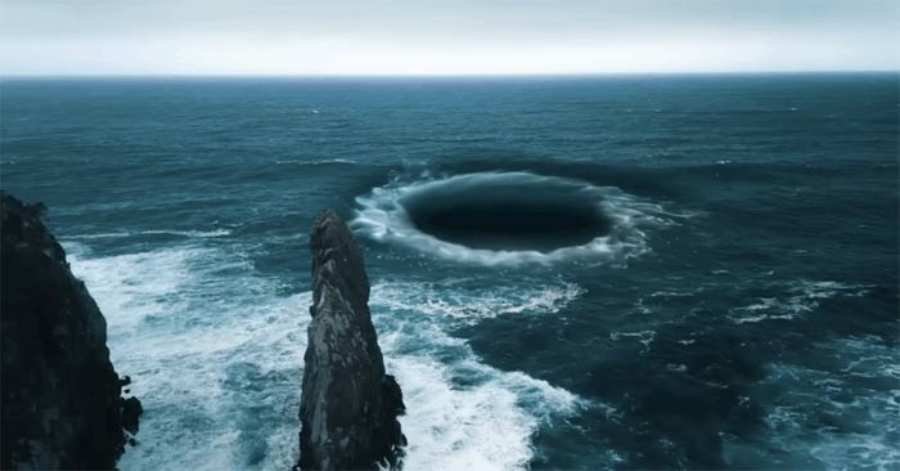
The ocean spiritually symbolizes emotional depth, the subconscious mind, transformation, cleansing, freedom, mystery, and connection to something greater than yourself. Its vastness creates a natural association with infinity, while its unseen depths represent the thoughts, emotions, and parts of the self that exist beneath conscious awareness. Because the ocean is constantly moving through waves, tides, and currents, it also serves as a symbol of change and the recurring cycles of life.
Different conditions of the ocean can carry different spiritual meanings. A calm ocean is associated with inner peace, emotional balance, and acceptance, while rough seas can represent uncertainty, emotional turmoil, or a period of significant transformation. Waves reflect the rise and fall of experiences and emotions, while deep water is often connected with mystery, introspection, and the subconscious mind.
These meanings are symbolic interpretations rather than universal spiritual facts. The meaning of an ocean experience depends on its context, including what the water looks like, how it moves, and how you feel when encountering it. Exploring these details can help clarify why the ocean appears so frequently as a symbol of emotional and spiritual life.
What Does the Ocean Mean Spiritually?
The ocean spiritually represents 7 main themes: emotional depth, the subconscious mind, transformation, cleansing, freedom, mystery, and connection to something greater than the individual self. These meanings come from recognizable characteristics of the ocean, including its immense size, hidden depths, constant movement, and ability to sustain and reshape life. Rather than having one fixed spiritual meaning, the ocean functions as a symbol whose interpretation changes according to its condition and the experience surrounding it.
Emotional depth is one of the strongest meanings associated with the ocean. The surface can be visible and understandable while everything beneath it remains partly or completely hidden. This contrast mirrors the difference between emotions that a person consciously recognizes and deeper feelings that have not yet been examined. A calm surface with strong currents below, for example, can symbolize outward composure alongside complicated emotions beneath the surface.
The ocean also represents transformation because it never remains completely still. Waves rise and disappear, tides advance and retreat, and currents continually move water from one place to another. These processes make the ocean a natural symbol for changing circumstances, emotional transitions, and personal growth. Entering a new phase of life can therefore be symbolically compared with moving through changing waters: the environment shifts, and the person must adjust to it.
Cleansing and renewal are connected to the ocean through its identity as a vast body of water. In spiritual symbolism, water is frequently associated with washing away what is no longer needed and beginning again with greater clarity. An ocean experience may therefore represent emotional release or renewal, especially when a person associates being near the water with leaving behind stress, grief, or an earlier stage of life.
Freedom and mystery come primarily from the ocean’s vastness. An open horizon creates few visible boundaries, which makes the ocean a powerful symbol of freedom, possibility, and expansion. At the same time, much of the ocean exists beyond ordinary human sight. That hidden dimension supports associations with mystery, the unknown, and aspects of life that cannot be completely understood or controlled.
The ocean can also symbolize connection to something greater than oneself. Standing before a body of water that extends beyond the visible horizon can create a sense of scale in which individual concerns feel small compared with the surrounding world. In a spiritual context, this experience may be interpreted as connection with nature, universal consciousness, divine presence, or a larger cycle of existence. The specific interpretation depends on a person’s spiritual or religious framework rather than on one universal meaning.
Why Does the Ocean Symbolize the Subconscious Mind?
The ocean symbolizes the subconscious mind because its visible surface conceals a much larger and deeper world beneath it. This creates a direct symbolic parallel between conscious awareness and the mental or emotional material that exists outside immediate awareness. The surface represents what a person currently recognizes, while deeper water represents memories, emotions, fears, desires, and unresolved experiences that are harder to access.
Ocean depth strengthens this symbolism. Moving from shallow water toward deeper water progressively reduces visibility and increases uncertainty. Spiritually, descending into deep water can therefore represent moving inward and examining parts of yourself that are not immediately obvious. The deeper the symbolic journey goes, the more it becomes associated with introspection, hidden emotions, self-discovery, and confronting the unknown.
The condition of the water can further qualify this meaning. Clear water may symbolize emotional clarity because the person can metaphorically “see” what lies beneath the surface. Murky or dark water can represent uncertainty, confusion, or emotions that have not yet been understood. A calm surface may suggest conscious stability, while powerful currents underneath can symbolize deeper feelings that remain active even when they are not externally visible.
The deep ocean specifically symbolizes the hidden self, mystery, unexplored emotions, and the unknown. Its spiritual meaning does not have to be negative. Fear of deep water can reflect an association with uncertainty or loss of control, while curiosity about the depths can symbolize a willingness to explore unfamiliar parts of yourself. For example, repeatedly imagining yourself diving peacefully into deep ocean water could be interpreted as a symbol of introspection and greater willingness to examine emotions that were previously avoided.
This subconscious symbolism also explains why personal context matters when interpreting the ocean. Two people can encounter the same deep sea and assign opposite meanings to it. One may experience freedom and curiosity, while another experiences vulnerability and fear. The ocean provides the symbolic setting, but the person’s emotions, beliefs, memories, and circumstances determine which aspect of that symbolism becomes most relevant.
Why Does the Ocean Symbolize Transformation and Change?
The ocean symbolizes transformation and change because it is continuously moving through waves, tides, currents, and changing conditions. Water may appear calm at one moment and turbulent at another, while tides repeatedly move between high and low points. Spiritually, these visible changes make the ocean a symbol of transition, impermanence, personal growth, and the recurring cycles of life.
Tides provide one of the clearest examples of this symbolism. Ocean water advances and retreats in a repeating rhythm rather than remaining at one fixed level. This pattern can represent periods of expansion and withdrawal in personal life. A person may experience phases of outward growth followed by periods of rest, reflection, or release. The spiritual lesson associated with tides is therefore not that life moves continuously forward, but that change often happens through recurring cycles.
Ocean storms represent a more disruptive form of transformation. Strong winds, rough water, and rapidly changing conditions can symbolize periods when familiar structures become unstable. A major career change, the end of a relationship, or a shift in personal beliefs may feel similar because the outcome is not immediately visible. In this context, the ocean represents transformation through uncertainty rather than change that is completely planned or controlled.
The shoreline adds another dimension to ocean symbolism because it marks a boundary between land and water. Spiritually, boundaries of this kind can represent transitions between familiar and unfamiliar states. Standing at the edge of the ocean can therefore symbolize being between two phases: leaving an established situation while not yet knowing exactly what the next one will become.
Transformation does not mean that every difficult ocean image predicts a major life event. Ocean symbolism works as a framework for reflection rather than a fixed prediction. A changing sea may feel meaningful during a personal transition because its movement mirrors the experience of adapting, releasing control, and responding to circumstances that do not remain constant.
What Do Ocean Waves Mean Spiritually?
Ocean waves spiritually symbolize 5 main themes: change, emotional movement, life cycles, surrender, and resilience. A wave forms, rises, reaches its peak, breaks, and returns to the ocean before another wave follows. This repeating process creates a strong symbolic connection with experiences and emotions that emerge, intensify, pass, and eventually give way to something new.
Change is the most direct spiritual meaning of ocean waves because no individual wave remains in one form. Its shape and position continually change until it breaks. This pattern can represent the temporary nature of circumstances. Success, difficulty, excitement, grief, and uncertainty all change over time, just as a wave cannot remain permanently at its highest point.
Waves also symbolize emotional movement. Gentle waves can reflect emotions that are present without becoming overwhelming, while powerful waves can represent feelings that are difficult to contain or process. For example, someone going through grief may identify with repeated waves because intense emotions can arrive, recede, and return rather than disappearing in a single moment. The symbolism comes from this pattern of emotional movement, not from the ocean determining a person’s emotional state.
Surrender is another meaning associated with waves because their movement cannot be stopped through individual effort. In spiritual interpretation, this can represent the difference between accepting change and attempting to control every circumstance. Surrender in this context does not mean giving up. It means recognizing which conditions can be influenced and which must be navigated as they occur.
Waves can represent resilience for the same reason. Each wave breaks, but the movement of the ocean continues. The symbolism shifts attention from preserving one fixed state to continuing through repeated changes. A difficult experience may end one phase of life without ending the larger process of growth, adaptation, or self-discovery.
Big ocean waves usually symbolize intense emotions, major transitions, overwhelm, or challenges that feel difficult to control. Their size and force amplify the general symbolism of movement and change. Feeling frightened by large waves may reflect anxiety about uncertainty or losing control, while watching powerful waves with fascination may represent respect for change, strength, or forces larger than oneself.
Gentle ocean waves more often symbolize peace, emotional balance, acceptance, and gradual change. Their predictable rhythm suggests movement without severe disruption. A person who feels peaceful while watching small waves, for example, may interpret the experience as a reminder that change does not always require conflict. Life can continue moving while a sense of inner stability remains intact.
The spiritual meaning of ocean waves therefore depends on both the condition of the water and the person’s response to it. Large and small waves share the symbolism of movement, but their emotional qualities differ. Identifying whether the waves feel threatening, peaceful, exciting, or freeing provides more context than interpreting the presence of waves alone.
What Does a Calm Ocean Mean Spiritually?
A calm ocean spiritually symbolizes inner peace, emotional balance, clarity, and acceptance. The symbolism comes from the contrast between the ocean’s enormous power and its peaceful surface. When a large body of water remains gentle despite its depth and constant movement, it can represent a state in which emotions still exist but no longer create inner conflict.
Inner peace is the strongest meaning associated with a calm ocean. Peace does not require the complete absence of thoughts, emotions, or change. The ocean continues to move through currents and tides even when its surface appears peaceful. In the same way, spiritual calm can describe the ability to experience changing thoughts and circumstances without being controlled by them.
A calm ocean can also represent emotional balance. Rough water visually expresses instability, while smooth water suggests that opposing forces have reached a more balanced state. Someone who feels peaceful while sitting beside a calm sea may therefore associate the experience with emotional stability after a stressful period. The ocean does not create that emotional resolution by itself; its condition provides a symbol through which the person can recognize and interpret the change.
Clarity is especially relevant when calm water is also clear. Spiritually, clear ocean water can symbolize seeing emotions, motivations, or circumstances without the confusion that previously obscured them. This interpretation connects with the ocean’s broader symbolism of the subconscious mind: when the symbolic water becomes clearer, what lies beneath the surface becomes easier to examine.
A calm ocean also represents acceptance because calmness and movement can exist simultaneously. The water does not need to become completely motionless to appear peaceful. This makes calm seas a useful symbol for peace within change rather than freedom from change. A person can accept an uncertain situation, for example, without knowing exactly how that situation will develop.
What Does a Rough Ocean Mean Spiritually?
A rough ocean spiritually symbolizes emotional turmoil, uncertainty, conflict, challenge, and transformation. Strong waves and unstable conditions create an environment that is difficult to predict or navigate, making rough seas a natural symbol for periods when emotions or circumstances feel similarly unsettled.
Emotional turmoil is one of the clearest interpretations. A rough surface can represent visible distress, while unpredictable waves can reflect emotions that repeatedly intensify and subside. Someone experiencing anger, grief, fear, or conflicting feelings may identify with this imagery because both the emotional state and the ocean lack temporary stability.
Uncertainty is represented by the difficulty of predicting rough water. When conditions change rapidly, the safest direction may not be immediately obvious. Spiritually, this can mirror periods in which a person must make decisions without knowing the outcome. Changing careers, relocating, ending a relationship, or questioning established beliefs are examples of transitions that can create this type of uncertainty.
Conflict and challenge add another layer to the symbolism. Moving through rough water requires more effort than moving through calm water, so turbulent seas can represent resistance, obstacles, or circumstances that demand adaptation. The symbolic focus is not necessarily on suffering. Instead, it can be on how a person responds when familiar ways of maintaining control stop working.
Rough seas can also symbolize transformation because turbulent conditions do not remain permanent. A storm changes the state of the ocean before eventually passing or moving elsewhere. Spiritually, this progression can represent a disruptive period that leads to a different emotional perspective, belief, priority, or stage of life. The transformation comes through responding to instability rather than avoiding every form of disruption.
The contrast between calm and rough oceans is therefore important. A calm ocean represents stability within movement, while a rough ocean represents instability that requires adaptation. Neither condition should automatically be interpreted as a prediction of positive or negative events. The person’s circumstances and emotional response determine which symbolic meaning is most relevant.
Why Do I Feel Spiritually Drawn to the Ocean?
You may feel spiritually drawn to the ocean because it evokes 6 experiences commonly associated with spirituality: freedom, emotional release, solitude, awe, introspection, and renewal. These responses can make being near the ocean feel personally meaningful even when the experience is not connected to a specific religion or spiritual tradition.
Freedom comes from the ocean’s apparent lack of boundaries. An uninterrupted horizon extends beyond what the eye can see, creating a visual contrast with enclosed environments and structured daily routines. For someone who feels restricted by responsibilities or expectations, looking across open water can become a symbol of possibility, independence, or a desire to move beyond existing limitations.
Emotional release can develop from the combination of space, repetitive waves, and distance from everyday distractions. A person who arrives at the ocean feeling mentally overwhelmed may find that watching the water provides a simple external focus. In spiritual interpretation, that experience can feel like releasing emotional weight or allowing difficult thoughts to move rather than holding onto them.
Solitude and introspection are closely connected but represent different experiences. Solitude creates space away from other people’s demands, while introspection directs attention inward. The ocean can support both because its scale provides a setting in which personal concerns can be viewed from a wider perspective. Sitting quietly beside the water, for example, may prompt reflection on relationships, priorities, identity, or a life transition.
Awe can make the ocean feel spiritual because its size and power exceed ordinary human scale. Looking toward a horizon with no visible end or standing near powerful waves can create a strong awareness of being one small part of a much larger environment. Depending on personal beliefs, this experience may be interpreted as connection with nature, the universe, divine presence, or a greater whole.
Renewal is another reason people can feel drawn to the sea. Ocean water already carries symbolic associations with cleansing and transformation, while physically leaving a familiar environment can mark a psychological transition. Returning to the ocean during periods of change may therefore become a personal ritual associated with reflection, release, or beginning a new phase.
Your emotional response provides the strongest clue to what the attraction means personally. Feeling peaceful near the ocean can point toward balance or acceptance; feeling energized can relate to freedom or renewal; feeling emotional can indicate release or introspection; and feeling uneasy can connect with uncertainty or the unknown. The same ocean can produce different meanings because spiritual symbolism depends on the interaction between the symbol and the person interpreting it.
What Does Dreaming About the Ocean Mean Spiritually?
Dreaming about the ocean spiritually symbolizes emotions, the subconscious mind, uncertainty, transformation, and parts of yourself that may not be fully understood. The most relevant interpretation depends on 3 elements of the dream: the condition of the ocean, your interaction with the water, and the emotions you experience during the dream. A peaceful ocean and a threatening ocean therefore should not be interpreted in the same way.
The condition of the water provides the first layer of meaning. Because the ocean is associated with emotional depth and the subconscious, its appearance can symbolically reflect how accessible or difficult those inner experiences feel. Clear water may represent emotional clarity or greater awareness, while dark or murky water can represent uncertainty, confusion, or feelings that remain difficult to identify. Deep water adds the themes of mystery and unexplored parts of the self.
Your interaction with the ocean provides the second layer. Swimming comfortably can symbolize willingness to engage with emotions or adapt to changing circumstances. Standing on the shore can represent observing an emotional situation without fully entering it, especially when the dream creates a clear boundary between land and water. Being carried by waves may relate to surrender or loss of control, depending on whether the experience feels peaceful or frightening.
Drowning in the ocean has a more specific symbolic meaning. Dreaming about drowning in the ocean can represent feeling overwhelmed by emotions, responsibilities, uncertainty, or circumstances that seem difficult to control. The interpretation comes from the experience of being submerged and unable to regain stability. It does not predict that a negative event will occur. Instead, the dream can be interpreted as symbolic imagery for an existing sense of emotional overload.
The emotion experienced during the dream is the third and most important qualifier. Fear can connect the ocean with uncertainty, vulnerability, or loss of control. Peace can connect it with acceptance and emotional balance. Excitement may point toward freedom, exploration, or readiness for change. Awe can relate to mystery or connection with something greater than yourself. The same ocean image can therefore carry different meanings when the emotional context changes.
What Does a Calm or Rough Ocean Mean in a Dream?
A calm ocean in a dream can symbolize emotional stability, clarity, acceptance, and inner peace, while a rough ocean can symbolize emotional conflict, uncertainty, overwhelm, or disruptive change. The contrast reflects the same symbolic relationship found in waking ocean experiences: calm water suggests stability within movement, whereas turbulent water represents conditions that are harder to navigate.
Dreaming of a calm ocean may be meaningful during a period when an emotional issue is becoming easier to understand or accept. Clear, gentle water can reinforce this interpretation because visibility represents greater clarity about what lies beneath the symbolic surface. For example, peacefully floating on calm water may represent comfort with circumstances that previously created resistance or anxiety.
A rough ocean creates the opposite symbolic environment. Large waves, storms, or rapidly changing water can represent circumstances that feel unpredictable or emotionally demanding. Being afraid of the waves may suggest anxiety about losing control, while successfully moving through them may symbolize adaptation or resilience during a difficult transition.
These dream interpretations are symbolic frameworks rather than fixed predictions. Dreams are shaped by personal memories, emotions, beliefs, and experiences, so no single ocean image has one guaranteed spiritual meaning. The strongest interpretation is the one that accounts for both what happens in the dream and how you feel while it happens.
What Do the Ocean and Moon Symbolize Spiritually?
The ocean and moon spiritually symbolize cycles, intuition, emotional rhythms, change, and the relationship between visible experiences and less visible influences. Their symbolism is closely connected to the physical relationship between the Moon and ocean tides, which provides a natural foundation for spiritual interpretations involving rhythm and recurring change.
Cycles are the clearest shared symbol. Ocean tides repeatedly rise and fall, while the Moon moves through recognizable phases. Neither remains visually unchanged. Together, these patterns can represent the idea that life moves through periods of growth, fullness, decline, rest, and renewal rather than following a permanently fixed state.
The Moon is also associated in many spiritual interpretations with intuition and inner awareness, while the ocean represents emotional depth and the subconscious mind. When these symbols appear together, the combination can represent attention to feelings, instincts, or aspects of yourself that are less visible than external behavior. The ocean provides the symbolic emotional depth, while the Moon adds an association with reflection and changing cycles.
Emotional rhythm is another connection between the two symbols. Just as tides advance and retreat, emotions can intensify and subside without disappearing permanently. This does not mean lunar phases determine a person’s emotional or spiritual state. Rather, the observable relationship between the Moon and tides provides a metaphor for understanding recurring emotional experiences.
The ocean and moon can therefore symbolize change without complete disconnection. Tides move, lunar phases change, and ocean conditions vary, yet each remains part of a continuing natural system. Spiritually, this relationship can serve as a symbol for accepting different phases of life while recognizing continuity across them.
The exact meaning also depends on a person’s spiritual, religious, or cultural framework. Someone may interpret the ocean and moon as symbols of nature and personal reflection, while another person may connect them with specific spiritual traditions. These interpretations should remain distinct from the physical effects of lunar gravity on ocean tides, which belong to scientific rather than spiritual explanation.
How Can You Use Ocean Symbolism in Spiritual Practice?
You can use ocean symbolism in 4 spiritual practices: meditation, reflective walking, journaling, and visualization. Each practice uses a different characteristic of the ocean, such as rhythmic waves, open space, depth, or constant movement, as a focus for reflection. The purpose is not to treat the ocean as a source of guaranteed spiritual messages, but to use its symbolism to examine emotions, transitions, and personal experiences more deliberately.
Ocean meditation uses the rhythm of waves as an attention anchor. Sit in a safe place near the water and direct your attention toward the repeated sound and movement of waves arriving and receding. When thoughts interrupt your attention, acknowledge them and return your focus to the rhythm. Spiritually, the rising and falling waves can represent allowing thoughts and emotions to appear, change, and pass rather than trying to hold onto or suppress them.
Reflective walking combines physical movement with the symbolism of transition. Walking along the shoreline places you beside a boundary where land and water continually meet, separate, and meet again. This setting can be used to reflect on a specific change in your life, such as ending one stage, beginning another, or deciding what you are ready to leave behind. The shoreline provides a visible metaphor for being between an established state and a new one.
Journaling uses ocean symbolism to make abstract emotions more specific. Instead of asking a broad question such as “How do I feel?”, describe your current inner state as an ocean. Ask whether the water feels calm, rough, deep, clear, dark, or unpredictable, then identify what makes that description accurate. For example, describing your inner state as “calm on the surface with a strong current underneath” can help distinguish outward stability from emotions that still require attention.
Visualization uses the ocean as a symbolic setting for release or renewal. Imagine standing beside the water and associate each receding wave with something you want to release, such as resentment, fear, or attachment to a past situation. Incoming waves can then represent a quality you want to strengthen, such as acceptance, clarity, or courage. The value of the exercise comes from intentionally directing attention toward those themes rather than assuming that the ocean itself changes external circumstances.
These practices can also be adapted without physically visiting the sea. Recorded wave sounds, ocean imagery, memories of being near the water, or written descriptions can provide the symbolic context for meditation and reflection. What matters is maintaining a clear relationship between the ocean characteristic and the idea being explored: waves with change, depth with introspection, clear water with clarity, and the horizon with openness or freedom.
Does the Spiritual Meaning of the Ocean Change Between Traditions?
Yes, the spiritual meaning of the ocean changes between religious, mythological, cultural, and personal traditions. There is no single interpretation that applies universally. Ideas such as transformation, mystery, emotional depth, and renewal provide useful general symbolism, but individual traditions can assign the ocean meanings based on their own beliefs, stories, rituals, and relationships with water.
Religious interpretations can connect large bodies of water with creation, divine power, purification, danger, or spiritual passage. The exact meaning depends on the religious context in which the water appears. An ocean or sea representing chaos in one sacred narrative, for example, should not automatically be interpreted as having the same meaning in another tradition. The surrounding story and the role of water within that belief system determine the interpretation.
Mythological traditions frequently use the sea as a setting for forces that humans cannot fully control. Oceans can separate worlds, conceal unknown beings, create dangerous journeys, or mark boundaries that characters must cross. These narratives strengthen symbolic associations between the ocean and mystery, power, uncertainty, exploration, and transformation. However, the meaning belongs to the specific mythology rather than establishing a universal spiritual rule about the ocean.
Cultural symbolism can also differ according to people’s physical relationship with the sea. Communities whose lives have historically depended on fishing, navigation, coastal trade, or seasonal conditions can develop meanings that differ from those of communities with little direct connection to the ocean. The same water can represent livelihood and abundance in one context while emphasizing danger, distance, or uncertainty in another.
Personal spirituality adds another layer because individual experience affects interpretation. Someone who associates the ocean with peaceful childhood experiences may see it as a symbol of safety and renewal. A person who has experienced a frightening event at sea may associate the same environment with vulnerability or loss of control. Personal symbolism can therefore overlap with broader spiritual traditions without being identical to them.
Ocean spiritual meaning is best interpreted through context rather than through a fixed symbolic dictionary. Consider the ocean’s condition, the emotions connected with it, the situation in which the symbol appears, and the spiritual or cultural framework being used. These qualifiers explain why the ocean can represent peace and turmoil, freedom and uncertainty, or cleansing and mystery without those meanings contradicting one another.