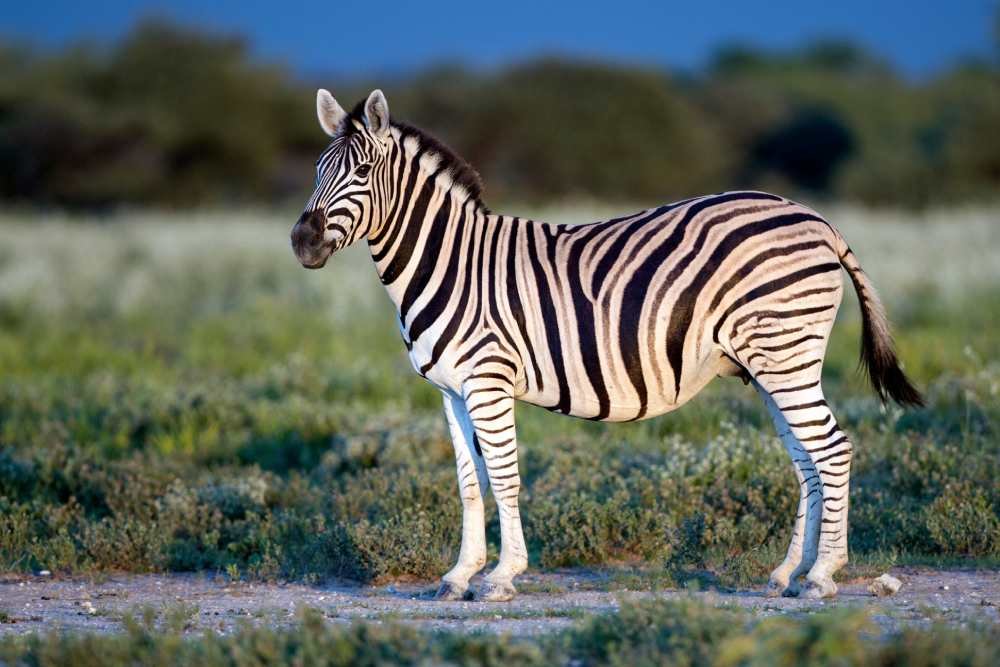
The spiritual meaning of a zebra centers on balance, individuality, freedom, and harmony between opposites. Its distinctive black-and-white stripes are commonly interpreted as a symbol of duality, showing how contrasting forces can exist together without one eliminating the other. This symbolism can apply to opposing emotions, responsibilities, relationships, or choices that require balance rather than an all-or-nothing decision.
A zebra also represents individuality because every zebra has its own stripe pattern. Spiritually, this physical characteristic can symbolize maintaining an authentic identity while still belonging to a community. Zebras live socially in groups, creating another symbolic connection between personal independence and the need for support, cooperation, and belonging.
Seeing a zebra, dreaming about one, or identifying with the zebra as a spirit animal can therefore prompt reflection on areas of life involving balance, identity, freedom, and relationships. The meaning depends on the context of the encounter and the circumstances you are experiencing. Rather than treating a zebra as a certain prediction of future events, its symbolism can serve as a framework for examining opposing priorities, recognizing your individuality, and finding harmony between independence and connection.
What Is the Spiritual Meaning of a Zebra?
The spiritual meaning of a zebra centers on five main themes: balance, duality, individuality, freedom, and community. These meanings come from interpreting the zebra’s distinctive appearance and natural behavior symbolically. Its contrasting black-and-white stripes create the strongest association with balance and duality, while its individual stripe pattern connects the animal with identity and authenticity. At the same time, the zebra combines a strong individual identity with social group behavior, making it a useful symbol for balancing independence with belonging.
Balance is central to zebra symbolism because the animal visually brings two contrasting colors together in one unified pattern. Spiritually, this contrast can represent opposing forces that need to coexist rather than compete. Work and personal life, independence and connection, logic and emotion, or action and patience are examples of opposing priorities that may require balance. The zebra symbol does not suggest choosing one side and rejecting the other. Instead, it represents finding a workable relationship between both.
Individuality is another major zebra spiritual meaning. Each zebra has a distinctive stripe pattern, which creates a natural symbolic connection with personal identity. In a spiritual context, the zebra can represent accepting the characteristics that distinguish you from other people instead of changing them simply to gain approval. This meaning becomes especially relevant when personal values conflict with social expectations or when fitting into a group begins to weaken a person’s sense of identity.
Freedom and community add another layer to zebra symbolism. Zebras are wild animals that also rely on social groups, so they can symbolically represent independence without complete isolation. The spiritual lesson is not that freedom requires withdrawing from other people. Instead, the zebra represents maintaining autonomy while recognizing the value of cooperation, relationships, and belonging.
Why Does a Zebra Represent Balance and Duality?
A zebra represents balance and duality because its black-and-white appearance places contrasting elements together as parts of the same whole. In spiritual symbolism, duality describes the presence of two different or opposing aspects within one experience. These may include strength and vulnerability, certainty and uncertainty, independence and dependence, or positive and difficult periods of life.
The zebra’s symbolism therefore treats opposites as complementary rather than automatically defining one side as good and the other as bad. Black does not need to represent negativity, and white does not need to represent positivity. The more useful symbolic relationship is contrast → coexistence → balance. Both colors contribute to the zebra’s recognizable appearance, just as contrasting experiences can contribute to a more complete understanding of a situation.
This interpretation makes the zebra particularly relevant during periods involving conflicting priorities or identities. A person may value independence while also wanting a close relationship, for example. Another person may pursue professional ambition while recognizing a need for rest and personal time. Zebra symbolism points toward integration in these situations: acknowledge both sides, determine what each one contributes, and create balance without unnecessarily eliminating either.
What Do a Zebra’s Black and White Stripes Mean Spiritually?
A zebra’s black-and-white stripes spiritually symbolize contrast, balance, individuality, and harmony between opposites. The two contrasting colors exist within one continuous pattern, making zebra stripes a natural symbol for situations in which different forces, qualities, or priorities need to coexist. Rather than representing a choice between two absolute sides, the stripes can represent the ability to recognize differences while creating stability between them.
The strongest symbolic connection is between contrast and balance. Life regularly contains opposing demands, such as independence and commitment, ambition and rest, reason and emotion, or personal needs and responsibilities toward others. Zebra stripes can represent the idea that these opposites do not always need to be resolved by eliminating one side. Balance can come from recognizing the function of each side and determining how both fit within the same situation. In this interpretation, the zebra becomes a symbol of integration rather than division.
The black-and-white pattern also represents harmony through difference. Harmony does not require every element to become identical. The zebra remains visually unified precisely because contrasting colors form the same pattern. Applied spiritually, this symbolism can relate to relationships, families, communities, and other situations where people with different personalities or perspectives need to coexist. The underlying message is to acknowledge differences without automatically treating those differences as sources of conflict.
Individuality adds a second important meaning to zebra stripes. Individual zebras have distinctive stripe patterns, so the stripes can symbolically represent identity, uniqueness, and authenticity. Spiritually, this association encourages maintaining the qualities that distinguish you from others rather than suppressing them simply to conform. Belonging to a group and maintaining a separate identity are not mutually exclusive.
This combination of individuality and harmony gives zebra symbolism greater depth. A zebra is visually distinct as an individual while still sharing the recognizable characteristics of its species. In personal life, the same symbolism can apply when someone wants acceptance without abandoning personal values, preferences, or boundaries. The spiritual message is therefore not simply to “be different.” It is to preserve your identity while learning how to exist constructively alongside people who are different from you.
What Does Seeing a Zebra Mean Spiritually?
Seeing a zebra spiritually symbolizes a need to examine balance, individuality, freedom, or belonging in your current circumstances. The specific interpretation depends on where the zebra appears, whether the experience repeats, and which aspect of zebra symbolism relates most closely to your situation. A zebra encounter does not have one fixed spiritual meaning because the same symbol can reflect different concerns depending on the context in which it appears.
Seeing a zebra once can serve as a prompt to notice contrasting priorities in your life. You may be balancing independence with commitment, personal goals with family responsibilities, or logic with emotion. The zebra’s black-and-white pattern makes duality the clearest symbolic connection in these situations. Instead of immediately choosing one side, the encounter can encourage you to identify what each side contributes and determine whether a more balanced response is possible.
Repeatedly seeing zebras or zebra imagery places greater emphasis on reflection. The repetition itself does not prove that a supernatural message is being sent. Spiritually, however, you can use the recurring symbol to identify a theme that deserves attention. For example, repeated zebra imagery may feel relevant when you are compromising your identity to fit into a group, struggling to balance two important responsibilities, or trying to maintain personal freedom within a close relationship. In each case, the useful interpretation comes from connecting zebra symbolism with a specific situation rather than assigning a universal prediction to the encounter.
A zebra crossing your path can carry a similar meaning but places more emphasis on direction and choice. A zebra crossing your path can symbolize the need to recognize opposing factors before deciding how to move forward. This interpretation is especially relevant when a decision appears to offer only two extremes. The zebra’s contrasting stripes suggest looking for coexistence, compromise, or a third perspective before treating the situation as strictly either-or.
The meaning can also shift according to how the zebra appears. A zebra standing with a herd may draw attention to community and belonging, while a zebra standing apart can place greater symbolic emphasis on individuality or independence. A calm encounter may reflect harmony and stability, whereas an encounter that feels tense can prompt reflection on unresolved conflict. These interpretations are most useful when the details of the encounter correspond with circumstances already present in your life.
The practical spiritual message of seeing a zebra is therefore to notice where difference and connection exist at the same time. Examine whether you are sacrificing individuality for acceptance, choosing independence at the expense of meaningful relationships, or treating two priorities as incompatible when they could be balanced. Zebra symbolism provides a framework for that reflection rather than a certain prediction of what will happen next.
What Does a Zebra Spirit Animal Mean?
A zebra spirit animal represents individuality, balance, freedom, community, and adaptability. Its symbolism combines two qualities that may initially appear contradictory: maintaining a distinct identity while remaining connected to others. For someone who identifies with the zebra as a spirit animal, the central lesson is to preserve personal values and independence without treating isolation as the only path to freedom.
Individuality is one of the strongest meanings associated with the zebra spirit animal. A zebra is immediately recognizable as part of its species, yet its stripe pattern distinguishes it from other zebras. Symbolically, this combination represents belonging without losing identity. The lesson becomes relevant when social expectations, relationships, or group pressures encourage someone to suppress qualities that make them different. The zebra spirit animal points toward authenticity rather than conformity for its own sake.
Balance is equally important because the zebra’s contrasting colors provide a visual representation of opposing forces existing together. As a spirit animal, the zebra can represent the ability to hold two competing needs without automatically rejecting either one. A person can value independence while maintaining close relationships, pursue ambitious goals while protecting personal well-being, or remain confident while accepting uncertainty. The spiritual lesson is to integrate these opposing elements into a workable whole.
Freedom adds another dimension to the zebra spirit animal. Zebras remain wild animals rather than symbols of domestication, creating an association with autonomy and unrestricted identity. Spiritually, freedom in this context does not mean avoiding commitments or responsibilities. It means recognizing where unnecessary restrictions, expectations, or habits prevent authentic choices. The zebra can therefore serve as a reminder to distinguish meaningful commitments from limitations maintained only because they have become familiar.
Community balances this emphasis on freedom. Zebras are social animals, so their symbolism does not frame independence as complete separation from others. Instead, the zebra spirit animal represents the ability to participate in a community while maintaining personal boundaries and identity. For example, someone can accept support from family, friends, or a wider community without allowing the group to determine every personal decision.
Adaptability connects these meanings because maintaining balance requires adjustment when circumstances change. A decision that once supported independence may later create isolation, while a relationship that once provided belonging may eventually restrict individuality. The zebra spirit animal can symbolize recognizing these shifts and adjusting boundaries accordingly.
There are five practical lessons associated with the zebra spirit animal: maintain your individuality, balance opposing priorities, protect meaningful freedom, value supportive communities, and adapt when circumstances change. Together, these lessons reinforce the central zebra symbolism established throughout the article: differences do not always need to be eliminated. They can coexist when each is given an appropriate place.
What Does a Zebra Mean in a Dream?
A zebra in a dream can symbolize balance, individuality, freedom, belonging, or a conflict between opposing priorities. The most relevant meaning depends on what the zebra is doing, whether it appears alone or with a herd, how you interact with it, and how you feel during the dream. These details provide more interpretive context than the presence of the zebra alone.
Dreaming about a zebra can represent a situation in which two different needs exist at the same time. The animal’s black-and-white stripes create a symbolic connection with duality, making this interpretation particularly relevant when you are facing competing priorities. For example, you may want greater independence while also wanting stability in a relationship, or you may be deciding between personal ambitions and responsibilities to other people. The dream can encourage reflection on whether these priorities genuinely require an either-or decision.
Individuality becomes more significant when one zebra stands out in the dream. A single zebra can symbolize identity, authenticity, or the desire to maintain personal boundaries. This interpretation may be relevant when you feel pressure to conform to expectations at work, within a family, or in a social group. Rather than automatically interpreting separation as loneliness, the zebra can represent the value of remaining recognizable as an individual while participating in a larger community.
How Does the Zebra Dream Context Change Its Meaning?
The context of a zebra dream changes its meaning by emphasizing different aspects of zebra symbolism. A herd, a running zebra, a calm zebra, and a frightened zebra do not communicate the same symbolic theme because each situation changes the relationship between the animal, its environment, and the dreamer.
A herd of zebras can symbolize community, belonging, and your position within a group. The dream may prompt you to examine whether your relationships provide support while allowing enough room for individuality. Feeling comfortable among the herd can correspond symbolically with healthy belonging, while feeling lost within it may point toward concerns about conformity or loss of identity.
A running zebra can symbolize freedom, movement, and independence. The interpretation changes according to the reason for the movement. A zebra running freely through an open landscape can represent autonomy or a desire for fewer restrictions. A zebra running away from danger can instead direct attention toward pressure, avoidance, or a situation from which you want to escape.
A calm zebra can represent balance and acceptance. This image fits situations in which contrasting parts of life are beginning to coexist without creating constant conflict. A frightened or aggressive zebra, by contrast, can symbolize tension between competing needs, challenged boundaries, or difficulty maintaining a sense of independence.
Dreams that strongly emphasize the zebra’s black-and-white stripes can place duality at the center of the interpretation. This may correspond with two choices, conflicting emotions, or different perspectives on the same problem. The symbolism does not necessarily indicate that one option is right and the other is wrong. Instead, it can encourage you to examine what each side represents before reaching a decision.
Your emotional response provides the final layer of context. Feeling peaceful, curious, restricted, afraid, or excited around the zebra changes how the same image can be interpreted. For this reason, zebra dream meaning works best as a tool for reflection rather than a fixed prediction. The most useful interpretation connects the zebra’s symbolism with the specific actions, emotions, and circumstances present in the dream.
What Does a Zebra Symbolize in Love and Relationships?
A zebra symbolizes individuality, balance, mutual acceptance, and independence within love and relationships. Its spiritual symbolism suggests that a healthy connection does not require two people to think, behave, or express themselves in exactly the same way. Instead, differences can exist within a stable relationship when both people respect each other’s identity, boundaries, and needs.
The zebra’s black-and-white stripes create a symbolic connection between relationships and harmony between opposites. Two partners may have different personalities, communication styles, priorities, or emotional needs while still building a compatible relationship. In this context, balance does not mean making both people identical. It means recognizing those differences and finding a way for them to coexist without allowing one person’s preferences to consistently override the other’s.
Individuality is particularly important in zebra relationship symbolism. Just as individual zebras have distinctive stripe patterns, each person brings a separate identity into a relationship. A strong partnership allows both identities to remain visible. For example, partners can maintain separate interests, friendships, goals, and personal boundaries while still sharing commitments and experiences. The zebra therefore symbolizes connection without loss of self.
Freedom carries a similar message. Within zebra symbolism, independence does not require emotional distance or avoidance of commitment. It represents having enough personal autonomy to make authentic choices while remaining connected to another person. This distinction matters when a relationship begins to create tension between closeness and personal freedom. The zebra can serve as a symbolic reminder that commitment and independence do not always need to function as opposites.
The zebra’s association with community also expands this meaning beyond romantic relationships. Its symbolism can apply to friendships, families, and other close social connections. Belonging to a group can provide support and security, but healthy belonging still leaves space for personal identity. If acceptance depends entirely on conformity, the relationship between community and individuality has become unbalanced.
Seeing zebra imagery during a period of relationship uncertainty can therefore be interpreted as an invitation to examine three areas: identity, boundaries, and balance. Consider whether both people have space to remain themselves, whether personal boundaries are respected, and whether differences are being managed constructively rather than treated as problems that must always be removed.
Zebra symbolism does not inherently indicate that someone is a soulmate, twin flame, or destined partner. Those interpretations require additional belief systems that are not established by the zebra’s core symbolism itself. A more consistent spiritual interpretation connects the zebra with maintaining individuality while creating harmony with another person. In love and relationships, its central message is that two distinct individuals can build a meaningful connection without either person surrendering their identity.
What Should You Do After Seeing a Zebra Spiritual Sign?
After seeing a zebra spiritual sign, examine the context of the encounter, identify the symbolism that feels relevant, connect it with your current circumstances, and use the meaning for reflection. These four steps provide a practical way to interpret zebra symbolism without assuming that every encounter predicts a specific event or carries a fixed supernatural message.
First, record the context of the encounter. Note where the zebra appeared, what you were doing or thinking about at the time, whether the encounter was physical or symbolic, and what emotional response it created. Seeing a zebra at a zoo, repeatedly noticing zebra imagery, and dreaming about a zebra are different experiences. Context helps determine which symbolic attribute deserves the most attention instead of assigning the same meaning to every encounter.
Second, identify the most relevant zebra symbolism. The four strongest themes to consider are balance, individuality, freedom, and community. Balance is relevant when two priorities are competing for attention. Individuality becomes more significant when you feel pressure to conform. Freedom relates to restrictions, independence, or personal autonomy, while community becomes relevant when the central issue involves relationships, support, or belonging. Selecting the meaning that matches the situation produces a more focused interpretation than trying to apply every symbolic meaning simultaneously.
Third, connect the symbolism to a specific circumstance in your life. If balance appears to be the dominant theme, identify the two priorities that need to coexist. For example, professional ambition may conflict with personal time, or independence may conflict with the desire for a committed relationship. If individuality is more relevant, examine whether you are changing your values, preferences, or boundaries primarily to gain acceptance from other people. The goal is to turn an abstract symbol into a concrete question that can be evaluated.
Fourth, use the zebra as a reflection tool rather than a prediction. Spiritual symbolism can provide a framework for examining thoughts, relationships, and decisions, but the appearance of a zebra does not establish what will happen next. Avoid making major financial, medical, career, or relationship decisions solely because you encountered a zebra or repeatedly noticed zebra imagery. Decisions should remain grounded in the actual circumstances and evidence available to you.
A useful zebra interpretation therefore follows a simple sequence: observe the encounter, identify the symbolic theme, connect it with a real situation, and reflect on what needs attention. If the recurring theme is duality, consider where two apparently opposing needs could coexist. If it is individuality, examine where stronger personal boundaries may be necessary. If it is community, consider whether you need greater connection or whether belonging is requiring too much conformity.
The broader spiritual message of the zebra is not to search for certainty in every sign. It is to recognize where balance and individuality intersect in your life. Zebra symbolism is most useful when it helps you preserve your identity, respect meaningful connections, and create harmony between priorities that initially appear incompatible.