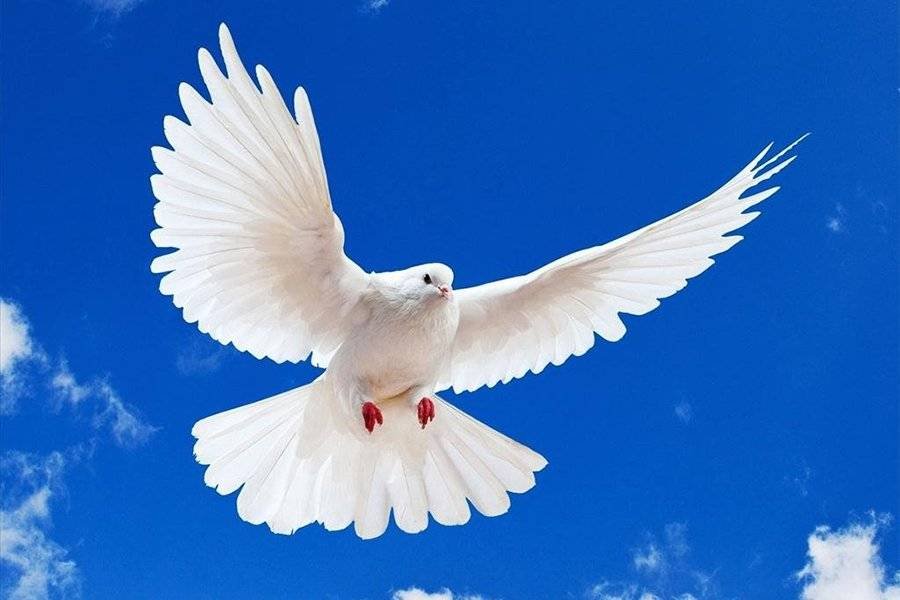
A white pigeon spiritually represents peace, purity, hope, love, protection, spiritual guidance, transformation, freedom, and new beginnings. Its white color is commonly associated with innocence and cleansing, while its ability to fly connects it symbolically with freedom, transition, and the relationship between earthly life and spiritual beliefs.
Seeing a white pigeon can carry different meanings depending on the circumstances of the encounter. A pigeon crossing your path may be interpreted as a symbol of transition or a new direction, while one repeatedly appearing near you may represent a reminder to seek peace, pay attention to change, or reflect on your current circumstances. Two white pigeons are more closely associated with partnership, harmony, and commitment. In religious contexts, similar symbolism is strongly connected with the dove, particularly within Christianity.
These interpretations are symbolic rather than proof that a supernatural event has occurred. The meaning of an encounter depends on four main factors: the pigeon’s behavior, where the encounter happens, whether it occurs repeatedly, and the spiritual or religious beliefs of the observer. Understanding these contexts makes it possible to interpret a white pigeon without treating every sighting as a prediction or divine message.
What Does a White Pigeon Mean Spiritually?
A white pigeon spiritually represents 9 main meanings: peace, purity, hope, love, protection, spiritual guidance, transformation, freedom, and new beginnings. These meanings come from a combination of white color symbolism, the pigeon’s behavior, religious traditions, and the close symbolic relationship between pigeons and doves. The exact interpretation depends on the circumstances in which the bird appears and the beliefs of the person who sees it.
Peace is one of the strongest spiritual meanings of a white pigeon. Pigeons and doves have long been connected with reconciliation, harmony, and the end of conflict. When a white pigeon appears during a stressful period, its presence may therefore be interpreted as a reminder to restore calm or resolve tension. This symbolism does not predict that a conflict will automatically end; instead, it represents the qualities of peace and reconciliation that the observer may need at that moment.
Purity is associated with a white pigeon because white commonly represents innocence, cleansing, and spiritual clarity. In a spiritual context, seeing the bird may symbolize releasing emotional burdens, negative thoughts, or behaviors connected with an earlier stage of life. The meaning is particularly relevant during periods of personal reflection because cleansing symbolism centers on leaving something behind before moving forward.
Hope and new beginnings are linked to the white pigeon through themes of renewal and transition. A sighting may take on this meaning after a difficult experience, major decision, relationship change, or other turning point. Rather than representing a guaranteed positive event, the pigeon can function symbolically as encouragement to recognize that one stage has ended and another can begin.
Love and harmony are represented by white pigeons through their associations with bonding, companionship, and peaceful relationships. This symbolism becomes stronger when two white pigeons appear together because a pair naturally creates associations with partnership and mutual connection. In romantic interpretations, they may represent commitment or reconciliation, while outside romantic relationships they can symbolize cooperation between family members or friends.
Protection and spiritual guidance are two interpretations connected with the idea of being watched over or directed toward a peaceful path. A person who encounters a white pigeon during uncertainty may interpret the bird as reassurance or as a reminder to evaluate the direction of their life. Spiritual traditions differ on where such guidance originates, so the sighting itself should not be treated as objective evidence of divine intervention.
Transformation represents a change in emotional, personal, or spiritual direction. Birds move between the ground and sky, which has made flight a recurring symbol of transition and transcendence. A white pigeon appearing during a significant life change may therefore represent letting go of an old identity, belief, habit, or situation and moving toward a different stage.
Freedom is connected primarily with the pigeon’s ability to fly and move beyond physical boundaries. Spiritually, this can represent release from emotional restrictions, limiting beliefs, resentment, or circumstances that prevent personal growth. For example, someone who has recently ended a prolonged conflict may interpret a white pigeon flying away as a personal symbol of releasing that conflict rather than carrying it into the next stage of life.
The spiritual meaning of a white pigeon ultimately depends on context rather than the bird alone. Peace and purity describe its broad symbolism, while hope, love, protection, guidance, transformation, freedom, and new beginnings become more relevant according to what is happening when the encounter occurs. The bird’s behavior also changes the interpretation, which is why seeing a white pigeon crossing your path can carry a different symbolic emphasis from simply noticing one nearby.
What Does It Mean When You See a White Pigeon?
Seeing a white pigeon spiritually means encountering a symbol commonly associated with peace, reassurance, positive transition, and spiritual awareness. The sighting becomes more personally meaningful when it coincides with a decision, emotional change, relationship issue, period of grief, or search for direction. However, seeing the bird does not by itself establish that a supernatural message has been sent.
There are 4 main contextual factors that shape the interpretation: where the pigeon appears, what it does, how often it appears, and what is happening in your life at the time. A bird quietly resting nearby creates a different symbolic context from one suddenly crossing your path. Likewise, seeing a white pigeon once is different from repeatedly noticing white pigeons during the same period of your life.
The observer’s belief system also affects the meaning. A spiritual interpretation may focus on guidance, protection, or synchronicity, while a Christian interpretation may connect the sighting with symbolism traditionally associated with the dove. Someone without a religious framework may simply view the encounter as a personal reminder of peace or renewal. These interpretations can coexist because symbolism describes the meaning people assign to an experience rather than establishing a universal prediction.
What Does It Mean When a White Pigeon Crosses Your Path?
A white pigeon crossing your path spiritually represents transition, direction, and the opportunity to move forward peacefully. The symbolism comes partly from the physical action itself: the bird enters your route, crosses it, and continues in another direction. This makes the encounter particularly relevant to interpretations involving choices, changes, and turning points.
For example, seeing a white pigeon while considering a new relationship, career change, move, or personal decision may be interpreted as a reminder to approach the transition with clarity rather than fear or conflict. The encounter does not confirm which decision is correct. Instead, its symbolic value lies in connecting the qualities represented by the white pigeon—especially peace, hope, and freedom—with the path or decision currently occupying your attention.
What Does It Mean When a White Pigeon Flies Around You?
A white pigeon flying around you spiritually represents freedom, heightened attention, and movement through a period of change. Flight strengthens the symbolism of release because the bird is actively moving rather than remaining stationary. Circling or flying close to you can also make an ordinary sighting feel more personally significant because the interaction attracts immediate attention.
In spiritual interpretation, this encounter may serve as a prompt to notice what you were thinking or experiencing at that moment. Someone struggling to release resentment, for example, might associate a white pigeon taking flight with emotional freedom. Someone entering a new stage of life might interpret the same behavior as a symbol of transition. The bird’s movement provides the symbolic mechanism, while the observer’s circumstances determine which interpretation carries the greatest personal relevance.
What Does It Mean When a White Pigeon Comes to Your House?
A white pigeon coming to your house spiritually represents peace, protection, harmony, or a positive transition connected with your home and family life. The house changes the context of the symbolism because a home represents security, relationships, privacy, and the personal environment in which daily life takes place. For this reason, a white pigeon appearing at home is generally interpreted more personally than seeing the same bird in a park or other public place.
A white pigeon resting near your entrance, balcony, garden, or roof may symbolize a need to create greater peace within the household. This interpretation becomes especially relevant during family disagreements, relationship tension, or periods of major domestic change. The bird does not indicate that these problems will resolve automatically. Instead, its association with peace can function as a symbolic reminder to reduce conflict, communicate clearly, and restore stability within the home.
A white pigeon appearing at a window carries a related meaning but places greater emphasis on attention and awareness. A window forms a visible boundary between the private space inside a home and the outside world. In symbolic interpretation, a pigeon appearing there may therefore represent something that deserves your attention, particularly an unresolved emotion, relationship issue, or approaching transition that you have already been considering.
Protection is another spiritual interpretation associated with a white pigeon staying close to a home. People who view birds as spiritual messengers may interpret the encounter as reassurance that their household is protected or watched over. This remains a belief-based interpretation rather than evidence that a supernatural protector is physically present. A natural explanation should also be considered because pigeons regularly choose roofs, balconies, ledges, and windowsills as places to rest, find food, or seek shelter.
The most useful interpretation therefore combines the location of the encounter with your circumstances at the time. A white pigeon appearing during family conflict may emphasize peace, while the same encounter during a move or major household change may symbolize transition and a new beginning. Context determines which attribute of white pigeon symbolism is most relevant.
What Does It Mean When You Keep Seeing White Pigeons?
Repeatedly seeing white pigeons spiritually represents a recurring theme of peace, awareness, guidance, or personal transformation that has become significant to you. Repetition makes an encounter feel more meaningful because the same symbol continues to attract attention. In spiritual traditions, repeated appearances are sometimes interpreted through the concept of synchronicity, in which an external event seems meaningfully connected with a person’s internal thoughts or circumstances.
There are 3 main ways to interpret repeated white pigeon sightings. The first is reinforcement: the repeated symbol may encourage you to give more attention to peace, forgiveness, or another quality represented by the bird. The second is transition: repeated sightings during a period of change may become personally associated with leaving one stage behind and beginning another. The third is awareness: once a white pigeon becomes meaningful to you, each new encounter may prompt reflection on the same unresolved question, relationship, or decision.
For example, someone experiencing prolonged conflict may repeatedly associate white pigeons with the need for reconciliation. A person beginning a new phase after a breakup, relocation, or career change may instead connect them with freedom and renewal. The physical sighting is the same, but the symbolic interpretation changes because the personal context is different.
Repeated sightings do not necessarily have a spiritual cause. Environmental factors can explain why the same type of bird appears frequently. Pigeons may repeatedly visit an area because it provides food, water, shelter, nesting locations, or established resting places. Human attention also matters: after noticing an unusual white pigeon once, you may become more likely to notice similar birds later.
For this reason, repeatedly seeing white pigeons does not prove that the universe, a deity, or another spiritual entity is sending a message. A balanced spiritual interpretation treats repetition as an opportunity for reflection rather than a guaranteed supernatural sign. The most relevant question is not simply how many times the pigeon appears, but which recurring theme in your life makes its symbolism personally meaningful.
What Does Seeing Two White Pigeons Mean Spiritually?
Seeing two white pigeons spiritually represents partnership, harmony, balance, mutual support, and commitment. While one white pigeon emphasizes qualities such as peace, purity, freedom, and transition, two birds introduce the additional symbolism of a pair. The relationship between the birds therefore becomes part of the interpretation.
Partnership is the strongest meaning associated with two white pigeons. A pair can symbolize two individuals maintaining a connection while remaining separate individuals, making the image relevant to romantic partners, close friendships, family relationships, and other forms of companionship. If two white pigeons appear during a period when you are evaluating an important relationship, the encounter may serve as a personal symbol of cooperation and mutual support.
Harmony is another central interpretation because the symbolism of the pair combines companionship with the broader association between white pigeons and peace. Two pigeons resting or moving together may consequently represent the value of resolving disagreements and maintaining balance between two people. For someone experiencing relationship tension, the encounter may symbolize reconciliation rather than separation.
Two white pigeons can also represent commitment and stability, particularly when the encounter is interpreted in a romantic context. This does not mean that seeing two pigeons predicts marriage, guarantees reconciliation, or confirms the arrival of a future partner. The pair functions as a symbol of connection; its personal significance depends on the observer’s current relationships and beliefs.
The behavior of the two pigeons provides additional context. Two birds resting peacefully together emphasize harmony and stability, while two pigeons flying together can strengthen themes of shared direction, freedom, and transition. These meanings naturally connect white pigeon symbolism with questions about romantic love and relationships.
What Does a White Pigeon Mean in Love and Relationships?
A white pigeon in love and relationships spiritually represents peace, loyalty, emotional harmony, reconciliation, and commitment. These meanings combine the broader symbolism of the white pigeon with the idea of partnership. The interpretation becomes especially relevant when the bird appears while you are thinking about a relationship, resolving a disagreement, beginning a new connection, or deciding whether to leave an unhealthy emotional pattern behind.
For a single person, seeing a white pigeon can symbolize emotional renewal and openness to a healthier relationship. The emphasis is not necessarily on meeting a specific person. Instead, the bird can represent releasing resentment, recovering from a previous relationship, or becoming emotionally prepared for a new connection. For example, someone who sees a white pigeon after deciding to stop dwelling on a difficult breakup may associate the encounter with letting go and beginning a new emotional stage.
For someone already in a relationship, a white pigeon is more closely associated with harmony, trust, and peaceful communication. Its symbolism can be particularly relevant during conflict because peace does not mean avoiding disagreements; it means addressing them without allowing hostility to control the relationship. A sighting during such a period may therefore serve as a personal reminder to communicate honestly, listen to the other person, and seek a balanced resolution.
Reconciliation is another possible meaning, but seeing a white pigeon does not guarantee that a former partner will return. Spiritually, reconciliation can also mean making peace with what happened, forgiving without restoring the relationship, or ending emotional conflict within yourself. This distinction prevents the symbolism from becoming a prediction about another person’s actions.
Seeing two white pigeons strengthens the relationship symbolism because the pair introduces themes of companionship, mutual support, and shared direction. Two pigeons resting together can represent stability and harmony, while two flying together may symbolize two people moving through a transition together. The encounter may feel especially meaningful around an engagement, marriage, reconciliation, or major relationship decision, but it should be interpreted as symbolism rather than a guarantee of a particular romantic outcome.
What Does Seeing a White Pigeon Mean After Someone Dies?
Seeing a white pigeon after someone dies spiritually represents peace, remembrance, transition, and comfort during grief. White birds are associated with purity and peace in several symbolic traditions, while flight can represent release or passage from one state to another. These associations explain why a white pigeon encountered after a death may acquire a deeper personal meaning for someone who is grieving.
Peace is often the central interpretation. Grief can involve sadness, uncertainty, regret, and unresolved emotions, so the appearance of a calm white bird may become associated with reassurance. A person may interpret the encounter as a symbol that it is acceptable to grieve while gradually moving toward acceptance. In this context, the value of the symbol comes from the comfort and meaning attached to the experience rather than from proving what happens after death.
Remembrance provides another interpretation. A white pigeon may appear at a location, date, or moment strongly associated with the deceased, causing the observer to connect the sighting with that person. For example, seeing one near a loved one’s former home or around an anniversary may trigger memories that make the encounter feel unusually significant. The timing can strengthen its personal symbolism without establishing a supernatural cause.
Flight also creates an association with transition and release. Within spiritual interpretations, a bird rising into the sky can represent moving beyond physical limitations, which makes bird imagery especially relevant to beliefs about death and the soul. Different religions and spiritual traditions interpret death differently, so this symbolism should not be presented as a universal description of what happens after a person dies.
Can a White Pigeon Be a Sign From a Deceased Loved One?
A white pigeon can be interpreted as a sign from a deceased loved one within personal or spiritual belief systems, but the sighting itself cannot prove that the deceased person is communicating with you. The distinction between interpretation and evidence is important because the same encounter can have spiritual significance for one person and an ordinary natural explanation for another.
People who believe in signs from deceased loved ones may associate a white pigeon with the person when 3 contextual elements coincide: meaningful timing, a meaningful location, and a strong personal association. For example, a pigeon appearing on an anniversary or during a moment when someone is thinking intensely about the deceased may feel more significant than an unrelated sighting. These circumstances explain why the encounter can carry powerful personal meaning even when its cause cannot be established.
The symbolism may also function as part of remembrance. An encounter can prompt memories, encourage reflection, or provide a moment of calm during grief without requiring certainty about supernatural communication. In this sense, the white pigeon can remain personally meaningful whether it is understood as a spiritual sign, a symbol of peace, or simply an encounter that reminds someone of the person they lost.
A balanced interpretation therefore separates spiritual belief from factual certainty. You can regard a white pigeon as a meaningful symbol of a deceased loved one if that interpretation fits your beliefs and experience, while recognizing that the bird’s appearance alone does not demonstrate contact with the dead.
What Does a White Pigeon Mean in the Bible and Christianity?
A white pigeon is commonly associated with peace, purity, hope, renewal, and the Holy Spirit in Christian interpretation, but the biblical symbolism is more accurately connected with the dove than specifically with a white pigeon. This distinction matters because modern spiritual symbolism often treats pigeons and doves similarly, while biblical passages generally refer to doves without establishing the modern image of a white pigeon as a separate spiritual sign.
Doves appear in several biblical contexts, including sacrifice, the story of Noah, and descriptions associated with the Holy Spirit. Together, these references contributed to the dove becoming an important Christian symbol. The color white later strengthens associations with purity, innocence, and holiness in religious art and popular symbolism, creating the familiar image of a white dove or white pigeon representing something peaceful or sacred.
The Bible does not establish a rule that seeing a white pigeon in everyday life means God is sending a specific message. A Christian may personally interpret the encounter as a reminder of peace, faith, or spiritual renewal, but this interpretation should be separated from what biblical texts explicitly state. The symbolic connection is therefore strongest when the white pigeon is understood through the broader Christian tradition surrounding doves.
What Does the Dove of Noah Represent?
The dove in the story of Noah represents the end of the flood, the return of habitable conditions, and the beginning of restoration after destruction. In Genesis 8, Noah sends birds from the ark to determine whether the floodwaters have receded. The dove eventually returns carrying a freshly plucked olive leaf, showing that the waters had decreased and vegetation was accessible again.
This event created a lasting symbolic relationship between the dove, olive branch, peace, hope, and new beginnings. The mechanism behind the symbolism is straightforward: the dove’s return provided Noah with evidence that the destructive period was ending. The bird therefore became associated with relief after hardship and the possibility of beginning life again under changed conditions.
In modern spiritual interpretation, seeing a white pigeon after a difficult period may evoke the same themes of hope and restoration. Someone recovering from conflict, loss, or a major life disruption might interpret the bird as a personal symbol that difficult circumstances can give way to a new stage. This is a symbolic parallel with Noah’s dove rather than evidence that every white pigeon sighting carries the same biblical message.
Why Is the Dove Associated With the Holy Spirit?
The dove is associated with the Holy Spirit in Christianity because New Testament accounts of Jesus’ baptism describe the Spirit descending like a dove. This connection made the dove one of the most recognizable visual symbols of the Holy Spirit in Christian tradition.
The symbolism emphasizes qualities such as peace, divine presence, purity, and spiritual guidance. Christian art later reinforced this association by frequently depicting the dove as white, which combined the biblical dove imagery with established visual associations between the color white and purity. As a result, white dove imagery became more prominent in Christian symbolism than the specific concept of a white pigeon.
This distinction helps explain why someone may interpret a white pigeon spiritually through Christian concepts even though the Bible does not assign a separate meaning to encountering a white pigeon. The bird’s appearance can remind a believer of established dove symbolism, but the encounter itself does not confirm divine communication. Christian meaning comes from the religious symbolism associated with the dove rather than from a biblical prediction attached to white pigeon sightings.
Is Seeing a White Pigeon a Good or Bad Omen?
Seeing a white pigeon is more commonly interpreted as a good omen than a bad omen, particularly because its strongest symbolic associations are peace, hope, purity, love, protection, and renewal. A sighting during a difficult period may therefore be understood as an encouraging symbol rather than a warning of danger.
A positive interpretation often depends on what is happening around the encounter. Seeing a calm white pigeon after an argument may symbolize reconciliation. Encountering one while beginning a new stage of life may represent hope or renewal. Seeing two together may emphasize partnership and harmony. These meanings derive from the symbolic attributes attached to the bird rather than from its ability to predict future events.
A white pigeon should not automatically be interpreted as a promise that something good will happen. An omen is an interpretation of an event, not reliable evidence of a future outcome. Seeing one does not guarantee marriage, pregnancy, financial success, reconciliation, or another specific event. Likewise, an unusual encounter should not automatically be treated as a warning that death or misfortune is approaching.
Cultural and personal beliefs can also change whether an encounter feels positive, negative, or neutral. A person who associates white birds with peace may experience reassurance, while someone whose family tradition connects a particular bird encounter with death may interpret it differently. The same physical event can therefore acquire different meanings within different belief systems.
The most consistent spiritual interpretation remains positive because white pigeon symbolism centers primarily on peaceful rather than threatening attributes. Treating the encounter as an invitation to reflect on peace, relationships, change, or personal direction provides a more grounded interpretation than using it to predict a specific future event.
Read more: 7 Spiritual Meanings of a Black and White Hummingbird
Is a White Pigeon the Same as a White Dove Spiritually?
A white pigeon and a white dove share much of the same spiritual symbolism, but the terms should not be treated as completely interchangeable in every religious or cultural context. Both belong to the bird family Columbidae, which helps explain their close biological relationship, while common language and cultural traditions have created different associations around the words “pigeon” and “dove.”
Spiritually, both birds can be associated with peace, love, purity, hope, freedom, and new beginnings. The overlap is particularly strong when the bird is white because color symbolism adds ideas such as innocence, cleansing, and purity. This is why a person seeing a white pigeon may apply meanings commonly associated with a white dove to the encounter.
The main difference is cultural emphasis. The dove carries stronger established religious and ceremonial symbolism. Biblical stories refer to doves, Christian imagery uses the dove to represent the Holy Spirit, and white doves are widely used as symbols of peace. The word “pigeon” is more commonly associated with familiar birds living around towns and cities, even though pigeons and doves are closely related.
For spiritual interpretation, this means white dove symbolism can provide useful context for understanding a white pigeon, but specific claims should preserve the distinction between the two terms. A biblical passage about a dove, for example, should be described as dove symbolism rather than rewritten as direct biblical evidence about white pigeons. Keeping this distinction clear produces a more accurate interpretation while preserving the substantial symbolic overlap between the two birds.
How Should You Interpret Seeing a White Pigeon?
You should interpret seeing a white pigeon by considering 4 factors: context, behavior, frequency, and your belief system. These factors help determine which spiritual meaning is most relevant without assuming that every encounter is a supernatural message. A white pigeon can symbolize peace, purity, hope, love, protection, transformation, or a new beginning, but the circumstances surrounding the sighting determine which interpretation fits best.
Context identifies what the white pigeon may symbolize in your current circumstances. Consider where you were, what was happening, and which issue occupied your attention when you noticed the bird. Seeing a white pigeon during family conflict may make its peace symbolism particularly relevant. Seeing one while moving, changing careers, ending a relationship, or starting another major life stage may place greater emphasis on transition and new beginnings. The encounter becomes personally meaningful through its relationship with your circumstances rather than through the bird alone.
Behavior provides a second layer of meaning because different actions create different symbolic associations. A white pigeon crossing your path can emphasize direction and transition, while one flying around you can emphasize freedom and movement. A pigeon resting peacefully near your home may be associated with stability and harmony. Two white pigeons appearing together strengthen themes of partnership, balance, and mutual support. Observing what the bird actually does therefore produces a more specific interpretation than assigning the same meaning to every sighting.
Frequency determines whether the encounter is isolated or recurring. Seeing a white pigeon once may simply create a meaningful moment, while repeatedly noticing white pigeons can become a recurring personal symbol. Spiritual interpretations sometimes describe repeated encounters as synchronicities or reminders to pay attention to an unresolved theme. Natural explanations remain relevant: food sources, shelter, nesting areas, and established pigeon populations can cause the same birds to appear regularly.
Your belief system determines the spiritual framework used to understand the encounter. A Christian may connect a white pigeon with the peace, renewal, and Holy Spirit symbolism traditionally associated with the dove. Someone following a broader spiritual practice may interpret the bird through concepts such as guidance, protection, or synchronicity. Another person may view the encounter as a personal symbol of peace without assigning any supernatural cause to it.
The most useful interpretation connects the sighting with a specific theme rather than treating it as a prediction. Ask what the encounter represents in relation to your present circumstances: peace during conflict, hope during hardship, freedom after restriction, harmony within a relationship, or renewal during a transition. This approach preserves the spiritual value of white pigeon symbolism while distinguishing personal meaning from factual certainty about supernatural events.