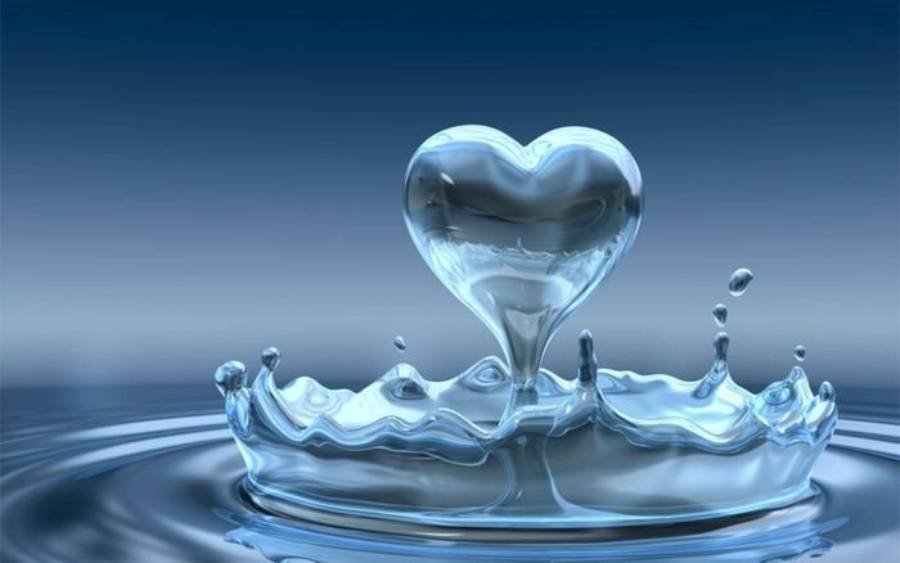
Water spiritually symbolizes purification, renewal, rebirth, transformation, life, healing, emotions, intuition, and spiritual connection. Its ability to cleanse, sustain life, change form, and move continuously has made water a powerful spiritual symbol across cultures and belief systems. Rather than carrying one fixed meaning, water takes on different interpretations according to its movement, depth, clarity, and spiritual context.
Clear water is commonly associated with purity and clarity, while flowing water represents change, release, and the continuous movement of life. Still water can symbolize reflection and inner peace, whereas deep water is associated with hidden emotions, mystery, and the subconscious. Rain adds another dimension to water symbolism because its arrival can represent cleansing, renewal, and a new beginning.
Religious and spiritual traditions also give water specific meanings through practices such as ritual washing, immersion, blessing, and purification. These traditions do not interpret water in exactly the same way, but they repeatedly connect it with important transitions between physical and spiritual states. Understanding these connections helps explain why water remains one of the most enduring spiritual symbols and why different forms of water can carry distinct meanings.
What Does Water Mean Spiritually?
Water spiritually means purification, renewal, rebirth, transformation, life, healing, emotions, and intuition. These eight meanings come from the qualities people observe in water: it cleans surfaces, sustains living organisms, moves continuously, reflects its surroundings, changes physical form, and can conceal what lies beneath its surface. Spiritual traditions and symbolic systems interpret these qualities in different ways, so water does not have one universal spiritual meaning.
Purification is one of the most prominent spiritual meanings of water. Water physically removes dirt, which creates a direct symbolic connection between washing the body and cleansing the inner or spiritual self. This connection appears in practices involving washing, immersion, and sacred water. In a spiritual context, purification can refer to releasing perceived negativity, preparing for a ritual, or marking a transition from one state to another.
Renewal represents the restoration that follows cleansing or release. Water repeatedly appears in natural cycles through rainfall, rivers, evaporation, and condensation, making it a fitting symbol for continuation and restoration. Rain falling after a dry period provides a clear example: the landscape receives water and begins supporting growth again. Spiritually, this pattern can represent leaving an old condition behind and entering a renewed state.
Rebirth takes the idea of renewal further by representing the beginning of a new state of being. Entering water and emerging from it creates a symbolic sequence of departure, transition, and return. This mechanism helps explain why immersion in water appears in religious and spiritual practices connected with major transitions. Baptism in Christianity is a prominent example in which water is connected with spiritual rebirth, although the specific theological meaning belongs to the Christian context and should not be treated as universal to all traditions.
Transformation is represented by water because water continually changes while remaining water. It moves around obstacles, takes the shape of its container, and changes among liquid, solid, and vapor under different physical conditions. These characteristics create a symbolic association with adaptation, transition, and change. Flowing water, for example, provides a natural image for moving from one stage of life to another rather than remaining fixed in a previous condition.
Life is another central meaning because living organisms depend on water. Water supports plants, animals, and humans, while access to it determines whether many environments can sustain biological activity. Spiritual symbolism extends this observable relationship from physical sustenance to ideas such as creation, fertility, abundance, and life-giving energy. A spring emerging from the ground, for example, can symbolize a source of life because it brings water into an environment where growth can occur.
Healing is associated with water through its connections with cleansing, restoration, rest, and renewal. Within spiritual symbolism, healing does not necessarily mean curing a medical condition. It more often describes emotional or spiritual restoration after distress, loss, or a difficult transition. Practices such as sitting beside calm water or using bathing as a deliberate moment of reflection illustrate how physical interaction with water can be given a personal symbolic meaning of restoration.
Emotions are represented by water because both can appear calm, turbulent, shallow, or deep. A still lake provides a visual metaphor for emotional calm, while rough waves can represent emotional turmoil. The changing surface of water also corresponds symbolically with changing emotional states. This association explains why the condition of water matters when interpreting its spiritual symbolism: calm and stormy water communicate very different emotional qualities.
Intuition is associated with water through depth, reflection, and what exists beneath the visible surface. Clear surface water allows a person to see what is present, whereas deep or dark water conceals what lies below. Spiritually, this contrast can represent the difference between conscious awareness and inner knowledge that has not yet become fully visible. Water therefore becomes a symbol not only of what a person consciously feels, but also of emotions, impressions, and internal experiences waiting to be recognized.
These eight meanings are interconnected rather than isolated. Purification can lead symbolically to renewal, renewal can become rebirth, and rebirth requires transformation. Emotions and intuition add an inward dimension, while life and healing connect water with restoration and continuation. The exact interpretation depends on the form of water and the spiritual context in which it appears.
Why Does Water Symbolize Purification and Cleansing?
Water symbolizes purification and cleansing because its physical ability to wash away impurities creates a natural metaphor for removing spiritual, emotional, or moral impurities. The symbolic process follows a clear relationship: water removes what does not belong on the body or an object, while spiritual cleansing represents removing what a person or tradition considers spiritually impure. This connection makes purification one of the most persistent meanings associated with water.
Physical washing and spiritual purification are not identical. Physical cleansing changes the condition of the body or an object, whereas spiritual cleansing gives that act a symbolic or religious meaning. When water is incorporated into a ritual, washing can represent preparation, purification, or movement from one spiritual condition to another. The water itself may therefore function both as a physical substance and as a symbol whose meaning comes from the belief system surrounding the practice.
The connection becomes especially visible in religious practices involving ritual washing, immersion, and sacred water. These practices differ substantially between traditions, so they should not be interpreted as expressions of one universal doctrine. Their shared use of water nevertheless demonstrates a recurring symbolic mechanism: an observable act of washing becomes associated with an internal or spiritual form of purification.
Water can carry the same symbolism outside formal religious rituals. Bathing, standing in rain, or entering natural water can be interpreted in personal spiritual practice as symbolic acts of releasing unwanted thoughts, emotions, or experiences. In this context, cleansing describes a spiritual interpretation rather than a scientifically measurable removal of negative energy. The central meaning remains release: something unwanted is symbolically washed away so that a different state can follow.
Why Does Water Symbolize Renewal and Rebirth?
Water symbolizes renewal and rebirth because it is associated with restoration, new growth, and transitions from one condition into another. Renewal describes restoring or beginning again, while rebirth represents a more complete transition into a new state. Water connects these ideas through natural cycles and through symbolic acts in which a person enters, passes through, or emerges from water.
Rain provides a direct example of renewal symbolism. Water returning to dry soil supports plants and replenishes water sources, producing visible changes in the surrounding environment. This physical process creates a symbolic sequence of dryness → water → restoration → growth. Within spiritual interpretation, the same sequence can represent the end of stagnation, the release of an old experience, and the beginning of a renewed period.
Rebirth carries a stronger meaning than renewal. Renewal restores, while rebirth marks the symbolic beginning of a different state. This distinction explains why immersion can carry powerful spiritual symbolism. Entering water creates separation from the previous state, being within water represents transition, and emerging creates a visible image of beginning again.
Christian baptism is one specific example of water being connected with spiritual rebirth and transition. Its meaning belongs to a particular theological context rather than providing a definition for water symbolism in every religion. Other traditions use water according to their own doctrines, practices, and concepts of purification. The broader symbolic connection is therefore not that every tradition assigns water the same meaning, but that water provides a physical medium through which transitions can be represented.
Renewal and rebirth also explain why water frequently appears in personal interpretations of new beginnings. A person may interpret rain after an emotionally difficult period, a deliberate cleansing practice, or entering a natural body of water as a symbol of starting again. The spiritual meaning comes from the relationship between release and beginning, not from water guaranteeing that an external change will occur.
Why Does Water Symbolize Transformation and Change?
Water symbolizes transformation and change because it moves, adapts to its surroundings, and exists in different physical states. Unlike a rigid object that maintains a fixed shape, liquid water conforms to its container and follows the available path. This observable flexibility creates a strong spiritual metaphor for adaptation, transition, and movement through changing circumstances.
Flowing water makes this symbolism particularly clear. A river remains continuous even though the water within it is constantly moving. Spiritually, this can represent a life that retains continuity while individual experiences, relationships, circumstances, and identities change over time. The symbolism does not require change to erase the past; instead, movement becomes part of an ongoing process.
Water also transforms physically between liquid water, ice, and vapor. These states differ visibly while remaining forms of the same substance. In spiritual interpretation, this characteristic can represent the idea that transformation changes how something is expressed without necessarily eliminating its underlying identity. It provides a concrete natural metaphor for moving from one stage or condition into another.
The direction of water adds another layer to this meaning. A river moves around obstacles, rainfall moves from atmosphere to land, and water cycles through evaporation and condensation. These processes have made water useful for representing transition, impermanence, adaptability, and release. Flowing water is especially associated with letting go because it moves onward rather than remaining in one location.
Transformation connects directly with the earlier meanings of purification, renewal, and rebirth. Purification represents removing what is unwanted, renewal represents restoration, rebirth represents a new state, and transformation describes the change connecting those states. Together, these meanings explain why water can symbolize both an ending and a beginning without contradiction: the central concept is movement from one condition into another.
Why Does Water Symbolize Life and Creation?
Water symbolizes life and creation because living organisms depend on water to survive, grow, and reproduce. This physical relationship gives water a direct symbolic connection with vitality, fertility, abundance, and the beginning of life. Unlike symbolic associations based mainly on abstract interpretation, the connection between water and life begins with an observable fact: environments with accessible water can support forms of life that cannot survive without it.
The life-giving symbolism of water becomes especially visible through plant growth. Rain supplies water to soil, rivers distribute water across landscapes, and springs bring groundwater to the surface. These processes connect water with growth, nourishment, fertility, and abundance. In spiritual symbolism, fertile land after rainfall can therefore represent more than physical growth; it can become an image of renewed potential, creative energy, or the beginning of a productive period.
Creation adds another layer to this meaning. Water can represent the state from which life, form, or a new condition emerges. This symbolism appears differently across religious and spiritual traditions, and those traditions should not be treated as interchangeable. At the broader symbolic level, however, water provides a natural image of possibility because it simultaneously sustains existing life and enables new growth.
The meanings of life and creation also connect water with renewal. A dry environment receiving water demonstrates a visible transition from scarcity toward growth, while a seed receiving sufficient water can begin germination. These examples help explain the symbolic sequence of water → nourishment → growth → life. Spiritual interpretations extend that sequence to concepts such as inner growth, creative beginnings, and the restoration of vitality.
Water therefore symbolizes life not simply because spiritual traditions assign that meaning to it, but because its physical role in sustaining life provides the foundation for the symbolism. Different belief systems can build distinct religious meanings around water, while the underlying association between water, growth, and life remains easy to recognize.
Why Is Water Associated With Emotions and Intuition?
Water is associated with emotions and intuition because its depth, movement, surface, and changing conditions provide natural metaphors for inner experiences that are not always immediately visible. Calm water can represent emotional stability, turbulent water can represent emotional disturbance, and deep water can represent feelings or perceptions beneath conscious awareness. The condition of the water therefore changes the interpretation.
Still water commonly represents emotional calm and reflection. A smooth surface produces fewer disturbances and can reflect surrounding objects clearly, creating a connection between physical reflection and self-reflection. In a spiritual context, this image can represent quieting external distractions in order to examine thoughts and feelings more closely. A calm lake, for example, provides a different symbolic message from an ocean during a storm because one emphasizes stillness while the other emphasizes intensity and instability.
Moving or turbulent water can represent changing or overwhelming emotions. Waves rise and fall, currents change direction, and storms disturb otherwise calmer surfaces. These characteristics provide concrete metaphors for emotional states that fluctuate in intensity. Rough water may therefore symbolize fear, grief, anger, uncertainty, or emotional conflict within an interpretive spiritual context, while gently flowing water can represent emotional movement without the same sense of disorder.
Depth connects water with the subconscious and hidden emotional experience. A person can see the surface of deep water without seeing everything underneath it. Symbolically, the visible surface can represent conscious awareness while the unseen depth represents feelings, memories, fears, desires, or intuitions that have not been fully recognized. Deep oceans and lakes are particularly suited to this symbolism because their depths contain spaces that remain outside ordinary visual perception from the surface.
Water is also associated with intuition through the contrast between direct observation and inner perception. Intuition, in spiritual interpretations, refers to recognizing or sensing something without reaching it entirely through deliberate reasoning. Water’s hidden depths provide a metaphor for this process: information may exist beneath the surface even when it is not immediately visible. Clear water can consequently symbolize clarity and recognition, while cloudy or dark water can symbolize uncertainty or difficulty interpreting an internal experience.
Reflection strengthens this connection between water and self-awareness. A reflective water surface shows an image, but that image depends on the condition of the water. Clear and still water produces a more coherent reflection, whereas disturbed water distorts it. Spiritually, this can symbolize how a calm mental or emotional state supports introspection, while emotional turbulence can make inner experiences more difficult to interpret.
These associations do not mean that encountering a particular type of water objectively reveals a person’s emotional or spiritual condition. Water symbolism is interpretive rather than diagnostic. Its value comes from using observable characteristics such as depth, movement, clarity, and reflection to represent less visible experiences such as emotions, intuition, and the subconscious. This relationship also explains why the spiritual meaning of water changes significantly according to whether the water is flowing, still, clear, deep, or turbulent.
Does the Spiritual Meaning of Water Change Depending on Its Form?
Yes. The spiritual meaning of water changes according to its movement, clarity, depth, source, and surrounding context. Water retains broad associations with purification, life, transformation, and emotions, but its physical condition determines which symbolic attribute becomes most prominent. Flowing water emphasizes movement, still water emphasizes reflection, clear water emphasizes purity, and deep water emphasizes what exists beneath the visible surface.
Movement creates one of the clearest differences in water symbolism. Flowing rivers and streams continually move from one place to another, which connects them with change, transition, and release. Still lakes and ponds create the opposite visual experience, making them stronger symbols of calmness, contemplation, and inner reflection. The same central entity therefore produces different spiritual interpretations when one physical attribute changes.
Clarity also affects interpretation. Clear water is commonly connected with purity, truth, and mental or spiritual clarity because what lies within it can be seen more easily. Muddy or cloudy water reverses this relationship by obscuring what is beneath the surface, making it a possible symbol of confusion, uncertainty, or unresolved emotions. Depth works similarly: shallow water exposes more of what it contains, while deep water conceals it and therefore lends itself to symbolism involving mystery, intuition, and the subconscious.
Context remains essential when interpreting any form of water. Rain, rivers, oceans, waterfalls, and lakes do not have fixed meanings that apply to every religion, culture, dream, or personal spiritual experience. Their meanings develop from the combination of water’s observable qualities and the spiritual framework in which those qualities are interpreted. Understanding the form of water is therefore the first step toward understanding why one encounter with water can symbolize peace while another can symbolize major change.
What Is the Spiritual Meaning of Flowing Water?
Flowing water spiritually symbolizes change, movement, release, transition, and the continuous progression of life. Its defining characteristic is that it does not remain fixed in one location. Rivers, streams, and currents continually move forward, making flowing water a natural metaphor for experiences that develop, pass, or change over time.
Change is the central meaning of flowing water because movement continuously alters the water’s position and surroundings. A river can travel through forests, valleys, cities, and open land while maintaining its overall course. Spiritually, this pattern can represent moving through different stages of life while retaining a sense of continuity. Circumstances change, but the larger journey continues.
Flowing water also represents release because it carries material away from its previous location. This characteristic supports spiritual interpretations involving letting go of emotional burdens, past experiences, or patterns that no longer serve a person’s intended direction. A person using a river as a focus for reflection, for example, may treat its current as a symbol of allowing an experience to move onward rather than trying to hold it permanently.
Transition is closely connected with this symbolism. A stream moves from its source toward larger bodies of water, while a river passes continuously from one landscape into another. The movement between locations creates a physical image of transition between states. Flowing water can therefore represent leaving one stage, passing through a period of change, and entering another.
The symbolism does not imply that a person must accept every change passively. Instead, flowing water provides an image of adaptability without complete loss of direction. Water can move around rocks, follow new channels, or change speed according to the terrain while continuing its movement. This makes flowing water particularly suitable for spiritual interpretations involving flexibility, resilience, and progression.
What Is the Spiritual Meaning of Still Water?
Still water spiritually symbolizes inner peace, reflection, contemplation, emotional calm, and stillness. Unlike a moving river or crashing waterfall, still water draws attention to what happens when movement decreases. A calm lake or pond therefore provides a natural image for slowing down and observing what is present.
Reflection is one of the strongest meanings of still water because an undisturbed surface can mirror its surroundings. This physical characteristic creates a direct metaphor for self-reflection. Just as a smooth surface makes an external image easier to see, spiritual interpretations can use still water to represent examining thoughts, emotions, intentions, or experiences without constant external disturbance.
Still water also represents emotional calm. Waves and turbulence are commonly used as metaphors for emotional intensity, so their absence produces the opposite association. A quiet lake can symbolize a state in which emotions remain present but are not dominating awareness. This distinction matters because stillness does not necessarily mean emptiness; it can represent stability within an existing emotional experience.
Contemplation develops from the same mechanism. Reducing movement creates an environment associated with observation rather than immediate reaction. For this reason, sitting beside calm water can be incorporated into meditation or personal reflection. The water does not inherently create a spiritual state, but its stillness can function as a symbolic focus for attention and introspection.
Still water is not universally positive. In some interpretive contexts, water that does not move can represent stagnation, suppressed emotion, or resistance to change. The surrounding context determines whether stillness represents peace or lack of movement. A clear, peaceful lake and dark stagnant water share the attribute of stillness but communicate different symbolic qualities because clarity, condition, and environment modify the meaning.
What Is the Spiritual Meaning of Clear Water?
Clear water spiritually symbolizes purity, clarity, truth, cleansing, and unobstructed awareness. The association comes primarily from visibility: clear water allows a person to see through it, while cloudy water hides what lies beneath. This physical difference creates a straightforward metaphor for understanding something clearly rather than remaining uncertain about it.
Purity is connected with clear water because visible cleanliness suggests the absence of contamination or obscurity. In spiritual symbolism, this quality can represent purification, a fresh beginning, or the removal of unwanted influences. This interpretation reinforces the broader relationship between water and cleansing while adding clarity as a specific attribute.
Clear water can also represent mental or emotional clarity. When the contents beneath the surface are visible, there is less uncertainty about what is present. Spiritually, this characteristic can symbolize recognizing feelings, understanding an internal conflict, or becoming more aware of one’s intentions. The symbolism works through analogy rather than prediction: clear water provides an image for clarity rather than proving that a person has reached a particular spiritual state.
Muddy or cloudy water creates a useful contrast. Sediment makes it harder to see beneath the surface, so cloudy water can symbolize confusion, uncertainty, unresolved emotions, or a situation that has not yet become clear. The contrast between clear and muddy water demonstrates how the same central symbol changes when one attribute—clarity—changes.
Clear water therefore combines two closely related meanings: being cleansed and being able to see clearly. The first connects it with purification, while the second connects it with truth, awareness, and insight. These meanings explain why clarity is an important contextual factor when interpreting water in spiritual symbolism.
What Is the Spiritual Meaning of Deep Water?
Deep water spiritually symbolizes mystery, the unknown, the subconscious, hidden emotions, and inner depth. Its symbolism comes from the difference between what can be observed at the surface and what remains concealed below. The deeper the water becomes, the less a person can perceive from above, making depth a natural metaphor for aspects of the inner self that are difficult to recognize or understand.
Mystery is one of the strongest meanings of deep water because its depths conceal information. A person standing beside a deep lake or ocean can observe the surface without seeing everything beneath it. Spiritually, this physical limitation can represent experiences, questions, or parts of the self that have not yet been fully explored. Deep water therefore differs from clear, shallow water, where visibility creates stronger associations with certainty and clarity.
Deep water is also associated with the subconscious because both involve something existing beneath an accessible surface. The surface can symbolize conscious thoughts and immediate awareness, while the unseen depth represents memories, emotions, fears, desires, or impressions that are harder to access. This metaphor explains why descending into deep water can be interpreted as turning inward or exploring less familiar aspects of one’s emotional life.
The emotional meaning of deep water depends heavily on context. Calm deep water can symbolize introspection, wisdom, or profound inner awareness, while dark or turbulent deep water can symbolize uncertainty, fear, or emotions that feel difficult to control. Depth alone does not determine whether the symbolism is positive or negative; clarity, movement, and the person’s interpretive context modify its meaning.
What Is the Spiritual Meaning of the Ocean?
The ocean spiritually symbolizes vastness, mystery, emotional depth, interconnectedness, and forces larger than the individual. Its immense scale distinguishes ocean symbolism from the meanings associated with smaller bodies of water. A person can see the ocean’s surface and horizon while remaining unable to perceive its full depth or extent, creating a powerful image of what exceeds individual knowledge and control.
Vastness connects the ocean with spiritual ideas of something greater than the individual self. The horizon can appear almost limitless from the shore, while the volume and depth of the ocean extend far beyond what a person can experience at once. Depending on the spiritual framework, this scale can be interpreted as infinity, expanded consciousness, divine creation, or the larger whole to which individual life belongs.
The ocean also represents emotional depth and the subconscious. Its surface changes from calm to turbulent, while enormous depths remain beneath those visible conditions. A calm ocean can symbolize emotional peace or acceptance, whereas powerful waves and storms can represent emotional intensity, uncertainty, or internal conflict. The hidden depths reinforce the association with feelings and experiences that exist beneath conscious awareness.
Interconnectedness is another important ocean meaning because individual rivers and streams eventually connect with larger bodies of water as part of the global water cycle. Spiritually, this can become a metaphor for individual existence participating in something larger. The ocean can represent both individuality and unity: a single wave has a recognizable form, yet it remains part of the same body of water.
What Is the Spiritual Meaning of a River?
A river spiritually symbolizes life’s journey, direction, transition, continuous change, and the passage from one stage to another. Although a river is a form of flowing water, its symbolism extends beyond movement because it follows a course from a source toward another body of water. This direction gives the river a strong connection with journeys and progression.
The river represents a journey because it has both movement and a path. It begins from a source, passes through changing landscapes, receives water from tributaries, encounters obstacles, and continues toward a larger destination. Spiritually, these characteristics can represent a person’s movement through different experiences and stages of life.
A river also symbolizes continuous change without complete loss of identity. Its water continually moves, yet the river retains its name, channel, and recognizable course. This creates a useful metaphor for personal transformation: beliefs, relationships, circumstances, and priorities can change while a sense of continuity remains.
Obstacles add another dimension to river symbolism. Water can move around rocks, accelerate through narrow channels, slow in wider areas, or change course when the landscape requires it. This adaptability can represent responding to changing circumstances without abandoning forward movement. The river therefore combines the symbolism of flowing water with the more specific attributes of direction, journey, and passage.
What Is the Spiritual Meaning of Rain?
Rain spiritually symbolizes cleansing, renewal, nourishment, fertility, and new beginnings. Its symbolism develops from the visible effects of water returning to the land. Rain can wash surfaces, replenish rivers and soil, support plant growth, and change a dry environment, making it a natural symbol for restoration after a period of scarcity or stagnation.
Cleansing is associated with rain because falling water physically washes exposed surfaces. Spiritually, this process can represent releasing an old emotional condition, clearing away what is no longer wanted, or preparing for a different stage. Standing in rain may consequently be interpreted in personal spiritual practice as a symbolic act of release, although that interpretation depends on the individual rather than representing a universal spiritual rule.
Renewal follows naturally from cleansing. After rainfall, water becomes available to plants and soil, supporting new or continued growth. This creates the symbolic sequence of rain → nourishment → growth → renewal. Rain after a dry period provides an especially clear image of this transition because the contrast between scarcity and replenishment is directly observable.
Rain can also symbolize fertility and abundance because adequate water supports productive land and living ecosystems. Religious and cultural interpretations of rainfall differ, so rain should not automatically be described as a blessing in every tradition. Within contexts where beneficial rain is connected with divine provision or sacred meaning, however, its life-supporting role can strengthen spiritual associations with abundance and renewal.
What Is the Spiritual Meaning of a Waterfall?
A waterfall spiritually symbolizes release, powerful transformation, cleansing, movement, and transition. Unlike gently flowing water, a waterfall combines continuous movement with a sudden change in elevation and greater visible force. These characteristics make it a particularly strong symbol for change that feels decisive rather than gradual.
Release is a central meaning of a waterfall because water reaches an edge and continues downward instead of remaining where it was. Spiritually, this movement can represent letting go of an attachment, emotion, experience, or previous stage. The symbolism is especially relevant when release is understood as part of forward movement rather than simply the disappearance of something unwanted.
A waterfall also represents powerful transformation because its water undergoes a dramatic transition while remaining part of the same flow. Water moves from a relatively horizontal course into a rapid descent before continuing downstream. This visible shift can symbolize periods when change becomes intense, unavoidable, or clearly noticeable.
Cleansing adds a further meaning. The combination of moving water, spray, sound, and continuous flow can create a strong sensory association with washing and renewal. In personal spiritual interpretation, a waterfall may therefore represent releasing what belongs to a previous stage and moving into another with greater clarity.
The waterfall differs from other forms of water through the intensity of its movement. Still water emphasizes reflection, flowing water emphasizes continuous change, a river adds journey and direction, while a waterfall emphasizes release and forceful transition. These distinctions show why the physical form of water is essential when interpreting its spiritual symbolism.
What Does Water Symbolize in Different Spiritual Traditions?
Water symbolizes purification, spiritual renewal, life, sacred transition, and connection with the divine in different spiritual and religious traditions, but these meanings are not identical across belief systems. Christianity, Hinduism, Buddhism, Judaism, and Islam each place water within their own teachings, rituals, and sacred contexts. The recurring presence of water does not mean that every tradition shares one universal interpretation; its meaning depends on how each tradition understands purification, sacred practice, and the relationship between physical actions and spiritual life.
What Does Water Symbolize in Christianity?
In Christianity, water symbolizes purification, spiritual rebirth, new life, and salvation, with baptism providing one of the clearest examples. Baptism uses water within a religious act that marks entry into Christian life and expresses a relationship between cleansing, death to an old state, and emergence into a new one. The precise theological interpretation of baptism differs among Christian denominations, but water remains central to the practice.
Water also carries life-giving symbolism in Christian scripture. Biblical imagery connects water with life, cleansing, divine provision, and spiritual renewal. The concept of “living water,” for example, gives water a meaning that extends beyond physical thirst and connects it with spiritual life. This symbolism strengthens the relationship between physical water sustaining the body and sacred water imagery representing spiritual life.
Holy water provides another Christian context in which ordinary water receives a specific religious function through blessing and use. Depending on Christian tradition, it may be associated with blessing, remembrance of baptism, or purification. These meanings belong within Christian theology and practice rather than serving as evidence that blessed water has the same significance in other religions.
What Does Water Symbolize in Hinduism?
In Hindu traditions, water is strongly associated with purification, sacredness, life, and spiritual cleansing. Water appears in religious practices involving bathing, offerings, and sacred rivers, where its significance extends beyond ordinary physical washing. The spiritual meaning comes from the religious context in which the water, location, and ritual act are understood.
The Ganges is a prominent example of sacred water in Hinduism. The river is not treated merely as a symbolic representation of purification; it holds a specific sacred status within Hindu traditions. Ritual bathing in sacred waters can therefore express religious purification and devotion according to beliefs and practices connected with those waters.
This context illustrates why spiritual symbolism should not reduce every sacred river to the generic idea of “flow.” A river can carry both general symbolic attributes and tradition-specific religious meanings. In Hinduism, the religious identity of a sacred river can be more important than the general spiritual symbolism associated with moving water.
What Does Water Symbolize in Buddhism?
In Buddhist contexts, water can symbolize purity, clarity, calmness, and the cultivation of a mind less disturbed by attachment or agitation, although the role and interpretation of water vary among Buddhist traditions. Its physical qualities provide useful imagery: clear water allows visibility, while disturbed or muddy water makes clear perception more difficult.
This contrast creates a symbolic relationship between clear water and mental clarity. Water that becomes still allows sediment to settle, providing an image that can be used to understand how reduced disturbance changes perception. In spiritual interpretation, the mechanism is not that water itself produces wisdom, but that its observable condition offers a metaphor for clarity and calmness.
Water also appears in Buddhist rituals and cultural practices in forms that differ by region and tradition. These practices should be understood within their specific Buddhist context rather than combined into a single universal ritual meaning. The broader symbolism of clarity and purification can overlap with other religions, while its doctrinal significance remains distinct.
What Does Water Symbolize in Judaism?
In Judaism, water is closely associated with ritual purification, renewal, and preparation for religious life. One important context is the mikveh, a ritual bath used for specific forms of immersion according to Jewish law and tradition. The meaning of this immersion is religious and ritual rather than simply equivalent to ordinary physical bathing.
The mikveh demonstrates the distinction between cleanliness and ritual status. A person can already be physically clean before immersion, meaning that the water’s religious function cannot be reduced to removing visible dirt. The act belongs to a structured religious framework in which water participates in a transition defined by Jewish law and practice.
Water also carries broader biblical associations with life, creation, and divine provision. These meanings can overlap conceptually with water symbolism elsewhere, but their Jewish significance comes from Jewish scripture, law, and tradition. This is another example of the same central entity acquiring different meanings when the source context changes.
What Does Water Symbolize in Islam?
In Islam, water is strongly connected with purity, cleanliness, preparation for worship, and life. Its religious significance is particularly visible in purification practices performed before certain acts of worship. In this context, water serves a defined religious purpose rather than functioning only as a general symbol of spiritual cleansing.
Wudu, the ritual ablution performed before prayer under the conditions prescribed in Islam, demonstrates this relationship clearly. Water is used to wash specified parts of the body as part of preparation for salah. Ghusl involves a more complete ritual washing in circumstances where it is required. These practices connect water with ritual purity and readiness for worship within an Islamic legal and religious framework.
Water also has a fundamental association with life within Islamic thought. This meaning connects its observable life-sustaining function with a religious understanding of creation and divine provision. As with the other traditions, however, the Islamic meaning of water should be explained through Islamic sources and concepts rather than treated as interchangeable with Christian baptism, Hindu sacred-river practices, Buddhist symbolism, or Jewish ritual immersion.
Across these five traditions, purification is the most visible recurring connection, but the mechanism, doctrine, and ritual purpose differ. Christian baptism, Hindu sacred waters, Buddhist uses and imagery, Jewish mikveh, and Islamic ablution should therefore remain distinct knowledge units. Their differences demonstrate an important principle of water symbolism: the physical qualities of water create recurring associations, while each spiritual tradition determines what those associations mean within its own religious framework.
Why Is Water Used in Spiritual Cleansing Rituals?
Water is used in spiritual cleansing rituals because its physical ability to wash away substances provides a direct symbolic model for purification, release, and preparation for a new spiritual state. When washing becomes part of a religious or personal spiritual practice, the action can represent removing impurity, leaving behind an unwanted condition, or preparing to enter a sacred context. The meaning comes from the ritual and belief system surrounding the water rather than from physical washing alone.
Spiritual cleansing with water follows a recognizable symbolic mechanism: contact with water → removal or release → transition → renewed state. Physical washing makes this sequence visible. A person enters the practice in one condition, performs an action involving water, and completes it in another ritual or symbolic condition. This mechanism helps explain why washing and immersion appear in spiritual practices even when their specific doctrines differ substantially.
Religious examples demonstrate why the surrounding context matters. Christian baptism, Jewish mikveh, Islamic ablution, and Hindu practices involving sacred waters all involve water, but they do not perform the same religious function. The shared presence of water does not make the rituals equivalent. Each tradition determines who performs the practice, when it occurs, what actions are required, and what religious meaning those actions carry.
Personal spiritual cleansing is broader and less formally defined. Someone may use a bath, shower, rainfall, or natural body of water as a setting for reflection and symbolic release. For example, a person might consciously associate washing with letting go of an emotionally difficult period. In this case, water provides a physical action around which the individual organizes a personal intention; the interpretation does not establish that water literally removes negative energy.
The distinction between symbolic cleansing and physical cleansing is therefore essential. Water can physically remove dirt and other substances, while spiritual cleansing describes meaning assigned to an action within a religious or personal framework. Keeping these functions separate explains why water can be spiritually significant without presenting symbolic interpretations as measurable physical effects.
Read more: Spiritual Meanings of July
What Does It Mean When You Feel Spiritually Drawn to Water?
Feeling spiritually drawn to water can represent a desire for calm, emotional reflection, cleansing, renewal, release, or deeper connection with your inner experience. The interpretation depends on what kind of water attracts you, how you respond to it, and what is happening in your life at the time. Feeling drawn to water does not have one fixed spiritual meaning.
A desire for calm and reflection is one interpretation, particularly when a person feels attracted to quiet lakes, gentle streams, or peaceful shorelines. Still or rhythmic water provides fewer abrupt visual changes than many busy environments and can become a focus for contemplation. Within spiritual interpretation, seeking this setting can represent a wish to become quieter internally and examine thoughts or emotions with less distraction.
A connection with cleansing and release is another interpretation. A person going through a transition may find rain, flowing rivers, showers, or ocean waves symbolically meaningful because moving water already carries associations with washing away and moving onward. The attraction can therefore become part of a personal narrative about releasing a past experience rather than evidence that the water itself is causing the transition.
Feeling drawn to deep water or the ocean can carry a different symbolic emphasis. Depth is associated with hidden emotions, intuition, mystery, and the subconscious, while the ocean adds vastness and interconnectedness. Someone using these symbols for spiritual reflection might interpret an attraction to the ocean as an invitation to explore feelings or questions that seem larger or deeper than everyday concerns.
The specific condition of the water can help refine the interpretation. Attraction to flowing water can emphasize change and progression; still water can emphasize contemplation; clear water can emphasize clarity and purification; deep water can emphasize inner exploration; and rain can emphasize renewal. These are symbolic frameworks rather than fixed messages, so personal context remains necessary.
A useful interpretation should therefore begin with the experience itself rather than assuming a supernatural explanation. Consider which form of water attracts you, what quality of that water stands out, what emotion it produces, and which current experience shares that quality. This approach uses water symbolism as a framework for reflection without claiming that attraction to water automatically predicts an event or delivers a universal spiritual message.
How Can Water Be Used in a Spiritual Practice?
Water can be used in spiritual practice through meditation, symbolic cleansing, mindful bathing, reflection near natural water, and intention-focused rituals. The simplest practices use water as a focus for attention or as a symbol of a specific intention such as release, renewal, or emotional clarity. Formal religious water rituals should be distinguished from personal practices because they belong to established traditions with their own requirements and meanings.
Use water as a focus during meditation by observing its movement, sound, surface, or reflection. A river can provide a focus for contemplating change, while a still lake can support reflection on calmness and awareness. The mechanism is attention: instead of treating the water as a source of supernatural power, the practitioner uses an observable quality of water to maintain focus on a corresponding spiritual theme.
Use bathing or showering as a symbolic cleansing practice by connecting the physical act of washing with an intentional moment of release. For example, a person can identify an emotion or experience they are ready to leave behind and use the end of a bath or shower as a symbolic boundary between reflection and moving forward. The physical cleansing is real, while the additional meaning of release is personally assigned.
Spend reflective time beside natural water when a river, lake, ocean, or waterfall is safely accessible. Each setting provides a different symbolic focus. A river emphasizes movement, an ocean emphasizes vastness and depth, a lake emphasizes stillness, and a waterfall emphasizes powerful release. Journaling or quiet reflection beside these environments can turn abstract symbolism into a structured contemplative practice.
Use a bowl or glass of water as a visual symbol during personal reflection when access to natural water is unnecessary or impractical. Clear water can represent clarity, while gentle movement can represent transition. The purpose is to provide a concrete object that reinforces an intention or concept. The spiritual value comes from attention and symbolic meaning rather than from assuming that ordinary water acquires a scientifically established supernatural property.
Religious water practices require a different approach. Baptism, mikveh, wudu, ghusl, and practices involving sacred waters belong to particular religious traditions and cannot be recreated accurately by borrowing only their visible actions. Respect the doctrine and requirements of the relevant tradition when participating in a formal religious water practice. A personal symbolic bath and a prescribed religious purification ritual may both involve water, but they are not interchangeable.
Water works particularly well in personal spiritual practice because its different qualities correspond with distinct reflective themes: cleansing for release, flowing for change, stillness for reflection, clarity for awareness, and depth for inner exploration. Choosing the form of water according to the intended meaning keeps the practice connected to the symbolism explored throughout this article rather than treating every use of water as spiritually identical.