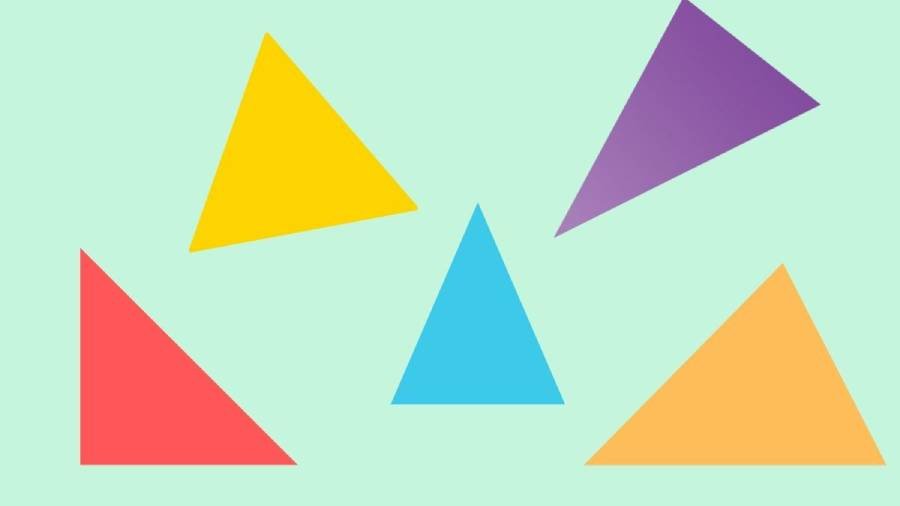
The triangle has several spiritual meanings, including unity, balance, transformation, manifestation, and the connection between three distinct forces. Its three sides and three points make it a natural symbol for concepts organized in groups of three, such as mind, body, and spirit or past, present, and future. The shape can also represent stability because three connected points form a complete, self-supporting geometric structure.
The spiritual meaning of a triangle changes with its orientation and symbolic context. An upward-pointing triangle is associated with concepts such as ascent, fire, and active energy in certain symbolic systems, while a downward-pointing triangle can represent water, receptivity, and inward energy. Two triangles combined or interlocked can introduce another layer of meaning related to the union or balance of complementary principles.
Triangles also appear in sacred geometry, religious imagery, alchemical symbolism, meditation, tattoos, and personal spiritual practices. These uses do not give the triangle one universal meaning. Its interpretation depends on the tradition, orientation, surrounding symbols, and purpose for which it is used. Understanding these contexts makes it possible to distinguish broad modern spiritual interpretations from meanings associated with specific traditions.
What Does a Triangle Mean Spiritually?
A triangle spiritually represents unity, balance, transformation, manifestation, and the relationship between three connected forces. These meanings originate primarily from the triangle’s three-part structure and from symbolic systems that use geometric forms to represent relationships between physical, mental, and spiritual concepts.
Unity is one of the central spiritual meanings of the triangle. Three separate points become one complete shape when they are connected, making the triangle a useful representation of distinct elements functioning as a whole. In modern spiritual interpretation, this structure is commonly applied to concepts such as mind, body, and spirit. Each component remains distinct, but all three contribute to a unified system.
Balance is another meaning associated with the triangle because its three points can represent forces that support or complement one another. Rather than representing balance between only two opposites, the triangle introduces a third component that connects them. This structure allows the symbol to represent integration, harmony, and the relationship between different aspects of an individual’s spiritual life.
Transformation and manifestation add a directional dimension to triangle symbolism. A triangle can visually move from a broad base toward a single point or from one point toward an expanding base, depending on its orientation. Spiritual interpretations use this visual structure to represent processes such as focusing intention, moving toward a higher goal, or bringing an idea into a more defined form. These meanings are symbolic interpretations rather than properties inherent to the geometric shape itself.
The exact spiritual meaning is therefore determined by context. An upward-pointing triangle, a downward-pointing triangle, and two interlocking triangles can communicate different ideas. Religious traditions, sacred geometry, alchemy, and modern spiritual practices also assign meanings according to their own symbolic frameworks. The triangle is better understood as a flexible spiritual symbol than as a shape with one universal interpretation.
Why Does the Triangle Have Spiritual Meaning?
The triangle has spiritual meaning because its three sides and three points provide a simple visual structure for representing groups of three, unity, direction, and relationships between separate forces. Its symbolism develops when people connect these geometric characteristics with religious, philosophical, or spiritual concepts.
The number three is central to this relationship. A triangle cannot exist without three sides and three vertices, so three is structurally inseparable from the shape. Spiritual interpretations extend this physical characteristic into symbolic triads. Examples include mind, body, and spirit; past, present, and future; and birth, life, and death. In these interpretations, the triangle provides a visual framework that connects three individual concepts into one complete system.
The shape also communicates unity because three independent points become one enclosed form when connected. This relationship makes the triangle suitable for symbolic systems that describe different aspects of existence as separate but interconnected. For example, the mind-body-spirit interpretation does not treat the three components as identical. Instead, each occupies a distinct conceptual position while remaining part of one whole.
Direction creates another layer of spiritual symbolism. A triangle with its point facing upward produces a different visual relationship from one pointing downward. Symbolic traditions can therefore use orientation to distinguish concepts such as rising and descending or active and receptive principles. The orientation does not have a universal spiritual meaning by itself; its significance depends on the symbolic system in which the triangle appears.
The triangle’s spiritual significance consequently comes from the interaction between geometric structure and human interpretation. Its three-part form provides the framework, while religions, spiritual traditions, and symbolic systems provide specific meanings. This distinction explains why several traditions can use triangles while assigning different meanings to the same basic shape.
What Does an Upward-Pointing Triangle Mean Spiritually?
An upward-pointing triangle spiritually represents ascent, growth, aspiration, and movement toward a higher state in modern symbolic interpretations. In specific Western esoteric and alchemical contexts, the same orientation is also associated with fire. These meanings come from both the visual direction of the triangle and the symbolic system in which it appears.
The upward point creates a natural visual sense of rising. For this reason, spiritual interpretations can connect the shape with elevation, higher consciousness, personal development, or movement from a grounded state toward a spiritual goal. The broad base can represent a foundation, while the narrowing form directs attention toward a single point. This makes the triangle useful as a visual metaphor for concentrating energy or intention toward one objective.
Fire symbolism gives the upward triangle a more specific meaning. In Western alchemical symbolism, an upward-pointing triangle is used to represent fire. Fire carries associations with heat, activity, change, and transformation, so these qualities can become part of the triangle’s spiritual interpretation when the symbol appears in that context. The association should not be treated as a universal meaning of every upward triangle because other traditions use triangular forms within different symbolic frameworks.
An upward triangle can therefore communicate both general and context-specific meanings. Ascent and aspiration describe interpretations based on the visual direction of the shape, while fire belongs to a particular symbolic tradition. Identifying the surrounding symbols and tradition is necessary before assigning a precise spiritual meaning.
What Does a Downward-Pointing Triangle Mean Spiritually?
A downward-pointing triangle spiritually represents receptivity, inward movement, descent, and the movement of energy toward a grounded or internal state in modern spiritual interpretations. In Western alchemical symbolism, a downward-pointing triangle also represents water, creating a symbolic contrast with the upward fire triangle.
Its direction provides the first layer of interpretation. Instead of directing the eye upward, the point moves attention downward. This visual movement can be interpreted as turning inward, receiving rather than projecting, or bringing attention from an elevated state toward physical or internal experience. In spiritual practices that use directional symbolism, this makes the downward triangle suitable for representing receptive or inward-focused processes.
Water adds a more specific contextual meaning. In alchemical elemental symbolism, the downward triangle represents water. Water is associated with fluidity, movement, and receptivity, so these attributes can influence spiritual interpretations of the symbol. This relationship also creates a clear symbolic counterpart to the upward-pointing fire triangle.
The term inverted triangle is frequently used for a downward-pointing triangle, but its meaning still depends on context. A downward orientation does not automatically indicate negativity, danger, or spiritual decline. It can instead represent receptive qualities or a particular element within an established symbolic system. The surrounding imagery, tradition, and intended use provide the information needed to distinguish between these interpretations.
What Do Two Interlocking Triangles Mean Spiritually?
Two interlocking triangles spiritually represent the union, interaction, or balance of complementary forces. One triangle points upward while the other points downward, creating a single geometric figure from two opposing orientations. This structure allows the symbol to express the idea that apparently different principles can coexist within a larger whole.
The meaning comes primarily from the relationship between the two triangles. An upward triangle can carry associations with ascent or outward movement, while a downward triangle can suggest descent, receptivity, or inward movement. When the two forms overlap, their opposing directions become interconnected rather than remaining separate. Modern spiritual interpretations therefore use interlocking triangles to express concepts such as integration, equilibrium, and the reconciliation of complementary energies.
The surrounding tradition determines the more specific meaning. Interlocking triangles appear in established religious and cultural symbols, so their significance should not be reduced to a generic idea of “spiritual balance.” A six-pointed figure formed from two overlapping triangles, for example, can carry a specific religious identity and historical meaning that takes precedence over a broad modern spiritual interpretation.
For this reason, two interlocking triangles do not have one universal spiritual meaning. Their geometry supports interpretations involving complementary principles, but the symbol’s cultural origin, religious context, orientation, and surrounding imagery determine what it means in a specific use.
What Does the Triangle Mean in Sacred Geometry?
In sacred geometry, the triangle represents a basic relationship between three points that can be interpreted as unity, order, creation, and the connection of multiple principles within one form. Its importance comes from combining a simple geometric structure with symbolic interpretations of number, proportion, direction, and interconnectedness.
Three points are required to create a triangle, making the shape a natural visual representation of a triad. Spiritual interpretations can use this structure to connect three concepts that form a larger whole. Mind, body, and spirit provide one modern example. Other systems may apply different sets of three according to their own philosophical or religious frameworks. The geometry remains the same, while the symbolic interpretation changes with context.
The triangle can also represent a movement from multiplicity toward unity. When viewed from its base toward its apex, two separated points converge visually toward one point. This structure can symbolize concentration, integration, or movement toward a unified purpose. When interpreted in the opposite direction, one point expands toward two, allowing the same shape to serve as a metaphor for differentiation, expression, or manifestation.
Creation and manifestation are therefore symbolic interpretations of the triangle rather than mathematical properties of it. In contemporary spiritual frameworks, the movement from a point toward an expanded form can represent an idea becoming more defined or an intention taking form. Conversely, movement toward the apex can represent the concentration of different experiences or forces into one purpose.
Sacred geometry does not give every triangle an identical spiritual meaning. The triangle gains specific significance from the system in which it is used, including its orientation, proportions, relationship with other shapes, and surrounding spiritual concepts. Reading these contextual features first provides a more accurate interpretation than assigning a fixed meaning to the shape alone.
What Does the Triangle Symbolize in Different Spiritual Traditions?
The triangle symbolizes different forms of three-part unity, divine principles, elemental forces, and spiritual relationships across religious and esoteric traditions. Its meaning is not universal because each tradition interprets the triangle through its own beliefs, practices, and symbolic system. Christianity can connect triangular imagery with the Trinity, Hindu traditions use triangles within yantras, and Western alchemy uses triangle orientation to distinguish elements such as fire and water.
These differences are important when interpreting triangle symbolism. The geometric structure provides the same three sides and three points, but the religious or spiritual context determines what those features represent. A triangle appearing in Christian art should therefore not automatically receive the same interpretation as a triangle within a Hindu yantra or an alchemical diagram.
What Does the Triangle Symbolize in Christianity?
In Christian symbolism, the triangle can represent the Holy Trinity: the Father, the Son, and the Holy Spirit. The connection comes from using one three-sided form to represent three distinct persons united within one God, making the triangle visually suitable for expressing a three-in-one theological relationship.
The number three already has substantial importance within Christianity, but the triangle itself should be understood as a symbolic representation rather than the source of the doctrine. Its three points provide a visual analogy for a triadic relationship, while its single enclosed form emphasizes unity. This combination explains why triangular imagery can be used in Christian religious art and symbolism to reference the Trinity.
Context remains necessary when identifying this meaning. Not every triangle in Christian architecture, decoration, or artwork automatically represents the Trinity. Its placement, accompanying religious imagery, and intended function determine whether a Trinitarian interpretation is appropriate.
What Does the Triangle Symbolize in Hindu Traditions?
In Hindu traditions, triangles appear prominently in yantras and can represent divine principles, cosmic forces, and the relationship between complementary energies. Their meanings depend strongly on orientation and on the larger sacred diagram in which they appear.
The Sri Yantra provides a prominent example of this relationship. Its structure contains multiple interlocking triangles rather than treating one isolated triangle as a complete symbol. Upward- and downward-facing triangles interact within the larger design, creating relationships between complementary principles. The spiritual meaning therefore comes from both the individual triangular forms and their arrangement within the complete yantra.
This context also demonstrates why triangle symbolism cannot be interpreted through orientation alone. A triangle inside a yantra belongs to a specific religious and philosophical framework. Applying a general modern meaning such as “growth” or “balance” without considering that framework can remove the symbol from its original context.
What Does the Triangle Symbolize in Alchemy?
In Western alchemical symbolism, triangles are used to represent elements, with orientation and additional markings distinguishing one element from another. An upward-pointing triangle represents fire, while a downward-pointing triangle represents water. Related triangular signs with horizontal lines are traditionally used for air and earth.
The system demonstrates how a small geometric change can alter symbolic meaning. Fire and water use opposite orientations, while the addition of a horizontal line creates further distinctions among elemental signs. The triangle therefore functions as a structural base whose direction and markings communicate different elemental identities.
These elemental associations also explain why fire and water frequently appear in modern discussions of triangle spirituality. However, fire is not the universal meaning of every upward triangle, and water is not the universal meaning of every downward triangle. These associations belong to a specific symbolic context and should be identified as such when interpreting a triangle outside an alchemical diagram.
Across Christianity, Hindu traditions, and alchemy, the same principle applies: the triangle provides the geometric form, while the tradition provides the specific meaning. Identifying the symbolic system first prevents meanings from different traditions from being combined into a single interpretation that none of them originally intended.
What Does Seeing Triangles Repeatedly Mean Spiritually?
Seeing triangles repeatedly can be interpreted spiritually as a reminder of balance, three-part unity, transformation, or a personal spiritual intention, but repeated sightings do not have one fixed meaning. The interpretation depends on where the triangle appears, its orientation, the spiritual framework being used, and the personal associations attached to the symbol.
Context provides the strongest clue. Someone who uses the triangle during meditation may associate repeated triangle imagery with a concept already connected to that practice, such as mind-body-spirit integration. A person studying sacred geometry may interpret the same shape through geometric relationships and symbolic order. The repeated appearance does not change the triangle itself; it changes the attention a person gives to its existing symbolic associations.
Orientation can narrow the interpretation further. An upward-pointing triangle may direct attention toward themes such as aspiration, ascent, or transformation. A downward-pointing triangle may instead encourage reflection on receptivity or inward movement. When the triangle belongs to a recognizable religious or esoteric symbol, that established context should take priority over a general personal interpretation.
Repeatedly noticing triangles should therefore be treated as an opportunity for reflection rather than objective proof of a supernatural message. A useful interpretation considers four factors: where the triangle appeared, which direction it pointed, what other symbols surrounded it, and what the triangle already represents within the person’s spiritual framework. These details provide more meaning than the frequency of the sightings alone.
What Does a Triangle Mean in a Dream?
A triangle in a dream can symbolize unity, balance, direction, transformation, or a relationship among three important aspects of the dreamer’s experience. There is no single established meaning for every triangle dream, so interpretation depends on the triangle’s appearance, orientation, surrounding imagery, and the emotional response experienced during the dream.
The triangle’s structure provides one starting point. Because it contains three points connected within one form, a dreamer may associate it with three related people, choices, stages, or areas of life. In a spiritual interpretation, the same structure may represent a familiar triad such as mind, body, and spirit. This meaning is most relevant when a three-part relationship already exists within the dreamer’s circumstances or spiritual practice.
Orientation provides another contextual clue. An upward-facing triangle can be interpreted through themes such as rising, aspiration, or focused movement, while a downward-facing triangle can suggest receptivity or inward attention. An interlocking triangular figure introduces a different relationship because two orientations interact within one symbol. These interpretations should remain consistent with the broader dream rather than being applied automatically.
Emotional response also changes the interpretation. A triangle accompanied by calmness may be understood differently from the same shape appearing during fear or confusion. Its color, size, repetition, location, and surrounding objects provide additional contextual information. For example, a triangle appearing repeatedly beside imagery already associated with a person’s spiritual practice carries a stronger personal connection than an isolated geometric shape with no relevant context.
Dream symbolism is interpretive rather than a scientifically fixed decoding system. A triangle in a dream is therefore most useful as a prompt for examining personal associations and spiritual context, not as evidence that one predetermined event or spiritual message will occur.
What Does a Triangle Tattoo Mean Spiritually?
A triangle tattoo can spiritually represent balance, unity, transformation, personal growth, or the connection between three important parts of life. Its specific meaning depends on the triangle’s orientation, design, surrounding symbols, and the intention of the person wearing it. A triangle tattoo therefore functions as a personal symbol rather than carrying one spiritual meaning in every context.
A simple triangle can represent three connected aspects of a person’s identity or spiritual path. For example, someone may use its three points to represent mind, body, and spirit. Another person may assign the points to three stages of personal development or three people with an important relationship. The three-part structure remains consistent, while the meaning assigned to each point changes according to personal context.
Orientation adds another layer of symbolism. An upward-pointing triangle may be chosen to represent aspiration, growth, or movement toward a spiritual goal. A downward-pointing triangle may instead emphasize receptivity, inward reflection, or another meaning derived from a specific symbolic tradition. Two interlocking triangles can introduce themes of interaction and complementary principles.
Additional elements can change the meaning further. Lines, circles, plants, celestial imagery, words, or other geometric shapes create new symbolic relationships around the triangle. A tattoo based on a religious or culturally established symbol should also be interpreted within that tradition rather than reduced to a generic spiritual meaning. The most accurate meaning of a triangle tattoo comes from combining its form, orientation, accompanying imagery, and intended significance.
Read more: Spiritual Meanings of the Color Gold
How Can You Use a Triangle Symbol in Spiritual Practice?
You can use a triangle symbol in spiritual practice as a visual focus for meditation, visualization, journaling, symbolic artwork, or personal reflection. The purpose is to connect the shape with a clearly defined spiritual concept rather than assuming that the triangle itself produces a spiritual effect.
Use a triangle as a meditation focus by assigning a specific meaning to its three points. For example, the points can represent mind, body, and spirit. During meditation, attention can move between the three concepts before returning to the complete triangle as a representation of their relationship. This creates a structured visual framework for contemplating unity and balance.
Use a triangle for visualization by selecting an orientation that matches the intended theme. An upward-pointing triangle can serve as a visual reminder of aspiration or focused growth, while a downward-pointing triangle can support reflection on receptivity or inward attention. The value comes from maintaining a consistent relationship between the chosen symbol and the intention attached to it.
Use a triangle in journaling to organize three connected areas of reflection. A person could place one question or concept at each point and then examine how the three influence one another. For example, the points could represent thoughts, actions, and values. Drawing connections between them can turn the geometric structure into a practical framework for spiritual self-reflection.
Use a triangle in personal symbolic artwork when its meaning has been defined in advance. It can appear in an altar design, journal illustration, meditation space, or other personal object as a reminder of balance, transformation, unity, or another chosen concept. Established religious symbols require additional care because their meanings originate from specific traditions rather than personal interpretation alone.
The triangle works best as a spiritual tool when the intention, symbolism, and context remain consistent. Using the same shape to represent a defined concept creates a recognizable personal association over time, while changing its meaning constantly makes the symbolism less precise.
Does a Triangle Always Have the Same Spiritual Meaning?
No, a triangle does not always have the same spiritual meaning. Its interpretation changes according to four main factors: orientation, spiritual or religious tradition, surrounding symbols, and personal context. The geometric form remains the same, but the symbolic meaning assigned to it can differ substantially between contexts.
Orientation changes how a triangle is interpreted. An upward-pointing triangle can represent ascent, aspiration, or focused movement in modern spiritual interpretations and fire in Western alchemical symbolism. A downward-pointing triangle can represent receptivity or inward movement in broader spiritual interpretations and water within the same alchemical system. Changing the direction of the triangle can therefore change the relationship between the shape and the concept it represents.
Spiritual and religious traditions provide more specific meanings. Christianity can use triangular imagery in connection with the Holy Trinity, while Hindu traditions incorporate triangles into yantras within their own religious and philosophical frameworks. Western alchemy uses triangular forms to identify elemental symbols. These meanings should remain within their respective contexts rather than being combined into one universal definition of triangle symbolism.
Surrounding symbols modify the triangle’s meaning. A single triangle, two interlocking triangles, and a triangle incorporated into a larger sacred diagram do not communicate identical information. Lines, circles, religious imagery, geometric patterns, and other accompanying elements can identify the symbolic system and narrow the range of reasonable interpretations. The complete symbol therefore provides more information than the triangle alone.
Personal context determines how the triangle functions in individual spiritual practice. A person may use three points to represent mind, body, and spirit, while another may assign them to three personal values, relationships, or stages of growth. Tattoos, meditation symbols, dreams, and recurring triangle imagery are especially dependent on personal associations because their meaning is not determined solely by an established religious system.
The most accurate way to interpret a triangle spiritually is to identify its context before assigning its meaning. Check its orientation, identify the tradition or symbolic system, examine the surrounding imagery, and consider the purpose for which the symbol is being used. This approach preserves the distinction between established symbolism and personal spiritual interpretation while explaining why one simple geometric form can carry several meanings.