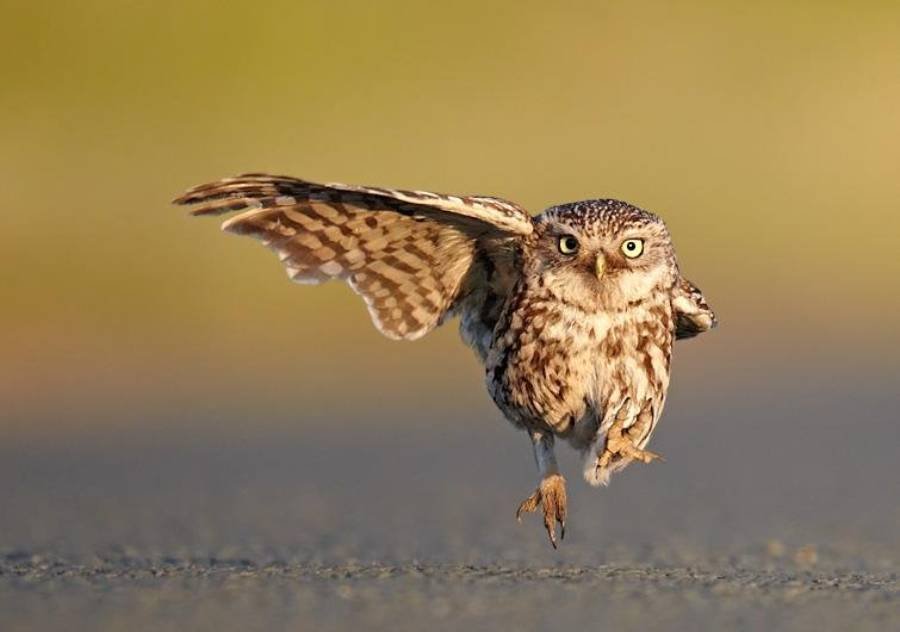
Seeing an owl is spiritually associated with 9 main meanings: wisdom, intuition, hidden knowledge, heightened awareness, transformation, protection, warning, mystery, and death or rebirth. These meanings come from the owl’s long-standing symbolic associations with perception, darkness, knowledge, and transition. The specific interpretation depends on where and when you see the owl, what it is doing, your circumstances at the time, and the spiritual or cultural tradition used to interpret the encounter.
An owl sighting does not automatically mean that a supernatural event is taking place. Owls are wild animals, and encounters can occur because of their habitat, hunting behavior, migration, or activity patterns. Spiritual interpretations add a symbolic layer to the experience rather than proving that the owl appeared to deliver a specific message.
Context therefore matters when interpreting the spiritual meaning of seeing an owl. An owl seen at night may be associated with intuition, mystery, or hidden knowledge, while an owl crossing your path may symbolize a transition or a need to examine your current direction. Repeated sightings can carry another interpretation. Understanding these distinctions helps separate traditional owl symbolism from literal predictions and provides a clearer framework for interpreting your own encounter.
What Does Seeing an Owl Mean Spiritually?
Seeing an owl spiritually represents awareness, wisdom, intuition, and the ability to recognize what is hidden or unclear. The owl’s symbolic meaning is strongly connected with perception because owls navigate and hunt effectively in darkness. Within a spiritual interpretation, darkness represents situations in which answers, intentions, or future outcomes are not immediately visible. Seeing an owl can therefore symbolize the need to observe a situation more carefully before deciding how to respond.
An owl encounter can also represent a period of personal change. Transformation often requires leaving familiar circumstances without knowing exactly what comes next, which creates a natural connection with the owl’s symbolism of navigating darkness. For example, someone encountering an owl while changing careers, ending a relationship, or reconsidering a major decision may interpret the sighting as a symbolic reminder to rely on observation and inner judgment during the transition. The owl does not predict the outcome of that change; the meaning comes from how its symbolism relates to the person’s circumstances.
There is no single spiritual meaning that applies to every owl sighting. The interpretation changes according to the encounter itself, the person experiencing it, and the spiritual or cultural framework being used. An owl appearing near a home can carry a different symbolic interpretation from an owl flying across a road, while repeated sightings can feel more personally significant than a single encounter. For this reason, the strongest interpretation considers both traditional owl symbolism and the specific context in which the owl appeared.
What Are the 9 Spiritual Meanings of Seeing an Owl?
The 9 main spiritual meanings of seeing an owl are wisdom, intuition, hidden knowledge, heightened awareness, transformation, protection, warning, mystery, and death or rebirth. These meanings overlap because they develop from related qualities attributed to owls, particularly their association with perception, darkness, observation, and transition. However, each meaning describes a different way to interpret an owl encounter.
1. Wisdom
Seeing an owl can symbolize wisdom and thoughtful judgment. Wisdom in this context means using knowledge and experience to see a situation beyond its most obvious appearance. The owl has a particularly strong association with wisdom in Western symbolism, including its historical connection with Athena, the ancient Greek goddess associated with wisdom.
As a personal spiritual interpretation, this meaning can become relevant when an important decision requires careful judgment rather than an immediate reaction. For example, seeing an owl during a period of uncertainty may serve as a symbolic prompt to gather information, consider previous experience, and examine consequences before choosing a direction. The symbolism points toward thoughtful judgment rather than predicting which choice will succeed.
2. Intuition
Seeing an owl can represent intuition when you need to recognize information that is not immediately obvious. Intuition differs from wisdom because it concerns internal perception rather than accumulated knowledge. Spiritually, the owl’s ability to function in darkness provides a metaphor for sensing that something deserves attention before all the facts are visible.
This interpretation can apply when your observable circumstances and internal response do not seem to match. For example, an opportunity may appear favorable while particular details continue to create hesitation. Interpreting an owl as a symbol of intuition would not mean accepting that hesitation as proof. Instead, it can represent a reason to examine those details more closely and determine why they are producing concern.
3. Hidden Knowledge
An owl can symbolize hidden knowledge, truth, or information that has not yet been recognized. This meaning develops from the contrast between darkness and sight: darkness conceals information, while the owl remains capable of detecting what is present. Spiritually, the same relationship can represent discovering something that was previously overlooked.
Hidden knowledge does not necessarily refer to supernatural secrets. It can describe information already present but not yet understood, such as an overlooked pattern, an unspoken problem, or a missing fact. An owl encounter during a confusing situation may therefore be interpreted as an invitation to investigate what is beneath the surface rather than accepting the first explanation available.
4. Heightened Awareness
Seeing an owl can symbolize heightened awareness and a need to pay closer attention to your surroundings. Awareness concerns what you notice in the present moment, making it different from intuition, which involves internal perception. Owl symbolism in this context emphasizes observation before action.
For example, heightened awareness may involve noticing a repeated behavior in a relationship, recognizing an overlooked opportunity at work, or becoming conscious of a habit affecting a personal goal. The symbolic message is not that the owl identifies a specific problem for you. Instead, the encounter can function as a reminder to observe details that routine or distraction has caused you to ignore.
5. Transformation
Seeing an owl can represent transformation when one stage of life is ending and another is beginning. Transformation involves a meaningful change in identity, circumstances, priorities, or direction. Because transitions often involve uncertainty, the owl’s association with navigating darkness provides a symbolic connection between the animal and periods of change.
This meaning can be applied to events such as leaving a job, moving to a new place, ending a relationship, beginning a different lifestyle, or changing a long-held belief. The owl does not indicate whether the transformation will be positive or negative. Its symbolism instead reflects the process of moving through uncertainty while becoming more aware of what needs to change.
6. Protection
An owl can be interpreted as a symbol of protection through awareness and vigilance. This meaning does not imply that an owl physically or supernaturally protects the person who sees it. Instead, protection symbolism comes from the idea of remaining watchful enough to identify risks before responding to them.
For example, someone facing an unfamiliar situation may interpret an owl encounter as a reminder to establish boundaries, assess risks, or protect personal interests. In this interpretation, protection is connected with attention rather than fear. The practical value of the symbolism lies in becoming more observant and deliberate about decisions that affect your well-being.
7. Warning
Seeing an owl can symbolize a warning to examine a situation before continuing in the same direction. A spiritual warning does not mean that a harmful event has been predicted. It is better understood as a symbolic prompt to notice risks, unresolved problems, or information that requires additional attention.
The distinction matters because interpreting every owl as an omen of danger can create unnecessary fear. For example, an owl sighting during a difficult decision can be interpreted as encouragement to review the facts, identify assumptions, and reconsider overlooked consequences. The warning symbolism directs attention toward evaluation rather than predicting misfortune.
8. Mystery
An owl can symbolize mystery, the unknown, and aspects of life that cannot yet be fully understood. This association is closely connected with the owl’s nocturnal nature. Humans have limited vision in darkness, while owls are adapted to function under low-light conditions, creating a natural metaphor for encountering what remains unseen or uncertain.
Mystery symbolism is particularly relevant during periods when complete answers are unavailable. A person waiting for the outcome of a major decision, entering an unfamiliar stage of life, or questioning an established belief may relate an owl encounter to uncertainty. In this interpretation, the owl represents remaining observant while accepting that not every answer is immediately available.
9. Death and Rebirth
Seeing an owl can symbolize death and rebirth, but it does not mean that someone is going to die. In spiritual symbolism, death frequently represents an ending, while rebirth represents what develops after that ending. The concept therefore describes transition rather than a literal prediction of physical death.
For example, abandoning an old identity, ending a destructive habit, leaving a long-term role, or changing a deeply held worldview can symbolically resemble death because an established part of life comes to an end. What follows can be interpreted as rebirth because new behaviors, priorities, or circumstances take its place. When an owl is interpreted through this framework, its meaning concerns the cycle of ending, transition, and renewal rather than an omen of literal death.
What Does Seeing an Owl at Night Mean Spiritually?
Seeing an owl at night spiritually symbolizes intuition, hidden knowledge, mystery, and the ability to navigate uncertainty. Night represents what cannot be clearly seen or understood, while the owl is naturally adapted to function in low-light conditions. This contrast creates a symbolic connection between seeing an owl at night and recognizing information that remains unclear, concealed, or unresolved.
This meaning is particularly relevant when you are moving through a situation without having all the information needed to predict its outcome. For example, uncertainty about a relationship, career change, financial decision, or personal transition can make an owl sighting at night feel connected with the need for greater observation. The symbolism encourages you to identify what you know, recognize what remains unknown, and avoid making assumptions simply to eliminate uncertainty.
A nighttime sighting also has a straightforward natural explanation. Many owl species are nocturnal or most active around dusk and dawn, so encountering one after dark is consistent with normal owl behavior. The spiritual meaning therefore comes from the symbolic interpretation you give the encounter rather than from the nighttime sighting itself proving the presence of a spiritual message.
What Does Seeing an Owl During the Day Mean Spiritually?
Seeing an owl during the day can spiritually represent heightened awareness, unexpected insight, or the discovery of something previously overlooked. Daytime symbolism differs from nighttime symbolism because the emphasis shifts from navigating the unknown toward noticing something that has become visible. An owl appearing when you did not expect to see one can consequently serve as a symbol of paying closer attention to present circumstances.
The encounter may feel especially meaningful when something in your life requires renewed attention. For example, you may have ignored a recurring problem, overlooked an opportunity, or continued with a decision without reconsidering its assumptions. Within a spiritual framework, seeing an owl during the day can represent the need to look again at what appears familiar and identify details that were previously missed.
However, an owl appearing during daylight is not automatically a supernatural event. Owls can be active during daylight for biological and environmental reasons, and some species regularly hunt during the day. The symbolic interpretation should therefore remain separate from the observable event: the owl sighting is real, while its spiritual significance depends on the meaning you associate with the encounter.
What Does It Mean When an Owl Visits Your Home?
An owl visiting your home can spiritually symbolize protection, awareness, personal boundaries, or a transition affecting your private life. The home represents security, family, relationships, and personal space in many symbolic frameworks. When an owl appears in a yard, on a nearby tree, on a roof, or close to a window, its established symbolism becomes connected with the meaning you assign to home.
Protection is one possible interpretation because owls are associated with vigilance and observation. In this context, the encounter can serve as a symbolic reminder to pay attention to what affects your household or emotional security. For example, a person experiencing family tension may interpret the owl as a prompt to notice unresolved issues and establish clearer boundaries. The meaning comes from connecting the symbolism of awareness with the person’s circumstances rather than assuming that the owl is literally protecting the property.
An owl near your home can also represent transition when your domestic circumstances are changing. Moving, beginning or ending a relationship, welcoming a new family member, or changing household responsibilities can alter what home represents personally. An owl encountered during such a period may therefore be interpreted through the broader symbolism of change, observation, and adapting to uncertainty.
The owl may also be near your home for entirely natural reasons, including available prey, suitable trees, shelter, or habitat. Its presence does not establish that your house has been spiritually selected. A balanced interpretation considers the natural reason for the visit first and treats any spiritual significance as an additional symbolic meaning.
What Does It Mean When an Owl Flies Across Your Path?
An owl flying across your path can spiritually symbolize a change in direction, an approaching transition, or the need to reconsider where you are going. The central symbol in this encounter is not only the owl but also the path. A path represents direction and movement, while the owl represents perception, awareness, and the ability to navigate what cannot yet be clearly seen.
This interpretation becomes relevant when you are already facing a choice or transition. For example, an owl crossing your path while you are considering a new job, relocation, relationship decision, or major personal commitment may be interpreted as a reminder to examine your direction before proceeding. It does not identify which path you should choose. Instead, the symbolism emphasizes awareness while making the choice.
The direction in which an owl physically flies does not provide a reliable prediction of what will happen next. Claims that an owl crossing from one specific side always predicts good fortune, bad fortune, death, or another fixed outcome depend on particular belief systems rather than a universal spiritual rule. The stronger interpretation focuses on the encounter’s context: the owl symbolizes perception, while the path symbolizes your direction.
What Does It Mean When an Owl Stares at You?
An owl staring at you can spiritually symbolize self-awareness, observation, attention, and the need to examine something more closely. The interpretation comes from the owl’s association with perception and watchfulness. A direct gaze can feel unusually intense, so within a spiritual framework, the encounter is often connected with turning your attention toward something you have ignored, misunderstood, or avoided.
Self-awareness is one of the strongest interpretations because being watched naturally shifts attention back toward yourself. For example, an owl staring at you during a period of personal conflict may prompt reflection on your own behavior rather than focusing exclusively on another person’s actions. During a major decision, the same encounter may symbolize the need to examine your motivations, assumptions, and priorities before acting.
The stare can also represent observation rather than immediate action. Some situations become clearer when you stop reacting and gather more information first. If you are uncertain about a relationship, career opportunity, or personal commitment, the owl’s watchful symbolism can serve as a reminder to observe patterns and evaluate facts before reaching a conclusion. In this interpretation, the owl represents attentiveness rather than providing the answer itself.
An owl looking toward you does not establish that it recognizes a spiritual connection or intends to communicate a message. Owls visually monitor their surroundings for practical reasons, including detecting potential threats and prey. The physical behavior and spiritual interpretation should therefore remain distinct: the stare is an observable behavior, while awareness and introspection are symbolic meanings assigned to the experience.
What Does It Mean When You Keep Seeing Owls?
Repeatedly seeing owls can spiritually symbolize a recurring theme that deserves greater attention, particularly one involving intuition, awareness, hidden information, or personal transformation. Repetition can make an encounter feel more significant because the same symbol repeatedly enters your attention. Within a spiritual interpretation, the useful question is not simply why owls keep appearing, but which aspect of owl symbolism consistently relates to your current circumstances.
There are 3 main ways to interpret repeated owl sightings: spiritual symbolism, pattern recognition, and environmental repetition. A spiritual interpretation treats the owl as a recurring symbol connected with an unresolved decision, transition, or need for awareness. Pattern recognition occurs when noticing one owl makes you more attentive to owls afterward. Environmental repetition occurs when your location, travel schedule, local habitat, or the owl’s territory increases the likelihood of encountering the same species or individual again.
Context helps distinguish which interpretation is most useful. Record where you saw each owl, when the encounter occurred, what the owl was doing, and what was happening in your life at the time. For example, three sightings near the same road at approximately the same time of day may have a strong environmental explanation. Sightings in different circumstances may still feel symbolically connected if they repeatedly coincide with the same personal issue, but that connection remains an interpretation rather than proof of supernatural causation.
Repeated sightings therefore do not automatically make an owl a spiritual messenger. Their spiritual value comes from reflection: the repetition can encourage you to identify patterns in your decisions, emotions, relationships, or current transition. If no meaningful connection exists, there is no requirement to assign the sightings a deeper meaning.
What Does Hearing an Owl Hoot Mean Spiritually?
Hearing an owl hoot can spiritually symbolize awareness, communication, warning, or a call to pay attention to something that is not immediately visible. Unlike seeing an owl, hearing one creates an encounter without necessarily revealing the animal itself. This combination of sound and invisibility naturally connects owl hooting with mystery, hidden information, and attention within symbolic interpretations.
Communication is a central meaning because a hoot is a form of vocal signaling. Spiritually, hearing the call can be interpreted as a reminder to listen more carefully to information around you, including what another person is saying, what remains unsaid, or what your own reactions reveal. For example, hearing an owl during a period of uncertainty may become a symbolic prompt to gather more information rather than making a decision based on incomplete assumptions.
A hoot can also be interpreted as a warning, but hearing an owl does not predict danger, death, or misfortune. Warning symbolism is more useful when understood as increased attentiveness. It can represent a reason to review a decision, recognize an unresolved issue, or notice circumstances that require caution. This interpretation preserves the symbolic association without turning an ordinary animal behavior into a factual prediction.
Owls hoot and make other vocalizations as part of their natural communication. Depending on the species and situation, vocalizations can relate to territory, courtship, contact, or other behaviors. Hearing an owl at night therefore has a natural explanation independent of any spiritual interpretation. A spiritual meaning can be personally significant, but it exists as an interpretive layer added to the natural event.
Is Seeing an Owl a Good Sign or a Bad Sign?
Seeing an owl is not universally a good sign or a bad sign because its symbolism changes across spiritual and cultural traditions. Positive interpretations connect owls with wisdom, insight, protection, and transformation, while negative interpretations connect them with warnings, uncertainty, death, or the unseen. Neither category provides a universal prediction about what will happen after an owl appears.
A positive interpretation is appropriate when the encounter relates to awareness, learning, or constructive change. For example, someone beginning a new stage of life may associate an owl with the wisdom needed to move through unfamiliar circumstances. Someone struggling with a decision may interpret the same animal as a symbol of looking beyond obvious information before choosing a direction. In these cases, the owl represents qualities that can help a person respond to uncertainty rather than promising good luck.
A negative interpretation usually develops from the owl’s associations with darkness, nighttime, death, and things that remain hidden. These associations can make an owl appear threatening within traditions that connect nocturnal animals with danger or the unknown. However, death symbolism does not establish that physical death will occur. It can also represent an ending, such as leaving an old identity, relationship, belief, or stage of life behind.
The context of the encounter therefore provides more interpretive value than simply classifying an owl as lucky or unlucky. Consider what the owl was doing, where the encounter happened, what was occurring in your life, and which spiritual tradition you are using. An owl associated with protection in one framework may carry a different meaning in another.
What Does an Owl Symbolize in Different Spiritual Traditions?
Owl symbolism differs between spiritual and cultural traditions rather than having one meaning shared by every culture. Wisdom is particularly prominent in ancient Greek associations, while other traditions have connected owls with themes such as nighttime, death, warning, knowledge, or the supernatural. These differences explain why seeing an owl cannot be interpreted accurately through a single universal symbolism.
Cultural context also matters because symbolic meanings develop within specific histories, stories, religious practices, and communities. Two traditions can observe the same characteristics of an owl, such as its nocturnal activity, and assign different meanings to them. One may emphasize perception and knowledge, while another emphasizes danger or an association with death. Modern spiritual interpretations often combine these traditions, but those modern combinations should not be presented as if they were the original beliefs of every culture.
What Did the Owl Symbolize in Ancient Greek Tradition?
In ancient Greek tradition, the owl was strongly associated with Athena and therefore became connected with wisdom and knowledge. Athena was the goddess associated with wisdom and several other domains, and the little owl became closely connected with her imagery. This historical association is one important reason the owl continues to represent wisdom in Western symbolism.
The connection also demonstrates how a spiritual meaning can develop through association rather than through the animal’s behavior alone. Once the owl became an attribute of Athena, representations of the bird could evoke qualities associated with the goddess. Over time, the owl-wisdom relationship extended beyond its original religious and cultural setting and became a recognizable symbol in later Western contexts.
For a modern spiritual interpretation, seeing an owl through this framework can represent thoughtful judgment, knowledge, or the need to perceive a situation more clearly. However, this is an interpretation derived from a particular historical tradition rather than evidence that every owl encounter carries a message of wisdom.
What Do Owls Symbolize in Native American Traditions?
Owls do not have one universal meaning across Native American traditions. Native American communities comprise distinct peoples with their own histories, stories, languages, and spiritual practices, so reducing their owl symbolism to a single definition can misrepresent those differences.
Accounts of owl symbolism can include associations with death, warnings, nighttime, spiritual forces, or particular stories, but these meanings should be attributed to the specific people or tradition from which they come. A belief documented for one community should not automatically be presented as a belief shared by all Native American peoples.
This distinction is important when interpreting modern claims such as “seeing an owl is a Native American sign of death.” Such a statement removes the cultural context required to evaluate the claim and turns a potentially tradition-specific association into a universal rule. A more accurate spiritual interpretation identifies the particular tradition first and then explains what role the owl has within that tradition.
What Did Owls Symbolize in Celtic Traditions?
Claims about owl symbolism in Celtic traditions require careful historical context because modern spiritual interpretations are not automatically evidence of ancient Celtic belief. Contemporary sources frequently associate owls with wisdom, intuition, transformation, the Otherworld, or hidden knowledge, but these meanings should not be described as ancient Celtic beliefs unless historical or scholarly evidence supports that attribution.
This distinction matters because modern spirituality often combines symbols from folklore, mythology, nature symbolism, and later esoteric traditions. Repetition of a claim across modern spiritual websites does not establish its historical origin. When an owl is interpreted today as a Celtic symbol of intuition or transformation, the interpretation can still have personal spiritual value, but its modern use should remain separate from claims about what historical Celtic peoples believed.
For personal interpretation, this means cultural symbolism works best when its origin is identifiable. Rather than treating Greek, Native American, Celtic, and modern spiritual meanings as interchangeable, consider each framework independently. Doing so preserves cultural context while also making the spiritual meaning of an owl encounter more precise.
How Can You Interpret the Spiritual Meaning of Seeing an Owl?
Interpret the spiritual meaning of seeing an owl by examining 5 factors: location, time, the owl’s behavior, your personal circumstances, and the spiritual or cultural framework you follow. These factors provide more context than applying a fixed meaning such as wisdom, warning, or transformation to every owl encounter. The same owl symbolism can have different personal relevance depending on when and how the encounter occurs.
First, consider where you saw the owl. An owl near your home may lead you to reflect on security, family, boundaries, or changes in your private life. An owl crossing a road or path can instead connect symbolically with direction and decisions. Location does not determine the meaning by itself, but it establishes the context in which the symbolism is being interpreted.
Second, consider when the encounter occurred. This includes both the physical time and your current stage of life. Seeing an owl at night naturally connects with darkness, mystery, and what remains unseen, while a daytime encounter may emphasize awareness or unexpected discovery. Personal timing can be more significant: an owl encountered during a career change, relationship transition, relocation, or difficult decision may feel relevant because owl symbolism overlaps with uncertainty and transformation.
Third, examine what the owl was doing. An owl staring toward you can be interpreted through awareness and observation, while an owl flying across your path can represent movement or changing direction. Hearing an owl without seeing it creates another symbolic context involving communication and hidden information. The behavior narrows the interpretation rather than changing the owl into a literal messenger.
Fourth, identify what was happening in your life when you encountered the owl. Ask whether you were facing a decision, avoiding an unresolved issue, beginning a transition, or searching for information. For example, wisdom may be the most relevant meaning when a decision requires careful judgment, while transformation may be more relevant when an established stage of life is ending. Connecting the symbol with a specific circumstance produces a clearer interpretation than selecting whichever meaning sounds most appealing.
Fifth, consider which spiritual or cultural framework you are using. Owl symbolism differs among historical traditions, religious contexts, folklore, and modern spirituality. A meaning associated with Athena in ancient Greek tradition should not automatically be transferred to another cultural tradition. If you do not follow a particular tradition, you can treat the encounter as a personal symbol without attributing your interpretation to a culture that does not support it.
These 5 factors create a practical interpretation process: identify the encounter, establish its context, select the relevant owl symbolism, and compare that symbolism with your current circumstances. This approach allows an owl sighting to have personal spiritual significance without treating symbolic interpretation as objective evidence of a supernatural message.
Read more: Spiritual Meanings of Color Black
Does Seeing an Owl Mean Someone Is Going to Die?
No, seeing an owl does not mean that someone is going to die. Owls have been associated with death in some cultural and spiritual contexts, but symbolic association is not a method for predicting a person’s death. An owl appearing near a person, home, road, or window therefore does not establish that a fatal event will follow.
The confusion comes from treating death symbolism and literal death as the same concept. They are different. Within spiritual symbolism, death can represent the end of an identity, relationship, habit, belief, role, or stage of life. Rebirth describes the new condition that follows that ending. Together, death and rebirth form a symbolic sequence of ending → transition → renewal.
For example, leaving a career held for 15 years can represent the end of one professional identity without involving physical death. Ending a destructive habit can similarly represent the death of an old behavioral pattern and the beginning of a different one. An owl encountered during these periods may be interpreted as a symbol of transformation because the person is moving from a familiar condition into an uncertain one.
Cultural context should also be preserved when discussing owl-death associations. A death-related interpretation found within one tradition should not be converted into the universal claim that an owl predicts death. If an owl encounter causes fear because you have heard that it is a death omen, separate the observable fact from the interpretation: you saw an owl; the prediction that someone will die is an additional belief, not a consequence established by the sighting.
Is Seeing an Owl Always a Spiritual Sign?
No, seeing an owl is not always a spiritual sign. An owl sighting is first an encounter with a wild animal, and its presence can result from habitat, prey availability, nesting, territorial activity, migration, or normal daily behavior. Spiritual significance is an interpretation applied to that encounter rather than an observable property of the owl itself.
This distinction does not prevent an encounter from having personal meaning. People routinely use animals, places, events, and experiences as symbols for reflecting on their lives. An owl can therefore remind someone to exercise wisdom, trust carefully examined intuition, pay closer attention, or acknowledge a transition. The personal value comes from how effectively that symbolism helps the person understand a real situation.
A useful way to distinguish the two levels is to separate fact from meaning. The fact might be that an owl appeared outside your home at night. Natural circumstances can explain why the animal was there. The symbolic meaning might be that the encounter reminded you to examine an unresolved family issue or become more attentive during a period of change. The first statement describes the event; the second describes your interpretation of it.
For this reason, you do not need to search for a hidden message every time you encounter an owl. Consider a spiritual interpretation when the symbolism has clear relevance to your circumstances, but allow an owl sighting to remain a natural encounter when no meaningful connection exists. The spiritual meaning of seeing an owl ultimately comes from the relationship between owl symbolism, the context of the encounter, and the framework through which you choose to understand it.