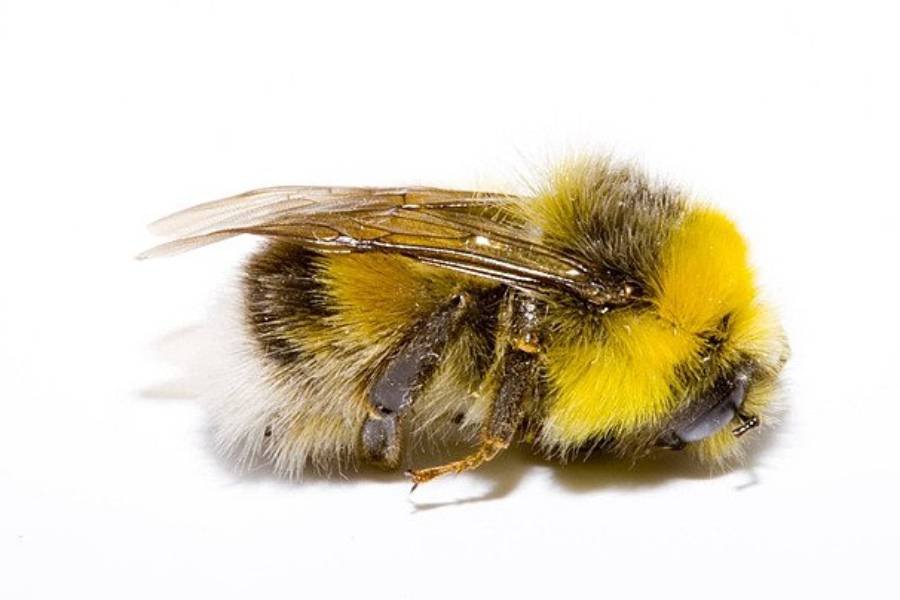
A dead bee is commonly interpreted as a spiritual symbol of endings, transformation, disrupted purpose, disconnection from community, or the need to restore balance. Bees are strongly associated with activity, cooperation, productivity, abundance, and collective purpose because they work within organized colonies and contribute to the survival of the hive. When the bee is dead, these associations change: activity becomes interruption, productivity becomes exhaustion, and an active life cycle becomes an ending or transition.
Finding a dead bee does not automatically mean that something bad will happen. Spiritual symbolism is better used as a framework for personal reflection than as a literal prediction of death, loss, or misfortune. The meaning also depends on context. A dead bee found inside your house can prompt a different interpretation from one found in a garden, near a doorway, or repeatedly appearing around you.
The spiritual meaning of a dead bee therefore centers on what is ending, changing, or becoming unbalanced in your current life. Examining the location, circumstances, and your personal situation can help determine whether the symbolism relates more closely to transformation, purpose, relationships, community, or the balance between effort and rest.
What Does a Dead Bee Mean Spiritually?
A dead bee can spiritually symbolize the end of a cycle, transformation, loss of purpose, disconnection from community, or a need to restore balance. These 5 meanings come from the contrast between what a living bee represents and what changes when that activity ends. Bees are associated with work, cooperation, contribution, and the collective life of a hive, so a dead bee shifts the symbolism toward interruption, completion, and transition.
The first spiritual meaning of a dead bee is the end of a cycle. Death marks the completion of a living process, so finding a dead bee can represent something in your life reaching its natural endpoint. This ending does not have to involve physical death or a negative event. It can relate to leaving a job, ending an old habit, moving beyond a relationship dynamic, or completing a period of personal growth. The central message is completion: something that once required your energy may no longer need to continue in the same form.
The second meaning is transformation and change. An ending creates a boundary between an old state and a new one, which makes the dead bee a possible symbol of transition. You may encounter this symbolism during a period when your priorities, relationships, work, or sense of identity are changing. For example, someone who has spent years defining themselves through a particular career may connect the dead bee with a transition toward a different purpose. In this interpretation, the dead bee represents the closing of one stage rather than predicting what the next stage will be.
The third meaning is lost productivity or purpose. A living bee is closely associated with continuous activity and contribution to its colony. A dead bee no longer performs those functions, creating a symbolic contrast between purposeful activity and interrupted effort. This meaning can become relevant when work no longer feels meaningful, motivation has declined, or constant productivity has resulted in exhaustion. For example, finding a dead bee during a period of burnout may prompt reflection on whether your effort still serves a worthwhile purpose or has simply become a habit of staying busy.
The fourth meaning is disconnection from community. Bees depend on a colony in which individuals perform interconnected roles, making the bee a natural symbol of cooperation and collective contribution. A dead bee separated from the hive can therefore represent isolation, weakened relationships, or a changing role within a group. This interpretation may relate to family, friendships, a workplace, or another community in which you once felt connected. The symbolic question is not simply whether you are alone, but whether your current relationships provide mutual support and a meaningful sense of belonging.
The fifth meaning is the need to restore balance. Productivity and cooperation are valuable, but constant effort without recovery can create imbalance. A dead bee can symbolically interrupt the positive image of endless work and redirect attention toward rest, personal needs, relationships, and priorities outside productivity. For someone who measures personal value mainly through achievement, the encounter may serve as a useful reminder that purpose requires more than continuous activity.
These meanings are symbolic interpretations rather than fixed predictions. A dead bee does not prove that a relationship will end, that misfortune is approaching, or that a supernatural event is occurring. Its spiritual relevance depends on how the symbolism connects with your current circumstances and the context in which you found it.
Is Seeing a Dead Bee a Bad Spiritual Sign?
Seeing a dead bee is not necessarily a bad spiritual sign. Although death naturally creates associations with loss and endings, spiritual symbolism does not require an ending to represent punishment, danger, or future misfortune. A dead bee can instead represent completion, transition, a need for change, or an invitation to reconsider how you use your energy.
The distinction between an ending and a bad omen is important. An ending describes the completion of a state or cycle, while an omen implies that the encounter predicts another event. Finding a dead bee may fit symbolically with an existing transition in your life, but the bee itself does not establish that something negative will happen next. For example, seeing one while preparing to leave an unfulfilling job could be interpreted as reflecting an existing transition rather than forecasting job loss.
A dead bee can also function symbolically as a warning without being a prediction of disaster. In this context, a warning means recognizing an imbalance that already exists. Exhaustion may signal a need for rest, isolation may highlight weakened social connections, and purposeless work may indicate that your priorities need reassessment. The symbolism directs attention toward the present situation rather than claiming knowledge about the future.
Natural circumstances should also remain part of the interpretation. Bees die because of age, environmental conditions, predators, disease, pesticides, and other physical causes. Finding one dead bee therefore has a practical explanation regardless of whether you also choose to give the encounter personal spiritual meaning. Treating the experience as an opportunity for reflection allows spiritual symbolism and physical reality to coexist without turning an ordinary event into a reason for fear.
Does Finding a Dead Bee Mean Something Is Leaving Your Life?
Finding a dead bee can symbolize the completion of something that is already leaving your life, but it does not predict that you will lose a person, relationship, or possession. The symbolism comes from the connection between death and completion: a living state has ended, creating space for a transition into a different state. Spiritually, this can encourage you to identify what has already reached its natural endpoint.
What is leaving may be a habit, role, belief, relationship dynamic, goal, or phase of life. For example, a person changing careers may associate a dead bee with the end of an identity built around their previous work. Someone whose friendship has gradually become distant may interpret the same symbol through relationships. In both cases, the dead bee reflects a transition that is already taking place rather than causing it.
This interpretation also applies to internal changes. You may be leaving behind a pattern such as seeking constant approval, measuring your worth through productivity, or remaining committed to goals that no longer reflect your priorities. Because bees symbolize work and contribution, the death of a bee creates a particularly relevant contrast when the ending involves how you spend your energy or define your purpose.
The important distinction is between symbolic completion and literal prediction. Finding a dead bee does not mean someone will die or that a relationship is destined to end. Instead, it can provide a symbolic prompt to ask what has already changed, what you are ready to release, and what no longer serves the same function in your life. This keeps the interpretation connected to your present circumstances rather than turning the encounter into a prediction about future loss.
What Does Finding a Dead Bee in Your House Mean Spiritually?
Finding a dead bee in your house can symbolize an ending, imbalance, or transition connected with your private life, relationships, or personal sense of security. A house represents a more personal context than an outdoor location because it is associated with family life, rest, routines, boundaries, and the space in which you feel most protected.
The meaning becomes clearer when the symbolism of the house is combined with the symbolism of the dead bee. Bees represent activity, cooperation, purpose, and contribution, while death represents an interruption or completion of those qualities. Together, these symbols can encourage reflection on whether something within your personal life has become exhausted, disconnected, or ready to change.
For example, finding a dead bee during a period of household tension may lead you to examine cooperation between family members. Finding one while working excessively from home may instead resonate with an imbalance between productivity and rest. The physical event is the same, but its personal significance changes because the circumstances surrounding it are different.
A dead bee inside your home should not automatically be treated as a warning of death, bad luck, or danger to your family. There are practical reasons for bees to enter buildings, and an insect that becomes trapped indoors may eventually die. The spiritual interpretation exists alongside this natural explanation rather than replacing it.
What Does a Dead Bee Near Your Door Mean Spiritually?
A dead bee near your door can symbolize a transition between what you are leaving behind and what you are preparing to enter. Doors physically separate one space from another, which gives them a symbolic association with boundaries, arrivals, departures, and changes between different stages.
When combined with the ending symbolism of a dead bee, the doorway can make transition especially relevant. For example, you might connect the encounter with moving to a new home, starting or leaving a relationship, changing careers, or establishing stronger personal boundaries. The emphasis is on crossing from one state into another, not on predicting whether that transition will be positive or negative.
Location also matters practically. Bees can die near entrances simply because they entered or approached a building. Consider the physical explanation first, then decide whether the encounter also provides a meaningful way to reflect on a transition already occurring in your life.
What Does a Dead Bee on a Windowsill Mean Spiritually?
A dead bee on a windowsill can symbolize a boundary between your current circumstances and something beyond them. A window allows you to see outside while remaining physically separated from what you see, making it a useful symbol for perspective, limitations, opportunities, and the distinction between internal and external life.
The dead bee adds the themes of interruption and completion to this symbolism. You might relate the encounter to a goal you can see but are no longer pursuing, an old perspective that needs to change, or a situation in which you feel restricted despite recognizing other possibilities. For example, someone considering a major life change but repeatedly avoiding action may interpret the windowsill as representing the boundary between observation and participation.
There is also a straightforward physical explanation for this location. A bee trapped inside a house may fly toward a window because light appears to offer an exit, then die near the glass or windowsill. This natural mechanism means a dead bee on a window does not establish the presence of a spiritual sign. Its symbolic value depends on whether the image has personal relevance to circumstances you are already experiencing.
What Does Finding a Dead Bee Outside Mean Spiritually?
Finding a dead bee outside can symbolize a natural ending, a change in direction, or the completion of a period of growth and effort. Unlike finding a dead bee inside your house, an outdoor encounter is less directly connected with private life and personal boundaries. Its symbolism is more closely associated with natural cycles, external circumstances, growth, and your relationship with the environment around you.
The exact location can change how you reflect on the encounter. A dead bee in a garden may emphasize growth and natural cycles because gardens contain living plants, pollinators, decay, and renewal at the same time. A dead bee along a path can be associated symbolically with direction or progress, while one found near your workplace may draw your attention toward productivity, contribution, or exhaustion. These interpretations come from combining the symbolism of the bee with the context of the location rather than assigning one universal meaning to every outdoor encounter.
A dead bee in a garden can carry particularly strong symbolism because bees contribute to pollination and plant reproduction. A living bee represents active participation in that process, whereas a dead bee represents the end of its individual contribution. Spiritually, this contrast can reflect the idea that a particular role, effort, or stage may be complete even while growth continues around it. For example, completing a demanding project may end one form of work while creating the conditions for a new opportunity.
Outdoor encounters also make natural explanations especially important. Bees have limited lifespans and can die from age, weather conditions, predators, disease, chemical exposure, or other environmental factors. A dead bee outside is therefore part of a real biological process before it is given any personal symbolism. Recognizing this does not prevent you from reflecting on the encounter; it prevents the symbolic interpretation from becoming an unsupported prediction.
The most useful interpretation is therefore based on context rather than location alone. Consider what the outdoor setting represents to you and what was happening in your life when you noticed the bee. If you are already completing a major project, changing direction, or reconsidering where your effort is going, the dead bee may serve as a meaningful symbol of that existing transition.
What Does It Mean Spiritually If You Keep Finding Dead Bees?
Repeatedly finding dead bees can spiritually symbolize a recurring theme involving endings, exhaustion, purpose, community, or imbalance, but repeated sightings do not prove that a spiritual force is sending you a message. Repetition makes an event more noticeable, which can encourage closer reflection, but both personal context and environmental causes should be considered before assigning meaning to the pattern.
Start with your current life circumstances. If the same issue repeatedly occupies your attention when you encounter dead bees, that connection may reveal why the symbolism feels significant. For example, someone experiencing prolonged burnout may associate repeated dead bees with exhausted productivity, while someone moving through several major life changes may connect them with endings and transformation. The spiritual value comes from identifying a consistent relationship between the symbol and your experience rather than assuming repetition has one predetermined meaning.
Next, consider where the dead bees keep appearing. Several bees around the same window may indicate that bees are entering a building and becoming trapped. Multiple dead bees in one part of a garden may point toward a local environmental factor. Dead bees appearing in different locations and at different moments may feel more personally significant, but location alone still cannot establish a supernatural cause.
Environmental explanations become especially important when multiple bees are involved. A single dead bee can result from the normal end of an individual bee’s life, while a noticeable number of dead bees in one location can indicate conditions affecting insects in that area. In that situation, the practical cause deserves attention before a spiritual interpretation is made. Spiritual reflection should not replace observation of what is physically happening around you.
After considering the circumstances and location, compare the encounter with the 5 central meanings of dead bee symbolism: ending, transformation, purpose, community, and balance. One theme may correspond more closely with your present experience than the others. Repeated sightings during a demanding period, for example, may make balance and exhaustion more relevant than transformation.
The goal is not to search for a hidden prediction every time a dead bee appears. A more grounded spiritual interpretation uses repetition as a reason to examine patterns already present in your life. If the encounters consistently remind you of the same unresolved transition, relationship, responsibility, or imbalance, that recurring association may be more useful than trying to determine whether the dead bees are predicting a future event.
What Does Dreaming About a Dead Bee Mean Spiritually?
Dreaming about a dead bee can spiritually symbolize an ending, exhaustion, lost motivation, disconnection from others, or personal transformation. The interpretation differs from physically finding a dead bee because a dream occurs within an internal experience. The emotions, events, people, and locations surrounding the bee in the dream therefore provide important context for interpreting its symbolism.
A dead bee in a dream can represent the end of a period defined by constant work or responsibility. Bees are associated with activity, contribution, and cooperation, so seeing one without life creates a contrast between active effort and stopped effort. This symbolism may feel relevant when you have completed a demanding goal, lost enthusiasm for work that once mattered to you, or reached a point where continuing at the same pace is no longer sustainable.
Exhaustion is another possible interpretation, especially when the dream occurs during a period of intense responsibility. A dead bee can represent productivity taken beyond a sustainable limit: the activity associated with the living bee has stopped completely. For example, someone who has been prioritizing work while neglecting sleep, relationships, or personal interests may connect the dream with a need to reconsider how their energy is being distributed.
The dream can also relate to community and belonging. A bee normally functions as part of a colony, so a dead or isolated bee can symbolically reflect separation from a group or a changing role within it. This may correspond with leaving a workplace, losing contact with friends, experiencing tension within a family, or realizing that a community no longer provides the same sense of belonging. The interpretation is strongest when the dream itself contains themes of isolation, separation, or exclusion.
Transformation becomes relevant when the dead bee appears alongside other signs of change in the dream. In symbolic terms, an old state has ended before another one has fully emerged. This can correspond with changing careers, redefining a relationship, abandoning an old goal, or reconsidering an identity that previously gave your life structure. The dead bee then represents completion and transition rather than a prediction of loss.
Your emotional reaction in the dream helps narrow the interpretation. Sadness may make loss or separation more relevant, relief may point toward the completion of an exhausting period, and fear may reflect anxiety about an existing change. Feeling calm while observing the dead bee can instead suggest acceptance of an ending. No single interpretation applies to every dream because the dead bee is only one element within the larger dream context.
A dream about a dead bee should therefore be treated as a symbolic reflection rather than a prediction. It does not establish that death, bad luck, or another negative event will occur. Its value lies in examining whether the themes represented by the bee—work, purpose, cooperation, community, and balance—connect with something currently changing in your life.
What Is the Difference Between a Living Bee and a Dead Bee Spiritual Meaning?
The main difference between a living bee and a dead bee spiritual meaning is the shift from active qualities to their interruption, completion, or transformation. A living bee is commonly associated with productivity, cooperation, purpose, growth, and abundance, while a dead bee changes the symbolic focus toward endings, exhaustion, disconnection, reassessment, and transition.
A living bee represents activity because its visible behavior involves movement, gathering resources, pollination, and participation in colony life. In spiritual symbolism, these characteristics can be connected with productive effort and meaningful contribution. Someone who encounters an active bee while beginning a new project, for example, may associate it with persistence, collaboration, or purposeful work.
A dead bee creates the opposite state. Its activity has stopped, so the symbolism no longer centers primarily on doing, producing, or contributing. Instead, attention moves toward what happens when effort ends. This is why dead bee symbolism can become relevant to completing a project, leaving a role, experiencing burnout, or reconsidering whether a particular goal still deserves your energy.
The contrast also applies to community. A living bee participates in a colony in which individual activity contributes to a larger system. This makes it a symbol of cooperation, shared responsibility, and belonging. A dead bee, particularly one found alone, can shift that symbolism toward separation or a change in your relationship with a group. The relevant question becomes whether your current communities still provide connection and whether your role within them has changed.
Growth and transformation provide another distinction. A living bee can symbolize active growth through its relationship with flowers and pollination, while a dead bee represents the completion of an individual life cycle. Spiritually, the second image can therefore represent the point at which one form of growth ends and another period begins. The emphasis moves from expansion to transition.
The two symbols can be summarized through 6 contrasts: activity versus interruption, productivity versus exhaustion, cooperation versus disconnection, abundance versus change, purpose versus reassessment, and growth versus transition. These contrasts explain why seeing a dead bee carries different spiritual associations from encountering a living bee even though the central entity remains the same.
Neither interpretation should be treated as a fixed rule. A living bee does not guarantee abundance or success, just as a dead bee does not predict failure, death, or misfortune. The condition of the bee changes the symbolic attributes available for reflection, while your circumstances determine which of those attributes has the strongest personal relevance.
Read more: 6 Spiritual Meanings of a Blue Ladybug
How Should You Interpret Finding a Dead Bee?
You should interpret finding a dead bee by considering 4 factors: your current life context, where you found the bee, the natural explanation for its death, and which part of the symbolism relates to your situation. This approach is more useful than assuming every dead bee carries the same spiritual message because symbolism depends on the relationship between the encounter and the circumstances surrounding it.
Start with your current life context. Consider what was occupying your attention when you noticed the dead bee and whether you are experiencing an ending, transition, loss of motivation, relationship change, or imbalance. For example, finding a dead bee while deciding whether to leave an exhausting job may make the themes of purpose and depleted energy more relevant. Finding one during a major personal transition may instead make completion and transformation more meaningful.
Next, consider the location. A dead bee inside your house can direct reflection toward private life, family, personal routines, or security. One near a door can be associated with boundaries and transitions, while one on a windowsill can represent the contrast between your current position and something beyond it. A dead bee in a garden has a different context because growth, pollination, decay, and renewal are naturally present in the same environment. Location does not determine the meaning by itself, but it adds context to the central symbolism.
You should also identify a natural explanation before treating the encounter as spiritually significant. Bees are living organisms with finite lifespans, and finding a dead bee can be an ordinary event. A bee near a window may have become trapped indoors, while dead bees outside may result from natural or environmental conditions. If several dead bees appear in the same location, the physical circumstances deserve particular attention. Spiritual interpretation should complement observation rather than replace it.
Finally, compare the experience with the 5 main meanings of dead bee symbolism: ending, transformation, purpose, community, and balance. Ask which theme describes something that is already happening in your life. If you are completing a long-term goal, ending may be the strongest connection. If your identity or priorities are changing, transformation may be more relevant. If constant work has left you exhausted, purpose and balance may provide the more useful interpretation.
The meaning that fits your circumstances is more valuable than trying to discover a universal message. A dead bee does not provide instructions about what decision you must make. Instead, its symbolism can function as a prompt to examine an existing situation from a different perspective and determine whether something needs to end, change, reconnect, or regain balance.
Should You Be Worried After Finding a Dead Bee?
You do not need to assume that something bad will happen after finding a dead bee. A dead bee can carry symbolic associations with endings and change, but symbolism is not the same as prediction. The encounter does not establish that death, illness, relationship loss, financial problems, or another negative event is approaching.
Fear often comes from interpreting the word “death” literally. In spiritual symbolism, however, death can represent the completion of a state rather than physical death. The end of a habit, career phase, relationship pattern, belief, or personal identity can all fit the broader theme of completion. For example, someone preparing for a career change might connect a dead bee with the end of an old professional role without treating it as a warning that the new direction will fail.
The same distinction applies to the idea of a spiritual warning. A symbolic warning can draw attention to something that already deserves consideration, such as exhaustion, isolation, excessive focus on productivity, or a loss of purpose. It does not need to predict an external event. If the dead bee makes you think about burnout, for example, the useful response is to examine your workload and recovery rather than expect misfortune.
Practical circumstances should receive attention when the encounter involves multiple dead bees. One dead bee can be part of an individual bee’s normal life cycle, while repeated deaths in one location may justify examining what is happening in that environment. In either situation, assuming a supernatural cause is unnecessary.
The most grounded way to approach dead bee spiritual meaning is therefore to use the symbol for reflection rather than prediction. Consider whether an ending, transformation, change in purpose, community issue, or imbalance is already present in your life. If one of these themes resonates, the encounter can provide a useful moment for reflection without becoming a source of fear.
Finding a dead bee ultimately does not tell you what will happen next. Its symbolic value comes from what the image helps you recognize about your present circumstances. That distinction allows the dead bee to represent change and completion without turning an ordinary encounter into an expectation of bad luck.