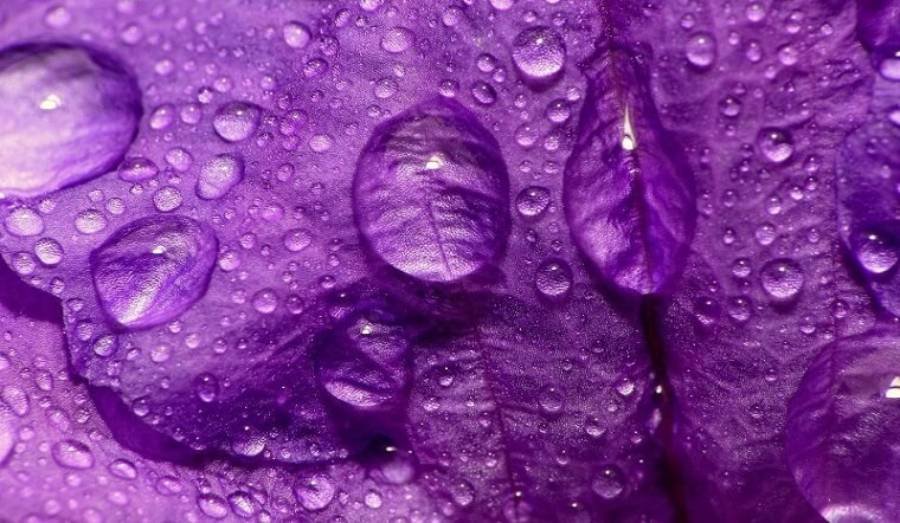
Purple carries spiritual meanings connected to higher consciousness, intuition, wisdom, spiritual awareness, transformation, and connection with the divine. Unlike colors commonly associated with physical energy or the natural world, purple is often used in spiritual traditions and practices to represent experiences that extend beyond ordinary awareness. Its position between the energy of red and the calm qualities associated with blue also contributes to its symbolism of balance between physical and spiritual awareness.
The spiritual meaning of purple changes according to the context in which the color appears. In chakra traditions, purple or violet is associated with the crown chakra and concepts such as transcendence and higher consciousness. Within aura traditions, a purple aura is commonly interpreted as a sign of intuition, sensitivity, or spiritual awareness. Seeing purple during meditation, in dreams, or repeatedly in daily life can carry additional symbolic meanings based on the experience and the individual’s spiritual framework.
This article explains the major spiritual meanings of purple, its connections with chakras and auras, the significance of different purple shades, and how purple is interpreted across spiritual experiences and traditions.
What Does the Color Purple Mean Spiritually?
The color purple spiritually represents higher consciousness, intuition, wisdom, transformation, and a deeper connection with the divine. These meanings come from purple’s long association with mystery, sacred authority, contemplation, and experiences that extend beyond ordinary physical awareness. In spiritual contexts, purple therefore tends to represent the inner and transcendent aspects of human experience rather than material action.
Purple is especially associated with higher consciousness and spiritual awareness. Higher consciousness refers to a state in which attention extends beyond immediate thoughts, desires, and physical concerns toward deeper questions about meaning, existence, and connection. Purple symbolizes this movement from ordinary awareness toward contemplation and transcendence. This association also explains why purple and violet frequently appear in modern chakra practices, meditation imagery, and other systems centered on spiritual development.
Intuition is another central spiritual meaning of purple. Intuition describes knowledge or understanding perceived without deliberate analytical reasoning. Within spiritual traditions, purple can symbolize the ability to direct attention inward, recognize subtle impressions, and trust inner perception. This does not mean that exposure to purple creates stronger intuition. Instead, the color functions as a symbolic representation of intuitive awareness within practices such as meditation, visualization, and energy work.
Purple also represents wisdom and spiritual transformation. Wisdom differs from knowledge because it involves interpreting experience and applying understanding rather than simply acquiring information. Transformation refers to a meaningful change in awareness, beliefs, identity, or spiritual direction. For this reason, purple can appear symbolically during periods of introspection, personal change, or spiritual growth, where an individual is reconsidering established beliefs and developing a different understanding of themselves or their spiritual path.
A further meaning of purple is divine connection and mysticism. Mysticism focuses on direct or contemplative experiences of spiritual reality, while divine connection describes a perceived relationship with God, a higher power, or a transcendent reality according to a person’s belief system. Purple can represent these concepts without proving that a supernatural connection exists. Its meaning remains symbolic and depends on the religious, spiritual, and personal context in which the color is interpreted.
What Are the Main Spiritual Meanings of Purple?
There are 7 main spiritual meanings commonly associated with purple: spiritual awareness, higher consciousness, intuition, wisdom, transformation, divine connection, and mystery. These meanings overlap because they describe different aspects of inner or transcendent experience, but each represents a distinct spiritual concept.
Spiritual awareness is the recognition of experiences, values, or questions that a person considers spiritual rather than purely material. Purple represents this awareness because the color has become strongly connected with contemplation and spiritual practices. A person may therefore use purple in a meditation space, spiritual journal, or symbolic object as a visual reminder to direct attention toward their inner life.
Higher consciousness represents awareness beyond habitual thoughts and immediate physical concerns. Purple symbolizes this concept particularly strongly through its connection with the upper part of the chakra system. In modern chakra symbolism, violet or purple is commonly connected with the crown chakra, which represents transcendence and spiritual consciousness. This association reinforces purple’s broader meaning as a color of elevated awareness.
Intuition represents inner perception and insight. Purple is used to symbolize intuition when spiritual practice emphasizes looking inward rather than relying exclusively on external information. For example, purple may appear in visualization exercises intended to focus attention on inner awareness. The symbolism describes the purpose of the practice; it does not establish that purple itself produces intuitive abilities.
Wisdom represents the ability to understand experience at a deeper level and apply that understanding meaningfully. Purple’s association with wisdom is closely connected with contemplation, dignity, and spiritual maturity. In this context, wisdom is not simply intelligence or accumulated information. It describes insight developed through reflection and experience.
Transformation refers to a significant change in a person’s inner perspective, identity, beliefs, or spiritual direction. Purple can symbolize the transition from one state of awareness to another. For example, someone going through a period of spiritual questioning may interpret an increased personal attraction to purple as a symbol of the transformation they are already experiencing rather than as the cause of that transformation.
Divine connection is the interpretation of purple as a symbol of connection with God, a higher power, or transcendent reality. The exact meaning depends on the spiritual or religious framework involved. In one tradition, purple may communicate sacred authority; in another context, it may represent meditation or transcendence. Treating these meanings as contextual interpretations is important because purple does not have one universal spiritual definition across every belief system.
Mystery is the seventh major meaning because purple is frequently associated with what is hidden, unknown, or difficult to explain. Spiritually, mystery does not necessarily mean something frightening or negative. It can represent unanswered questions about consciousness, existence, the divine, or experiences that a person understands through faith and contemplation rather than direct observation.
Together, these 7 meanings explain why purple has such a broad role in spiritual symbolism. Its central theme is movement beyond surface-level experience toward inner awareness, deeper understanding, or transcendence, while the precise interpretation depends on whether purple appears in chakra practice, aura symbolism, meditation, dreams, religion, or another spiritual context.
What Does Purple Mean in the Chakra System?
Purple represents spiritual consciousness, transcendence, and connection with higher awareness in the chakra system. It is most commonly associated with the crown chakra, or Sahasrara, which is traditionally positioned at the top of the head. In modern chakra color systems, the crown chakra is represented by violet, purple, or sometimes white. This makes purple particularly relevant to spiritual practices centered on consciousness, meditation, and the relationship between individual awareness and a greater spiritual reality.
The crown chakra represents the highest level of awareness within the seven-chakra model. While lower chakras are associated with areas such as security, emotion, personal power, relationships, and communication, the crown chakra focuses on transcendence and spiritual consciousness. Purple therefore symbolizes a movement away from exclusively physical concerns toward questions about purpose, existence, and spiritual connection. For example, purple may be used during crown chakra meditation as a visualization color representing the practitioner’s intention to focus on these themes.
Purple’s chakra meaning also explains its strong association with spiritual awakening and enlightenment. Within chakra-based spiritual frameworks, an open or balanced crown chakra is described as a state of greater spiritual awareness, connection, and unity. Purple serves as a symbol for these qualities rather than evidence that a specific spiritual state has been achieved. Seeing, wearing, or visualizing purple does not by itself demonstrate that the crown chakra is open.
Is Purple Also Associated With the Third Eye Chakra?
Purple can be associated with the third eye chakra in some modern interpretations, but indigo is its more common color association. The third eye chakra, known as Ajna, is positioned between the eyebrows and is associated with intuition, insight, perception, and inner awareness. The crown chakra is positioned above it and is more closely associated with spiritual consciousness and transcendence.
The confusion occurs because indigo, violet, and purple occupy neighboring areas of the perceived color spectrum and are sometimes described inconsistently in spiritual material. Their symbolic meanings also overlap. Intuition and inner perception associated with the third eye can easily intersect with the higher consciousness and spiritual awareness associated with the crown chakra.
A useful distinction is therefore based on the concept being represented. Indigo and the third eye primarily symbolize inner perception and intuition, while violet or purple and the crown chakra primarily symbolize transcendence and higher spiritual consciousness. Individual spiritual systems may use different color correspondences, so these associations should be understood as features of particular chakra traditions rather than universal properties of the colors themselves.
What Does a Purple Aura Mean Spiritually?
A purple aura is commonly interpreted as representing intuition, spiritual awareness, sensitivity, imagination, and an interest in higher consciousness. Within aura traditions, an aura is described as an energetic field surrounding a person, and its colors are interpreted as reflecting different emotional, personal, or spiritual qualities. Purple is consequently interpreted through many of the same symbolic associations it carries in chakra and spiritual color systems.
Intuition is one of the strongest meanings assigned to a purple aura. A person described as having purple in their aura may be interpreted as perceptive, introspective, or attentive to subtle emotional and spiritual experiences. Spiritual awareness is another common interpretation because purple is closely associated with the crown chakra and transcendence. Within this framework, a purple aura may therefore symbolize someone who places substantial attention on meditation, spiritual development, self-reflection, or questions about deeper meaning.
A purple aura can also represent imagination and sensitivity. Imagination relates purple to creativity and an ability to engage with ideas beyond immediate physical experience, while sensitivity refers to greater attention to internal or external impressions. These qualities do not necessarily indicate psychic abilities. Aura interpretations belong to spiritual and metaphysical belief systems, and there is no established scientific method showing that aura colors objectively identify personality traits or spiritual abilities.
The shade can modify the symbolic interpretation. Light purple or lavender is generally associated with gentleness, sensitivity, openness, and developing spiritual awareness, while deeper purple is more often connected with introspection, mystery, spiritual depth, and concentrated inner focus. A darker shade should not automatically be interpreted as negative. The meaning depends on the aura system being used and the broader context of the interpretation.
Purple aura symbolism also overlaps with crown chakra symbolism, but the two concepts are not identical. A purple aura describes an interpretation of the energy believed to surround a person, whereas the crown chakra describes a specific energy center within chakra traditions. Keeping these entities separate prevents intuition, aura, chakra, and spiritual consciousness from being treated as interchangeable concepts simply because they share the color purple.
What Does Seeing Purple Mean Spiritually?
Seeing purple is spiritually interpreted as a symbol of heightened awareness, intuition, transformation, or attention to spiritual matters. The exact meaning depends on where purple appears and what the person is experiencing at the time. Seeing purple during meditation, noticing it in a dream, and repeatedly encountering purple objects are different contexts, so they should not automatically receive the same interpretation.
Within spiritual frameworks, purple is closely connected with inner awareness because of its associations with the crown chakra, contemplation, and higher consciousness. A person who notices purple during a period of reflection or personal change may interpret the color as representing a shift toward deeper self-awareness. In this context, purple functions as a symbol of an existing spiritual focus or transformation, rather than proof that an external spiritual event is occurring.
Repeatedly noticing purple can also acquire meaning through personal association. For example, someone who already connects purple with meditation may become more conscious of the color while focusing on spiritual development. Another person may associate it with wisdom, a religious practice, or a meaningful life transition. Context and personal symbolism therefore provide more useful information than the color alone when interpreting repeated encounters with purple.
Spiritual interpretations should also remain separate from factual claims about supernatural communication. Repeatedly seeing purple does not establish that the universe, a spirit, or another supernatural source is sending a message. A spiritual practitioner can treat the experience as an invitation to reflect on intuition, awareness, purpose, or transformation without assuming a single universal explanation.
What Does Seeing Purple During Meditation Mean?
Seeing purple during meditation is commonly interpreted as a symbol of spiritual awareness, crown chakra activity, intuition, or deeper inward focus. This interpretation follows the existing symbolism of purple rather than establishing that seeing the color proves a particular spiritual event has taken place.
In chakra-based meditation, purple or violet may be deliberately visualized while attention is directed toward the crown chakra. A practitioner might imagine violet light at the top of the head while focusing on consciousness, transcendence, or spiritual connection. Purple appearing during this type of practice therefore fits naturally with the intention and imagery already being used.
Purple may also appear unexpectedly when the eyes are closed. Not every experience of seeing purple during meditation requires a spiritual explanation. Visual sensations can occur with closed eyes because the visual system remains capable of producing perceptions of light, color, shapes, or patterns without an external colored object. The context matters when deciding whether someone wants to treat the experience physiologically, psychologically, symbolically, or spiritually.
For spiritual reflection, the useful question is therefore not simply “Why did I see purple?” but what purple represented within the meditation. A meditation focused on spiritual connection may support a different personal interpretation from one focused on intuition, emotional processing, or visualization.
What Does Seeing Purple in a Dream Mean?
Seeing purple in a dream can symbolize spirituality, wisdom, intuition, transformation, mystery, or authority, depending on the dream’s context. Purple alone does not determine the meaning of a dream. The object that is purple, the events surrounding it, the dreamer’s emotions, and personal associations with the color all influence its interpretation.
For example, a purple light appearing during a dream about spiritual exploration may be interpreted as higher awareness or divine connection. Purple clothing worn by an authoritative figure could instead emphasize dignity, status, wisdom, or power. A purple object appearing during a major transition could symbolize transformation if that interpretation corresponds with the broader narrative of the dream.
Personal associations are especially important in dream interpretation. Someone who associates purple with a particular person, religious experience, or period of life already has a context that can outweigh generalized color symbolism. Purple dream symbolism is therefore best interpreted by combining the color’s common spiritual associations with the specific events and emotions within the dream.
Does the Shade of Purple Change Its Spiritual Meaning?
Different shades of purple can carry different spiritual meanings because changes in brightness, saturation, and proximity to violet influence how the color is symbolically interpreted. Light purple is generally associated with gentler forms of spiritual awareness and sensitivity, while dark purple emphasizes depth, mystery, introspection, and authority. Violet has an especially strong association with transcendence and the crown chakra.
Light purple and lavender commonly symbolize serenity, sensitivity, openness, and emerging spiritual awareness. Their softer appearance makes them suitable symbols for peaceful contemplation and gentle inner development. In a meditation or personal spiritual space, for example, lavender may be chosen to represent calm reflection rather than intense transformation.
Dark purple commonly represents spiritual depth, introspection, mystery, dignity, and inner transformation. Its greater visual intensity gives it a different symbolic character from lavender. Dark purple can therefore fit periods of deep reflection or exploration of difficult spiritual questions. Darkness in the shade does not automatically make its spiritual meaning negative.
Violet is particularly associated with transcendence, higher consciousness, and the crown chakra. Purple and violet are frequently used interchangeably in spiritual writing, but they are not technically identical colors. Violet is a spectral color associated with shorter wavelengths of visible light, whereas many colors perceived as purple result from combinations involving red and blue. Spiritual systems do not always maintain this technical distinction, which is why both terms frequently appear in descriptions of the crown chakra.
The differences between these shades provide nuance rather than completely separate systems of meaning. Light purple emphasizes gentle spiritual awareness, dark purple emphasizes depth and introspection, and violet emphasizes transcendence and higher consciousness. The broader spiritual symbolism remains centered on inner awareness, wisdom, intuition, and connection beyond ordinary material concerns.
Does Purple Have Negative Spiritual Meanings?
Purple can have negative spiritual meanings when it represents spiritual pride, excessive introspection, detachment, isolation, or uncertainty. These interpretations do not mean that purple is inherently negative. They describe the shadow side of qualities already associated with the color, such as spirituality, inward focus, authority, and mystery.
Spiritual pride can be associated with purple when spiritual knowledge or experience becomes connected with superiority. Purple has historically carried associations with status, authority, and elevated position, while spiritual symbolism connects it with higher awareness. Combined negatively, these ideas can represent a belief that spiritual development makes one person more enlightened or important than others. In this context, purple symbolizes an imbalance in spiritual identity rather than spiritual wisdom itself.
Excessive introspection is another possible interpretation. Reflection supports self-awareness when it leads to clearer understanding, but constant inward attention can create distance from practical responsibilities and relationships. Because purple symbolizes contemplation and inner awareness, its shadow meaning can represent becoming absorbed in internal experiences without translating insight into everyday action.
Detachment and isolation develop from a similar symbolic contrast. Transcendence involves looking beyond immediate material concerns, but excessive detachment can represent disconnection from ordinary life. A person using purple as a spiritual symbol may therefore interpret it as a reminder to balance meditation, contemplation, or spiritual exploration with relationships, work, physical needs, and other practical aspects of life.
Purple can also represent uncertainty and the unknown because of its association with mystery. Mystery has a positive meaning when it encourages curiosity about spiritual questions that do not have simple answers. It becomes more challenging when uncertainty produces confusion or encourages a person to assign supernatural explanations to experiences without considering other possibilities.
These meanings are best understood as symbolic contrasts. The positive and negative spiritual meanings of purple often describe two sides of the same quality: intuition can become overreliance on subjective impressions, introspection can become isolation, spiritual aspiration can become spiritual pride, and mystery can become uncertainty. Context determines which interpretation is more relevant.
What Does Purple Symbolize in Different Spiritual and Religious Traditions?
Purple does not have one universal meaning across every spiritual and religious tradition. Its symbolism changes according to religious practices, cultural history, ceremonial use, and the symbolic systems through which a community interprets color. Meanings such as spirituality, sacred authority, contemplation, and transcendence therefore need to be connected to a specific tradition rather than presented as universal facts.
In contemporary spiritual practices, purple and violet are strongly associated with higher consciousness and the crown chakra. This interpretation appears frequently in modern chakra systems, meditation practices, aura readings, and other metaphysical frameworks. Purple can consequently function as a visual symbol for spiritual development, intuition, contemplation, or connection with a reality perceived as greater than the individual self.
Other traditions may use purple primarily through ceremonial or cultural symbolism rather than chakra concepts. Purple’s historical connection with rarity, wealth, and high social status contributed to associations with dignity, authority, royalty, and sacred importance. When these associations enter a religious context, the color can communicate spiritual authority or the importance of a particular observance without carrying the same meaning assigned to purple in modern energy practices.
This distinction matters because spiritual color symbolism develops through different systems. A chakra interpretation of purple should not automatically be applied to Christianity or another religious tradition, just as a religious ceremonial meaning should not automatically be treated as the meaning of a purple aura. The same color can participate in several symbolic systems while carrying a different meaning in each one.
What Does Purple Symbolize in Christianity?
In Christianity, purple is primarily associated with royalty, penitence, preparation, and solemnity, although its precise meaning depends on the biblical or liturgical context. Its association with royalty appears in the New Testament account of Jesus being dressed in purple during the events surrounding the Crucifixion, where the color participates in the mock presentation of Jesus as a king.
Purple also has a specific role in Christian liturgical traditions. In churches that follow a liturgical calendar and use designated colors, purple or violet is associated particularly with Advent and Lent. These seasons emphasize preparation and reflection, while Lent places particular emphasis on penitence. The color therefore carries a contextual religious meaning rather than simply serving as a general symbol for spirituality.
Christian purple symbolism should also remain distinct from chakra symbolism. Christian traditions do not require the crown chakra concept to explain why purple has religious significance. The two systems developed within different theological and spiritual contexts. Their shared use of purple does not demonstrate that they assign the same meaning to it.
This difference illustrates a broader principle for interpreting purple spiritually: identify the symbolic system first, then interpret the color within that system. Doing so preserves the distinction between religious symbolism, chakra associations, aura interpretations, dream symbolism, and personal spiritual experiences instead of treating all purple symbolism as a single universal belief.
Read more: Spiritual Meanings of Broken Glass
Is Purple a Sign of Spiritual Awakening?
Purple can symbolize spiritual awakening because it is associated with higher consciousness, transformation, intuition, and spiritual awareness, but seeing purple alone does not prove that a spiritual awakening is occurring. Within spiritual frameworks, the color is better understood as a symbol that can reflect or reinforce an individual’s existing process of inner change.
Spiritual awakening generally describes a significant shift in how a person understands themselves, their values, their purpose, or their relationship with a larger spiritual reality. Purple fits this context because several of its established symbolic meanings correspond with that process. Transformation represents inner change, intuition represents increased attention to inner perception, and higher consciousness represents a movement beyond habitual ways of thinking. Together, these associations make purple a natural symbol for spiritual development.
Purple’s connection with the crown chakra further strengthens this interpretation. In chakra-based practices, the crown chakra is associated with spiritual consciousness, transcendence, and connection beyond the individual self. A person practicing crown chakra meditation may therefore use purple or violet intentionally while exploring themes related to spiritual awakening. In this situation, the color has meaning because it belongs to an established symbolic framework used by the practitioner.
Repeatedly noticing purple can also become personally significant during a period of spiritual change. For example, someone beginning meditation, reconsidering long-held beliefs, or becoming more focused on spiritual questions may interpret their increased awareness of purple as reflecting that transition. The meaningful element is the relationship between the color and the person’s experience, not the frequency of seeing purple by itself.
A stronger indication of spiritual change would therefore involve changes in awareness, values, behavior, or perspective rather than the appearance of one color. Purple can provide a symbolic language for interpreting that process, but it should not be treated as a diagnostic sign or universal message. This distinction keeps spiritual interpretation meaningful without turning a symbolic association into a factual claim.
How Can You Use Purple in a Spiritual Practice?
There are 4 practical ways to use purple in a spiritual practice: meditation, visualization, symbolic objects, and journaling or reflection. Each method uses purple as a focus for intention and symbolism rather than assuming that the color itself produces a spiritual effect.
Use purple during meditation to represent spiritual awareness or higher consciousness. A practitioner can place a purple object within the meditation space, focus on a purple visual point before closing the eyes, or incorporate the color into an environment intended for contemplation. Someone practicing within a chakra framework may specifically connect purple or violet with the crown chakra. The purpose is to create a consistent symbolic cue for the theme of the meditation.
Use purple in visualization when focusing on concepts such as intuition, transformation, or transcendence. For example, a practitioner might visualize violet light while reflecting on spiritual connection or imagine purple as a representation of moving from confusion toward greater awareness. The visualization gives an abstract spiritual intention a concrete mental image, which can make it easier to maintain attention during the practice.
Use purple objects as personal spiritual symbols. Candles, flowers, artwork, fabric, journal covers, or other purple objects can represent a specific intention when they have meaning for the practitioner. A purple candle, for example, might serve as a reminder to focus on wisdom during a reflective practice. The object does not need to possess an inherent spiritual property to function effectively as a personal symbol.
Use purple in journaling and reflection to explore its personal meaning. A useful approach is to record when purple attracts attention, what was happening at the time, which emotions were present, and what spiritual questions were already being considered. Comparing several experiences can reveal whether the color consistently represents transformation, intuition, contemplation, or another theme for that individual.
Purple works most coherently in spiritual practice when its use has a defined intention. Choose the meaning first—such as intuition, spiritual awareness, wisdom, or transformation—and use purple as a symbol for that intention. This approach connects the color with a specific practice while preserving the distinction between personal spiritual symbolism and claims about objective supernatural effects.