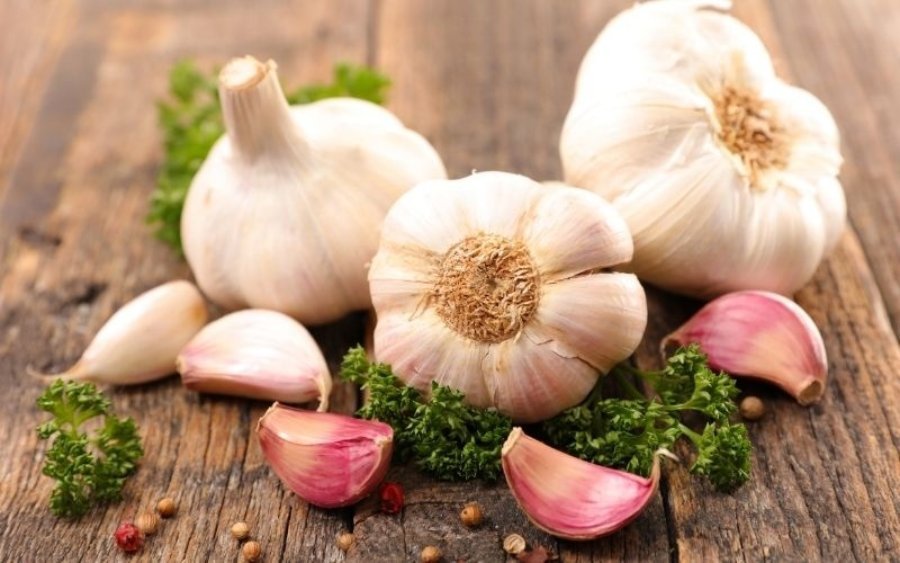
Garlic has long been associated with spiritual protection, purification, strength, vitality, and good fortune. Across different cultures and folk traditions, garlic is more than a culinary plant. Its strong scent, historical reputation for promoting physical strength, and long-standing place in protective customs helped transform it into a symbol used to guard people, homes, and spiritual boundaries from unwanted influences.
Protection and purification are the two meanings most strongly associated with garlic. In European folklore and other traditional belief systems, people have used garlic as a protective object against evil spirits, harmful forces, and supernatural threats. Garlic also appears in cleansing practices where it symbolizes removing negativity or creating a protective boundary around a person or place. These meanings are cultural and spiritual interpretations rather than scientifically proven supernatural effects.
Garlic symbolism also extends beyond protection. Depending on the tradition and context, it can represent courage, resilience, vitality, prosperity, and good luck. Its meaning therefore changes according to how and where it appears, from garlic hung near an entrance to garlic encountered in folklore, spiritual practices, or dreams. Understanding these contexts explains both what garlic means spiritually and why its protective symbolism has survived for generations.
What Is the Spiritual Meaning of Garlic?
Garlic spiritually symbolizes protection, purification, the removal of negative influences, strength, vitality, and good fortune. Protection is its most prominent symbolic meaning because garlic has been treated as a protective plant in folklore and traditional practices across different cultures. People have placed, carried, or displayed garlic with the intention of creating a boundary between themselves and forces they considered harmful.
Purification is closely connected to this protective symbolism. Within spiritual and folk traditions, garlic represents the removal of unwanted influences from a person, object, or living space. Protection and purification serve different functions: protection establishes a symbolic barrier against something harmful, while purification represents removing an influence believed to be already present. This distinction explains why garlic appears in both protective customs and cleansing practices.
Garlic also represents strength and vitality. Its strong smell, distinctive taste, and historical association with physical vigor contributed to its symbolic identity as a powerful plant rather than a passive protective object. This connection allows garlic to represent resilience, courage, and the ability to withstand harmful influences. In spiritual interpretation, these qualities can extend from physical strength to personal or spiritual strength.
Good fortune is another meaning attributed to garlic in certain traditions, although it is less universal than protection. Garlic can function as a symbol of prosperity, abundance, or household well-being when it appears within customs concerned with protecting resources and maintaining a secure home. The exact interpretation therefore depends on cultural context rather than on a single universal spiritual definition.
Why Does Garlic Symbolize Protection?
Garlic symbolizes protection because generations of folk traditions have associated it with creating a barrier against evil, harmful influences, and supernatural threats. Its protective meaning developed through repeated cultural use rather than from one single spiritual doctrine. As these practices were passed between generations, garlic itself became recognizable as a protective symbol.
One important association is protection from evil spirits. In folk belief, objects with distinctive physical characteristics are sometimes assigned protective significance, and garlic’s powerful odor made it especially recognizable. People could place garlic around themselves or their homes as a visible and sensory representation of protection. Over time, the physical properties of the plant and the beliefs attached to it became part of the same symbolic tradition.
Garlic is also associated with protection against the evil eye in some folk traditions. The evil eye refers to the belief that a harmful gaze, often connected with envy or ill intention, can bring misfortune to another person. Protective objects are used within these belief systems to prevent or redirect that perceived harm. Garlic can serve this symbolic function when a particular cultural tradition recognizes it as a protective object.
The key distinction is that garlic’s protective power belongs to cultural, folkloric, and spiritual belief systems rather than established scientific evidence of supernatural protection. Historical evidence can document that people believed in or practiced these customs. It does not establish that garlic physically blocks evil spirits, negative energy, or other supernatural forces. Maintaining this distinction makes it possible to explain the spiritual meaning accurately without presenting a belief as a measurable fact.
Why Does Garlic Symbolize Spiritual Purification?
Garlic symbolizes spiritual purification because it has been associated with removing unwanted influences and restoring a protected state. In this context, purification does not refer to physically disinfecting a space. It describes a symbolic process in which something regarded as spiritually harmful, impure, or undesirable is removed.
The connection between purification and protection is direct. A cleansing practice symbolically removes an unwanted influence, while a protective practice attempts to prevent that influence from returning. Garlic can represent both functions, which is why cleansing and protection frequently overlap in its spiritual symbolism. For example, using garlic as part of a cleansing custom may represent removing negativity first and establishing a symbolic protective boundary afterward.
Negative energy is a modern term frequently used to describe unwanted emotional or spiritual influences, but its meaning varies considerably between belief systems. When garlic is described as removing negative energy, the claim should therefore be understood within the relevant spiritual framework. Different traditions may instead describe the unwanted influence as evil, impurity, harmful intention, spiritual danger, or another culturally specific concept.
Spiritual cleansing with garlic likewise varies according to tradition. There is no single universal “garlic cleansing ritual” shared by all cultures or spiritual systems. Practices involving garlic should be interpreted according to their historical, cultural, or religious context rather than combined into one generalized tradition. This distinction preserves the difference between documented folk customs and newer spiritual interpretations.
These sections follow the article’s central entity and source context while keeping protection and purification as the main attributes, consistent with the Core Section approach in the supplied Topical Map framework. The direct answers at the beginning of each section also follow the supplied Algorithmic Authorship rule not to delay the answer.
Why Does Garlic Symbolize Strength and Vitality?
Garlic symbolizes strength and vitality because its physical intensity and historical association with vigor helped cultures connect the plant with endurance, resilience, and personal power. Unlike its protective symbolism, which focuses on keeping harmful influences away, this meaning focuses on strengthening the person who possesses or uses garlic. The plant therefore represents an active form of spiritual strength rather than protection alone.
Garlic’s sensory characteristics reinforce this symbolism. It has a penetrating smell, a sharp taste, and an intensity that distinguishes it from milder plants. Within symbolic systems, noticeable physical characteristics can influence how a natural object is interpreted. Garlic’s potency makes associations with power, courage, and resilience more intuitive, particularly in traditions that already regard the plant as capable of opposing harmful influences.
Strength and protection also reinforce each other semantically. Protection represents the ability to resist an external threat, while strength represents the internal capacity to endure it. Garlic can consequently symbolize both a protective boundary and the resilience of the person inside that boundary. This relationship helps explain why protection, strength, and vitality frequently appear together in interpretations of garlic’s spiritual meaning.
Vitality adds a life-force dimension to this symbolism. Garlic has historically been valued as food and has been associated with physical vigor, which provides a natural foundation for symbolic interpretations involving energy and endurance. A spiritual interpretation can extend these physical associations into ideas such as inner strength or spiritual resilience. However, the symbolic meaning should remain separate from specific medical claims about what eating garlic does to the body.
Does Garlic Symbolize Good Luck and Prosperity?
Garlic can symbolize good luck, prosperity, and household well-being in traditions that connect protection with preserving fortune and abundance. These meanings are secondary to protection and purification and should not be treated as universal. A culture may regard garlic primarily as protection from harmful influences without assigning it a specific meaning related to wealth or financial prosperity.
The relationship between protection and good fortune explains much of this symbolism. Protecting a household traditionally meant protecting more than the people living inside it. Food, possessions, livestock, crops, health, and other resources could all contribute to the household’s security. A protective symbol could therefore acquire a secondary association with preserving what the household already possessed and preventing misfortune from disrupting it.
Prosperity also differs from simple financial wealth in spiritual symbolism. It can represent abundance, successful harvests, sufficient food, family well-being, or continued stability. When garlic is interpreted as a prosperity symbol, its meaning should therefore be read within the cultural context in which the practice occurs rather than reduced to the modern idea of attracting money.
Garlic does not function as a universal good-luck symbol across every spiritual tradition. Its meaning depends on the belief system, cultural setting, and way the garlic is being used. Protection remains the stronger recurring association, while luck and prosperity represent additional meanings in contexts where protecting a person or household is closely connected with preserving well-being and abundance.
How Is Garlic Used for Spiritual Protection and Cleansing?
Garlic is used symbolically for spiritual protection and cleansing by placing, displaying, carrying, or incorporating it into practices intended to establish protection or remove unwanted influences. The specific method and interpretation vary between traditions, so there is no single historically universal way to use garlic for spiritual purposes.
Placing garlic near an entrance is one recognizable form of protective symbolism. Doors and other entrances represent boundaries between an interior space and the outside world. Positioning a protective object at that boundary therefore communicates a straightforward symbolic purpose: unwanted influences should remain outside the protected space. Garlic hung or placed around a home can serve this function within traditions that recognize the plant as protective.
Carrying garlic applies the same concept to an individual instead of a building. In traditions where garlic functions as a protective object or charm, keeping it close to the body represents personal protection from perceived harmful influences. The mechanism is symbolic and belief-based; carrying a clove of garlic has not been scientifically demonstrated to create a supernatural protective barrier.
Garlic can also appear in cleansing practices intended to represent the removal of unwanted spiritual influences. In these contexts, cleansing and protection form a sequence: cleansing represents removing what is unwanted, while protection represents preventing its return. The exact practice can differ substantially according to cultural and spiritual tradition, so individual rituals should not be presented as though they belong to a single universal garlic tradition.
This structure keeps each section focused on one attribute of the central entity rather than mixing unrelated meanings, following the supplied framework’s emphasis on densifying the Core Section around the main and derived attributes.
What Does Garlic Symbolize in Different Cultures and Spiritual Traditions?
Garlic has represented protection, strength, sacred boundaries, and defense against harmful influences in different cultural and folk traditions. These meanings are not identical across cultures. Each tradition developed its own interpretation according to local beliefs, religious practices, medicinal associations, and ideas about supernatural danger.
The recurring theme is protection. Garlic’s strong smell, distinctive physical properties, and historical reputation as a potent plant made it suitable for symbolic roles involving strength and defense. However, the meaning attached to garlic in one culture should not automatically be applied to another. Ancient religious practices, European folk beliefs, and modern spiritual practices represent separate cultural contexts even when they share similar protective symbolism.
What Did Garlic Symbolize in Ancient Egypt?
In ancient Egyptian contexts, garlic was associated primarily with strength, sustenance, and vitality rather than with the modern concept of cleansing negative energy. Garlic was part of the material and cultural life of ancient Egypt, and later interpretations frequently connect its importance with the physical strength and endurance attributed to the plant.
Garlic’s presence in an ancient society does not automatically prove that Egyptians regarded it as a supernatural protective object. Archaeological use, dietary use, medicinal reputation, religious offerings, and magical symbolism are different categories of evidence. A reliable spiritual interpretation therefore needs to distinguish documented practices from meanings assigned to ancient Egypt by later spiritual traditions.
For modern readers, the strongest semantic connection is garlic → vitality → strength → symbolic power. This provides historical context for garlic’s broader spiritual association with resilience without requiring the stronger claim that every ancient Egyptian use of garlic was religious or magical.
What Did Garlic Symbolize in Ancient Greece?
Garlic was associated with strength and protection in ancient Greek cultural traditions, while particular uses depended on their social, religious, or practical context. Its reputation as a potent plant allowed garlic to acquire meanings beyond ordinary food.
The idea of protection is particularly important because ancient belief systems could assign plants symbolic functions based on their perceived properties and established traditions. Garlic’s pungency and reputation for vigor made it compatible with concepts of resistance and protection. These associations later became part of the broader historical narrative surrounding garlic as a spiritually powerful plant.
Ancient Greek practices should nevertheless be separated from modern spiritual interpretations. Saying that garlic now represents cleansing “negative energy,” for example, does not establish that ancient Greeks used the same concept or terminology. Historical context is most useful when it explains how protective symbolism developed rather than when modern spiritual vocabulary is projected backward onto an earlier culture.
What Does Garlic Symbolize in European Folklore?
In European folklore, garlic is best known as a symbol of protection against evil and supernatural threats. This association forms one of the clearest cultural foundations for the modern image of garlic as a protective object.
Protective folklore frequently revolves around boundaries. A home, doorway, window, person, or personal possession can represent something that must be defended from an outside threat. Garlic fits this pattern because it can be displayed, carried, or placed at a boundary. Its strong sensory character also makes it an especially recognizable symbol of repelling something unwanted.
European folklore eventually strengthened the association between garlic and supernatural creatures, particularly vampires. Popular literature and later entertainment made that connection internationally recognizable, but vampire protection represents only one branch of a much broader protective symbolism. Garlic’s spiritual identity should therefore not be reduced to vampire folklore alone.
The cultural comparison reveals an important pattern: garlic does not have one fixed spiritual meaning across every historical period or tradition. Strength and vitality become more relevant in some contexts, while protection from supernatural harm becomes dominant in others. The shared entity is garlic, but the attribute attached to it changes according to cultural context.
Why Is Garlic Believed to Ward Off Evil?
Garlic is believed to ward off evil because folk traditions transformed its perceived potency into a symbol of defense against harmful supernatural forces. Its intense smell, reputation for strength, and repeated use in protective customs reinforced this association over generations.
Strong sensory characteristics provide one explanation for this symbolism. Garlic is difficult to ignore: its odor is penetrating, its flavor is sharp, and its presence can remain noticeable long after it has been handled or eaten. Within symbolic thinking, something physically powerful can become associated with the ability to repel another powerful force. Garlic’s physical pungency therefore provides an intuitive foundation for the idea of spiritual repulsion.
Its historical reputation for vitality adds another layer. A plant associated with strength can logically become a symbol for resisting weakness, danger, or hostile forces. The semantic progression is therefore physical potency → strength → protection → supernatural protection. Cultural repetition can strengthen that association until the object itself becomes recognizable as a protective symbol.
This belief should still be understood within its proper epistemic boundary. Historical and folkloric evidence can demonstrate that people believed garlic warded off evil or used it for that purpose. It cannot demonstrate that garlic objectively repels supernatural entities. This distinction allows the article to describe spiritual traditions accurately while maintaining the certainty rules required by Algorithmic Authorship.
Why Is Garlic Associated With Vampires?
Garlic is associated with vampires because European protective folklore connected the plant with the ability to repel supernatural threats, and later vampire literature and popular culture strengthened that association. The familiar image of garlic keeping vampires away is therefore part of a broader symbolic pattern in which garlic represents protection from dangerous or unwanted forces.
The association makes sense within garlic’s existing protective symbolism. If a plant is already regarded as capable of warding off evil or harmful supernatural influences, it can also become associated with protection against a specific supernatural creature. Vampires fit this role because they represent invasion, danger, loss of vitality, and the crossing of personal or household boundaries. Garlic symbolically functions as the opposing force: protection, resistance, and preservation of those boundaries.
Literature and popular culture helped make the garlic-vampire connection more recognizable. Over time, stories about vampires transformed older protective associations into a simplified cultural rule: garlic repels vampires. Modern films, books, television, and Halloween imagery have reinforced this idea so strongly that garlic is now one of the objects most readily associated with vampire protection.
The spiritual meaning of garlic should not be reduced to this association, however. Vampire symbolism is one expression of garlic’s broader protective meaning, not the origin or entirety of that meaning. Its associations with purification, strength, vitality, household protection, and resistance to harmful influences extend beyond vampire folklore.
What Does Garlic in the Home Mean Spiritually?
Garlic in the home spiritually symbolizes protection, cleansing, and the maintenance of a boundary against unwanted influences. This interpretation is especially relevant when garlic is intentionally placed near an entrance or another boundary of the home rather than simply stored as food.
A doorway has strong symbolic value because it separates two spaces: inside and outside. Placing a protective object near a door therefore represents controlling what is permitted to cross that boundary. Within traditions that recognize garlic as protective, garlic near the front door can symbolize an intention to keep evil, misfortune, or other perceived harmful influences outside the household.
Windows can carry a similar meaning because they are another point of connection between the protected interior and the external environment. Garlic placed near doors or windows consequently combines two symbolic entities: garlic as protection and the entrance as a boundary. The placement gives the protective symbolism a specific spatial context.
Hanging garlic inside a home can also represent general household protection rather than protection from one specific threat. The home contains people, possessions, food, relationships, and other resources associated with security and well-being. Protecting the household can therefore develop secondary meanings involving stability, good fortune, and preservation of abundance.
Context remains essential when interpreting garlic found in a home. Garlic hanging intentionally as part of a spiritual or folk practice carries a different meaning from garlic stored in a kitchen for cooking. The presence of garlic alone does not establish spiritual intent. Its meaning depends on placement, purpose, cultural tradition, and the beliefs of the person using it.
What Does Dreaming About Garlic Mean Spiritually?
Dreaming about garlic can symbolize protection, cleansing, resilience, or the need to establish stronger personal boundaries in modern spiritual interpretation. The specific meaning depends on what happens in the dream, how the dreamer interacts with the garlic, and the personal or cultural associations attached to it.
Seeing garlic in a dream can be interpreted through its established symbolic attributes. Garlic associated with protection may represent a desire for safety or stronger boundaries. Garlic associated with purification may instead represent removing something unwanted from one’s life. If strength is the dominant association, the same symbol can represent resilience or the need to confront a difficult situation.
The action involving garlic can change the interpretation. Carrying or placing garlic may emphasize protection, while removing or discarding it could suggest a different relationship with whatever the garlic represents to the dreamer. These interpretations are contextual rather than fixed because the same object can perform different symbolic functions within different dreams.
Dream interpretation should not be presented as a predictive system with one objectively correct meaning. There is no universal rule that dreaming about garlic predicts a specific future event. Spiritual dream interpretations are symbolic frameworks, and personal experience, cultural background, emotions, and other elements of the dream can alter the meaning substantially.
These Outer Section topics expand minor attributes of garlic—folklore, household placement, and dreams—while keeping them connected to the central spiritual context rather than allowing them to replace the Core Section. This follows the supplied Topical Map distinction between core and outer content.
Read more: Spiritual Meaning of Gates in the Bible
Is Garlic Really Spiritually Protective?
Garlic is spiritually protective within specific cultural, folkloric, and spiritual belief systems, but there is no established scientific evidence that garlic creates supernatural protection. The distinction matters because historical evidence can demonstrate that people used garlic for protection, while it cannot demonstrate that supernatural forces were objectively affected by the plant.
There are 3 separate layers to consider when evaluating garlic’s spiritual protection: historical practice, cultural interpretation, and supernatural effectiveness. Historical practice concerns whether people actually carried, displayed, or otherwise used garlic for protective purposes. Cultural interpretation concerns what those practices meant within a particular community or belief system. Supernatural effectiveness concerns whether garlic can objectively repel evil spirits, negative energy, or supernatural beings. Evidence for the first two does not automatically establish the third.
Historical and folkloric traditions give garlic its strongest foundation as a spiritual symbol. Repeated associations with protection, purification, strength, and resistance to harmful influences allowed the plant to acquire meaning beyond its everyday use as food. Once garlic became recognized as protective within a tradition, placing it at a doorway, carrying it, or incorporating it into a protective custom could communicate a specific symbolic intention.
Modern spiritual interpretations continue this symbolic framework. Someone who uses garlic for cleansing or protection today may regard it as a physical representation of boundaries, purification, resilience, or the intention to remove unwanted influences. In this context, the spiritual value comes from the meaning assigned to the garlic within the person’s practice or tradition. It should not be described as a scientifically verified mechanism for manipulating invisible energy.
This distinction also applies to claims about negative energy. Negative energy has different meanings across spiritual traditions and is not a single scientifically measurable phenomenon in the way temperature or blood pressure is. A spiritual blog can accurately explain how practitioners interpret garlic as removing or repelling negative influences while identifying that interpretation as a belief rather than presenting it as an experimentally demonstrated property of Allium sativum.
The same principle applies to evil spirits, the evil eye, vampires, and other supernatural associations discussed throughout the article. Garlic has genuine cultural significance because people have attributed protective meanings to it and incorporated those meanings into stories, customs, and spiritual practices. Whether supernatural entities themselves exist or respond to garlic is a separate claim that cultural history alone cannot establish.
The clearest answer is therefore contextual: garlic represents spiritual protection because generations of cultural and folk traditions have given it that meaning. Its symbolism encompasses protection, purification, strength, vitality, and, in certain contexts, good fortune. Understanding garlic spiritually means understanding these symbolic relationships without confusing documented beliefs with scientifically established effects.
This final section maintains certainty according to the evidence available rather than converting a possibility or belief into a factual claim, following the Algorithmic Authorship principle in your supplied rules that knowledge claims should use the appropriate level of certainty.