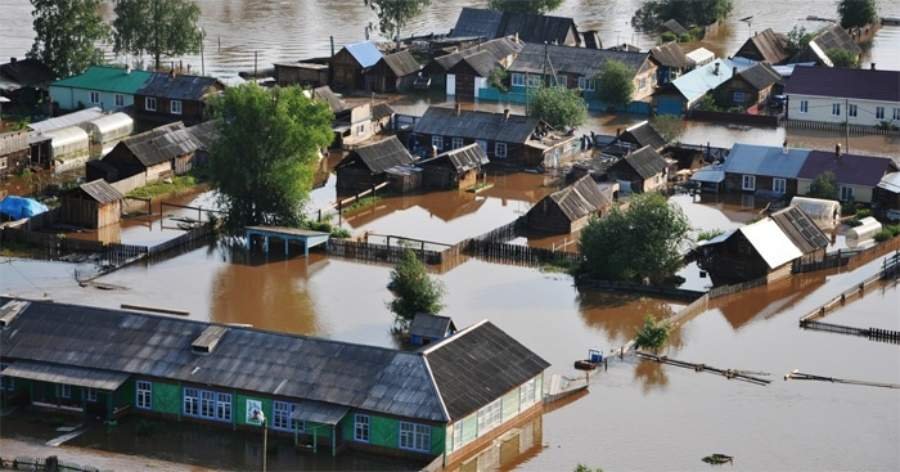
Spiritually, a flood symbolizes overwhelming forces, cleansing, destruction, transformation, and renewal. Because a flood changes an environment rapidly and often removes what existed before, it is commonly interpreted as a symbol of powerful change that can be difficult to control. Water adds another layer to this symbolism through its associations with cleansing, emotion, and transition.
The meaning of a flood is not always negative. Destructive flood imagery can represent the ending of an old state, such as a belief, habit, relationship, or stage of life. Cleansing imagery can represent releasing what no longer serves a purpose, while the period after the flood can symbolize renewal and the beginning of a different state. In this sense, destruction and renewal are connected stages of the same symbolic process.
The spiritual meaning of a flood also depends on its context. A flood in a dream can carry a different meaning from a flood described in a religious text or experienced as a real-world event. Details such as clear or muddy water, rising or receding water, escaping the flood, surviving it, or seeing a home flooded can change the interpretation. Examining these details helps distinguish general flood symbolism from meanings associated with a specific spiritual or personal context.
What Is the Spiritual Meaning of a Flood?
The spiritual meaning of a flood is a powerful change that overwhelms an existing state, clears away what has accumulated, and creates space for transformation or renewal. There are 5 main meanings associated with flood symbolism: overwhelming forces, cleansing, destruction, transformation, and renewal. These meanings come from the nature of a flood itself: water rises beyond its normal boundaries, covers familiar surroundings, removes existing structures, and leaves a changed environment behind.
A flood represents overwhelming forces when the water becomes too powerful to contain or control. In a spiritual context, this loss of control can symbolize emotions, circumstances, or changes that have exceeded a person’s normal capacity to manage them. Fear, grief, conflict, uncertainty, or a major life transition can fit this symbolism because each can disrupt an established sense of stability. The rising water therefore represents more than water itself; its movement and intensity provide the context for interpreting increasing pressure or emotional overwhelm.
Floods also symbolize cleansing and destruction because water removes, carries away, and changes what it reaches. These two meanings are closely connected but are not identical. Destruction emphasizes the loss of an existing structure or state, while cleansing emphasizes the removal of something that has accumulated or no longer belongs. Spiritually, this distinction allows a flood to represent the end of an old habit, belief, relationship, identity, or stage of life without implying that every loss is inherently positive.
Transformation and renewal describe what follows the disruption. A flood changes the conditions that existed before it, so its symbolism often follows the sequence overwhelm → destruction or cleansing → transformation → renewal. Renewal does not mean that a flood predicts a positive event. Instead, it represents the possibility of a new state emerging after an old one has been disrupted or removed. The exact interpretation depends on the context in which the flood appears, including whether it occurs in a dream, religious narrative, spiritual practice, or personal experience.
What Does a Flood Symbolize Spiritually?
A flood spiritually symbolizes 4 closely connected processes: emotional overwhelm, purification, the destruction of an existing state, and transformation into a new state. The specific meaning depends on what the water does and what happens before, during, and after the flood. A rapidly rising flood emphasizes pressure and loss of control, while water that washes something away places greater emphasis on cleansing, release, or transition.
Emotional overwhelm is one of the clearest interpretations because a flood crosses boundaries that normally contain water. Symbolically, those boundaries can represent a person’s ability to contain emotions or maintain stability. When the water rises faster than it can be controlled, the image can correspond to fear, grief, stress, anger, or another emotional state that feels difficult to contain. For example, a flood appearing during a period of major personal change may be interpreted as an image of accumulated emotional pressure rather than as a prediction of an external event.
Purification comes from the cleansing attribute of water. Water removes dirt and carries material away, so spiritual traditions and practices have long used water imagery in contexts involving purification and transition. A flood intensifies this attribute because it involves water on a scale capable of changing an entire environment. Within flood symbolism, cleansing therefore represents a more substantial release: an old pattern, attachment, belief, or condition is removed so that it no longer occupies the same place in a person’s life.
Destruction represents the more disruptive side of the same process. Floodwater can erase boundaries and damage structures, making it a fitting symbol for the collapse of something previously considered stable. Spiritually, the destroyed structure does not have to represent a physical object. It can represent an established identity, expectation, relationship, belief system, or way of living. The important distinction is that destruction describes what ends, while purification describes what is removed.
Transformation and renewal describe the state that can follow this disruption. Once floodwater recedes, the environment is no longer identical to what existed before. This creates a symbolic sequence in which an overwhelming event disrupts an old condition, the old condition is removed or altered, and a new condition becomes possible. A flood can therefore carry negative and positive symbolism at the same time: destruction describes the transition away from the old state, while renewal describes the potential state that follows it. This dual meaning is one reason flood symbolism must be interpreted from the complete context rather than from the presence of water alone.
Is Seeing a Flood a Spiritual Sign?
Seeing a flood can carry personal spiritual symbolism, but the event itself does not establish that a supernatural message or prediction has occurred. A real flood is first a physical event, while its spiritual meaning comes from the religious, cultural, or personal framework used to interpret it. This distinction matters because flood symbolism describes meaning assigned to an experience rather than proving that the experience was intentionally sent as a spiritual sign.
There are 3 contexts to separate when interpreting a flood: the physical event, the symbolic association, and the spiritual interpretation. The physical event is what actually happened, such as water rising and entering a home. The symbolic association connects those characteristics with concepts such as overwhelm, loss, cleansing, or change. The spiritual interpretation then relates those concepts to a person’s beliefs or circumstances. For example, someone undergoing a major life transition might associate rising water with mounting emotional pressure, while another person may interpret receding water as release after a difficult period.
The strongest interpretation comes from examining the complete context rather than treating the flood as an isolated sign. Three details are especially useful: what was happening before the flood, what the water affected, and what remained after it receded. A flood that destroys familiar surroundings emphasizes disruption and loss, while one followed by safety and recovery can place greater symbolic emphasis on endurance and renewal. The emotional response also changes the interpretation because fear, relief, acceptance, and calm represent different relationships with the same event.
For this reason, seeing a flood should not automatically be interpreted as a warning of future disaster, divine punishment, or guaranteed spiritual transformation. Flood symbolism is more useful as a framework for reflecting on overwhelm, change, release, and renewal than as evidence of a specific future event. The meaning becomes more specific when the flood appears within a dream, where details such as escaping, surviving, water condition, and location provide additional symbolic context.
What Is the Spiritual Meaning of Dreaming About a Flood?
Dreaming about a flood spiritually represents an overwhelming emotional state, loss of control, major transition, or the release of something that has built up over time. Flood dreams intensify the symbolism of ordinary water because the water has crossed its normal boundaries. The dream may therefore reflect a situation that feels larger, faster, or more difficult to contain than everyday emotional pressure.
The direction and behavior of the water provide important context. Rapidly rising water can symbolize increasing pressure, while water rushing toward the dreamer can represent a problem or emotional state that feels difficult to avoid. Receding floodwater creates a different meaning because the source of overwhelm is moving away rather than increasing. In that context, the dream can symbolize release, recovery, or movement beyond an intense period. These interpretations describe symbolic relationships rather than predictions about what will happen after the dream.
The dreamer’s emotional response further changes the meaning. Fear can emphasize vulnerability or loss of control, while calmness during the same flood can indicate acceptance of a major transition. Relief after the water recedes can strengthen the symbolism of release and recovery. For example, two people can dream about the same flooded street but derive different interpretations when one is trapped and frightened while the other reaches safety and watches the water recede.
What Does Escaping or Surviving a Flood Mean Spiritually?
Escaping or surviving a flood spiritually symbolizes responding successfully to an overwhelming challenge, but the two scenarios emphasize different stages of that process. Escaping focuses on avoiding or moving beyond the immediate force, whereas surviving emphasizes endurance after experiencing it. A successful escape can therefore represent finding a way out of emotional pressure or an unstable situation, while survival can represent resilience, adaptation, and recovery after disruption.
The details determine which interpretation is stronger. Reaching high ground can symbolize gaining distance or stability, while being rescued can place greater emphasis on receiving support. Surviving until the water recedes emphasizes endurance because the dreamer remains present throughout the threatening situation. In each case, what happens after safety is reached is as important as the flood itself when determining whether the dominant meaning is avoidance, resilience, release, or transformation.
What Does a House Flooding Mean Spiritually?
A flooded house spiritually symbolizes an overwhelming force entering an area associated with personal life, security, identity, or emotional boundaries. A house differs from an open landscape because it represents an enclosed personal space. When floodwater crosses that boundary, the symbolism shifts from general overwhelm toward disruption affecting something perceived as private or personally significant.
The affected part of the house can provide additional context. Water entering a bedroom may be interpreted in relation to private or intimate concerns, while flooding throughout the entire home suggests a broader disruption of personal stability. The condition of the water also matters. Muddy water introduces associations with confusion or uncertainty, whereas clear water can place greater emphasis on cleansing or transition. The flooded house, the behavior of the water, and the dreamer’s response should therefore be interpreted together rather than assigning a fixed meaning to the house alone.
Does the Type of Flood Water Change Its Spiritual Meaning?
The type of flood water changes its spiritual meaning because the water’s appearance, movement, and direction add context to the broader symbolism of overwhelm and transformation. Clear flood water is commonly associated with clarity, cleansing, and transition, while muddy flood water emphasizes confusion, uncertainty, or unresolved emotional states. Rising water strengthens the symbolism of increasing pressure, whereas receding water shifts the meaning toward release, recovery, and the end of an intense period.
Clear flood water combines two symbolic attributes that initially appear contradictory: clarity and overwhelm. The flood itself still represents a force that has crossed normal boundaries, but clear water adds associations with visibility, purification, or awareness. In a spiritual interpretation, this combination can represent a major transition in which the change is intense but its purpose or direction feels increasingly clear. For example, clear water flooding an area and then receding without trapping the dreamer can place more emphasis on cleansing and transition than on confusion or danger.
Muddy flood water carries a different meaning because mud reduces visibility and makes it difficult to see what lies beneath the surface. Spiritually, muddy flood water can symbolize uncertainty, emotional confusion, or difficulty understanding an overwhelming situation. The mechanism behind this interpretation is the combination of two attributes: the flood represents a force that is difficult to contain, while the muddy condition represents obscurity. A dream involving rapidly rising muddy water can therefore emphasize both increasing pressure and uncertainty about how to respond.
Rising flood water represents escalation. As the water level increases, available space and control decrease, creating a symbolic relationship between rising water → increasing pressure → approaching loss of control. This imagery can correspond with accumulated stress, unresolved emotions, or circumstances that feel progressively harder to manage. The speed of the rise also matters. Slowly rising water can suggest gradual pressure becoming harder to ignore, while rapidly rising water emphasizes urgency and sudden overwhelm.
Receding flood water reverses this sequence. Spiritually, receding water symbolizes decreasing pressure, release, recovery, or movement out of a disruptive transition. The environment may still carry evidence of what happened, so receding water does not necessarily symbolize returning to the previous state. Instead, it can represent the point at which the overwhelming force has passed and a person begins responding to what has changed. This distinction connects receding flood imagery with renewal: recovery occurs after disruption rather than by erasing the disruption itself.
Water condition should not be interpreted independently from the rest of the experience. Clear water accompanied by fear can carry a different meaning from clear water accompanied by relief, just as muddy water entering a home creates a different context from muddy water seen at a distance. The strongest spiritual interpretation combines water clarity, movement, location, emotional response, and the outcome of the flood rather than assigning one universal meaning to a single detail.
What Does a Flood Mean in the Bible?
In the Bible, a flood most prominently represents divine judgment, destruction, preservation, and the beginning of a renewed order through the story of Noah’s Flood. Genesis 6–9 describes a world affected by human wickedness, God’s decision to send the Flood, Noah and his family being preserved in the ark, and the covenant established after the waters recede. The narrative therefore gives flood symbolism a sequence rather than reducing it to destruction alone.
Judgment is a central meaning because the Flood occurs in response to the condition of humanity described in Genesis. Destruction follows that judgment as the waters remove the existing order outside the ark. Within the narrative, however, destruction is accompanied by preservation. Noah, his family, and representatives of animal life survive in the ark, making preservation an essential part of the Flood’s biblical context rather than a secondary detail.
The receding waters introduce another stage: renewal. Noah leaves the ark after the earth becomes habitable again, and the narrative moves from catastrophe toward a reestablished relationship between God, humanity, and the living world. Genesis then describes God’s covenant with Noah and living creatures, with the rainbow serving as the sign of that covenant. The biblical sequence can therefore be expressed as judgment → destruction → preservation → renewal → covenant.
This sequence explains why the biblical meaning of a flood should not be summarized only as punishment or only as cleansing. Judgment and destruction are prominent, but preservation and renewed order are also necessary to understand the complete narrative. Noah’s ark is particularly important in this relationship because it represents preservation within the destructive event rather than escape from the event before it begins.
The biblical Flood also differs from a personal flood dream. Noah’s Flood belongs to a specific scriptural narrative with its own theological context, while a modern dream about flooding does not automatically carry the same meaning of divine judgment. Treating every flood dream or real-world flood as evidence of punishment would remove the symbol from the context that gives the Genesis narrative its meaning. Biblical flood symbolism is therefore most useful when interpreted through the complete story of judgment, preservation, covenant, and renewal rather than applied as a universal prediction.
Do Floods Have the Same Spiritual Meaning in Every Tradition?
No, floods do not have the same spiritual meaning in every religious, mythological, or spiritual tradition. Flood narratives can share themes such as destruction, judgment, purification, preservation, and renewal, but the relationship between these themes changes according to the beliefs and narrative context of each tradition. A flood should therefore be interpreted within its original tradition rather than given one universal spiritual meaning.
In biblical tradition, for example, Noah’s Flood connects judgment and destruction with preservation, covenant, and renewed order. Other flood traditions may use a catastrophic flood to explain a transition between different ages, the destruction of an earlier society, divine intervention, or the survival of selected people. The repeated presence of destruction and survival creates a broad symbolic pattern, but similar narrative structures do not mean that different traditions assign identical theological meanings to them.
Purification is another recurring interpretation because water naturally carries associations with washing and removal. However, a destructive flood and ritual cleansing are not automatically equivalent symbols. The meaning depends on what causes the flood, who or what survives, and what changes after the water disappears. A narrative in which a deity sends a flood as judgment creates a different spiritual context from a story in which flood imagery primarily represents cosmic change or the transition from one state to another.
The most useful cross-tradition pattern is therefore not a single definition but a sequence of related attributes: disruption → destruction or purification → preservation → transformation → renewal. Individual traditions can emphasize only part of this sequence or assign different causes and purposes to it. Recognizing these differences prevents flood symbolism from being reduced to claims such as “a flood always means cleansing” or “a flood always means divine punishment.”
How Can You Interpret the Spiritual Meaning of a Flood?
Interpret the spiritual meaning of a flood by examining 5 contextual signals: where the flood appears, how the water behaves, how you respond to it, what it affects, and what happens after the water recedes. These details identify whether the dominant symbolism is overwhelm, uncertainty, cleansing, destruction, survival, release, transformation, or renewal. Interpreting the complete pattern is more useful than assigning a fixed meaning to the presence of floodwater alone.
First, identify where the flood appears. Location establishes the area affected by the symbolism. A flooded house can direct attention toward personal life, security, or emotional boundaries, while a flood covering an entire landscape creates a broader image of disruption. Distance matters as well. Watching a flood from a safe location represents a different relationship with the event from being trapped inside the water.
Second, examine how the water behaves. Rising water emphasizes increasing pressure because the threat becomes progressively harder to contain. Fast-moving water adds urgency and instability. Receding water indicates that the strongest pressure is passing and can therefore shift the interpretation toward release or recovery. The condition of the water adds another attribute: clear water can emphasize clarity or cleansing, whereas muddy water can emphasize uncertainty or emotional confusion.
Third, identify your emotional response. Fear, calmness, relief, and helplessness change the meaning of otherwise similar flood imagery. Fear while water rises can strengthen an interpretation of overwhelm or loss of control. Remaining calm may indicate acceptance of change rather than resistance to it. Relief after reaching safety places greater emphasis on release and recovery. Emotional response is especially important in dreams because two people can experience similar imagery while relating to it in completely different ways.
Fourth, determine what the flood affects or removes. A flood that damages a home, carries away possessions, blocks a path, or separates people creates different symbolic relationships. What is lost can indicate which existing structure is being challenged within the interpretation. For example, a blocked path can emphasize interruption or inability to progress, whereas something being carried away can place greater emphasis on loss, release, or the removal of an existing attachment.
Fifth, examine what happens after the flood. The outcome distinguishes destruction from transformation. Remaining trapped keeps the symbolic focus on unresolved pressure, while reaching safety introduces survival and resilience. Receding water followed by relief can emphasize release. Discovering a changed environment afterward strengthens the symbolism of transition because the previous state has ended and a different one has begun.
These 5 signals should be interpreted together. Consider a dream involving muddy, rapidly rising water entering a house while the dreamer feels trapped. Muddy water adds uncertainty, rising water indicates increasing pressure, the house connects the disruption with personal space, and feeling trapped emphasizes loss of control. Together, these attributes strongly support an interpretation centered on emotional overwhelm and instability.
A dream involving clear, receding water after the dreamer reaches safety and feels relief creates a different semantic pattern. Clear water adds clarity or cleansing, receding water indicates decreasing pressure, survival introduces resilience, and relief points toward release. The dominant interpretation therefore shifts toward recovery, transition, and renewal.
Flood spiritual meaning is ultimately determined by context rather than by one fixed symbolic definition. The flood establishes the central themes of overwhelm and major change, while its location, water condition, movement, emotional response, and outcome determine whether the experience places greater emphasis on destruction, cleansing, uncertainty, survival, transformation, or renewal.