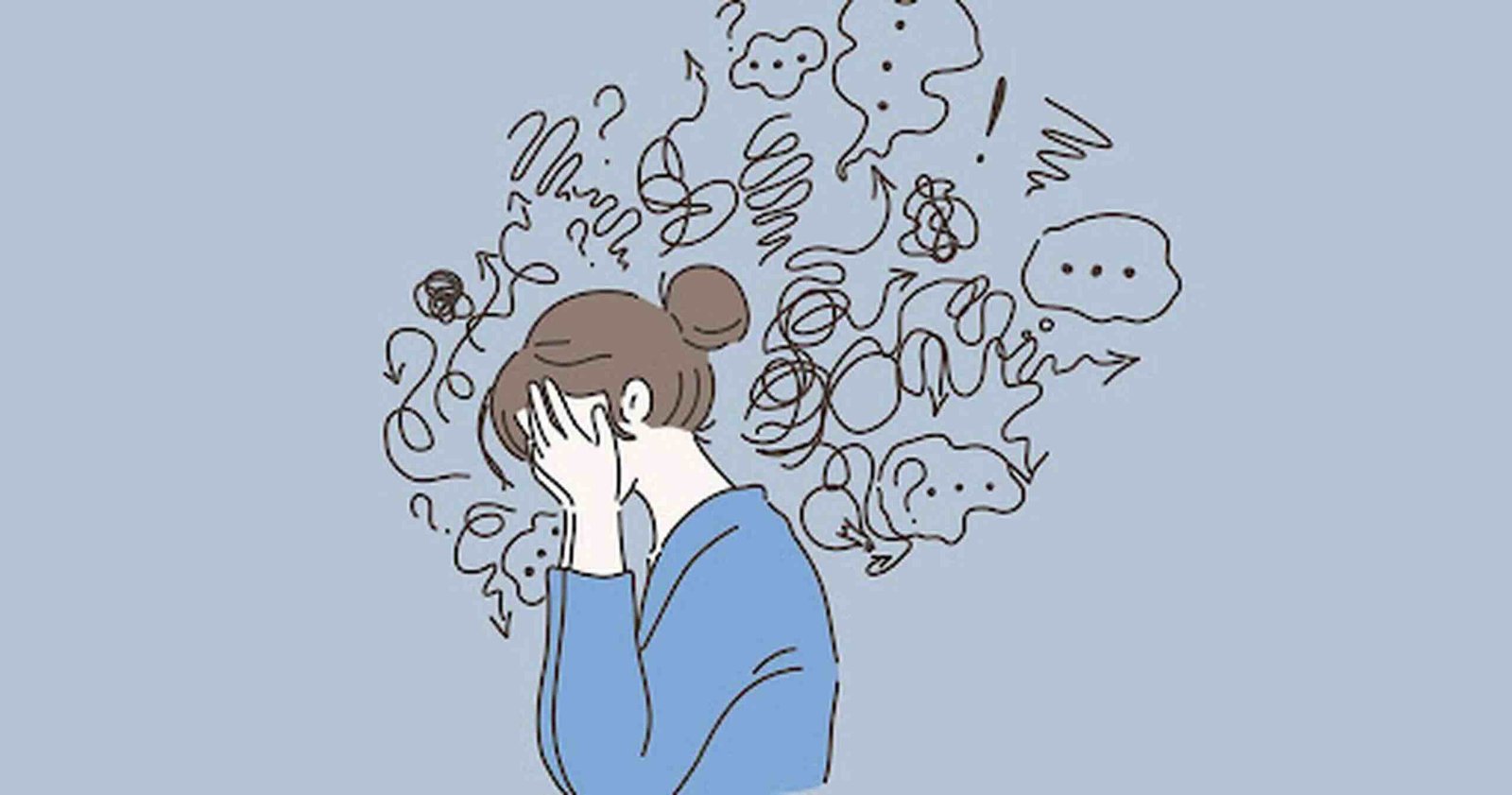
Feeling anxious for no apparent reason does not automatically mean something spiritual is happening. However, in spiritual traditions and belief systems, unexplained anxiety is sometimes interpreted as a sign of inner conflict, heightened sensitivity, unresolved emotions, personal transformation, or spiritual awakening. The feeling may arise during periods when your beliefs, relationships, priorities, or direction in life are changing, even when you cannot identify an immediate trigger.
The key distinction is that “no obvious reason” does not mean “no reason.” Anxiety can have emotional, situational, psychological, or physical triggers that are not immediately apparent. For this reason, a spiritual meaning should be treated as one possible interpretation rather than proof that the feeling comes from intuition, energy shifts, or a supernatural source.
This article explores 7 possible spiritual meanings of feeling anxious for no reason, the experiences that may accompany periods of spiritual change, and the differences between anxiety and what people describe as intuition. It also explains why anxiety can seem to appear without a cause, what you can do when the feeling arises, and when persistent anxiety should not be treated only as a spiritual sign.
What Does Feeling Anxious for No Reason Mean Spiritually?
Feeling anxious for no apparent reason may be interpreted spiritually as a sign of inner conflict, heightened sensitivity, unresolved emotions, personal transformation, or a period of spiritual awakening. In this context, anxiety is viewed as an internal signal that something in your emotional or spiritual life requires attention. The feeling may become noticeable when your current circumstances no longer align with your values, needs, beliefs, or direction in life.
A spiritual interpretation does not mean that unexplained anxiety has a supernatural cause. The phrase “for no reason” usually describes an experience in which you cannot identify an immediate trigger. Stress, suppressed emotions, uncertainty, physical sensations, or changes in your environment may still contribute to the feeling. Spirituality provides one framework for reflecting on the experience rather than a definitive explanation for why anxiety occurs.
The context surrounding the anxiety therefore matters more than the feeling alone. Anxiety that appears while you are questioning your purpose, changing important relationships, reconsidering long-held beliefs, or entering a major life transition may be interpreted differently from anxiety that follows sleep deprivation, excessive caffeine, ongoing stress, or a frightening event. Looking at the circumstances before and during the feeling provides a more grounded basis for deciding whether a spiritual interpretation is personally meaningful.
What Are the Spiritual Meanings of Feeling Anxious for No Reason?
There are 7 common spiritual interpretations of feeling anxious without an obvious reason: spiritual awakening, inner conflict, heightened sensitivity, resistance to change, unresolved emotions, perceived intuition, and personal or spiritual growth. These meanings are interpretations rather than universal rules, so the presence of anxiety alone does not establish that any one of them is occurring.
1. Spiritual awakening. Some spiritual belief systems interpret unexplained anxiety as an experience that can accompany spiritual awakening. A person going through this process may begin questioning established beliefs, personal identity, relationships, priorities, or their sense of purpose. These changes can create uncertainty because familiar ways of understanding life are being reconsidered. For example, someone who previously based most major decisions on career achievement may become uneasy after beginning to question whether that lifestyle still reflects their values. The anxiety in this situation can be interpreted spiritually as part of an internal transition, but anxiety itself does not prove that a spiritual awakening is taking place.
2. Inner conflict. Unexplained anxiety may be interpreted as a sign that your actions and deeper values are no longer aligned. Inner conflict develops when two important needs, beliefs, or directions compete with each other. You might want the security of your current situation while simultaneously feeling that remaining there prevents meaningful change. For example, staying in an unfulfilling career because it provides financial stability can create tension between security and personal fulfillment. A spiritual interpretation views this discomfort as an invitation to identify where your choices and values have become disconnected.
3. Heightened sensitivity. Some spiritual traditions associate unexplained anxiety with increased sensitivity to your surroundings, emotions, relationships, or what they describe as energy. A more grounded way to interpret this experience is to examine whether you have become unusually responsive to crowded environments, interpersonal tension, conflict, noise, or other people’s emotions. For example, you may notice that uneasiness consistently intensifies after spending time in a stressful social environment. Spiritual frameworks may describe this pattern as energetic sensitivity, but the experience itself does not demonstrate that external spiritual energy is causing the anxiety.
4. Resistance to change. Anxiety can be interpreted spiritually as resistance to a life transition when part of you wants change while another part wants familiarity and predictability. Major transitions alter established routines, identities, relationships, and expectations, which can create uncertainty even when the change is ultimately desired. Moving to another city, ending a relationship, starting a new career, or changing a long-held lifestyle can produce this conflict. From a spiritual perspective, the anxiety may serve as a prompt to examine what you are afraid of losing and what direction you believe you need to pursue.
5. Unresolved emotions. Feelings that have not been fully acknowledged may contribute to anxiety that seems to have no immediate explanation. Grief, guilt, anger, fear, disappointment, and uncertainty can remain relevant even when you are not consciously thinking about the event connected to them. For example, someone who avoids processing the end of an important relationship may experience restlessness when encountering reminders of that period. Spiritual practices such as reflection, meditation, prayer, or journaling may be used to explore these emotions, but they should not be treated as proof that the anxiety has a spiritual origin.
6. Perceived intuition. Anxiety is sometimes interpreted as intuition because both experiences can create a strong sense that something is wrong. However, feeling afraid does not by itself mean that your intuition is warning you about an event. Anxiety often generates repetitive questions, imagined negative outcomes, and escalating worry. What people describe spiritually as intuition is more commonly characterized as a specific and immediate impression rather than an expanding chain of fearful possibilities. Examining the thought pattern behind the feeling is therefore more useful than automatically treating uneasiness as a warning.
7. Personal or spiritual growth. Unexplained anxiety may be interpreted as part of a growth period when your identity, priorities, or worldview is changing. Growth can involve abandoning familiar assumptions before a new sense of direction has fully developed, creating a period of uncertainty between the old and the new. For example, setting stronger personal boundaries may initially produce anxiety because it changes established relationship dynamics. A spiritual interpretation may frame this discomfort as part of transformation, but meaningful growth is better identified through sustained changes in awareness, choices, and behavior than through anxiety alone.
These 7 interpretations share one principle: unexplained anxiety can be used as a prompt for self-reflection, but it should not automatically be treated as a spiritual message. The useful question is not simply “What spiritual sign is this?” but also “What was happening emotionally, physically, and situationally when this feeling appeared?” Examining both questions reduces the risk of assigning spiritual meaning to every uncomfortable sensation.
What Spiritual Signs Can Accompany Unexplained Anxiety?
Four experiences commonly associated with periods of spiritual change are increased self-reflection, restlessness, changing priorities, and a stronger desire for solitude. These experiences may appear alongside unexplained anxiety when you are reconsidering your identity, beliefs, relationships, or direction in life. They provide context for spiritual reflection, but none of them proves that anxiety has a spiritual cause.
Increased self-reflection can accompany anxiety when questions about purpose, identity, or personal values become more important than before. You may repeatedly examine whether your current career, relationships, habits, or goals still represent the person you want to be. For example, a person who has spent years pursuing financial success may suddenly become more concerned with meaningful work, relationships, or personal fulfillment. Spiritual frameworks may interpret this shift as greater self-awareness or the beginning of an internal transformation.
Restlessness can appear when your current circumstances feel increasingly inconsistent with what you value or want. The feeling may present as difficulty settling into familiar routines, a persistent desire for change, or dissatisfaction with activities that previously felt meaningful. A person might have a stable job and predictable lifestyle yet feel increasingly uneasy about continuing in the same direction. In a spiritual context, that restlessness may be interpreted as a signal to examine what has changed internally rather than as an instruction to make an immediate major decision.
Changing priorities can also accompany periods that people describe as spiritual growth. Relationships, possessions, career status, social approval, or familiar goals may become less important while meaning, connection, personal values, or inner stability become more significant. For example, someone who previously prioritized professional recognition may begin placing greater importance on family relationships or personal well-being. Anxiety can arise during this transition because changing priorities may conflict with existing commitments and expectations.
A stronger desire for solitude may occur when you need more space to process thoughts, emotions, and changes in perspective. Solitude can provide time for journaling, meditation, prayer, reflection, or simply reducing external stimulation. However, wanting occasional reflective time differs from withdrawing because anxiety makes everyday interaction difficult. The first can be an intentional practice, while the second may indicate that the anxiety itself requires greater attention.
These signs are most useful when treated as context rather than evidence. Increased reflection, restlessness, changing priorities, and solitude can occur during spiritual change, but they can also accompany stress, emotional transitions, or ordinary changes in life circumstances. Their presence therefore supports self-examination rather than a definite conclusion that unexplained anxiety is a spiritual sign.
How Can You Tell the Difference Between Anxiety and Intuition?
Anxiety and intuition can feel similar because both may create a sense that something deserves your attention, but their thought patterns are typically described differently. Anxiety tends to involve repetitive worry, escalating possibilities, and difficulty disengaging from feared outcomes. What people describe as intuition in spiritual contexts is generally portrayed as a more immediate and specific impression. This distinction can help with reflection, but it does not establish intuition as a supernatural source of information.
What Does Anxiety Usually Feel Like?
Anxiety usually involves a pattern of uncertainty that expands rather than resolves. One concern can generate another, producing repeated “what if” questions and increasingly negative scenarios. For example, worrying about making a mistake at work may develop into fears of criticism, losing a job, financial problems, and future instability. The original concern becomes a chain of possible threats rather than one clearly defined observation.
Anxiety can also include physical sensations such as tension, restlessness, a racing heartbeat, sweating, trembling, or difficulty concentrating. These sensations can make a thought feel especially convincing because the body is reacting at the same time as the mind. A strong physical response, however, does not confirm that the feared outcome will occur or that the feeling carries a spiritual warning.
Another useful characteristic is repetition. If the same fear returns repeatedly, changes into new negative scenarios, or becomes stronger the more you analyze it, the pattern is more consistent with anxious rumination than with the concise experience that spiritual traditions commonly describe as intuition.
What Does Intuition Usually Feel Like?
What people call intuition is commonly described in spiritual frameworks as a specific impression that appears without an extended chain of reasoning. Instead of producing numerous escalating scenarios, the experience may feel more like a concise sense that a particular situation deserves attention. For example, someone may describe feeling unexpectedly uncomfortable about a decision without immediately constructing multiple predictions about everything that could go wrong.
The perceived emotional quality can also differ. Spiritual descriptions of intuition often emphasize clarity or immediacy, whereas anxiety tends to amplify uncertainty and encourage continued mental checking. This does not mean that a calm thought is automatically intuitive or that a fearful thought is always anxiety. Emotional intensity alone cannot determine the source or accuracy of an impression.
A practical way to examine the difference is to ask four questions: What exactly am I afraid of? What evidence supports the concern? Is my mind producing increasingly negative scenarios? Does the feeling change after I ground myself and allow the immediate anxiety to settle? These questions shift attention from assigning a spiritual label to examining the actual pattern of the experience.
The safest distinction is therefore not “anxiety is false and intuition is true.” An anxious feeling does not become a reliable prediction simply because it appears suddenly or feels powerful. Treating the experience as information to examine, rather than an instruction that must immediately be followed, creates room to consider emotional, situational, and spiritual interpretations without assuming one explanation is automatically correct.
Does Feeling Anxious for No Reason Always Have a Spiritual Meaning?
No. Feeling anxious for no apparent reason does not always have a spiritual meaning. Anxiety can occur in emotional, situational, psychological, and physical contexts even when you cannot immediately identify what triggered it. A spiritual interpretation is therefore one framework for exploring the experience, not the default explanation for every episode of unexplained anxiety.
Stress is one reason anxiety may seem disconnected from a specific event. Pressure can accumulate across work, relationships, finances, family responsibilities, or major decisions instead of appearing after one obvious trigger. For example, several weeks of deadlines, poor sleep, and unresolved relationship tension may create persistent uneasiness even when nothing stressful is happening at the exact moment the anxiety becomes noticeable. The absence of an immediate event does not mean the feeling has no underlying context.
Physical factors can also influence how anxious you feel. Lack of sleep, caffeine, hunger, physical exhaustion, and physiological arousal can produce sensations that overlap with anxiety, including restlessness, tension, shakiness, or a faster heartbeat. Those sensations may then affect how you interpret your emotional state. If you already believe sudden uneasiness carries spiritual significance, it can be tempting to assign a spiritual explanation before considering these more immediate factors.
Emotional experiences are another source of anxiety that can remain difficult to recognize. Grief, uncertainty, conflict, fear of change, or concerns that you have been avoiding do not disappear simply because you are not consciously thinking about them. A reminder, conversation, place, upcoming decision, or change in routine may activate those concerns before you consciously connect the feeling to its source.
This distinction does not require rejecting spiritual reflection. A more balanced approach is to consider spiritual meaning alongside emotional, situational, and physical context rather than using spirituality to replace those explanations. If reflection reveals that the anxiety consistently appears around questions of identity, purpose, personal values, or major life changes, exploring its spiritual meaning may be personally useful. If a clear non-spiritual trigger emerges, that information should not be ignored simply because the anxiety initially felt unexplained.
Why Can Anxiety Feel Like It Has No Cause?
Anxiety can feel as though it has no cause when the trigger is indirect, accumulated over time, outside your immediate awareness, or first experienced as a physical sensation. In other words, “I do not know why I feel anxious” and “there is no cause for my anxiety” are two different statements. The first describes your current awareness; the second makes a conclusion about the origin of the feeling.
One mechanism is delayed recognition of a trigger. Your reaction to a situation does not always occur at the same moment you consciously identify its importance. An upcoming conversation, unresolved decision, financial concern, relationship change, or uncertain event may remain in the background while you focus on daily activities. When uneasiness later becomes noticeable, it can seem spontaneous because the connection between the feeling and the earlier concern is not immediately obvious.
A second mechanism is accumulated stress. Instead of one event creating an obvious anxious reaction, several smaller pressures can combine. Poor sleep may reduce your ability to cope with a demanding workload, while relationship tension adds another source of uncertainty. No single factor appears significant enough to explain the anxiety, but their combined effect can make you feel persistently on edge. This is one reason searching for one dramatic cause may fail to explain the experience.
A third mechanism involves physical sensations being interpreted as emotional danger. A racing heartbeat, trembling, tension, or restlessness can attract attention before you understand why the sensation occurred. Once noticed, the sensation itself may generate concern: “Why is my heart beating faster?” can become “Something must be wrong.” The resulting worry can intensify the physical response, making the original feeling seem increasingly significant.
Your attention can also influence how unexplained anxiety develops. Repeatedly searching for hidden meanings may encourage you to monitor every thought, sensation, coincidence, or change in mood. In a spiritual context, this can create a tendency to interpret ordinary fluctuations as messages or warnings. A sudden feeling of uneasiness may then become evidence of an “energy shift” or intuitive warning before alternative explanations have been examined.
For this reason, not knowing the cause immediately is a reason to investigate the context, not proof that the cause is spiritual. Consider what happened before the anxiety appeared, how you have been sleeping, what pressures have accumulated, which emotions you may be avoiding, and whether a major change is occurring in your life. Spiritual reflection can be included in that process without being treated as the only possible explanation.
What Should You Do When You Feel Anxious for No Reason?
When you feel anxious without knowing why, first calm your immediate response, then examine the emotional, situational, physical, and spiritual context of the feeling. This order matters because anxiety can make thoughts and sensations feel more urgent than they are. Assigning a spiritual meaning immediately may reinforce fear instead of helping you understand what is happening.
A useful first step is to identify what you know rather than what you fear. Notice when the anxiety started, what you were doing beforehand, which thoughts appeared with it, and whether anything significant has changed recently. Consider practical factors such as sleep, caffeine, workload, relationships, upcoming decisions, and unresolved conflicts. Once these factors are clearer, you can explore whether the experience also connects with questions about your values, identity, purpose, or spiritual beliefs.
How Can You Ground Yourself When Anxiety Appears?
Ground yourself by directing attention away from imagined outcomes and toward what is happening in the present moment. Anxiety frequently pulls attention toward future possibilities, especially questions such as “What if something bad is about to happen?” Grounding interrupts this pattern by giving your attention a specific and immediate reference point.
One simple approach is to notice what you can see, hear, and physically feel around you. Pay attention to the pressure of your feet against the floor, the temperature of the room, nearby sounds, or the movement of your breathing. The goal is not to force the anxiety to disappear. The goal is to observe the feeling without immediately turning it into a prediction, spiritual warning, or instruction.
Grounding also creates a useful test for interpretation. If the sense that “something is wrong” becomes less intense after your body and attention settle, the original feeling may have been strongly influenced by anxiety. If a specific concern remains, you can examine it more clearly afterward. Either outcome provides more useful information than interpreting the first wave of uneasiness as a message that must be acted upon immediately.
How Can Meditation and Journaling Help You Examine the Feeling?
Meditation and journaling can help you observe unexplained anxiety before deciding what it means. Meditation creates space between the feeling and your interpretation of it, while journaling helps identify recurring circumstances, thoughts, emotions, and concerns connected with the experience. Within a spiritual practice, both methods can support reflection without requiring you to assume that the anxiety itself has a supernatural origin.
During meditation, observe the anxiety as an experience rather than trying to decode it immediately. Notice where you feel tension, which thoughts repeatedly appear, and whether your mind keeps returning to a particular person, decision, fear, or life change. For example, recurring anxiety about work may initially seem random but become easier to understand when you notice that thoughts about changing careers consistently appear with it.
Journaling can make these patterns more concrete. Start with 4 questions: What happened before this feeling started? What am I currently avoiding? What major change am I experiencing? What am I afraid might happen? Your answers may reveal a practical trigger, unresolved emotion, internal conflict, or question about your direction in life. If spirituality is important to you, you can then consider what the experience means within your beliefs without excluding other explanations.
Should You Look for a Spiritual Meaning Immediately?
No. Observe unexplained anxiety before assigning a spiritual meaning to it. Immediate interpretation creates a risk of confirmation bias: once you decide the feeling is a warning, energy shift, or spiritual sign, ordinary events can begin to look like evidence supporting that conclusion.
Instead, separate the experience into three parts: what you physically feel, what you are thinking, and what you know about your current circumstances. For example, “my chest feels tense” is an observation; “something bad is going to happen” is an interpretation. Distinguishing the two helps prevent a strong sensation from automatically becoming a prediction.
Spiritual reflection can come after this initial assessment. You might ask whether the anxiety corresponds with an unresolved value conflict, resistance to change, a shift in priorities, or a period of deeper self-reflection. This approach preserves the personal value of spirituality while avoiding the assumption that every unexplained feeling contains a hidden spiritual message.
When Should You Stop Treating Anxiety as Only a Spiritual Sign?
Do not rely only on a spiritual interpretation when anxiety is persistent, severe, repeatedly disrupts daily life, or causes significant physical or emotional distress. Spiritual practices may provide comfort, meaning, and opportunities for self-reflection, but they should not become a reason to ignore anxiety that is becoming harder to manage.
Pay particular attention when anxiety repeatedly interferes with sleep, concentration, work, school, relationships, or ordinary activities. Increasingly intense episodes, panic-like experiences, persistent avoidance, or feeling unable to cope also indicate that the experience deserves attention beyond spiritual interpretation. In these situations, seeking appropriate professional support can help identify contributing factors and determine what type of support is suitable.
You do not have to abandon your spiritual beliefs to seek that support. Meditation, prayer, journaling, grounding, or other spiritual practices can remain part of how you reflect on your experience. The important distinction is that spiritual meaning and practical support do not have to compete with each other.
Ultimately, feeling anxious for no apparent reason can encourage deeper reflection about your emotions, circumstances, values, and direction in life. Some spiritual traditions interpret that experience through concepts such as awakening, sensitivity, inner conflict, or personal transformation. However, the feeling alone cannot establish its cause. Treating anxiety as something to observe and understand, rather than automatically as a spiritual warning, provides a more grounded way to explore what the experience means for you.